This new paver driveway improves curb appeal, value, and satisfaction for this Jacksonville Beach homeowner. “John (Cacchione) came up with a wonderful plan,” said Homeowner Faith Stone. “And I met with him and reviewed the plan and said this is it.” The plan included tearing out and removing the existing concrete driveway and replacement with Tremron glacier colored 12” x 24” pavers in the Park Plaza style and landscaping. “It has transformed our house,” said Stone.
Pavers are attractive, safe, and considering permeability, they are better for the environment than poured concrete which has a shorter average lifespan before cracking. “I see that a lot, with new homes, some of the older buildings, even some of the new projects with concrete driveways are cracked with trees by them, with heavy machinery on them, with water from the roof eroding underneath them,” said John Cacchione, Earth Works landscape designer. “The pavers are a good replacement.”
Cracked and uneven concrete driveways leave bad first impressions as they are an eyesore, tripping, and driving hazard. “Beyond the installation, a paver driveway is a better investment because it lasts longer and adds curb appeal to your home,” says Home Advisor. “The average paver driveway lasts between 30 and 50 years. Pavers are up to four times stronger than poured concrete, meaning they can support four times as much weight. Slabs tend to crack over time, while pavers can come loose individually.”
Tremron Glacier, Park Plaza style pavers are available in 2 3/8” and 4” thick options. Other Park Plaza paver size options include 8”x8”, 8”x12”, 12”x12”, 16”x16”, and 24”x24”. “So we’ve got the four-inch-thick paver, and we’ve got a six-inch base of Krush Krete underneath all of that,” said Cacchione. “That was unique to this job, and we’ve got a cool border here too where we normally do a single border here we did a little double border. It gives you just a nice imprint of that contrasting color.”
Raised edging and borders are options for driveways with practical benefits, including less grass intrusion onto the pavers. It keeps vehicles on the driveway rather than in the landscape. Flat edging and borders provide aesthetic value with endless design possibilities. “Versus just a single band (border), you can do the double band,” said Cacchione. “You can do a triple band. I like to do the little sandwich band, I call it. So you take two 6”x9” pavers, and you sandwich another little thin paver between them. It’s a really pretty look. So dressing up your borders like that is really a nice way to dress up a driveway. You can do that on existing concrete driveways too. It doesn’t have to just be pavers. You could come in with a paver border, a paver apron, and then some paver bands that we cut into the concrete to enhance what you already have. You don’t have to tear out everything.”
We recommend widening sidewalks to front doors when replacing driveways as builders commonly construct them 36” wide, which isn’t pedestrian-friendly for two people walking together to a porch or front door. We enhanced the entrance, so it’s really big now,” said Cacchione. “It gives you that sense of welcomeness to the front door.”
With age and use, driveways require maintenance and eventual replacement that reflects on home value. “The National Association of Realtors surveyed homeowners, landscape professionals, and Realtors to evaluate how certain outdoor remodels contributed to resale,” according to Homelight.com. “Upgraded hardscape and landscape design both placed in the top four projects that buyers find appealing and that Realtors agree can add resale value.”
High and low gloss sealers are available for your new driveway, along with rust remover, rubber, paint, and tar removing cleaners. “The glossy sealer will give you that wet look all the time,” said Cacchione. “You do have to reapply that every 3-5 years based on your wear and tear. So the sealer will lock that look in place, or we can do a matt finish, which will give you not the glossy finish, but the finish when it is dry. I do recommend the sealer. I do recommend you reapply it. It’s going to be a lot easier to clean your surfaces off if you’ve got that coat of sealer on the paver.”
This Jacksonville Beach client trusts Earth Works for various services that started with a visit to the garden center where she purchased plants and met Cacchione. That friendly business relationship blossomed into providing landscape design plans and a beautiful driveway that met and hopefully continue to exceed her expectations.
Just as this driveway improves curb appeal, value, and satisfaction count on Earth Works of Jacksonville with all your landscaping, hardscaping, drainage, water gardening, and lawn care needs. Earth Works operates a retail Garden Center/Plant Nursery in Jacksonville and provides landscaping, hardscaping, water features, lawn care service, lawn spraying, and drainage solutions. Contact us with your questions and to book design consultations.
Proudly serving clients in Northeast Florida including Jacksonville, Ponte Vedra Beach, Atlantic Beach, Neptune Beach, Jacksonville Beach, Nocatee, St. Johns, Fleming Island, Orange Park, Middleburg, Green Cove Springs, Amelia Island, Fernandina, and St. Augustine. Happy Gardening!
As a key feature of the pool landscaping design process, Earth Works recommends budgeting 10% of your pool construction costs to landscaping. Pool landscaping is often an afterthought not considered until the pool contract is signed, under construction, or completed. A beautiful pool landscape design is the finishing touch on a real estate upgrade. HOA’s often require landscaping plans as part of their pool review approval process. Clients can prepare their pool landscape design simultaneously with the pool design or take a phased approach handling aspects of the landscape project, such as drainage and grading for the landscape prior to completion of the pool installation. Phasing in the overall landscape design can save money completing parts of the project immediately after the pool shell, deck, and plumbing are complete.
Earth Works landscape designers consult with each client at their property, listening and asking questions, taking photos, and providing from that meeting landscape design drawing. Aspects of the landscape design include drainage, irrigation, landscape tear-out, and installation of trees, shrubs, flower beds, sod, landscape lighting, and water features. Handling all aspects of these essential elements of the landscape design with one company rather than half a dozen reduces the client’s potential frustration from dealing with too many companies simultaneously working on their property. It saves clients money by developing the pool and landscape plan simultaneously. Avoid duplicitous labor and material expenses by timing drainage, irrigation, and grading between pool contractor and landscape designer.
The pool landscape design development requires that the designer receive a copy of the clients’ property survey, site plan, and pool construction plan. Additionally, the designer needs to know the location of new and existing lines for electric, gas, irrigation, plumbing, and sound system.
Process considerations include: -Irrigation capping and replacing associated pipes and hardware is recommended as existing lines could be broken after the pool is excavated and installed. -Drainage work can begin once the pool shell is installed and plumbing lines are buried before any landscaping. Drainage planning is critical prior to a new pool being installed as there is less lot surface area to absorb water and, if done poorly, can result in the house, pool, and property flooding. Consider connecting downspouts from roof to drainage to flow away from house and pool deck.
-Grading for irrigation and new landscape design can begin after drainage work is complete. -Tear-out and removal of old landscaping and installation of new landscaping are completed after pool construction is complete and their equipment is removed.
Earth Works of Jacksonville design process typically requires 2-6 weeks depending on the complexity of the project and time of year. Earth Works provides pool landscaping separately from the pool contracting process although we have strong working relationships with pool builders throughout Northeast Florida including Pratt Guys. For more about the Earth Works design consultation process, view the following video highlighting each step in the journey.
Building An Asian themed Koi Pond Poolside in Jacksonville
Water Feature Completes Backyard Poolside Oasis!
Water Garden Construction, Landscaping, And Drainage
Plus, remember that for comprehensive solutions to your specific lawn, garden and landscaping need contact Earth Works of Jacksonville at 904-996-0712. Earth Works operates a retail Garden Center/Plant Nursery in Jacksonville and provides landscaping, hardscaping, water features, lawn care service, lawn spraying, and drainage solutions. Proudly serving clients in Northeast Florida including Jacksonville, Ponte Vedra Beach, Atlantic Beach, Neptune Beach, Jacksonville Beach, Nocatee, St. Johns, Fleming Island, Orange Park, Middleburg, Green Cove Springs, Amelia Island, Fernandina, and St. Augustine. Happy Gardening!
Between June and September, Jacksonville receives as much precipitation as the other eight months combined, which brings not only lush lawns and gardens, but mosquitos, chinch bugs, and fungus. During extended periods of rainfall, cut back your automatically timed irrigation scheduled watering. Soil aeration, fertilization, and cultural practices, including cutting lawn turf at the proper height and watering at the appropriate time of day, all reduce the threat posed by summer lawn and garden pests and pathogens. While taking measures to remedy these threats to the lawn and garden we discourage overuse and runoff of treatments that can harm beneficial plant and animal species and the environment.
Mosquitos quickly get our attention biting exposed skin after hatching from stagnant water in as little as 24 hours. To minimize the health threat from mosquitos eliminate stagnant water collection receptacles in the landscape. Properly maintained ponds and water gardens are NOT breeding grounds for mosquitos. Still, birdbaths and bogs without filtration or aeration can be a mosquito haven that’s remedied with Mosquito dunks, the solid form of Bacillus Thuringiensis. Low-lying areas of the landscape that hold water also serve as a breeding ground for mosquitos. When mosquitos are present, avoid getting bit with a non-oily application of Natures Way All Natural Repellant, which kills and repels nuisance flying insects and is safe for people, pets, and the environment.
Southern chinch bugs are ever-present in the Northeast Florida environment. Their 3-4 life cycles per year cause damage in full sun and drought conditions, especially to St. Augustine lawn turf. Proper timing and application of pesticides are critical to addressing the threat from chinch bug eggs along with nymphs and adults. Increasing irrigation and dumping high nitrogen fertilizer on chinch bug-infested turf can cause more harm than good to the landscape and environment. Contact the Earth Works lawn care division for professional fertilization, disease, weed, and pest control service. Get Your Free Quote.
Fungal pathogens, including mold and mildew that prey on lawn and garden plants, are of particular concern during the rainy season. However, other fungi species, including mycorrhizae, are beneficial to plants and animals, demonstrating the importance of good cultural practices to only rid your garden of fungal pathogens. Take care of your soil with periodic aeration and soil amendments combined with targeted fungicide treatments available at Earth Works Garden Center to remedy downy and powdery mildews, root rot, and various other fungi in the lawn and garden. Also, ask the Earth Works lawn care division for a quote on such services.
Mosquitos, chinch bugs, and fungus are a threat with lush lawns the same as for rutted-up ones that hold water.
Plus, remember that for comprehensive solutions to your specific lawn, garden and landscaping need contact Earth Works of Jacksonville online and at 904-996-0712. Earth Works operates a retail Garden Center/Plant Nursery in Jacksonville and provides landscaping, hardscaping, water features, lawn care service, lawn spraying, and drainage solutions. Proudly serving clients in Northeast Florida including Jacksonville, Ponte Vedra Beach, Atlantic Beach, Neptune Beach, Jacksonville Beach, Nocatee, St. Johns, Fleming Island, Orange Park, Middleburg, Green Cove Springs, Amelia Island, Fernandina, and St. Augustine. Happy Gardening!
June lawn and garden tips for Northeast Florida start with the recognition that Summer begins on June 20. This is also the Summer Solstice, the longest day of the year as the Sun is at its highest point in the sky. June 1 is the first day of hurricane season. Rainfall totals for Jacksonville between January and June 2021 were 17”, which is one inch above average. However, May was a dry month with less than a half-inch of rainfall, with most of the monthly totals coming in February and April. As a result, the soil is dry and irrigation and hand watering crucial. Fortunately, the chance of rain increases each day of June historically to the greatest daily likelihood coming at the end of July. June is typically a wet month averaging nearly six inches of rainfall, with last year’s total being 8.9 inches. In June 2012, Jacksonville received over 21 inches of rain, with 12 inches of it associated with Tropical Storm Debby. Rain is good, but not too much.
June’s climate in Northeast Florida is typically prime time for planting a wide assortment of warmth and full sun-loving flowering plants and shrubs. Rising soil and air temperatures of spring and early summer make for good conditions for planting palms and drought-tolerant choices, including African Iris, bromeliads, bulbine, crotons, figs, fountain grass, lantana, agaves, birds of paradise, junipers, and fruit trees. Vegetables for planting directly in the ground in June include okra, peas, squash, spinach, and sweet potatoes as the heat becomes too much for most cooler season vegetables. Remember to water new landscape plants daily for the first month, which is an allowable exception to the twice per week watering restrictions for the region.
JUNE PRUNING IN NORTHEAST FLORIDA
Remember the five D’s of pruning, pruning a plant anytime it is dead, dying, damaged, disfigured, or showing signs of diseased wood. Shrubs that bloom in spring typically set their blooms on old wood from the prior season, whereas summer-blooming shrubs typically set blooms in spring on new growth from the same year. Thus, trim your spring bloomers immediately after their flowers bloom to allow for the preservation of buds for next year. Prune your summer bloomers in late winter or early spring to encourage new growth before bud setting. Ask Earth Works garden center staff for help with your specific plant pruning requirements.
JUNE FERTILIZATION & SOIL AMENDMENTS IN NORTHEAST FLORIDA
It is essential to match the nutrient needs of your landscape and house plants with the appropriate NPK (Nitrogen, phosphorus & potassium) provided by various fertilizers. For example, balanced fertilizer such as 10-10-10 has an equal percentage of nitrogen for green leaf development, phosphorus and potassium for root growth, and setting blooms and fruit. Soil testing provides a baseline of information for knowing your plant’s nutrient needs, and testing is free in Northeast Florida at the University of Florida IFAS Extension Office. Learn more about their services in our blog “Soil Testing in Northeast Florida.”
Long-standing recommendations were to fertilize your lawn in spring, followed by an additional application in summer and then a winterizing fertilizer application which prepares the sod heading into winter dormancy. However, in 2007 the Florida Department of Agriculture and Consumer Services (FDACS) passed the Urban Turf Fertilizer Rule that reduces the amount of phosphorus and potassium allowed for release during lawn fertilization to negligible percentages, basically defined as low or no phosphorus and nitrogen. Dozens of counties have rules more strict than the state rule prohibiting nitrogen and phosphorus entirely between June 1 and Sept 30 due to the increasing frequency of devastating algae blooms. Duval County does not.
Most of your houseplants do well with monthly liquid fertilization during their growing season. However, because of the wide assortment of plants in the typical landscape, please research their nutritional needs and consider using slow-release fertilizers. In addition, create setbacks around water bodies and pathways to storm drains to avoid fertilizer pollution. Earth Works lawn care division provides aeration and top dressing services to replenish lawn nutrients that reduce your fertilization and watering needs.
JUNE POND CARE IN NORTHEAST FLORIDA
The warmest months of the year are times you expect to enjoy your pond and water garden the most, but anxiety arrives if your fish are suffering as a result of a poorly designed & equipped, dirty, overstocked pond that all contribute to low dissolved oxygen. There you are trying to enjoy some time pondside as that Summer warmth cooks the O2 out when the fish need it most. Supplemental aeration helps during these times of Summer by raising the dissolved oxygen levels. Learn more in our blog “Low Dissolved Oxygen: Koi Summer.”
JUNE PEST CONTROL IN NORTHEAST FLORIDA
June’s heat and moisture make for good conditions for and an explosion of lawn and garden pest species. Chinch bugs, sod webworms, grubs, mole crickets, and fungus are a few of the species attacking the lawn while aphids, thrips, whitefly, leafhoppers, leaf miners, and leafrollers go after the flower beds, trees, and shrubs. The Earth Works lawn care department has a seasonal pre and post-emergent pesticide treatment program and provides instant quotes for all available services. In addition, the garden center has a wide assortment of organic pest control solutions, including Horticultural oil, bacillus thuringiensis, and copper fungicide, along with broad-spectrum bifenthrin, systemic insect spray, and granules.
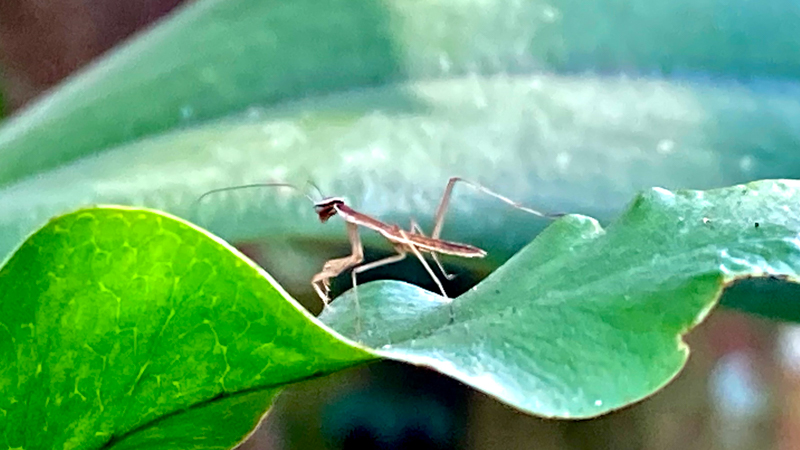
Nurturing predatory species of beneficial insects in the garden, such as ladybugs, green lacewings, and praying mantis, will reduce dependence on chemical treatments for these pests and support a sustainable ecosystem. Wrapping up June lawn and garden tips on the topic of pollinators, Join the Buzz by Entering our Social Media Contest. Share your love of pollinators on our Facebook page and spread the word! Share the favorite POLLINATOR PHOTO you have taken in the comment section—post by June 20, 2021, for a chance to win our fun friends of pollinator kit.
Plus, remember that for comprehensive solutions to your specific lawn, garden and landscaping need contact Earth Works of Jacksonville online and at 904-996-0712. Earth Works operates a retail Garden Center/Plant Nursery in Jacksonville and provides landscaping, hardscaping, water features, lawn care service, lawn spraying, and drainage solutions. Proudly serving clients in Northeast Florida including Jacksonville, Ponte Vedra Beach, Atlantic Beach, Neptune Beach, Jacksonville Beach, Nocatee, St. Johns, Fleming Island, Orange Park, Middleburg, Green Cove Springs, Amelia Island, Fernandina, and St. Augustine. Happy Gardening!
Hurricane season landscape preparation is crucial as it begins on June 1 and lasts until November 30. Each year Floridians face the potential of fall out from tropical storms and full-blown hurricanes. While hurricanes are uncommon in June, there have been tropical storms that were significant rain events, such as Tropical Storm Debby in June 2012, contributing more than half of that months’ 20-inch rainfall totals for Jacksonville. Hurricane seasons such as we are seeing in 2022 have no hurricanes affecting Florida until late September when the season heated up. Please pay attention to the needs of newly planted trees whose root system may not be fully established and do best when staked to prevent them from toppling over during periods of soggy soil and or with high winds.
Older trees may need pruning to reduce the risk to structures and power lines from overhanging limbs. In addition, we benefit from removing dead, diseased, cracked, and broken limbs at risk of falling during high wind events and hurricanes. Depending on the types of trees in the landscape, some are at greater risk of attracting lighting, with those struck most often being oak, pine, and palms. When hit, the tree will attempt to repair itself but should be monitored over some months that ultimately may require that the damaged tree be pruned or removed entirely.
When combined with saturated soil, tree species with shallow roots and large canopies are at higher risk of coming down during high wind and rain events. Younger trees planted that may still be staked or within several years of planting are not without risk during storms as their root systems may still be inadequate to protect against extreme wind and rain and at serious risk of falling. They can likewise be badly damaged in such events where the roots become ajar, exposed, or damaged. If you’ve planted a sizable tree in recent months and not yet protected it from wind damage with a staking kit, it is good to consider purchasing one and installing it.
Though tragic, it is hardly a surprise when we see news coverage of a limb or large tree that fell into a home or crushed a vehicle during high wind and rain. However, regardless of the conditions of our trees, when faced with an impending storm event, it is best to assess the situation, be aware of our surroundings, especially overhead, and take necessary precautions to protect ourselves, friends, and family.
A licensed arborist can provide a professional assessment of what needs to be done to protect the specific trees in the landscape before and after the hurricane season. Earth Works Jax Lawn Care & Pest Control Service offers treatment programs to keep clients’ trees, lawn, and garden healthy throughout the year. The Earth Works Garden Center provides a variety of trees that do well in Northeast Florida weather, including oak, magnolia, crape myrtle, and a wide variety of palms. Our knowledgeable garden center staff and landscape designers are here to help with your hurricane season landscape preparation.
For comprehensive solutions to your specific lawn, garden and landscaping need contact Earth Works of Jacksonville online and at 904-996-0712. Earth Works operates a retail Garden Center/Plant Nursery in Jacksonville and provides landscaping, hardscaping, water features, lawn care service, lawn spraying, and drainage solutions. Proudly serving clients in Northeast Florida including Jacksonville, Ponte Vedra Beach, Atlantic Beach, Neptune Beach, Jacksonville Beach, Nocatee, St. Johns, Fleming Island, Orange Park, Middleburg, Green Cove Springs, Amelia Island, Fernandina, and St. Augustine. Happy Gardening!
A good starting point for pruning tips with any plant is to remove dead, diseased, or damaged stems as soon as you see them. Dead stems attract insects and invite diseases to develop. Also remove crossing branches, water sprouts (vigorous upright growing shoots that form on trunks or side branches), and suckers (vigorous shoots that develop near or from below ground).
What to Prune When
Spring- Flowering Trees and Shrubs
Early season pruning tips for spring bloomers, such as azalea, bear flowers on wood formed the previous year. The best time to prune them is late spring — immediately after they finish blooming. If you prune them later in the growing season you’ll remove flower buds and decrease the amount of spring bloom.
Hydrangeas
Most hydrangea types bloom on old wood. Prune these types of hydrangeas before midsummer. If you prune them in winter or early spring, you’ll be removing flower buds. With newer reblooming types, such as the Endless Summer Series which bloom on new growth, timing of pruning is less critical. Even if you cut off some of the flower buds by pruning the old stems, the plant will bloom on the new growth.
Shrubs With Showing Blooms
Cut back shrubs grown primarily for their foliage (such as Loropetalum and Ligustrum) almost anytime: except in late autumn. New growth that starts after late season pruning won’t harden off properly before winter. Major pruning is best done when it is dormant.
Clipped Hedges
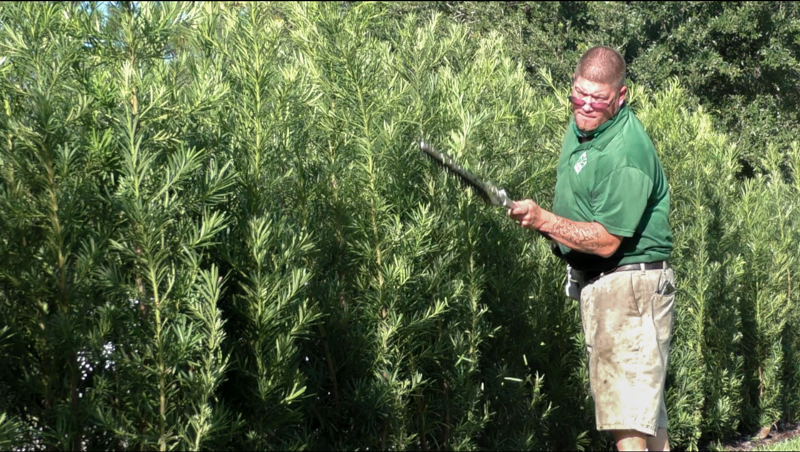
Shrubs such as boxwood and podocarpus are often sheared to form a hedge. To maintain a solid wall of green, shear the new growth frequently during the early part of the growing season. Stop in late autumn.
Roses
Prune climbers and old garden roses that bloom only once per year after they finish blooming. Repeat bloomers, including hybrid teas, floribundas, knockout, and drift shrub roses are pruned mostly to shape the plant or to remove winter-damaged canes. If they become overgrown, cut them back in early spring.
Perennial Flowers
Most perennial flowers look best if you remove faded flowers. This is called deadheading. As a bonus, many perennials will push out another cycle of blooms after deadheading. If your perennial flowers become too tall and leggy, or flop open in the middle, try shearing them back to 6-12 inches above the ground. This type of haircut causes them to become stockier.
Annual Flowers
Deadhead annual flowers regularly to keep them blooming well. Removing the old flowers prevents them from setting seeds and allows plants to put more energy into blooming. Some annuals, such as petunias, sprawl and develop bare stems at their bases. As with perennials, you can shear these rangy plants to force more compact growth and renewed bloom.
Citrus
On young trees, it is important to remove suckers from the base of the tree. Mature citrus trees do not require pruning of the canopy except for substantial injury or after a disease or freeze damage. Unnecessary pruning will reduce fruit production. Pruning of the canopy should be reserved to prevent trees from crowding other plants or buildings. Be sure to remove vertical shoots. Make all pruning cuts flush with the trunk, since stubs may be attacked by rotting organisms that could damage the tree. If you must prune, timing can be tricky and varies by variety. Shoot for after-harvest and before flowering.
Plus, remember that for comprehensive solutions to your specific lawn, garden and landscaping need contact Earth Works of Jacksonville online and at 904-996-0712. Earth Works operates a retail Garden Center/Plant Nursery in Jacksonville and provides landscaping, hardscaping, water features, lawn care service, lawn spraying, and drainage solutions. Proudly serving clients in Northeast Florida including Jacksonville, Ponte Vedra Beach, Atlantic Beach, Neptune Beach, Jacksonville Beach, Nocatee, St. Johns, Fleming Island, Orange Park, Middleburg, Green Cove Springs, Amelia Island, Fernandina, and St. Augustine.
Earth Works of Jacksonville as a member of the Interconnecting Concrete Paver Institute (ICPI) provides professional hardscaping services and information on paver care and maintenance. See examples of our completed paver projects in our photo gallery and youtube channel. We answer commonly asked questions below.
What should I expect during my paver project?
–Paver Dust: Make sure all furniture and valuables are covered and protected.
–Loud Noise: This is due to the paver saw.
-If you are doing a paver driveway expect to not be able to park in your driveway for a certain amount of days; determined by the size of the project.
If you have additional questions during your project, please ask the foreman who will be at your job daily.
Why should I use polymeric sand? This product is a fine sane combined with additives, usually silica, that when mixed with water, form a binding agent. These binders lock the sand particles together, which helps lock all the pavers together. A heavy rain will not wash all the sand out like regular sand. It also deters weed growth and ants. Plain sand is a much more inviting home for weeds and ant pests.
Why should my pavers be sealed? Sealing your pavers will slow down fading and provide a measure of protection from some stains. Before sealing, pavers must be clean and dry. It is recommended that you wait at least 45-60 days after installation before sealing. Once sealed, you will need to reseal approximately every three to five years.
How do I clean my pavers? Applying bleach to a paver job is not recommended. Common dish soap can be used in conjunction with a light pressure wash.
Why do my pavers have a chalky, white surface residue? This is called efflorescence which is a natural process occurring with almost all concrete and masonry products. Pavers exhibiting signs of efflorescence are NOT defective and not covered under warranty.
Efflorescence is created when the calcium oxide naturally found in the cement mixes with water to form calcium hydroxide, it leaches to the surface of the paver where it comes in contact with the carbon dioxide in the air and forms calcium carbonate which forms the white, chalky residue referred to as efflorescence. Eventually, efflorescence will disappear on its own. If you wish to fasten the process then use an Efflorescence Cleaner such as Foundation Armor found at Home Depot.
How do I remove oil stains and tire marks?
-Use paint and rubber remover to remove tire marks from pavers.
-Use professional grade oil and grease cleaner to remove oil and grease stains from pavers such as Pull It Out Concrete Stain Remover found at Home Depot.
-Sealing your pavers will help prevent oil stains and tire marks and make them easier to remove in the future.
Can I use Muriatic Acid on my pavers? No, muriatic acid will damage the surface of the pavers and cause pitting to appear.
Will my pavers fade over time? Over time all pavers will begin to fade if left unsealed. Sealing your pavers with a paver sealer after the natural process of efflorescence is complete will provide a barrier of protection against UV rays and harsh climate.
Plus, remember that for comprehensive solutions to your specific lawn, garden and landscaping need contact Earth Works of Jacksonville online and at 904-996-0712. Earth Works operates a retail Garden Center/Plant Nursery in Jacksonville and provides landscaping, hardscaping, water features, lawn care service, lawn spraying, and drainage solutions. Proudly serving clients in Northeast Florida including Jacksonville, Ponte Vedra Beach, Atlantic Beach, Neptune Beach, Jacksonville Beach, Nocatee, St. Johns, Fleming Island, Orange Park, Middleburg, Green Cove Springs, Amelia Island, Fernandina, and St. Augustine.
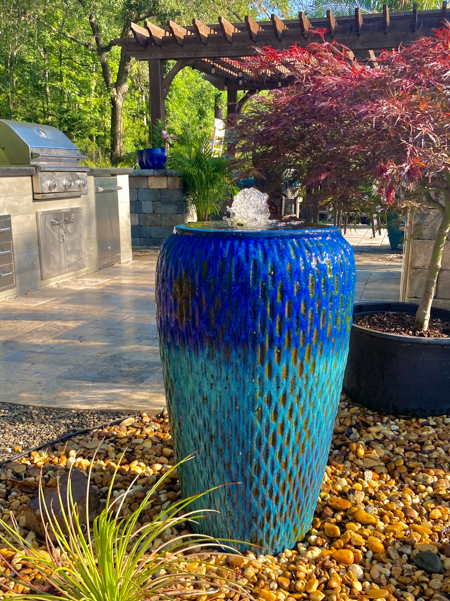
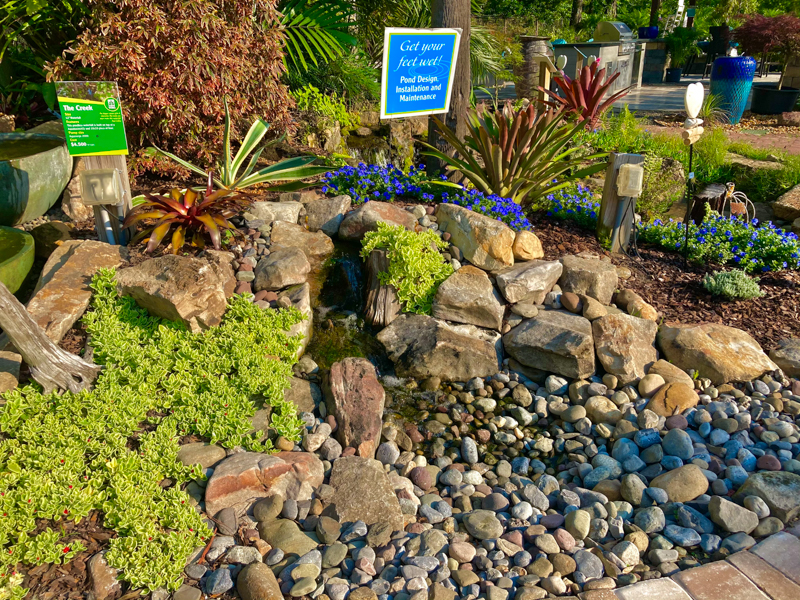
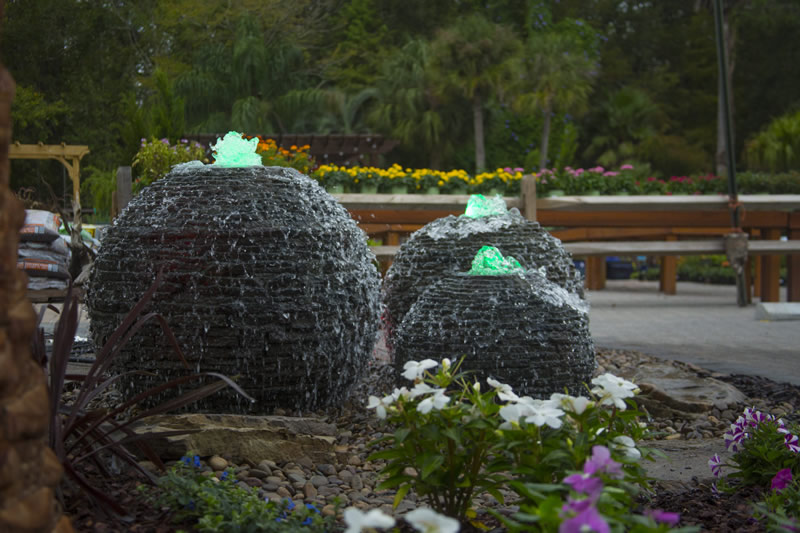
You may like the sound of running water, but don’t want a pond. Earth Works of Jacksonville, Florida has a variety of pondless water features on display at our garden center that demonstrate a few of your design possibilities. The hardware for these pondless water features is manufactured by Aquascape Inc that Earth Works also sells as kits to clients who wish to do it yourself (DIY). As Certified Aquascape Contractors (CAC) Earth Works landscape department staff work with clients to develop designs and install in landscapes throughout Northeast, Florida.
Pondless Waterfall Garden Center Displays Include:
Water Pot Features: Aquabasin 45, 10×10 Pond Liner Pump Size: Ultra Pump 2000 Contact for pricing.
Basalt Columns Size: 1- 24”H, 2-30”H, 3-36”H Features: 2 Night Light, Recirculating system, Large Aquabasin, Built with Mexican Beach Pebble. Pump Size: Ultra 2000 Water Pump. Contact for pricing.
The Creek Size: 12” Waterfall Features: This pondless waterfall is built on top of a Aquabasin (45) and 10×10 piece of liner. Pump Size: Aquasurge 2000 Contact for pricing.
Rocky River Size: 2ft waterfall, 4ft stream. Features: Spillway, Small Aquabloxs, 15×20 Pond Liner, Underlayment, River Jacks and IonGen G2. Pump Size: Aquasurge 5000 Contact for pricing.
Mountain Falls Size: 2.5 ft waterfall x 5ft stream. Features: Low maintenance pondless waterfall, built with Missouri rock. Pump Size: Aquasurge 4000-8000 Adjustable flow pump. With Tennessee Field Stone or Missouri Rock. Contact for pricing.
Stacked Slate Spheres Set of 3 Features: Large Aquablox, Pond Liner, and River Rock. Pump Size: Aquasurge Pro 4000-8000 Contact for pricing.
Entrance Elegance Size 12ft x 8ft Features: Large Aquablox, Pond Linter, Missouri Rock, IonGen G2, Patio Pond 32”, Patio Pond 40”, Curved Stacked Slate Wall 32”. Pump Size: Aquasurge Pro 2000-4000 and Aquasurge Pro 4000-8000. Contact for pricing.
Visit the Earth Works Garden Center to see these water feature options, call 904-996-0714 or request to book a design consultation. Earth Works of Jacksonville is Northeast Florida’s Premier Aquascape Certified Contractor with over 30 years of experience serving clients and delivering available pond options in Northeast Florida.
Plus, remember that for comprehensive solutions to your specific lawn, garden and landscaping need contact Earth Works of Jacksonville online and at 904-996-0712. Earth Works operates a retail Garden Center/Plant Nursery in Jacksonville and provides landscaping, hardscaping, water features, lawn care service, lawn spraying, and drainage solutions. Proudly serving clients in Northeast Florida including Jacksonville, Ponte Vedra Beach, Atlantic Beach, Neptune Beach, Jacksonville Beach, Nocatee, St. Johns, Fleming Island, Orange Park, Middleburg, Green Cove Springs, Amelia Island, Fernandina, and St. Augustine. Happy Gardening!
Brown palm frond tips, called “frizzle top” on new growth, are a cause for concern for newly planted palm species. Palms depending on size, are often pricey and a prized addition to a homeowners landscape plant collection. As popular palm species originate in all sorts of environments, from deserts to river banks and rainforests, keeping a thriving palm collection requires some knowledge of their specific variety requirements. The slow growth rate in palms coincides with an equally slow display of outward signs problems such as brown palm frond tips. For your palm to flourish it needs the right climate, water, and nutrition free of disease otherwise brown palm frond tips and other problems appear.
When planting your palm, make sure the root ball is placed at the surface or slightly above, not completed buried. Burying the rootball too deep can result in water and iron deficiencies in the palm and brown palm frond tips. In addition, the amount of sun they receive and climate is essential to your palm’s long-term health. Some palms prefer direct sun, others indirect sunlight. High humidity is typically preferred but not something you can only control for container palms indoors.
Too much and too little watering will cause brown palm frond tips. Typically palms prefer moist, well-draining soil. Too much water in poorly draining soil can cause root rot, whereas too little water in sandy soil can also harm your palm. Know the specific requirements of your palm as some such as the Everglades palms and mangrove fan palms grow naturally along river banks and water bodies. In contrast, Bismarck’s palms are extremely drought tolerant doing well in dry heat, desert-like conditions.
Sandy Northeast Florida soil is susceptible to mineral deficiencies negatively impacting palms. These minerals include boron, calcium, iron, magnesium, nitrogen, and potassium. “Magnesium deficiency is very common on highly leached soils in Florida, Hawaii, and other tropical areas,” according to the University of Florida. “It can also occur in container-grown palms if dolomitic limestone has not been added to the substrate. Also, since palms may remain in a container for up to a year or longer, any added dolomite is usually exhausted after six months or so with Mg deficiency symptoms becoming visible as a result. Most species of palms are susceptible to Mg deficiency to some degree, but Phoenix canariensis is by far the most susceptible species to this disorder.
Temperature, pH and certain soil amendments in the soil can result in a deficiency of magnesium that also resultw in frizzle top systems in a variety of palms in Northeast Florida. “Manganese deficiency is very common on alkaline soils, but can occur in containers if drainage is poor or soil temperatures are cool,” according to the University of Florida. “Most species of palms can be affected, but Syagrus romanzoffiana (queen palm), Roystonea regia, (royal palm), Acoelorrhaphe wrightii (paurotis palm), Phoenix roebelenii (pygmy date palm), and Elaeis guineensis (African oil palm) are particularly susceptible.”
Pests including weevils & root rot are often associated with increased stress in newly planted palms. However, in most scenarios, the pruning of your palm should remain the same whether it is healthy or not, considering the plant redirects nutrition from diminishing fronds to elsewhere in the plant. Review our palm pruning video for specific directions on proper palm pruning.
Earth Works has a variety of palm nutritional products and fungicides that will benefit their health. To diagnose the specific cause of brown palm frond tips and other palm problems, take pictures and contact your helpful Earth Works garden center staff.
Plus, remember that for comprehensive solutions to your specific lawn, garden and landscaping need contact Earth Works of Jacksonville online and at 904-996-0712. Earth Works operates a retail Garden Center/Plant Nursery in Jacksonville and provides landscaping, hardscaping, water features, lawn care service, lawn spraying, and drainage solutions. Proudly serving clients in Northeast Florida including Jacksonville, Ponte Vedra Beach, Atlantic Beach, Neptune Beach, Jacksonville Beach, Nocatee, St. Johns, Fleming Island, Orange Park, Middleburg, Green Cove Springs, Amelia Island, Fernandina, and St. Augustine. Happy Gardening!
Brown palm frond tips, called “frizzle top” on new growth, are a cause for concern for newly planted palm species. Palms depending on size, are often pricey and a prized addition to a homeowners landscape plant collection. As popular palm species originate in all sorts of environments, from deserts to river banks and rainforests, keeping a thriving palm collection requires some knowledge of their specific variety requirements. The slow growth rate in palms coincides with an equally slow display of outward signs problems such as brown palm frond tips. For your palm to flourish it needs the right climate, water, and nutrition free of disease otherwise brown palm frond tips and other problems appear.
When planting your palm, make sure the root ball is placed at the surface or slightly above, not completed buried. Burying the rootball too deep can result in water and iron deficiencies in the palm and brown palm frond tips. In addition, the amount of sun they receive and climate is essential to your palm’s long-term health. Some palms prefer direct sun, others indirect sunlight. High humidity is typically preferred but not something you can only control for container palms indoors.
Too much and too little watering will cause brown palm frond tips. Typically palms prefer moist, well-draining soil. Too much water in poorly draining soil can cause root rot, whereas too little water in sandy soil can also harm your palm. Know the specific requirements of your palm as some such as the Everglades palms and mangrove fan palms grow naturally along river banks and water bodies. In contrast, Bismarck’s palms are extremely drought tolerant doing well in dry heat, desert-like conditions.
Sandy Northeast Florida soil is susceptible to mineral deficiencies negatively impacting palms. These minerals include boron, calcium, iron, magnesium, nitrogen, and potassium. “Magnesium deficiency is very common on highly leached soils in Florida, Hawaii, and other tropical areas,” according to the University of Florida. “It can also occur in container-grown palms if dolomitic limestone has not been added to the substrate. Also, since palms may remain in a container for up to a year or longer, any added dolomite is usually exhausted after six months or so with Mg deficiency symptoms becoming visible as a result. Most species of palms are susceptible to Mg deficiency to some degree, but Phoenix canariensis is by far the most susceptible species to this disorder.
Temperature, pH and certain soil amendments in the soil can result in a deficiency of magnesium that also resultw in frizzle top systems in a variety of palms in Northeast Florida. “Manganese deficiency is very common on alkaline soils, but can occur in containers if drainage is poor or soil temperatures are cool,” according to the University of Florida. “Most species of palms can be affected, but Syagrus romanzoffiana (queen palm), Roystonea regia, (royal palm), Acoelorrhaphe wrightii (paurotis palm), Phoenix roebelenii (pygmy date palm), and Elaeis guineensis (African oil palm) are particularly susceptible.”
Pests including weevils & root rot are often associated with increased stress in newly planted palms. However, in most scenarios, the pruning of your palm should remain the same whether it is healthy or not, considering the plant redirects nutrition from diminishing fronds to elsewhere in the plant. Review our palm pruning video for specific directions on proper palm pruning.
Earth Works has a variety of palm nutritional products and fungicides that will benefit their health. To diagnose the specific cause of brown palm frond tips and other palm problems, take pictures and contact your helpful Earth Works garden center staff.
Plus, remember that for comprehensive solutions to your specific lawn, garden and landscaping need contact Earth Works of Jacksonville online and at 904-996-0712. Earth Works operates a retail Garden Center/Plant Nursery in Jacksonville and provides landscaping, hardscaping, water features, lawn care service, lawn spraying, and drainage solutions. Proudly serving clients in Northeast Florida including Jacksonville, Ponte Vedra Beach, Atlantic Beach, Neptune Beach, Jacksonville Beach, Nocatee, St. Johns, Fleming Island, Orange Park, Middleburg, Green Cove Springs, Amelia Island, Fernandina, and St. Augustine. Happy Gardening!
Share Your Story!
Manage Consent
To provide the best experiences, we use technologies like cookies to store and/or access device information. Consenting to these technologies will allow us to process data such as browsing behavior or unique IDs on this site. Not consenting or withdrawing consent, may adversely affect certain features and functions.
Functional
Always active
The technical storage or access is strictly necessary for the legitimate purpose of enabling the use of a specific service explicitly requested by the subscriber or user, or for the sole purpose of carrying out the transmission of a communication over an electronic communications network.
Preferences
The technical storage or access is necessary for the legitimate purpose of storing preferences that are not requested by the subscriber or user.
Statistics
The technical storage or access that is used exclusively for statistical purposes.The technical storage or access that is used exclusively for anonymous statistical purposes. Without a subpoena, voluntary compliance on the part of your Internet Service Provider, or additional records from a third party, information stored or retrieved for this purpose alone cannot usually be used to identify you.
Marketing
The technical storage or access is required to create user profiles to send advertising, or to track the user on a website or across several websites for similar marketing purposes.