Archives

Pond Cleaning Guide For Florida Backyards

Pond Cleaning Guide For Florida Backyards
Earth Works Gardens · Landscape
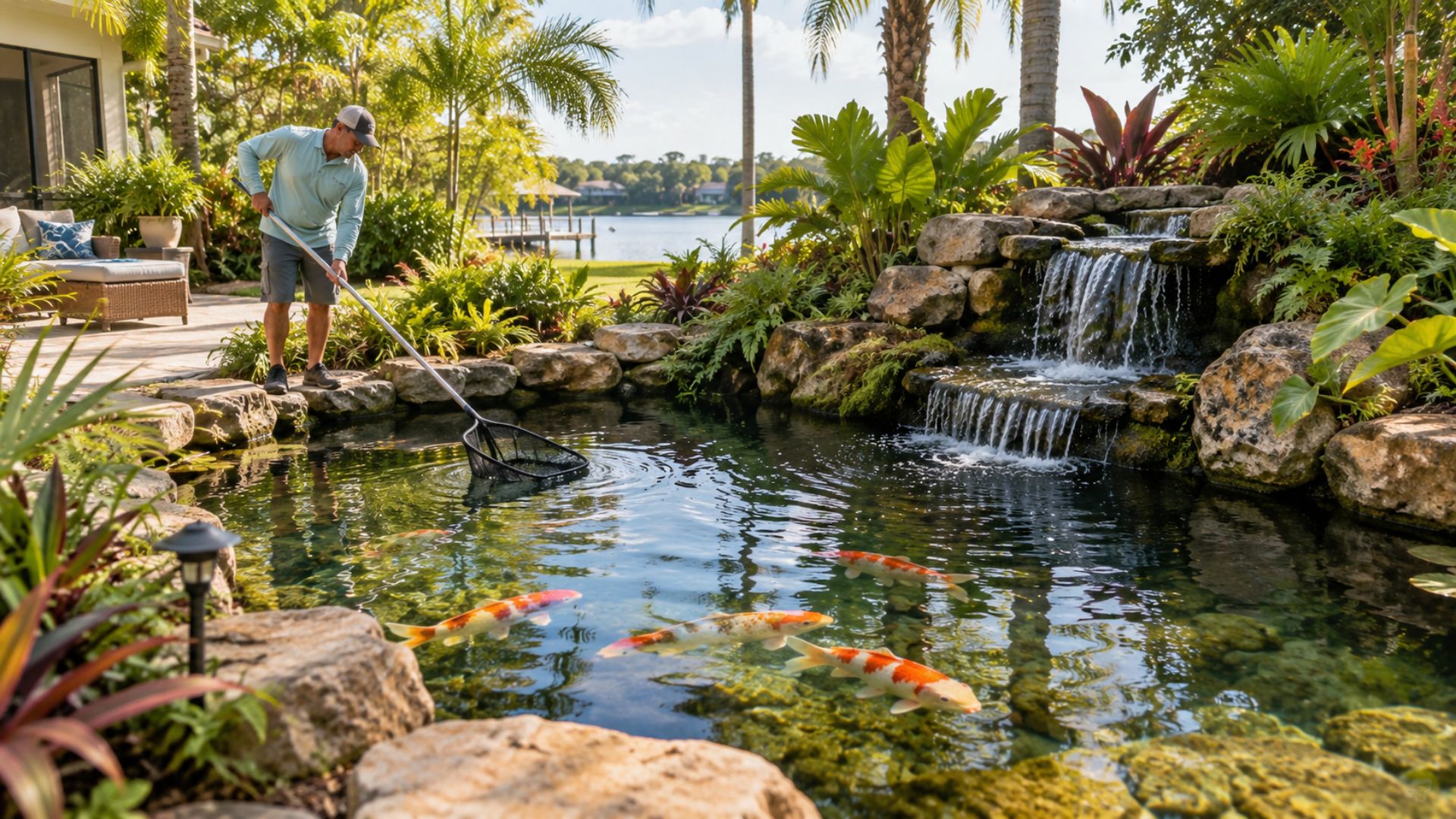
Man cleaning a backyard koi pond with a long-handled net beside a rock waterfall.

In Florida, pond care runs year-round. Our winters are short and mild, and in Jacksonville, the live oaks drop their old leaves every spring, often right into the water. Pond cleaning here works best as a steady routine rather than one big, annual cleanout. Whether you have a small garden pond off the patio or a koi pond with a waterfall, keeping it clean comes down to three things: recognizing when it needs attention, keeping up with weekly, monthly, and yearly tasks, and protecting your fish when it's time to drain and scrub.

Key Takeaways: Cleaning Your Pond

  • Florida's long warm season gives algae more months to grow, so weekly pond care matters more here than in colder climates.
  • Skim debris, rinse mechanical filter pads in pond water, and add beneficial bacteria to your pond. Save the full drain and scrub for once a year.
  • Rinse the biological filter media sparingly and only with pond water. Chlorinated tap water kills the bacteria that keep your pond water clear.
  • Small ponds can usually be cleaned with a net, buckets, and a pond vacuum, often without fully draining them. Large koi ponds call for a solids-handling cleanout pump and a holding tank big enough for your fish.
  • Koi and goldfish can only handle temperature changes of 1 to 2 degrees Fahrenheit. Before moving fish from the holding tank back into the refilled pond, make sure the two water temperatures match.
  • Use algaecides as a last resort for clearing algae. Reduce sunlight, excess fish, and excess nutrients, and check your filtration first.

Signs Your Pond Needs A Good Cleaning

Most pond problems start small and get worse over weeks of being left untreated. These signs mean debris, waste, algae, or some combination of the three has gotten ahead of your routine:

  • Green water or string algae on the rocks. Algae feeds on fish waste and decaying debris, and it grows fastest when a pond gets too much light, holds too many fish for its size, or lacks established bacteria. A sudden bloom often means one of those conditions has changed.
  • A swampy or rotten smell. Odors that linger usually come from debris decomposing where water doesn't circulate well: inside filter chambers, under deep gravel, or behind rocks.
  • Cloudy water that won't clear. If you're keeping up with filter care and the water stays cloudy, your biological filtration may not be strong enough for the waste load.
  • Thick muck on the bottom. Leaves and debris decompose on the pond floor, using up oxygen and raising ammonia levels in the water. If dragging a net along the bottom kicks up a dark cloud, pond sludge removal is overdue.
  • Fish gasping at the surface. A fish gasping for air is a warning sign of fish stress. In a dirty pond, gasping is often the first visible sign that oxygen is running low.
  • Filters clogging faster than usual. Rapid clogging in your filter means too much debris is getting past your skimmer or entering the pond in the first place. Fixing that source, rather than just cleaning the filter more often, solves the problem.
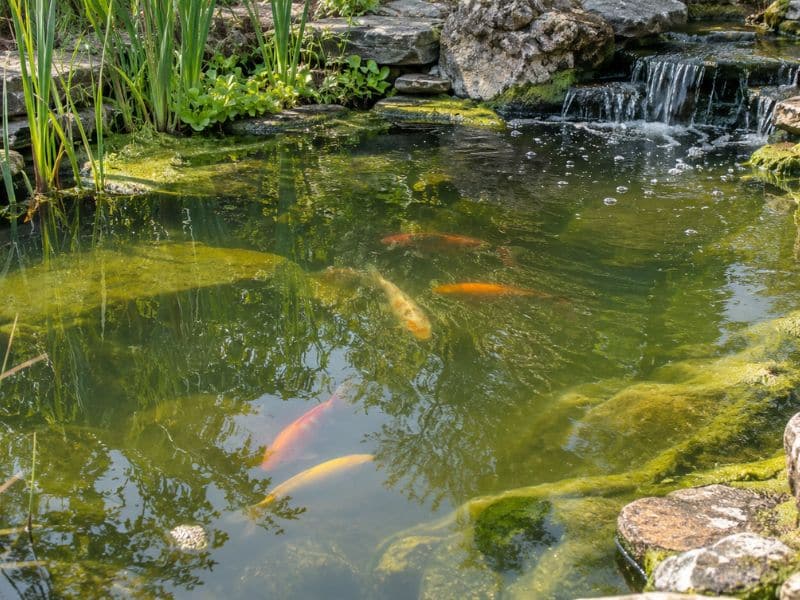
Backyard koi pond with green algae growing along the rocks and waterline.

As a note: tea-colored or brown water doesn't necessarily mean your pond needs a cleanout. The color usually comes from tannins released by leaves, bark, and acorns. Tannins are largely harmless to fish, and activated carbon clears them if you don't like the look.

Florida Pond Cleaning Checklist (Weekly, Monthly, Yearly)

Most garden pond cleaning is routine weekly upkeep, not a once-a-year project. Florida's mild winters give algae very little downtime, so skipping weekly tasks shows up in the water quickly.
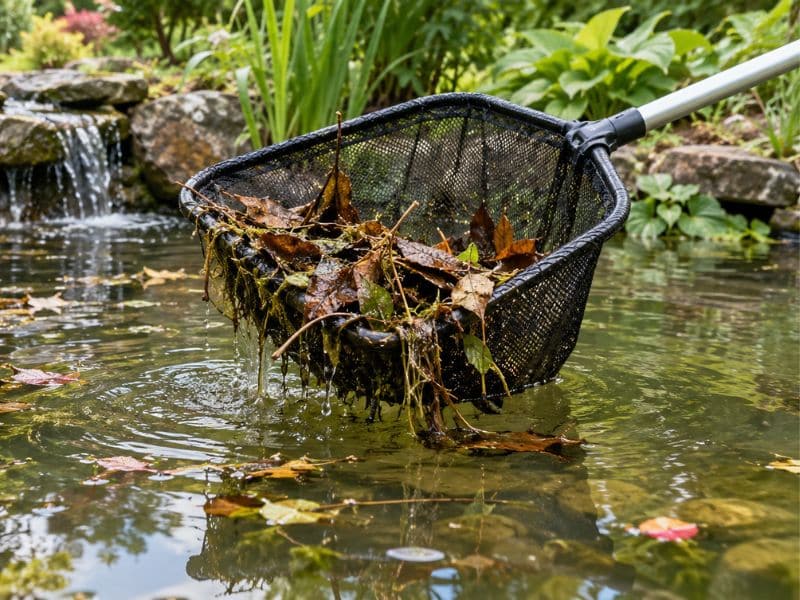
Pond net filled with wet leaves and organic debris removed from a backyard pond.
Weekly
  • Skim and empty the skimmer. Regular pond debris removal keeps leaves from sinking and rotting. Some ponds may require daily skimming during heavy leaf drop, which in Jacksonville usually means during the spring.
  • Rinse mechanical filter pads and intake screens. Rinse foam pads weekly in a bucket of pond water – not tap water – and squeeze them until the water runs clear.
  • Add beneficial bacteria and enzymes. Beneficial bacteria compete with algae for the same nutrients, so a weekly dose helps prevent algae from taking over. Because the weather stays warm in Florida, weekly dosing during warm months is ideal.
  • Feed less than you think. Feed your fish once a day, and only as much as your fish will finish in two minutes. Leftover food becomes waste, and that waste can fuel algae blooms.
  • Test the water. A pond test kit measures ammonia, nitrite, nitrate, and pH in a few minutes. Rising ammonia or nitrite means waste is building up faster than your filter can break it down. Write down your results each week so you can spot changes over time.
  • Check the pump and water level. Warm water holds less dissolved oxygen, and fish can suffocate quickly if a pump fails in summer.
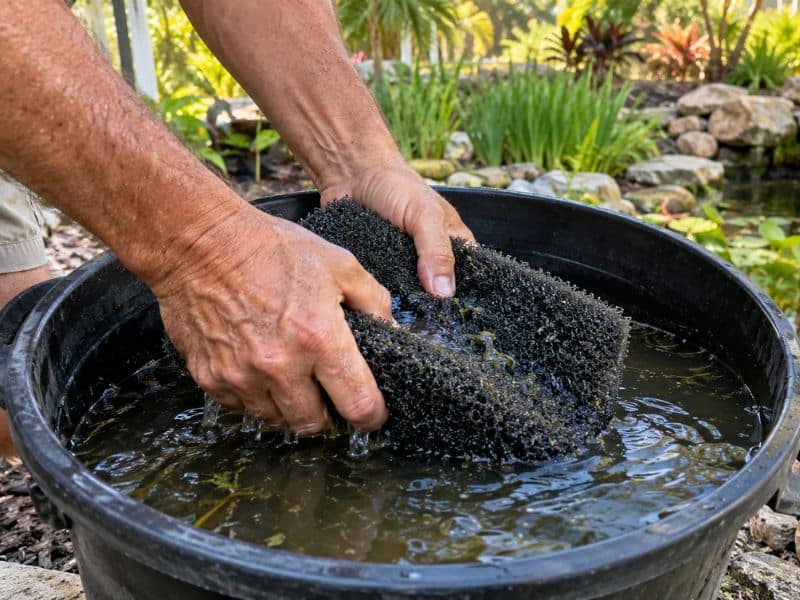
Hands rinsing a foam pond filter pad in a bucket of pond water.
Monthly
  • Trim aquatic plants. Remove dead or dying leaves before they decompose and release their stored nutrients back into the water.
  • Clean the UV sterilizer sleeve. Do monthly cleaning with white vinegar or a UV cleaner to remove the mineral and algae buildup that blocks UV light.
  • Replace activated carbon. If your filter uses activated carbon, swap it every four to six weeks during active seasons. Remove it entirely while treating fish with medication, because carbon absorbs medications before they can work.
  • Spot-clean the bottom of your pond. Pond vacuuming pulls up small sludge deposits between full cleanouts without you needing to drain the pond.
  • Do a partial water change if tests show waste building up. Drain a portion of the pond and refill it with fresh water. A pond is a closed system, so this is the only way to dilute fish waste and organic debris that builds up over time. Add a dechlorinator when refilling with city water.
  • Inspect foam pads. With proper care, most foam pads last four to six months. Check them monthly, and replace them when they start falling apart or won't rinse clean.
Yearly
  • Do a full cleanout. Drain the pond, remove debris, clean the rocks, and flush out the muck once a year. In Northeast Florida, the cooler stretch of late winter is the easiest window to do a cleanout on fish.
  • Rinse the biofilter media. Rinse any biological media once a year and reseed it with starter bacteria. We suggest rinsing only half at a time with pond water so the bacteria colony stays strong. Never wash all of it out with tap water.
  • Replace the UV bulb. Replace your UV bulb every year even if it still glows, because UV output drops over time.
  • Level out the gravel. Keep gravel about 1 to 2 inches deep. Deeper gravel blocks oxygen from reaching the bottom layer, and that layer turns black and mucky.
  • Check your stocking levels. A good rule of thumb is 100 to 150 gallons of water for each koi under 8 inches and 30 gallons for each adult goldfish. An overstocked pond will produce more waste than filters can handle.

Cleaning A Small Pond vs. A Large Pond

The basic steps are the same for any pond. Size determines the equipment you need and how long cleaning takes.

Small Pond Cleaning

A small pond is typically defined as a preformed pond, a patio water garden, or a lined pond with a handful of goldfish or no fish at all. Small pond cleaning doesn't take much equipment: a long-handled net, a few buckets, a pond vacuum or small pump, a garden hose, and tall rubber gloves.

Many small ponds never need a full drain. Skimming, vacuuming the bottom, rinsing the filter, and doing a partial water change handle most of the cleaning work. If you drain a small pond with fish in it, use a small pump and watch the water level closely. A small pond drains quickly, and fish need to come out while there's still enough water for them to swim.

Large Pond Cleaning

Large koi ponds and estate-style ponds with rock, gravel, plants, and waterfalls take more planning, more equipment, and usually a second set of hands to clean properly. You will typically need rubber boots, gloves, safety glasses, a solids-handling cleanout pump with a discharge hose, a holding tank with a net cover, an aerator, buckets, beneficial bacteria, and a dechlorinator. The cleanout pump matters more than any other tool for large pond cleaning. A weak pump clogs constantly, and you'll spend the day unclogging it instead of cleaning.

When draining your pond water, it doesn't have to go to waste. Because it is full of nutrients, pumping it onto a lawn or flower bed downhill from the pond can put the pond water to new use. Just be careful to pick a spot for water drainage that people don't walk through.

Pull leaves, branches, and dead plant material by hand before cleaning the rocks. You can then either rinse the rocks gently with a hose, or pressure wash them. Be mindful, though: a pressure washer can strip off the film of beneficial bacteria that keeps the water clear. Leaving a little nature behind can help a freshly cleaned pond get back in balance sooner.

Cleaning Still Ponds vs. Waterfall Ponds

Moving water changes where debris collects and which parts need cleaning.

Still Ponds

A still pond has no waterfall moving water through it, so debris settles straight to the bottom of the pond, instead of getting pulled into a skimmer. Regular surface skimming and pond vacuuming helps keep that buildup under control. Oxygen levels are the bigger concern, since moving water is what adds dissolved oxygen to a pond. In Florida, it's worth running an air stone or small fountain through the warm months to keep oxygen levels up. Floating plants can help keep the pond clean too: they absorb the nutrients algae would otherwise feed on, and their leaves shade the water.

Waterfall Ponds

Waterfall ponds stay better oxygenated, but they have more parts to clean. Most of that cleaning happens in two places: the skimmer, which houses the pump, and the biofalls, the box at the top of the waterfall.

Pull and rinse the filters from both during a cleanout. Before putting everything back, clear any gravel from the bottom of the skimmer so the pump doesn't suck it up, and fit the filter pads snugly so water flows through them instead of around them. Between cleanouts, watch the stream and falls for debris, which can dam the flow and push water over the edge of the liner.

How To Safely Clean A Pond With Fish

Fish pond cleaning adds a few steps to protect your fish from the three biggest risks during a cleanout: rough handling, temperature shock, and chlorinated water. How to clean a pond with fish safely starts with good preparation.

Count your fish first. Have a rough idea of how many fish you have before you begin cleaning, because fish can hide behind rocks and under plants, making them easy to miss.

Prepare a fish holding tank. Place the tank on a level spot in the shade. Fill it with the first water pumped out of the pond, since water from the upper layer is cleaner and saved pond water also carries the beneficial bacteria your fish are used to. Cover the tank with a net so fish can't jump out, and run an aerator in it.

Catch fish gently. Wait until the water is low but still deep enough for fish to swim in, which makes them easier to catch. Use a sock net or something similar that keeps the fish in water and supports its whole body, since uneven support can break a fish's spine. A stress-reducing water treatment in the holding tank can also help.

Keep the oxygen up in the holding tank. Warm water holds less dissolved oxygen, and a holding tank in the Florida sun warms quickly. Work early in the morning or in the evening, use the largest tank you can, and finish as quickly as you can.

Match the water temperature between the holding tank and the pond. Koi and goldfish can only handle rapid temperature changes of 1 or 2 degrees. Before returning fish to the pond, feel the tank water and the pond water. If the tank water is warmer, run a hose into it slowly until the two water temperatures match. Pump the tank water back into the pond along with the fish.

Dechlorinate the refill before fish go back in. City water is usually chlorinated, so add a dechlorinator to the refill water before returning fish to your pond. You can also use a detoxifier that neutralizes ammonia and heavy metals. Finish by adding beneficial bacteria to restart the pond's biological filtration.

When Should Professionals Be Called To Help Clean Your Pond?

Keeping a healthy pond in Northeast Florida requires steady work: weekly skimming and filter rinsing, monthly plant trimming and UV care, and full cleanouts once a year. Most homeowners can handle the weekly and monthly pond maintenance on their own. Annual pond cleaning is often a messier, more involved job, and it's worth bringing in help if you have a large koi pond or algae that keeps coming back despite a consistent routine.
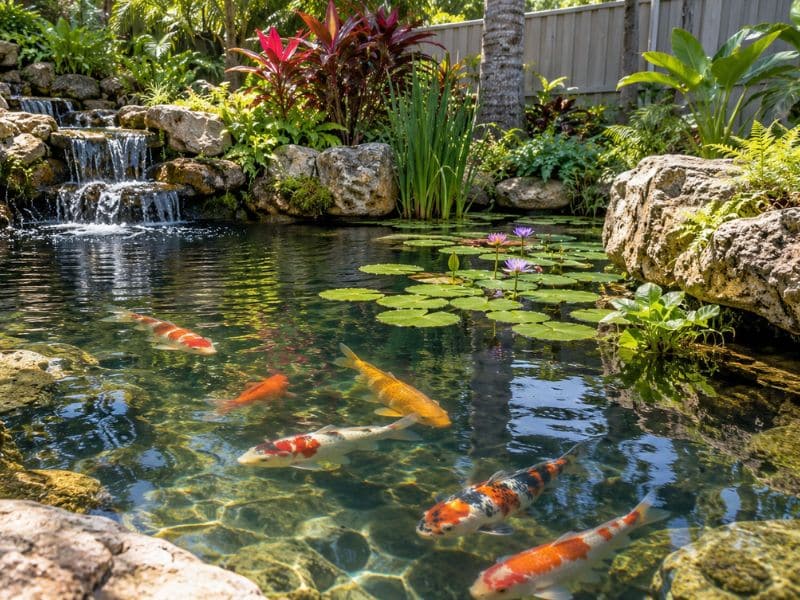
Clear backyard koi pond with colorful koi, lily pads, rocks, and a small waterfall.

Earth Works has been building and caring for outdoor spaces in Jacksonville since 1988, including koi ponds, pondless waterfalls, and bubbling urns. Our Garden Center on Beach Blvd carries a full pond supply store and aquatic plants, and our horticulturists can walk you through the right filter media, water treatments, and plants for your pond. Whether you want help with a single cleanout or ongoing pond cleaning through the year, we'll look at your pond and tell you exactly what it needs.

Contact Us Today

Pond Cleaning: FAQs

Why does my pond turn green so fast here in Florida?

Algae is a plant-like organism that feeds on nutrients from fish waste and decaying debris, and it grows fastest with plenty of light and nutrients. Cold water naturally slows algae growth, but Florida's short, mild winters give algae very little downtime. To keep it in check, reduce what feeds it. Add beneficial bacteria, which compete with algae for the same nutrients. Add plants or shade to cut down on sunlight, avoid overfeeding your fish, and check that your pond isn't overstocked. Pond algae removal works best when you treat the cause, not just the green water.

Can I use chemicals to clean my pond if I have fish and plants?

Yes, with care. Most pond water treatments are made to be safe for fish and plants when used according to the label. Algaecides should be a last resort, because they kill the algae without fixing the filtration problem that let it grow. Before using one, confirm your pond's volume so you dose it correctly, test the water, and add aeration.

Dying algae decomposes and uses up oxygen, and warm weather makes that worse.

After treating, watch your fish closely. If they gasp at the surface or seem sluggish, do a partial water change and add a water conditioner.

What dissolves muck in a pond?

Beneficial bacteria and enzyme products break down fish waste and organic debris over time, and muck remover products speed up that process. These treatments work best on thin layers. Thick muck needs to come out physically, with a pond vacuum or a cleanout pump. The easiest way to deal with muck is to prevent it by netting leaves before they sink.

How long does a full pond cleanout take?

It depends on the size of the pond, the number of fish, and your equipment. A small pond without fish takes far less time than a large koi pond with a waterfall, rock, and gravel. The final rinse alone can take anywhere from minutes to hours, and pump quality makes the biggest difference: a weak pump clogs constantly and slows the whole job down. If you have fish, plan the work so they spend as little time in the holding tank as possible.
Amazing Pool Landscaping Ideas For Your Florida Property

Amazing Pool Landscaping Ideas For Your Florida Property

Earth Works Gardens · Landscape
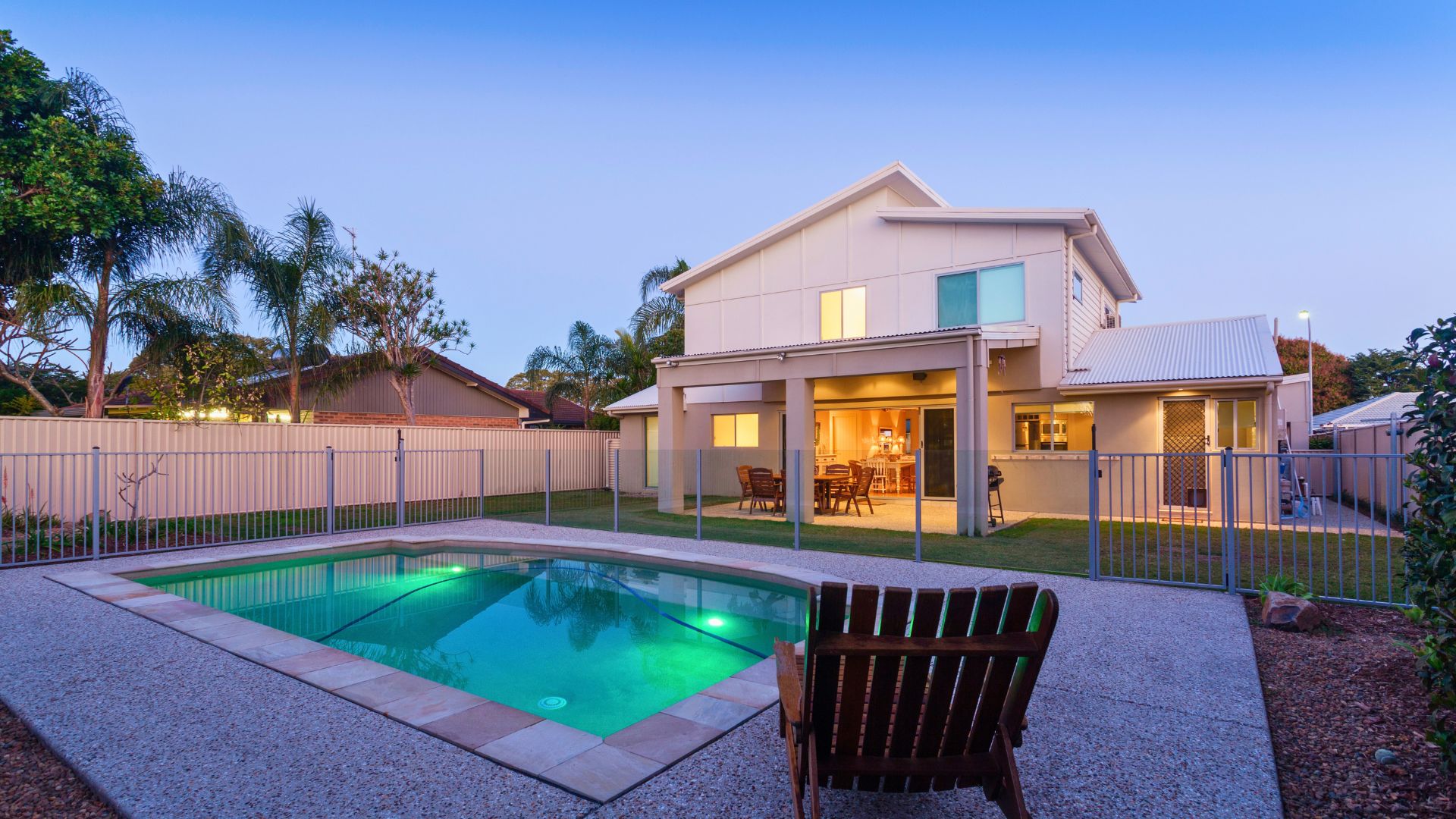
Backyard pool with lighting, pool fence, and covered patio at dusk.

The swimming pool often becomes the focal point of the backyard, but it is just one part of the entire experience. The surrounding landscaping will dictate the way the space looks, how it is used, and the level of privacy. It also determines how the area deals with Florida's heat, rain, and humidity.

A beautiful pool landscape incorporates hardscaping, plants, drainage, lighting, water features, as well as outdoor living, without the individual features being treated as standalone projects. It also considers the evolution of the landscape and the amount of upkeep the property owner desires.

Thinking about getting a new pool or upgrading an old one, these pool landscaping ideas can help you determine what's going to be around your pool and how they will interact with each other.

Key Takeaways: Pool Landscaping Ideas

  • Design landscaping projects before the pool is completed.
  • Drainage, grading, and irrigation should be addressed prior to new plants and hardscaping.
  • Select plants suitable for growing in Florida, for sun and shade, for their size when mature, and how to care for them.
  • Enhance the usability of pool areas with hardscaping, privacy planting, lighting, and outdoor living elements.
  • A variety of design styles can utilize Florida pools, ranging from tropical planting beds to modern and simple designs.
  • Think about the look of the completed pool space and its long-term durability.

Pool Landscaping Design Process

Pool landscaping is often treated as a finishing project after the pool has already been designed. It can create unnecessary complications. The pool shell, deck, and plumbing along with other site elements, must be accommodated during drainage, irrigation, grading, planting, and hardscaping.

It makes installation more efficient and can prevent double work when planning these aspects simultaneously.

Start With the Site and Pool Plans

A landscape designer needs to understand the property before deciding what belongs around the pool. A property survey, site plans, and pool construction plans can help determine available space, as well as the relationship between the pool, home, existing landscaping, utilities and proposed improvements.

Existing electric, gas, irrigation, plumbing, and other lines should also be identified before excavation or major landscape work begins.

The design process at Earth Works includes a meeting at the client's house, determining their use, assessing site conditions, taking photographs, and creating a landscape design based on their priorities. Planting, drainage, irrigation, hardscaping, lighting, water features, and other landscaping elements can be integrated into the plan.

Coordinate Drainage Before Landscaping

Drainage deserves particular attention around a new pool. The installation of a pool and deck creates additional impervious surface, which alters rainwater movement on the site.

So be sure to plan for drainage before you plant your beds, turf, or other decorative items. Depending on the property, channel drains, French drains, swales, or other drainage systems may be the solution.

Roof runoff should also be considered. Downspouts may need to be connected to drainage systems so water is carried away from the house and pool deck rather than concentrated beside them.

Plan Irrigation and Grading

Irrigation systems may require capping, rerouting, or replacement during pool excavation and construction activities. Making these changes before the new landscaping is installed will avoid excess disruption later in the project.

Grading should follow drainage planning, creating the elevations needed for planting beds, turf, walkways, and other landscape features.

Complete Planting and Finishing Work

Major planting and finishing work is generally better completed after pool construction and heavy equipment movement are finished. Existing landscaping can be removed, new beds established, and plants, lighting, water features, and hardscaping installed once the construction phase is largely complete.

Coordinating work between the pool contractor and the landscape designer can also reduce duplicated labor and material costs. Drainage, irrigation, and grading may be easier to coordinate while the pool project is underway.

Earth Works' landscape design process typically takes approximately two to six weeks depending on project complexity and time of year. The company provides pool landscaping separately from pool contracting while maintaining working relationships with pool builders throughout Northeast Florida.

8 Pool Landscaping Ideas for Your Florida Property

Hardscaping & Paving Stones

A pool landscape is shaped by hardscaping. Pavers and other paving materials can create spaces for seating, dining, and entertaining. They can define the pool deck, connect the pool to the house, and make walkways.

The layout matters as much as the material. A large uninterrupted deck can give you a lot of functional decking space, but may make the backyard seem like one solid piece of hard decking. Planting beds, trees, and groundcover around seating areas can help break the flow from the pool to the rest of the property.

For smaller yards, paving can do even more. A pathway can be designed to run from the pool to the house and to divide the pool from a garden or a sitting area.

Because pool decks are exposed to water, sun, foot traffic, and cleaning, materials should be selected with those conditions in mind.

Additional Water Features

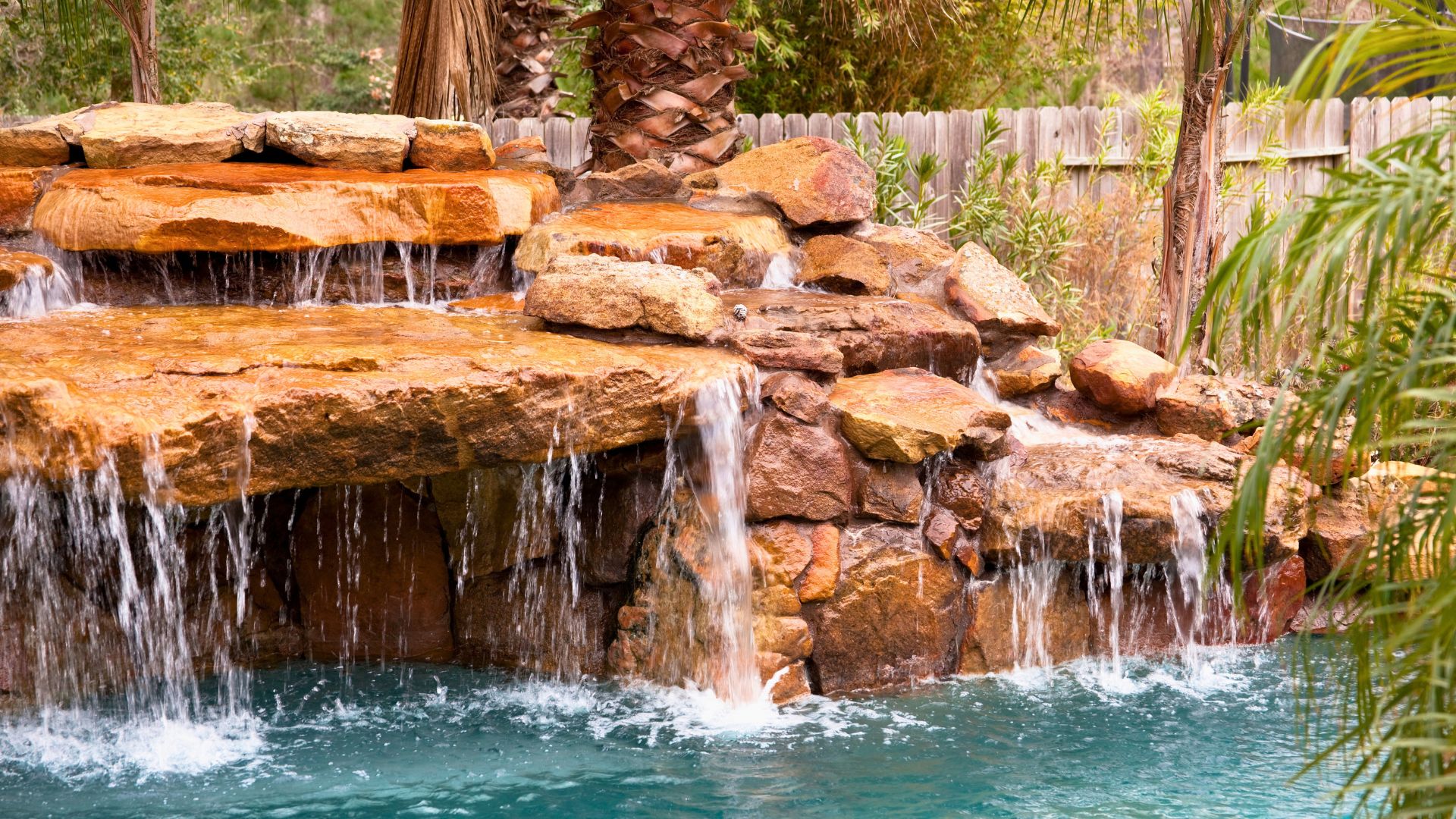
Natural stone waterfall flowing into a pool surrounded by palms.

A second water feature can be used to establish another interest, or to tie in the pool with the rest of the landscape. A waterfall can create a visual connection between a raised landscape area and the pool. Movement and sound can be achieved from a fountain without taking up a lot of space. A koi pond can be a transitional zone between an active pool zone and a more tranquil garden area.

The size and placement are crucial. A large waterfall right next to a small pool can overwhelm the design. A smaller one further out of the foreground can add a second focal point to the backyard.

When considering a broader pool backyard design, water-feature installations are a natural choice, and Earth Works offers koi ponds, waterfalls, and bubbling fountains.

Outdoor Fireplace or Fire Pit

The pool area does not have to be designed exclusively around swimming. A fire pit or outdoor fireplace can provide another destination for cooler days, evenings, and entertaining.

Don't set the fire feature next to the pool; build a designated area for gathering around it nearby. Paving can help define this space, and planting can separate it from the swimming area without making the backyard feel divided.

Seating, circulation, and the relationship of the fire feature to the house should also be considered in the surrounding landscape. Designing these components together is more effective than installing a fire pit just to fill in any space.

Privacy Hedges

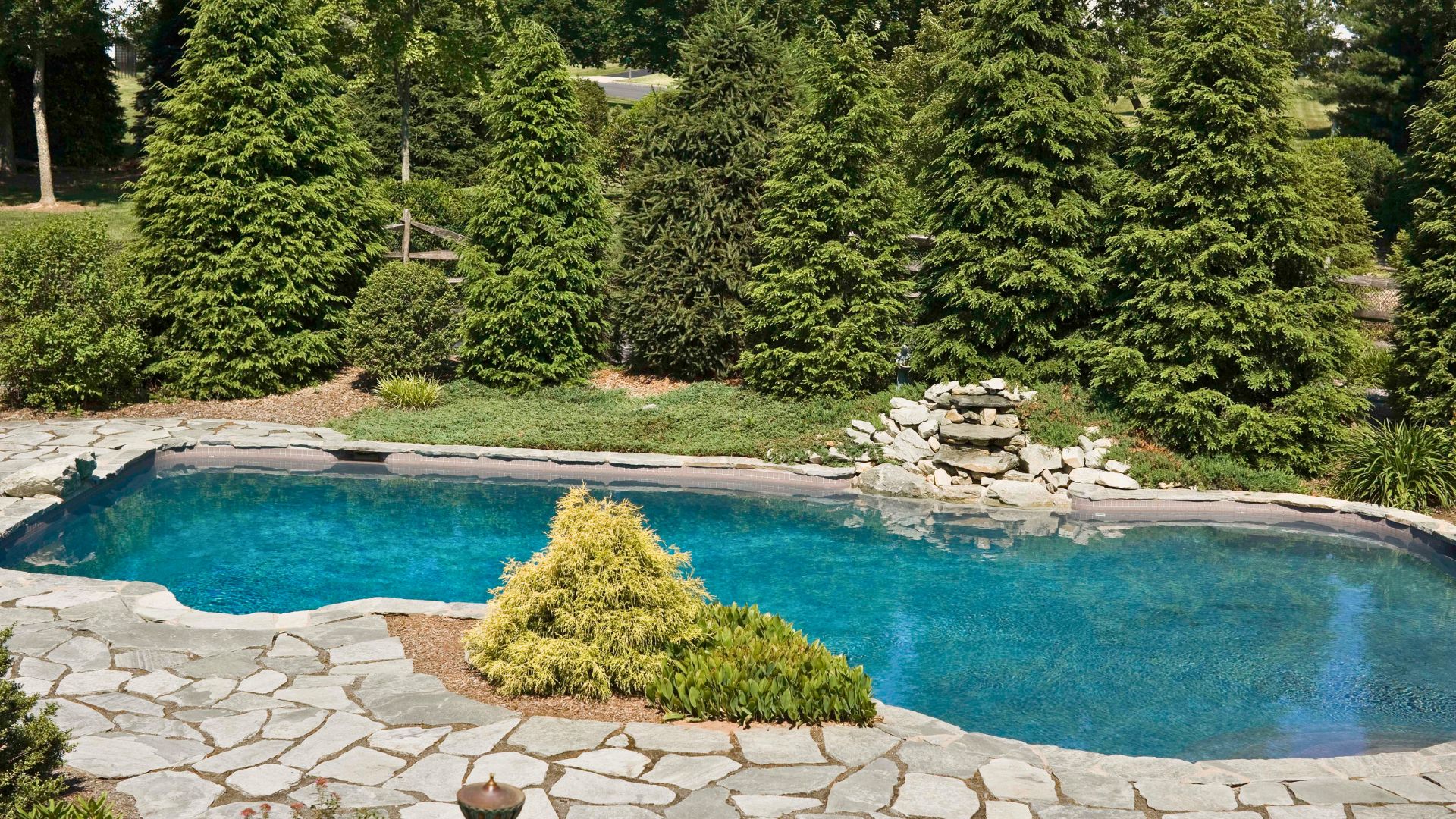
Pool with natural stone deck and a row of tall evergreen trees providing privacy.

Pools may feel exposed when they are visible from other yards, streets, or homes. Privacy landscaping for a pool can provide cover without a wall or fence closing off the backyard.

Hedges, shrubs, and carefully placed trees can screen out specific viewpoints without surrounding the pool area. The most suitable site depends upon what is being screened.

Plant selection also requires more thought than simply choosing the fastest-growing screen. Mature height and width, pruning requirements, sunlight, root behavior, and debris should all be considered. Heavy leaf or fruit drop immediately beside the pool can also increase cleaning requirements.

Lush Tropical Oasis Design

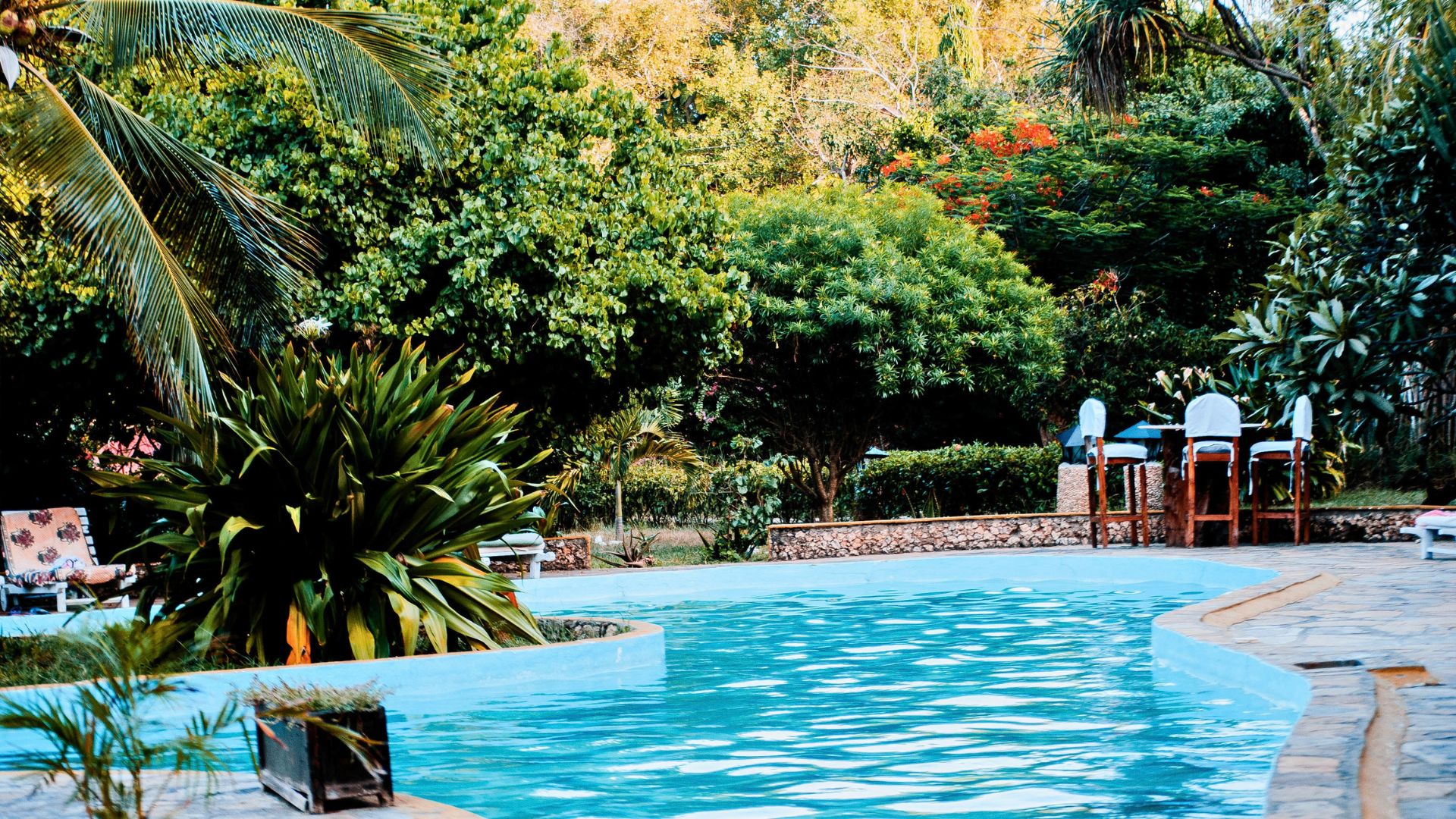
Pool surrounded by palms, lush tropical plants, and flowering trees.

A lush tropical pool landscape can take advantage of Florida's climate and create a layered planting scheme around the swimming area.

Taller plants can be used as background screening, medium plants can create a planting bed, and low plants can help to break up pathways and hardscape. This is especially effective if privacy or closer integration between the pool and garden is the objective.

But just because a plant looks tropical doesn't mean it should be by the pool. Plants should be chosen based on site conditions in Northeast Florida, such as light, soil, drainage, mature size, and maintenance requirements.

Modern Desert Design

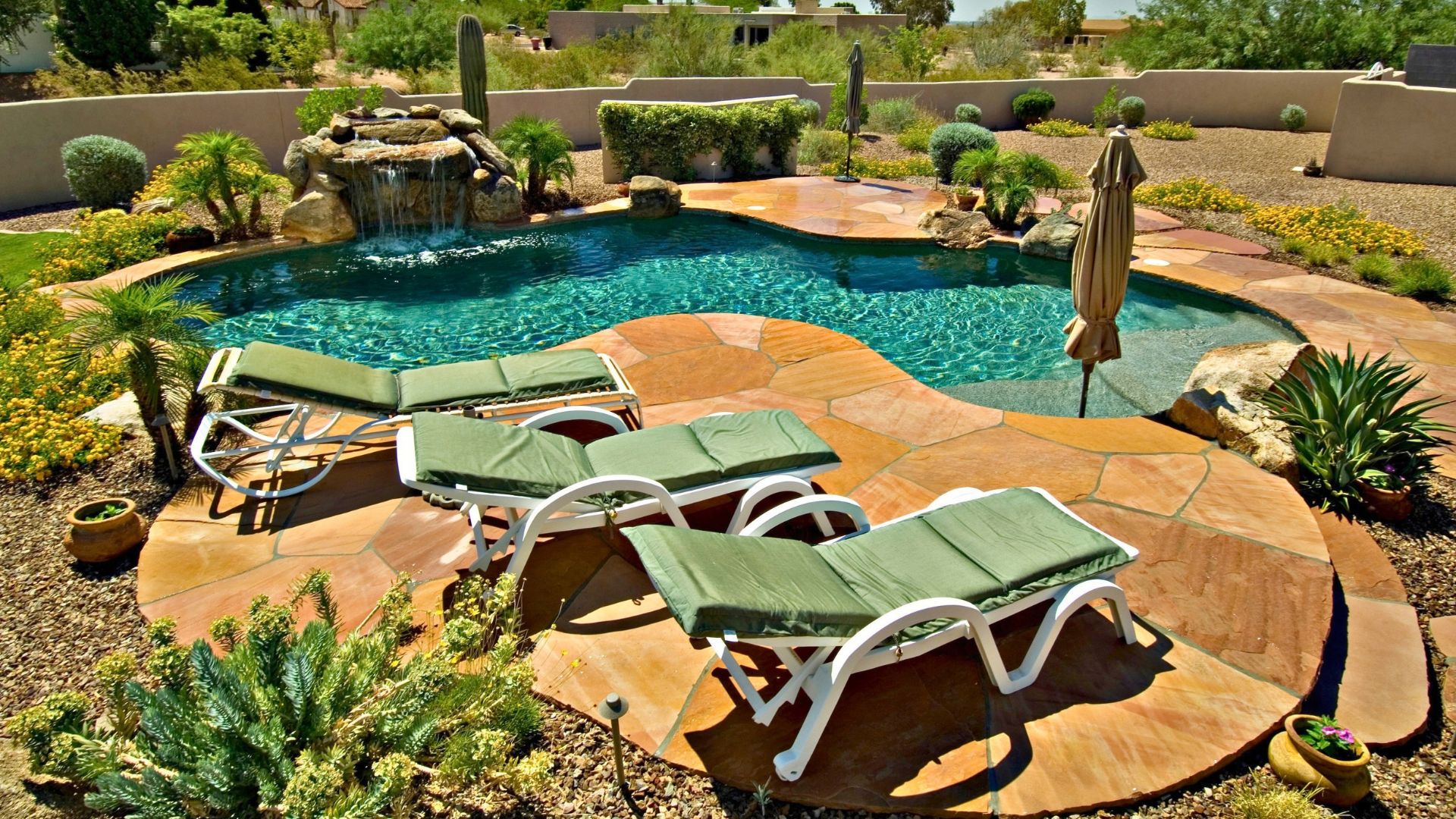
Freeform pool with flagstone deck, lounge chairs, rock waterfall, and desert-style plants.

A modern desert-inspired landscape can provide a clean alternative to a densely planted Florida backyard. Here, "desert" is better understood as a design aesthetic rather than an attempt to recreate an arid landscape.

The look can rely on strong geometric lines, stone, gravel-style textures, sculptural plants, and restrained planting. That makes it a natural match for contemporary architecture and pools with simple shapes.

The important distinction is plant selection. A desert-inspired appearance does not mean using plants poorly suited to Jacksonville's climate. Instead, the visual characteristics can be adapted using plants and materials appropriate for local conditions.

Minimalist Design

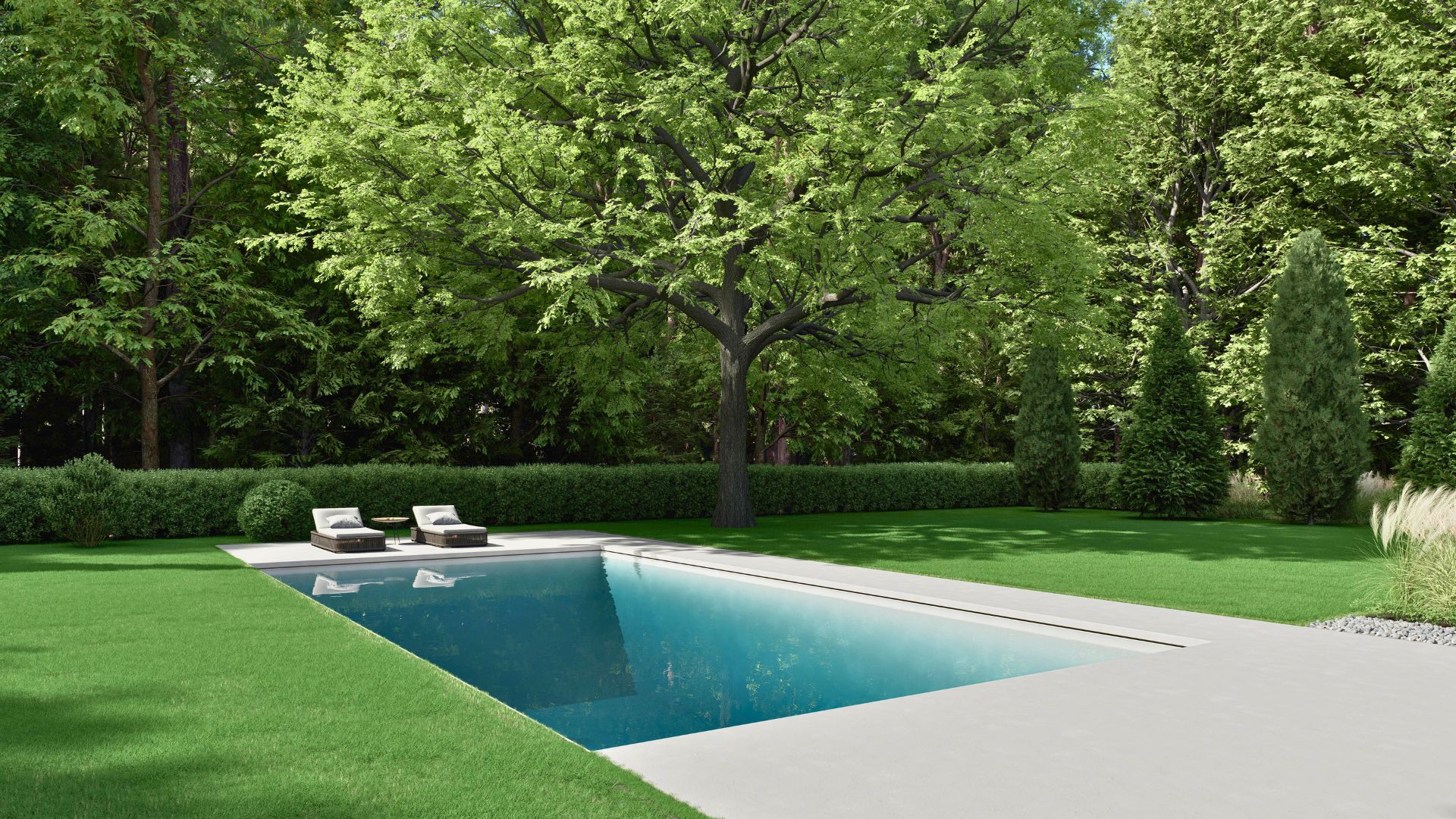
Rectangular pool surrounded by a clean concrete deck, lawn, and mature trees.

Minimalist pool landscaping is based on restraint. There must be a clear purpose for each element.

A clean and structured yard can be achieved with a mix of paving, lawn, bedded plants, and a few specimen plants. Repeating materials or plant forms can also create a sense of cohesiveness in a smaller property.

The style may work for homeowners who prefer low-maintenance pool landscaping, especially if the landscaping avoids complex planting beds and hard-to-reach areas.

Minimalism still requires planning. With fewer elements, sightlines, proportions, transitions between materials, and mature plant sizes become more noticeable.

Asian Fusion Design

An Asian fusion pool landscape can combine water, stone, planting, pathways, and carefully controlled views to create a more tranquil setting.

The concept does not need to reproduce a traditional garden. A koi pond or small water feature may form a focal point, while a simple path, stones, and a well-proportioned mass of greenery may link the pool to a garden beyond.

This style is a great choice when a homeowner desires the pool to be tied into a larger landscape rather than sitting in the middle of an open lawn.

Earth Works has experience with water gardens and koi pond projects, including poolside water-feature installations, so an Asian-inspired design can build on the company's existing approach to integrating water and landscaping.

Designing Around the Pool, Not Just Beside It

The best approach to backyard pool landscaping is to think of the whole area and not pick individual features.

Think about how people enter the pool area, how wet feet will move, where chairs and tables will be placed, where privacy is needed, and how much sun various areas will receive. These questions affect everything from planting beds to walkways.

Drainage should remain part of that conversation. A beautiful pool deck will not perform well if rainwater repeatedly collects along its edge. Plants can also become difficult to maintain if they are installed where irrigation, pruning, or access is difficult.

Lighting can connect the landscape after dark while helping define paths, seating areas, planting beds, and selected architectural or water features.

For small pool landscaping ideas, every element needs to earn its place. A narrow planting bed might provide privacy, a pathway can connect multiple areas, and a compact water feature can create a focal point without consuming most of the yard.

Which Landscaping Ideas & Designs Catch Your Eye?

There is no single formula for landscaping around a swimming pool. One Jacksonville property may benefit from lush planting and privacy screening. Another one may call for clean paving, restrained planting, a fire pit, or a water feature that connects the pool to the surrounding garden.

The important part is developing these elements as one landscape plan. The pool should be complemented by drainage, irrigation, grading, hardscaping, planting, lighting, and outdoor living features, rather than having them added on their own.

Earth Works offers landscape design and installation services, hardscaping, drainage, landscape lighting, fire pits, water features, lawn services, and other outdoor services in Northeast Florida. A landscaping consultation can aid in determining concepts suitable for the property layout, current situation, maintenance requirements, and uses.

Ready to plan your pool landscape? Contact Earth Works to schedule a landscaping consultation and discuss your property, priorities, and design ideas.

Contact Us Today

The Right Way to Plant New Trees: Why You Need a Ring Bowl

The Right Way to Plant New Trees: Why You Need a Ring Bowl

Earth Works Gardens · Planting & Installation
Creating a ring bowl for a newly planted tree — Earth Works Gardens

We just got a fresh shipment of palm trees in, and that means planting season is in full swing. This week on Grow Better Weekly, we’re talking about one of the simplest — and most important — steps after planting a tree: creating a ring bowl (also called a rain bowl). It may look basic, but this small soil berm can make a huge difference in helping your tree establish strong, healthy roots.

Watch A How-To Video With Matt:

How to Create a Ring Bowl

Making a ring bowl is simple and only takes a few minutes.

Step-by-Step

  1. Use extra soil from the planting hole (or additional soil if needed).
  2. Build a raised ring of soil around the outer edge of the root ball.
  3. Shape it like a donut, leaving the center hollow.
  4. Make sure the ring is high enough to hold water when filling.
The goal is to create a basin so water pools around the root ball instead of running away.

Why a Ring Bowl Matters

  • ✓It directs water exactly where your tree needs it most – the root ball.
  • ✓It helps capture rainwater instead of letting it run off.
  • ✓It prevents irrigation from spreading too far away from young roots.
  • ✓It encourages deeper root growth during the critical establishment phase.

Freshly planted trees need consistent moisture. A ring bowl helps ensure they get it.

Water Schedule for New Trees

Once your ring bowl is built, watering becomes much more effective.

For a tree this size:

Recommended Schedule
First month
Hose on a trickle for 15–20 minutes every day.
Second month
Every other day.
Third month
Gradually reduce to 2–3 times per week.

(Adjust timing based on tree size, root ball size, and rainfall.)

Set the hose on a slow trickle and let the ring fill. This slow soak encourages deeper root growth and better establishment.

Uses in the Landscape

Ring bowls are especially important for newly planted palms and larger trees that need consistent moisture while roots establish. Without a basin, water can run off or spread too thinly across the surrounding soil. This simple technique helps maximize both irrigation and rainfall — making it one of the easiest ways to protect your investment in new trees.

A ring bowl may look simple, but it plays a big role in helping newly planted trees thrive. By directing water straight to the root ball and following a consistent watering schedule, you give your tree the best chance at strong, healthy growth. If you’re planting new trees this season, stop by Earth Works — we’ve got plenty in stock, and we’re happy to help you grow better.

Happy gardening from Earth Works Gardens!

Foliar Feeding: The Garden Shortcut for Healthier Plants

Foliar Feeding: The Garden Shortcut for Healthier Plants

Earth Works Gardens · Garden Tips & How-Tos
Foliar feeding — Earth Works Gardens

If you’ve ever wished your plants could perk up a little faster—more color, stronger growth, happier leaves—foliar feeding might be the garden “shortcut” you’ve been missing. Foliar feeding is the practice of spraying liquid nutrients directly onto the leaves, giving plants a quick boost when they need it most. It’s not a replacement for healthy soil, but it is an excellent tool for better results—especially in Northeast Florida, where heat, humidity, sandy soils, and heavy rains can all impact nutrient availability.

Watch A How-To Video With Matt:

Foliar Feeding Tips For Best Results

Foliar feeding is simple, but, like most garden hacks, it works best when used correctly. Timing, dilution, and product choice make all the difference—because the goal is to boost your plants, not stress them.

Care & Maintenance Tips

  • ✓Always follow label directions. (More is not better—too strong can burn leaves.)
  • ✓Spray in the cool parts of the day—early morning is best. Heat + spray can cause leaf scorch.
  • ✓Coat the leaves thoroughly, including the undersides when possible (that’s where lots of pores live).
  • ✓Avoid spraying before heavy rain so the plant has time to absorb the nutrients.
  • ✓Don’t foliar feed drought-stressed plants mid-day. Water the plant first, then spray later.
  • ✓Use clean water and a clean sprayer to avoid clogging and unwanted residue.
  • ✓Start with a small test area on delicate plants or houseplants, just to be safe.
  • ✓Pair it with healthy soil practices. Foliar feeding is a boost—not the foundation.
Fun Facts
  • ●Leaves can absorb certain nutrients much faster than roots can.
  • ●Foliar feeding can be especially helpful when plants are stressed by heat, drought, transplant shock, or pest pressure.
  • ●It’s often used by professional growers to correct deficiencies quickly—especially with micronutrients like iron, magnesium, and manganese.
  • ●Some foliar sprays can also act as a “plant tonic,” supporting overall vigor and resilience.

Uses In The Garden

Foliar feeding is one of those “secret weapons” that can make a noticeable difference in your garden with very little effort. It’s especially useful for plants that need quick improvement in leaf color, flowering, or growth—like annuals, vegetables, citrus, and tropicals. It can also be a game-changer during the heat of summer when roots may struggle to absorb nutrients efficiently from hot, dry, or waterlogged soil. Think of foliar feeding as a quick sip of nutrition that helps plants bounce back faster and perform better between regular feedings.

Want greener leaves, better blooms, and healthier plants fast? Foliar feeding is an easy, effective way to give your garden a quick nutrient boost—especially during stressful weather or when plants are showing signs of deficiency. Used correctly, it’s one of the simplest ways to help your garden look its best all season long.

Happy gardening from Earth Works Gardens!

How To Save Freeze-Damaged Houseplants

How To Save Freeze-Damaged Houseplants

Cold snaps happen — and sometimes our plants get caught in the wrong place at the wrong time. This week on Grow Better Weekly, we’re looking at a common situation: a sansevieria left outdoors during a freeze that came back looking… less than great. Before you toss a damaged plant in the compost pile, take a closer look. Many plants, especially sansevieria, can regenerate from the roots if there’s still life below the soil.

Care & Maintenance Tips

When a plant looks damaged after cold weather, inspect it before making big decisions.

Step-by-Step Recovery Tips

  1. Check the roots first. Firm, healthy roots mean there’s still potential for new growth.
  2. Inspect the base of the plant. Look just under the soil line for signs of life or emerging shoots.
  3. Remove only the mushy or fully brown leaves. Yellowed or brown leaves will not turn green again.
  4. Leave healthy green leaves when possible. They help speed up the recovery process.
  5. For plants in the ground: Wait until after the frost-free date (around mid-March) before cutting back damaged foliage.
  6. For potted plants that can be brought indoors: You can prune sooner if they’re protected from future frost.

Specifications

Featured Plant: Sansevieria (Snake Plant)
Topic: Freeze Recovery & Pruning Basics
Best Time to Prune In-Ground Plants: After frost-free date (around St. Patrick’s Day in Northeast Florida)
Maintenance Level: Easy with patience
Growth Speed: Slow to moderate recovery

Close-up of a root-bound snake plant in a cracked terracotta pot, with dense tangled roots and compacted soil exposed around the base of the plant.
Smiling couple posing together against a plain background, with the man wearing a green jacket and hat while holding a potted snake plant, and the woman leaning on his shoulder.

Helpful Facts

  • Mushy or browned leaves don’t always mean the whole plant is gone.
  • Healthy roots are a strong sign that a plant can recover
  • Sansevieria (snake plants) are slow growers – patience is key during recovery
  • Damaged foliage can sometimes act as insulation if another frost occurs.

Helping Your Plant Bounce Back

Once you’ve cleaned up damaged growth, focus on encouraging new roots and shoots. Continue normal watering practices and consider fertilizing to support recovery. A slow-release fertilizer provides nutrients gradually over time, while a liquid or water-soluble fertilizer can deliver nutrients quickly for faster uptake. Just remember – sansevieria doesn’t move fast, so give it time to rebound.

here is still hope for freeze-damaged plants. Before you throw anything away, inspect the roots, remove only the damaged foliage, and give your plant time to recover. With patience, proper care, and a little fertilizer support, many sansevierias – and other houseplants – can bounce back stronger than you think.

Happy gardening from Earth Works Gardens!

SPRING IS OFFICIALLY HERE!

Spring is starting to show off at Earth Works Garden Center, and our newly arrived hibiscus trees are stealing the spotlight. With their bold tropical blooms and vibrant color, these statement plants instantly bring that warm-weather energy back to your patio, poolside, or landscape. If you’ve been waiting for a sign that the season is changing, this is it — fresh hibiscus, sunny days ahead, and the garden center filling up with the colors of spring. 🌺

October Container Gardening Recipe 2025

October Container Gardening Recipe 2025

Bold Blooms and Dark Foliage for October Nights


This October recipe blends bold purple, fiery orange, deep ruby, and dramatic black foliage to capture the spirit of the season. The mix of textures and colors creates a festive, eye-catching display that’s perfect for fall. With its vibrant contrast and playful nod to Halloween, this container will bring a touch of seasonal magic to your porch or patio.

1. Salvia Grand Stand Purple

This vibrant annual salvia boasts bold purple flower spikes that attract pollinators like bees, butterflies, and hummingbirds. It thrives in full sun and blooms continuously, adding rich jewel tones to your container.

2. Orange Mum

A fall favorite, orange mums bring bright, cheerful blooms that perfectly complement the season’s festive colors. They are long-lasting and thrive in cooler weather, making them a staple for October displays.

3. Alternanthera ‘Little Ruby’

This compact foliage plant offers deep burgundy-red leaves that provide stunning contrast to brighter blooms. Heat-tolerant and low-maintenance, it’s ideal for adding richness and depth to your fall container.

4. Sweet Potato Vine ‘Blackie’

Known for its striking, nearly black heart-shaped leaves, this trailing plant adds drama and flow to your arrangement. It’s fast-growing and versatile, perfect for cascading over the edges of your pot.


Spooky blooms copy

This container captures everything we love about October—color, drama, and just the right hint of Halloween fun. With its bold mix of blooms and foliage, it’s sure to be the star of your fall display.

PRO TIP: Keep the Color Coming!

To keep your mums blooming longer, remove spent flowers regularly and avoid letting the soil dry out completely—consistent moisture is key! Trim back leggy growth on your salvia and sweet potato vine to keep the foliage lush and full all season long.

Services

  • Landscape Design & Installation
  • Paver Patios, Paver Walkways, Paver Driveways
  • Firepits, Retaining Walls , Seat Walls,
  • Landscape Lighting, Drainage design & Installation,
  • Lawn Care Services, Lawn Maintenance, Lawn Fertilization
  • Lawn Pest Control, Lawn Weed Control
  • Aeration and Top Dressing
  • Water Features, Koi Ponds,
  • Waterfalls, Bubbling Fountains
  • Garden Center & Pond Supply Store

General Services Areas

Jacksonville (Jax), Jacksonville Beach, Neptune Beach, Atlantic Beach, Ponte Vedra Beach, Ponte Vedra, Fernandina Beach, Amelia Island, Orange Park, St. Johns, Nocatee

Location

GARDEN CENTER
12501 Beach Blvd
Jacksonville, FL 32246

LANDSCAPE OPERATIONS
(not open to the public)
St. Johns Bluff
1057 St. Johns Bluff Rd. N.
Jacksonville, FL 32225

Hours

Monday-Saturday 9-5
Sunday 10-5

HOLIDAY CLOSINGS
New Year’s Day • Easter • Memorial Day
July 4th • Labor Day • Thanksgiving Day
Christmas Eve • Christmas Day

From Ponds to Bubbling Urns — Discover the Waterscape That Fits Your Yard

From Ponds to Bubbling Urns — Discover the Waterscape That Fits Your Yard

Water has a magical way of transforming a backyard. Whether you’re seeking the tranquil movement of koi beneath lilies or the gentle murmur of water dancing in a ceramic urn, there’s a waterscape style that can turn your outdoor space into a peaceful retreat. At Earth Works Garden Center, we specialize in bringing that vision to life — from full-scale ponds to compact bubbling urns — and everything in between.

Looking at tadpoles copy


Koi Ponds — A Living Ecosystem

For those who love nature in motion, a koi pond offers so much more than water. At Earth Works, our custom-designed water gardens invite wildlife: koi, tadpoles, turtles, frogs — they all become part of your landscape.


These ponds range from “Tadpole Springs” (around 4′×6′) to larger footprints like “Turtle Bay” at 20′×20′, depending on your space and budget.


Why choose this style?

  • It becomes a focal point — visually rich with plants and fish

  • Sounds of moving water add serenity

  • Wildlife and plant life add an ecosystem feel

    Things to consider:

  • Requires maintenance (filtration, cleaning, plants)

  • Needs sufficient space and thoughtful design

  • Requires safety considerations (especially if children/pets are present)

Frog on a lily pad
Vicars waterfall copy

Pondless Waterfalls — The Sound of Water, Less Maintenance

If you love the sound of water rushing over stone, but want something lower-maintenance, a pondless waterfall may be your sweet spot. Earth Works offers configurations that range from a simple drop to a full backyard stream of rock cascades.

Waterfall face

Why choose this style?

  • You get the sound and movement of water without an open pond basin

  • Easier to maintain and safer if you have pets or children

  • Flexible with space — can fit into smaller areas

    Things to consider:

  • The installation still requires underground plumbing and rockwork

  • You’ll want to select a spot where you’ll enjoy the sound (near a window or patio)

paver pation up to a pond

Bubbling Urns & Fountain Kits — A Compact Statement

For patios, balconies or cozy outdoor spaces, bubbling urns and fountain kits offer a dramatic and elegant water feature without overwhelming the yard. At Earth Works you’ll find ready-to-install kits like stacked slate urns, basalt columns, spillway bowls and spheres.

scalloped urn lights

Why choose this style?

  • Smaller footprint — perfect for patios, decks, terraces
  • Quick to install and often DIY-friendly
  • Can serve as a dramatic focal point or accent piece

Things to consider:

  • While smaller, you still need a pump and power source
  • Think about how the sound and sight will integrate into your space
  • Choose a style that complements your landscape architecture and design theme
AQUASCAPE 3 Pc Set Natural Mongolian Basalt photo 64771 12071 12070
stacked slate urn group
stacked slate sphere

Which One Is Right for You?

Here are a few questions to help guide your decision:

  • How much space do you have?
    Large yard? A koi pond or pond‐waterfall combination could be perfect. Smaller space? A bubbling urn or fountain kit might suit better.

  • How much maintenance are you comfortable with?
    Ponds with fish and plants require more upkeep. Fountain kits often require less day-to-day care.

  • What mood are you trying to create?
    Want a lush ecosystem? Go with ponds. Want soothing water sounds and movement? Consider a waterfall. Want a sleek modern accent? Opt for a bubbling urn or fountain kit.

  • How will you use the space?
    Do you want to watch fish, entertain outdoors, or create a quiet reading nook? The waterscape should reflect how you live in your outdoor environment.

Final Thoughts

Whatever your vision, water features bring a unique power to the landscape — the sound, the movement, the sense of calm and connection to nature. With the right style, space and installation partner (hello, Earth Works!), you can create something truly special in your backyard.


Ready to explore? We’ll see you on the tour — and we’ll help you design the waterscape that fits you.

Services

  • Landscape Design & Installation
  • Paver Patios, Paver Walkways, Paver Driveways
  • Firepits, Retaining Walls , Seat Walls,
  • Landscape Lighting, Drainage design & Installation,
  • Lawn Care Services, Lawn Maintenance, Lawn Fertilization
  • Lawn Pest Control, Lawn Weed Control
  • Aeration and Top Dressing
  • Water Features, Koi Ponds,
  • Waterfalls, Bubbling Fountains
  • Garden Center & Pond Supply Store

General Services Areas

Jacksonville (Jax), Jacksonville Beach, Neptune Beach, Atlantic Beach, Ponte Vedra Beach, Ponte Vedra, Fernandina Beach, Amelia Island, Orange Park, St. Johns, Nocatee

Location

GARDEN CENTER
12501 Beach Blvd
Jacksonville, FL 32246

LANDSCAPE OPERATIONS
(not open to the public)
St. Johns Bluff
1057 St. Johns Bluff Rd. N.
Jacksonville, FL 32225

Hours

Monday-Saturday 9-5
Sunday 10-5

HOLIDAY CLOSINGS
New Year’s Day • Easter • Memorial Day
July 4th • Labor Day • Thanksgiving Day
Christmas Eve • Christmas Day

Planning for Cool-Weather Veggies & Herbs in Northeast Florida

Planning for Cool-Weather Veggies & Herbs in Northeast Florida

Plan Now, Harvest Later: Cool-Season Crops Await in Northeast Florida


 October may still feel like summer in Northeast Florida, but smart gardeners know this is the perfect time to start planning for a productive fall and winter vegetable garden. Warm soil and long days give you the opportunity to prepare your garden beds, select your crops, and set the stage for a season of abundant harvests. With a little early effort, you’ll enjoy crisp greens, flavorful roots, and fresh herbs right when you need them most. 


Prepping soil raised garden


Why Start Planning Now?


Cool-season vegetables thrive in our region when temperatures begin to dip in late fall and winter. By prepping your beds early, you’ll be ready to plant as soon as the weather turns favorable. Planning ahead ensures stronger plants, fewer pest problems, and more consistent harvests throughout the cooler months.

    veggie gardens

    Preparing Your Garden Beds

    1. Clear Out Summer Crops: Remove old plants and weeds to reduce pests and diseases.
    2. Enrich the Soil: Add compost or organic matter to replenish nutrients depleted by summer growth.
    3. Check Irrigation: Make sure drip lines or soaker hoses are in working order—cool-weather crops still require steady moisture.
    4. Plan Layouts: Group plants with similar water and sun needs. Consider companion planting to naturally boost yields and deter pests.
    Basket of fall veggies

    What to Plant in Fall & Winter

    As October arrives, it’s planting season for many of Northeast Florida’s most rewarding cool-weather crops.

    • Leafy Greens: Lettuce, kale, collards, Swiss chard, and spinach thrive in cooler temperatures.
    • Root Vegetables: Carrots, radishes, beets, and turnips develop crisp, sweet flavors in cold soil.
    • Brassicas: Broccoli, cauliflower, cabbage, and Brussels sprouts are ideal for fall and winter planting.
    • Cool-Weather Herbs: Parsley, cilantro, dill, fennel, basil, and chives add freshness to holiday cooking.

    Gardening Pro Tip:

    Jump-Start Your Garden

    Start seeds indoors or in shaded trays now. By the time the temperatures drop, they’ll be ready to transplant into your prepared beds. This strategy reduces the risk of bolting from lingering summer heat and gives your garden a head start.

    Starter seeds

    Extend Your Harvest with Succession Planting

     Instead of planting everything at once, sow small batches of seeds every couple of weeks. This method—called succession planting—keeps your garden producing steadily, so you’ll always have something ready to pick for the kitchen.

    Fresh homegrown garden cress sprouts or microgreens on a slice of bun

    Try Microgreens for Quick Rewards

    Don’t want to wait weeks for harvest? Microgreens are the answer. These tiny greens—cut just after sprouting—are packed with nutrients and grow quickly indoors or outdoors. They’re perfect for garnishing meals or adding fresh crunch to salads and sandwiches.

    A Flavorful Season Ahead


    Fall and winter gardening in Northeast Florida offers some of the year’s most rewarding harvests. With fewer pests to battle and an abundance of vegetables and herbs that thrive in cool weather, your garden can become a steady source of fresh, homegrown flavor. Plan now, prep wisely, and you’ll be enjoying crisp greens, hearty roots, and aromatic herbs all season long.

    Services

    • Landscape Design & Installation
    • Paver Patios, Paver Walkways, Paver Driveways
    • Firepits, Retaining Walls , Seat Walls,
    • Landscape Lighting, Drainage design & Installation,
    • Lawn Care Services, Lawn Maintenance, Lawn Fertilization
    • Lawn Pest Control, Lawn Weed Control
    • Aeration and Top Dressing
    • Water Features, Koi Ponds,
    • Waterfalls, Bubbling Fountains
    • Garden Center & Pond Supply Store

    General Services Areas

    Jacksonville (Jax), Jacksonville Beach, Neptune Beach, Atlantic Beach, Ponte Vedra Beach, Ponte Vedra, Fernandina Beach, Amelia Island, Orange Park, St. Johns, Nocatee

    Location

    GARDEN CENTER
    12501 Beach Blvd
    Jacksonville, FL 32246

    LANDSCAPE OPERATIONS
    (not open to the public)
    St. Johns Bluff
    1057 St. Johns Bluff Rd. N.
    Jacksonville, FL 32225

    Hours

    Monday-Saturday 9-5
    Sunday 10-5

    HOLIDAY CLOSINGS
    New Year’s Day • Easter • Memorial Day
    July 4th • Labor Day • Thanksgiving Day
    Christmas Eve • Christmas Day

    Transform Your Landscape with the Timeless Principles of Asian Garden Design

    Transform Your Landscape with the Timeless Principles of Asian Garden Design

    Create harmony, invite reflection, and bring balance to your outdoor space.

    Asian gardens are more than beautiful—they are deeply symbolic, meditative spaces that reflect centuries of cultural wisdom. Whether you’re drawn to the minimalist serenity of a Japanese Zen garden or the layered richness of a Chinese scholar’s retreat, Asian garden styles offer something uniquely peaceful and inspiring. Here’s how you can bring the spirit of the East to your own backyard.

    Charming Japanese style garden with traditional attributes: Oki gata lantern, gravel paths, boxwood trimmed bushes, maple trees. Landscaping photo of japanese garden.


    What Is Asian Garden Design?


    Asian garden design refers to a wide variety of traditional landscaping styles from countries like Japan, China, Korea, and Southeast Asia. While each has its own distinct characteristics, they all share core themes of natural harmony, balance, symbolism, and tranquility.

    Unlike Western-style gardens that often focus on symmetry and bright flowerbeds, Asian gardens aim to mimic nature and invite mindfulness. The result? A space that feels timeless, contemplative, and connected to the world around you.

      Small japanese garden

      Key Principles of Asian Gardening

      1. Simplicity (Kanso)
        Keep design elements to a minimum. Let the space breathe and allow room for thought and emotion.
      2. Naturalness (Shizen)
        Use materials and shapes that feel organic. Irregular stones, curving paths, and windswept plants mimic nature’s own design.
      3. Balance and Asymmetry
        Asymmetry is often used to create visual interest and evoke natural landscapes. A single stone or tree may serve as a focal point rather than a symmetrical arrangement.
      4. Symbolism and Meaning
        Every element has purpose. Rocks may represent mountains or strength; flowing water symbolizes life’s journey or renewal.
      5. Mindfulness
        These gardens are made to be experienced slowly—encouraging visitors to pause, observe, and reflect. Even tending to the garden is a meditative practice.

      Pondless waterfall w face

      Popular Asian Garden Styles to Explore

      Japanese Zen Gardens (Karesansui)

      These dry landscapes use raked gravel, boulders, and minimalist planting to create abstract representations of rivers, mountains, or islands. Zen gardens are designed for meditation and introspection rather than traditional gardening.

      Chinese Classical Gardens

      Often enclosed within walls, these gardens blend pavilions, ponds, rocks, and layered plantings to represent a natural world in miniature. They emphasize movement and transition—each turn in the path offers a new view.

      Korean Traditional Gardens

      Korean gardens integrate the surrounding landscape with gentle slopes, flowing water, and native plants like pine trees, azaleas, and grasses. They aim for effortless harmony with the natural environment.

      Tropical Southeast Asian Gardens

      These vibrant, lush gardens make use of dense plantings, bold foliage, and ornamental water features. You’ll often find lotus ponds, banana plants, orchids, and stone statues, creating a dynamic, immersive feel.

      Plant Choices for an Asian-Inspired Garden

      Selecting the right plants is essential for authenticity and harmony. Here are a few classic favorites:

      Asian garden
      Black pine
      Japanese red maple

      Bamboo

      A symbol of strength and flexibility, and a calming rustle in the breeze.

      Black Pine

      A classic choice for structure and symbolism, often used in bonsai.

      Japanese Maple

      Known for delicate, lace-like leaves and vibrant seasonal color.

      Ophiopogon japonicus
      Kleiner Ziergarten mit kugelförmig geschnittenen Büschen Felsen und Hecke Small ornamental garden with spherical shaped globular bushes and hedges
      Low maintenance Japanese Forest Grass (Carex Oshimensis) boasts vibrant yellow foliage, ideal as an ornamental ground cover.

      Dwarf Mondo Grass

      Perfect for ground cover, adding softness.

      Boxwood

      Very slow-growing and excellent for shaping.

        Ornamental Grasses

        Varieties like Everillo Carex add movement and grace.

        How to Start Your Asian Garden

        Starting an Asian-inspired garden doesn’t mean you have to overhaul your entire landscape. You can begin small:

        • Add a Zen corner with gravel, rocks, and a meditation bench
        • Introduce a stone lantern or bamboo fountain as a focal point
        • Plant a Japanese maple or cluster of ferns in a shaded area
        • Use natural materials like stone, wood, and river pebbles for paths and borders
        • Incorporate a water feature—a bubbling urn, koi pond, or still reflecting pool

        Remember: less is more. Each element should feel intentional and harmonious.

        The Benefits of Asian Garden Design

        ✅ Encourages mindfulness and relaxation

        ✅ Enhances property value with timeless design

        ✅ Low-maintenance plant palette

        ✅ Integrates beautifully with Florida’s subtropical climate

        ✅ Supports wildlife with water and plant diversity

        Visit Earth Works Gardens for Inspiration

        At Earth Works Gardens in Jacksonville, FL, we carry many of the plants and materials you need to create your own Asian-inspired escape—from Japanese maples and bamboo to stone features, pond supplies, and more.

        Our landscape design team can help you bring your vision to life with custom solutions rooted in beauty and balance.

        Find your Zen. Create your calm. Visit us today to get started.

        Services

        • Landscape Design & Installation
        • Paver Patios, Paver Walkways, Paver Driveways
        • Firepits, Retaining Walls , Seat Walls,
        • Landscape Lighting, Drainage design & Installation,
        • Lawn Care Services, Lawn Maintenance, Lawn Fertilization
        • Lawn Pest Control, Lawn Weed Control
        • Aeration and Top Dressing
        • Water Features, Koi Ponds,
        • Waterfalls, Bubbling Fountains
        • Garden Center & Pond Supply Store

        General Services Areas

        Jacksonville (Jax), Jacksonville Beach, Neptune Beach, Atlantic Beach, Ponte Vedra Beach, Ponte Vedra, Fernandina Beach, Amelia Island, Orange Park, St. Johns, Nocatee

        Location

        GARDEN CENTER
        12501 Beach Blvd
        Jacksonville, FL 32246

        LANDSCAPE OPERATIONS
        (not open to the public)
        St. Johns Bluff
        1057 St. Johns Bluff Rd. N.
        Jacksonville, FL 32225

        Hours

        Monday-Saturday 9-5
        Sunday 10-5

        HOLIDAY CLOSINGS
        New Year’s Day • Easter • Memorial Day
        July 4th • Labor Day • Thanksgiving Day
        Christmas Eve • Christmas Day

        Meet Our Jacksonville Landscape Designers

        Meet Our Jacksonville Landscape Designers

        Your Partners in Creating the Perfect Outdoor Retreat

        At Earth Works, we believe that a beautiful yard begins with the right vision—and the right designer to bring that vision to life. Our Jacksonville landscape design team is made up of experienced, creative professionals who specialize in transforming outdoor spaces into stunning, functional landscapes.

        When you’re paired with one of our designers, you’ll work directly with someone who understands your style, your property, and your lifestyle. Get to know each of our talented designers below, explore their project galleries, and check out their YouTube playlists for inspiration.

        Leslie Albritton – Landscape Designer

        Leslie Albriton

        Leslie joined Earth Works in October 2022 and transitioned to the landscape design team in Jacksonville in August 2023. With a Fine Arts degree and Gold Level Feng Shui certification, she brings a creative and holistic perspective to every design. Her 20 years of experience as a business owner includes murals, decorative painting, faux finishing, interior staging, and color consultation—giving her a unique eye for color, balance, and flow.

        Leslie believes landscapes should not only enhance curb appeal but also work in harmony with nature. She particularly enjoys the challenge of transforming necessary drainage installations into beautiful features that complement the overall design.

        • Design Philosophy: Creating spaces that blend art, nature, and function for everyday living.

        • Specialties: Artistic curb appeal, Feng Shui–inspired layouts, drainage made beautiful.

        • Explore Projects: [View Leslie’s YouTube Playlist]

        Jeff Melear – Landscape Designer

        Jeff Melear Landscape Designer

        Jeff joined Earth Works in May 2021, bringing over three decades of professional landscaping experience to the Jacksonville community. With A.A.S. degrees in Golf Turf Management and Landscape Design & Grounds Management, Jeff combines technical expertise with a passion for plant life. Before Earth Works, he successfully owned and operated two landscape companies in St. Simons Island and Savannah, Georgia.

        Jeff’s design philosophy emphasizes harmony and function. He’s especially skilled at integrating water features into designs and solving complex drainage challenges, ensuring that every outdoor space is as functional as it is beautiful.

        • Design Philosophy: Outdoor spaces should feel balanced and harmonious with the home.
        • Specialties: Water features, large-scale landscapes, drainage solutions.
        • Explore Projects: [View Jeff’s YouTube Playlist]

        Sidney Sheirling – Landscape Designer

        Sidney Sheirling

        Sidney first joined Earth Works in 2013 as a crew member, quickly moving up to foreman by 2015. After several years away, he returned in 2024 as part of our Jacksonville landscape design team. With six years of hands-on field experience and design training from Earth Works’ senior designers, Sidney offers clients both practical know-how and creative vision.

        Sidney thrives on multifaceted projects that combine landscaping, hardscaping, lighting, and water features. His goal is always to help clients bring their dream yards to life in a way that feels both beautiful and built for long-lasting enjoyment.

        • Design Philosophy: Outdoor living should be stunning, functional, and built to last.
        • Specialties: Hardscapes, lighting, water features, comprehensive outdoor living spaces.
        • Explore Projects: [View Sidney’s YouTube Playlist]

        Ready to Start Your Landscape Project?


        Our professional landscape designers in Jacksonville, Florida are here to help you transform your outdoor space into a place you’ll love every day. Whether you’re dreaming of a backyard oasis, a custom outdoor kitchen, or a front yard makeover, Earth Works is ready to bring your vision to life.

        Services

        • Landscape Design & Installation
        • Paver Patios, Paver Walkways, Paver Driveways
        • Firepits, Retaining Walls , Seat Walls,
        • Landscape Lighting, Drainage design & Installation,
        • Lawn Care Services, Lawn Maintenance, Lawn Fertilization
        • Lawn Pest Control, Lawn Weed Control
        • Aeration and Top Dressing
        • Water Features, Koi Ponds,
        • Waterfalls, Bubbling Fountains
        • Garden Center & Pond Supply Store

        General Services Areas

        Jacksonville (Jax), Jacksonville Beach, Neptune Beach, Atlantic Beach, Ponte Vedra Beach, Ponte Vedra, Fernandina Beach, Amelia Island, Orange Park, St. Johns, Nocatee

        Location

        GARDEN CENTER
        12501 Beach Blvd
        Jacksonville, FL 32246

        LANDSCAPE OPERATIONS
        (not open to the public)
        St. Johns Bluff
        1057 St. Johns Bluff Rd. N.
        Jacksonville, FL 32225

        Hours

        Monday-Saturday 9-5
        Sunday 10-5

        HOLIDAY CLOSINGS
        New Year’s Day • Easter • Memorial Day
        July 4th • Labor Day • Thanksgiving Day
        Christmas Eve • Christmas Day

        Share Your Story!

        Skip to content