Archives

September Container Gardening Recipe 2025

September Container Gardening Recipe 2025

Falling for Foliage!

Who needs flowers when the leaves steal the spotlight? This September container garden recipe is packed with rich color, striking textures, and bold contrasts—all from foliage alone. It’s a vibrant, low-maintenance way to welcome fall, whether on a porch, patio, or sunny garden nook.

1. Picasso Paintbruah Crotons

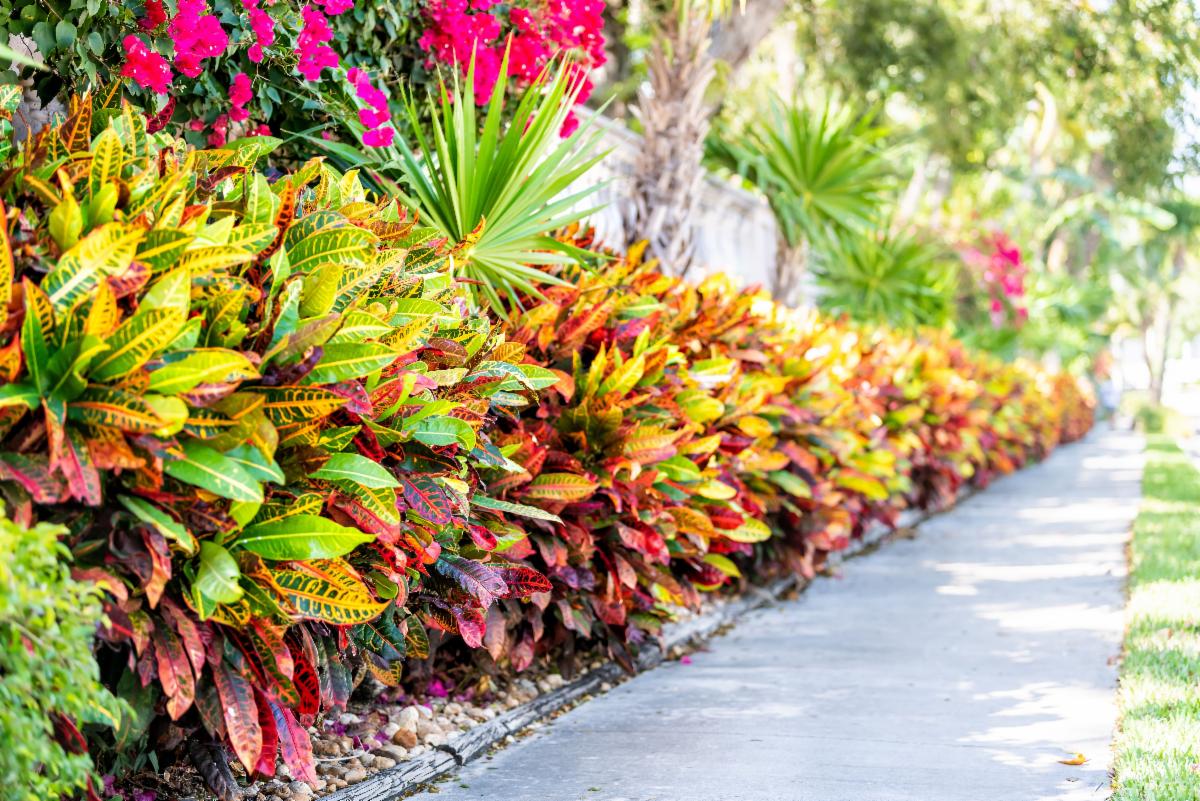
With splashes of red, orange, green, and yellow, crotons are tropical showstoppers that thrive in warm weather and bright light. The ‘Picasso’ variety adds an extra layer of drama with its painterly streaks and whispy leaf shape.

2. Alternanthera

This compact foliage plant brings deep burgundy tones and a neat, mounding habit. It loves the heat and is perfect for edging or tucking into mixed containers for color contrast.

3. Coleus ‘Burgundy Wedding Train’

A trailing coleus with velvety burgundy leaves edged in green, this variety spills beautifully over the sides of containers. It’s shade-tolerant and adds texture and richness to any arrangement.

4. Cuban Oregano

This fragrant, fuzzy-leaved herb has thick, variegated leaves that are both ornamental and edible. It’s drought-tolerant, loves the heat, and brings a soft texture to balance bolder foliage.


Falling for Foliage numbered

Who says flowers get to have all the fun? With the right mix of bold textures and vibrant foliage, you can create a container garden that’s just as colorful—if not more so—using only leaves. From deep burgundy to golden variegation, foliage-focused combos like Falling for Foliage! prove that leaves alone can carry the whole show.

PRO TIP: Foliage Needs Contrast to Shine

When designing with foliage, contrast is key! Pair plants with different leaf sizes, shapes, and colors to create eye-catching combinations that pop—even without a single flower.

Services

  • Landscape Design & Installation
  • Paver Patios, Paver Walkways, Paver Driveways
  • Firepits, Retaining Walls , Seat Walls,
  • Landscape Lighting, Drainage design & Installation,
  • Lawn Care Services, Lawn Maintenance, Lawn Fertilization
  • Lawn Pest Control, Lawn Weed Control
  • Aeration and Top Dressing
  • Water Features, Koi Ponds,
  • Waterfalls, Bubbling Fountains
  • Garden Center & Pond Supply Store

General Services Areas

Jacksonville (Jax), Jacksonville Beach, Neptune Beach, Atlantic Beach, Ponte Vedra Beach, Ponte Vedra, Fernandina Beach, Amelia Island, Orange Park, St. Johns, Nocatee

Location

GARDEN CENTER
12501 Beach Blvd
Jacksonville, FL 32246

LANDSCAPE OPERATIONS
(not open to the public)
St. Johns Bluff
1057 St. Johns Bluff Rd. N.
Jacksonville, FL 32225

Hours

Monday-Saturday 9-5
Sunday 10-5

HOLIDAY CLOSINGS
New Year’s Day • Easter • Memorial Day
July 4th • Labor Day • Thanksgiving Day
Christmas Eve • Christmas Day

August Container Gardening Recipe 2025

August Container Gardening Recipe 2025

Aqua Bloom

A Living Glass Garden You’ll Fall in Love With

This Sunset Succulent Bowl is a heat-loving, low-maintenance container recipe that’s as tough as it is beautiful. Planted in a shallow dish and topped with gravel, this mix of sculptural succulents thrives in summer sun and brings desert-inspired style to your patio or tabletop.

1. Glass Container — Any large, clear glass vessel will do—thrifted jars, apothecary containers, or oversized vases. Transparency allows light in and gives you a front-row view of your aquatic ecosystem.

2. SOL Soils – Saharan Gold — This specialty substrate is designed for planted aquariums and provides essential nutrients while anchoring aquatic roots. Its earthy golden color also adds natural beauty to your jar.

3. Found Rocks — Beachcombed stones or river rocks give structure, personality, and provide surface area for beneficial bacteria. Bonus: snails love to climb them!

4. Aquatic Plants — Bundles of oxygenating aquatic plants help clean the water while creating a habitat for fish and snails. These plants absorb fish waste and release oxygen—essential for a thriving aqua garden.

5. Pond Water or Dechlorinated Water — Use established pond water or tap water that has been treated with dechlorinator. This prevents harm to fish and preserves the balance of the ecosystem.

6. Guppies — Colorful and hardy, guppies are ideal for small, filter-free aqua gardens. Just a few will help maintain the symbiosis between animals and plants.

7. Aquatic Snails — Ramshorn or bladder snails are natural cleaners, keeping glass and rocks free of algae and debris. Limit to 1–2 per jar to avoid overpopulation.

8. Duckweed — A floating plant that rapidly reproduces, duckweed provides cover for guppies, reduces algae growth, and completes the natural filtration process. Scoop out a little as needed to maintain light and airflow.


Aqua Bloom Recipe

Check out the video above for step-by-step instructions.

Bring the beauty of water gardening indoors with this month’s Aqua Bloom container recipe. Simple to create, easy to maintain, and endlessly fascinating to watch, an aqua garden is the perfect blend of nature and creativity. Stop by the Garden Center to see our examples, pick up everything you need, and let us help you bring your own living water garden to life!


Duckweed

PRO TIP: Mind the Duckweed


Keep duckweed at about half the water’s surface.

Too much will block light from reaching your plants and fish.

What Is an Aqua Garden?

Tranquil Terrariums: An Enchanting Display of Miniature Ecosystems

An aqua garden is a miniature, enclosed aquatic ecosystem—essentially a low-tech aquarium-meets-terrarium. It’s built inside a glass container and designed to function without a filter, relying instead on a natural symbiotic relationship between the plants and the aquatic animals.

Guppy fish in a aquarium

Here’s how it works:

  • The fish (we recommend guppies) produce waste,
  • The plants use that waste as nutrients,
  • The plants also oxygenate the water,
  • And snails help clean up algae and excess organic material.

With the right balance, this little ecosystem requires only occasional maintenance—just top off the water, feed the fish sparingly, and trim the plants as needed.

Lush aquatic plants thriving in an aquarium environment with vibrant greenery and natural wood accents

Services

  • Landscape Design & Installation
  • Paver Patios, Paver Walkways, Paver Driveways
  • Firepits, Retaining Walls , Seat Walls,
  • Landscape Lighting, Drainage design & Installation,
  • Lawn Care Services, Lawn Maintenance, Lawn Fertilization
  • Lawn Pest Control, Lawn Weed Control
  • Aeration and Top Dressing
  • Water Features, Koi Ponds,
  • Waterfalls, Bubbling Fountains
  • Garden Center & Pond Supply Store

General Services Areas

Jacksonville (Jax), Jacksonville Beach, Neptune Beach, Atlantic Beach, Ponte Vedra Beach, Ponte Vedra, Fernandina Beach, Amelia Island, Orange Park, St. Johns, Nocatee

Location

GARDEN CENTER
12501 Beach Blvd
Jacksonville, FL 32246

LANDSCAPE OPERATIONS
(not open to the public)
St. Johns Bluff
1057 St. Johns Bluff Rd. N.
Jacksonville, FL 32225

Hours

Monday-Saturday 9-5
Sunday 10-5

HOLIDAY CLOSINGS
New Year’s Day • Easter • Memorial Day
July 4th • Labor Day • Thanksgiving Day
Christmas Eve • Christmas Day

Crape Myrtles for Florida Yards: Varieties, Uses & Care

Crape Myrtles for Florida Yards: Varieties, Uses & Care

Best Crape Myrtles for Northeast Florida Landscapes

If you’re looking to add long-lasting color, sculptural beauty, and heat-tolerant performance to your Florida yard, crape myrtles are your go-to flowering trees. Known as the “lilac of the South,” crape myrtles are a staple of Southern landscapes—and for good reason.

With vibrant summer blooms, striking bark, and a wide range of sizes, crape myrtles are among the most versatile and low-maintenance trees for Northeast Florida. Whether you’re planting a feature tree in the front yard, lining a driveway, or adding color to a small courtyard, there’s a crape myrtle that fits your vision.

Twig with beautiful white flowers Lagerstroemia indica (crepe myrtle) blooms in the park. Selective focus. Macro. Israel


Where to Use Crape Myrtles in the Landscape


Crape myrtles aren’t just pretty—they’re practical. Here are a few of the best ways to use them in your yard:

  • As a Focal Point: Frame an entryway or highlight a landscape bed with a large, single-trunk crape myrtle.
  • In Rows: Plant mid-sized varieties along driveways or fences for a colorful and structured look.
  • In Containers or Courtyards: Compact and dwarf cultivars provide all the beauty in smaller, more manageable forms.
  • As a Flowering Privacy Screen: Taller varieties can create a beautiful backdrop or soft privacy barrier with year-round interest.
Blooming summer white crepe myrtle in residential neighborhood.
Close up of crape myrtle trees in full bloom with vibrant pink, purple, and white flowers, showcasing their smooth bark, slender branches, and lush foliage in a garden or park setting under sunlight

Why Gardeners Love Crape Myrtles in Florida

Crape myrtles are beloved for being:

  • 🌞 Heat-tolerant
  • 💧 Drought-resistant once established
  • 🌿 Low-maintenance
  • 🌸 Long-blooming—from mid-summer to early fall
  • 🍂 Seasonally stunning, with fall foliage and unique winter bark

 Plus, they’re easy to shape with light pruning and available in a wide range of colors, from white to deep red and purple.


Pink Crape Myrtle Tree

From Classics to Contemporary:

Traditional Varieties with a Storied History

Some of the most widely planted crape myrtles in the South include:

  • Tuscarora – Vibrant coral-pink blooms
  • Muskogee – Lavender flowers and fast growth
  • Natchez – Pure white flowers and beautiful cinnamon-colored bark

These classic varieties were developed by the U.S. National Arboretum and named after Native American tribes, paying homage to their deep connection to the Southeastern landscape. Known for their exceptional bloom time and disease resistance, they’ve set the standard for crape myrtle performance.

New and Unique Crape Myrtle Varieties for Northeast Florida

Looking for something bold and different? These newer cultivars offer exciting features like deep foliage color, compact growth, and intense bloom colors:

0001767 black diamond purely purple crapemyrtle
Crape Myrtle center stage Pink
dynamite crape copy red blooms

Crape Myrtle ‘Black Diamond’

  • Dark burgundy foliage
  • Bright red, pink, or white blooms
  • Great for bold contrast

Crape Myrtle ‘Center Stage™ Pink’ (Proven Winners)

  • Large hot pink flowers
  • Deep black foliage
  • High-impact curb appeal

Crape Myrtle ‘Dynamite’

  • Vivid red blooms
  • Upright habit
  • A long-time Southern favorite
fire purple Crape Myrtle
0003274 black diamond radiant red crape myrtle
thunderstruck Crape Myrtle Jacksonville Florida

Crape Myrtle ‘Fire Magic’ (First Editions®)

  • Bright flower clusters
  • Rich green foliage
  • Tidy and compact

Crape Myrtle ‘Radiant’

  • Bold color
  • Smaller size, great for yards with limited space

    Crape Myrtle ‘Thunderstruck’

    • Striking foliage and intense blooms
    • Adds dramatic energy to the garden

    LANDSCAPE SPOTLIGHT

    Screenshot 2025 08 25 at 4.44.02 PM
    Ferti-lome Tree and Shrub Drench Video

    Inside Matt’s Garden Shed

    Welcome to Matt’s Garden Shed! Crape Myrtles are known for their stunning summer blooms, but they can still fall victim to a handful of pests and diseases—from aphids and bark scale to powdery mildew and leaf spot. That’s where Ferti-lome Tree & Shrub Systemic Drench comes in. This easy-to-use treatment delivers long-lasting protection right through the roots.

    Gardening Pro Tip: To Prune or Not to Prune?

    Avoid the mistake known as “crape murder”—severely chopping back branches in winter. Crape myrtles don’t need heavy pruning to bloom! Instead:

    • Remove crossing limbs, seed pods, or suckers
    • Maintain the tree’s natural shape
    • Let its sculptural form shine year-round
    Crepe Myrtle Tree

    Services

    • Landscape Design & Installation
    • Paver Patios, Paver Walkways, Paver Driveways
    • Firepits, Retaining Walls , Seat Walls,
    • Landscape Lighting, Drainage design & Installation,
    • Lawn Care Services, Lawn Maintenance, Lawn Fertilization
    • Lawn Pest Control, Lawn Weed Control
    • Aeration and Top Dressing
    • Water Features, Koi Ponds,
    • Waterfalls, Bubbling Fountains
    • Garden Center & Pond Supply Store

    General Services Areas

    Jacksonville (Jax), Jacksonville Beach, Neptune Beach, Atlantic Beach, Ponte Vedra Beach, Ponte Vedra, Fernandina Beach, Amelia Island, Orange Park, St. Johns, Nocatee

    Location

    GARDEN CENTER
    12501 Beach Blvd
    Jacksonville, FL 32246

    LANDSCAPE OPERATIONS
    (not open to the public)
    St. Johns Bluff
    1057 St. Johns Bluff Rd. N.
    Jacksonville, FL 32225

    Hours

    Monday-Saturday 9-5
    Sunday 10-5

    HOLIDAY CLOSINGS
    New Year’s Day • Easter • Memorial Day
    July 4th • Labor Day • Thanksgiving Day
    Christmas Eve • Christmas Day

    Landscaping With Rocks: Match the Rock Size to the Job

    Landscaping With Rocks: Match the Rock Size to the Job

    Earth Works Gardens · Landscape
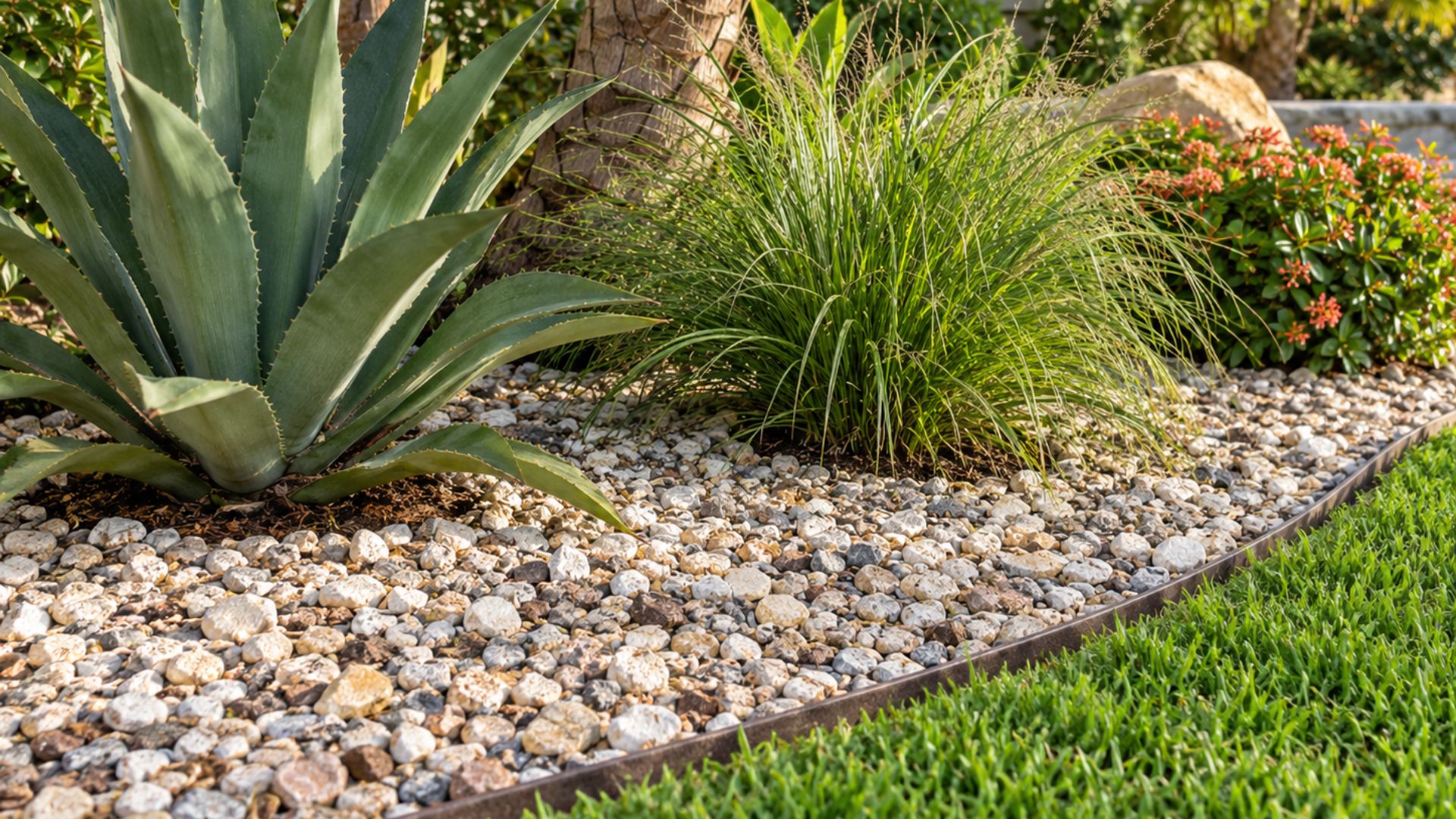
    Decorative landscape rock around agave and ornamental grasses in a Florida garden bed.

    Rock can give a landscape structure and texture that plants and mulch can't. It doesn't break down or need replacing every year, and when it's installed on the right base, it holds up to heavy Florida rain. Landscaping with rocks works best when each size of rock goes where it performs best: gravel in beds and paths, river rock along borders, flat stones for stepping, and boulders as the one or two pieces that catch the eye first. Whether you're refreshing a single bed, adding a walkway, or planning a full backyard project in Jacksonville, it helps to know what each size of rock does well, what should go underneath it, and which landscaping mistakes to avoid.

    Key Takeaways: Landscaping With Rocks

    • Match the rock to the job: small rock for beds and paths, mid-sized rock for borders and stepping stones, and boulders for focal points.
    • Every rock project needs a base. Landscape fabric goes under rock beds, and compacted crushed stone goes under walkways.
    • Small rocks wash out wherever water runs, so use larger rocks under downspouts, roof edges, and slopes.
    • Bury boulders a third to half of their height so they look like part of the landscape instead of something dropped on the lawn.
    • Moving and setting boulders takes heavy equipment, and a boulder placed in the wrong spot can be very difficult to move later.

    Why Rock Size Is Important For Your Landscaping Project

    When rock in a landscape looks off, the problem is usually size, not color or type. Rock that's too small for the space gets lost, and rock that's too large takes over. Pea gravel spread across a long, wide bed looks like just a flat beige surface. Softball-sized river rock lining a narrow path makes the path feel cramped. A single small boulder in the middle of an open lawn looks like it fell off a truck.

    The Four Sizes Of Rock

    • Gravel and pebbles (under 1 inch): This includes pea gravel, crushed granite, and small decorative pebbles. This rock is best for garden beds, walking paths, and filling the gaps between stepping stones.
    • River rock and cobble (about 1 to 6 inches): These are smooth, rounded stones. They are best for bed borders, dry creek beds, and areas under downspouts where water needs somewhere to go.
    • Landscape stone (6 inches to 2 feet): Including flagstones, stepping stones, wall stone, and fieldstone. Best for stepping stone walkways, low bed walls, and edging.
    • Boulders (2 feet and larger): Single stones that can weigh several hundred pounds to several tons. Best for focal points in the landscape, slopes, and pond edges.

    Suppliers size and name rock a little differently, so use these ranges only as a guide and check the actual dimensions before you buy.

    Small Rocks For Garden Beds And Walkways

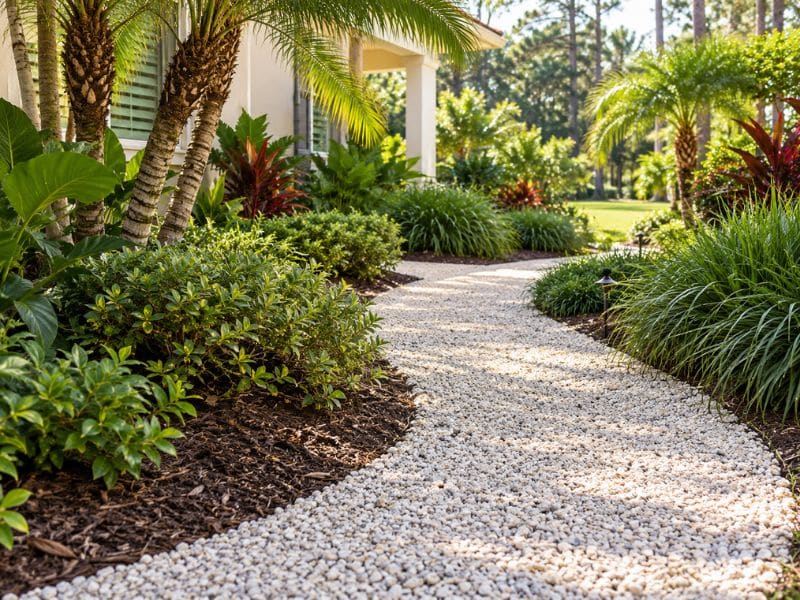
    White gravel walkway curving through a lush Florida landscape with palms and ornamental grasses.

    Small rock settles into an even layer, fills in around plant stems, and lets rainwater pass through to the soil underneath. It's also easy to rake level and comfortable to walk on, which makes it the most practical choice for garden beds and paths.

    Using Small Rocks In Garden Beds

    Spread small rocks about 2 to 3 inches deep in a garden bed. That's enough to cover the soil without burying the crowns of your plants. Keep the rock material pulled back a few inches from stems and trunks so heat and moisture don't build up against the plant. Small rock pairs best with plants that like good drainage, such as succulents, ornamental grasses, and many Florida native plants.

    Placement matters in Florida. Summer storms dump a lot of water in a short time, and small rock under a roof edge or on a slope will wash into the lawn after the first heavy rain. Use river rock or cobble instead in those spots and keep small rock on flat, protected ground.

    Using Small Rocks For Walkways And Paths

    Small rocks can make a good walking surface, but not all small rock works equally well underfoot. Crushed stone and crushed granite make a firmer path than pea gravel. The angular edges of crushed stone lock together when compacted, while the round shape of pea gravel lets it shift and roll underfoot. Pea gravel works for paths that get light use, but crushed stone holds up better to daily foot traffic and wheelbarrows.

    Every gravel path needs edging. Steel, aluminum, or stone edging along both sides of the path keeps gravel from spreading into the lawn, where a mower can pick it up and throw it.

    What To Put Under Landscape Rocks

    Under garden beds, use landscape fabric, a woven or non-woven material that lets water through while keeping rock separated from the soil. In Jacksonville's sandy soil, fabric keeps rock from slowly sinking out of sight, and it slows weeds coming up through the rocks from below.

    Under walkways, start with a few inches of compacted crushed stone base, then add fabric and the surface gravel. The compacted base keeps the path firm and level after years of use.

    Do not use plastic sheeting with small landscape rocks. Plastic blocks water from reaching the soil, so rain pools on top of the rock or runs off, and the plants in the bed lose their water supply.

    Mid Sized Rocks For Garden Beds And Borders

    Mid-sized rock is heavy enough to stay in place, but small enough to set by hand, which makes it the right size for edging. River rock, cobble, and smaller landscape stones define a bed without the cost or engineering of a retaining wall. A row of border stones separates the bed from the lawn, holds mulch or gravel in place, and gives a curved bed a clean, visible edge.

    Building A Garden Bed

    Lay out the shape of the bed with a garden hose, then cut a clean edge in the turf along that line. Set each border stone so its bottom third sits in the soil. Stones set on top of the grass will shift when they're bumped by a mower or a foot, while partly buried stones stay put.

    For a slightly raised bed, stack low stones two layers – or courses – high. Taller garden beds that are expected to hold back more soil need a retaining wall built with a proper footing and drainage, rather loosely stacked stone.

    Use Rock That Matches Your Home

    Use rock colors that match your house: the brick, the stucco, the roof, or the trim. Lighter stones brighten shady beds, and darker stones stand out against green foliage. A beach home in Ponte Vedra might call for light, shell-toned stone, while a brick home inland pairs well with warmer browns and tans.

    Stick to one or two rock types across the property. Five different colors and textures in one yard look unplanned, even when each choice looks good on its own.

    Mid Sized Rocks For Stepping Stone Walkways

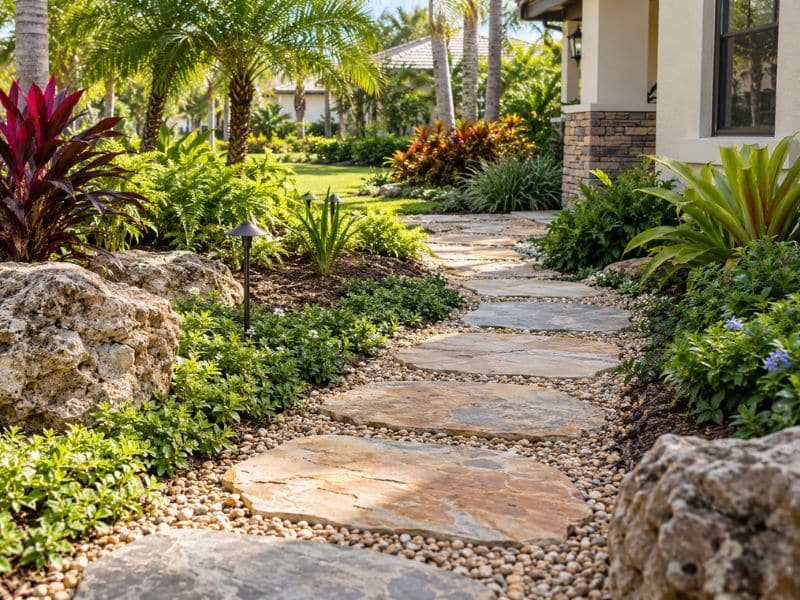
    Flat natural stepping stones set into gravel along a landscaped garden walkway.

    A stepping stone walkway looks intentional when the spacing matches a natural walking stride. For most adults, that means setting stones about 24 inches apart, measured from the center of one stone to the center of the next. Walk the route a few times before finalizing the rock setting, and adjust the spacing to where your feet actually land.

    Set each stone flush with the ground or slightly above it so a mower can pass over and no one catches a toe. It is best to put a bed of sand or fine crushed stone under each stone to keep it from rocking when stepped on. The gaps can be filled with gravel, left as lawn, or planted with a low groundcover such as dwarf mondo grass in shady spots.

    Stepping Stones vs. Gravel Pathways

    Stepping stones work best for casual routes through a lawn or garden bed, like a path from the patio to a side gate. They use less material and let grass or groundcover grow between the stones.

    Gravel pathways create a continuous surface, which makes them better for routes that get daily use, wider paths, or anywhere you'll push a wheelbarrow or mower. They need edging and an occasional top-off of gravel. Many yards combine the two by setting stepping stones into a gravel path, which gives a firm footing with a finished look.

    Landscaping With Large Rocks And Boulders

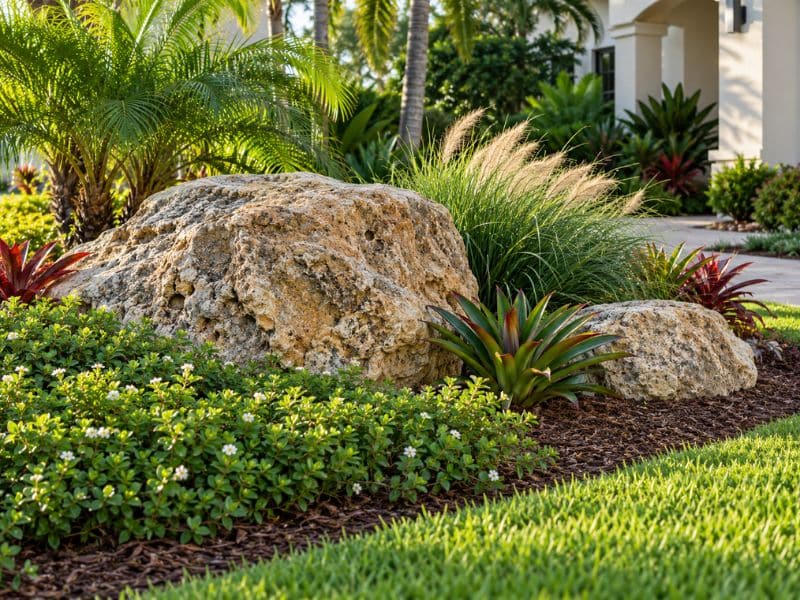
    Large natural boulders partially set into a landscaped garden bed with tropical plants.

    Boulders often become the focal points of a yard, so use them sparingly. Use one boulder or a small group of three where you want to draw the eye, such as the corner of a garden bed or the start of a path. In a mostly flat Jacksonville yard, a well-placed boulder adds height, marks the corner of a bed or the start of a path, or helps hold soil on a slope.

    How To Place Boulders So They Look Natural

    A boulder sitting on top of the grass looks like it was dropped off and left there. Boulders in nature are partly buried, so bury yours a third to half of their height. Set the widest side down, and turn the most weathered face up and toward the main viewing angle.

    To add to the natural look, group boulders in odd numbers with varied sizes, and avoid lining them up or spacing them evenly. Plant groundcover or low perennials around the base of each one so the stone looks like part of the bed.

    Why Boulder Placement Is A Job For Professionals

    A boulder large enough to serve as a focal point can weigh as much as a car. Moving a boulder safely usually takes equipment like a skid steer or mini excavator, lifting straps, and a crew that knows how to rig and set heavy stone. Getting the boulder into the backyard takes planning too. Gate widths, irrigation lines, septic systems, and soft ground all affect how a boulder gets from the driveway to the backyard.

    Setting a boulder can include digging, and digging can come with legal requirements. Professionals know what Florida law calls for, like having buried utility lines marked, and take care of it before the work starts.

    A boulder set in the wrong spot is very difficult to move without bringing landscaping equipment back. Earth Works' landscape crews handle boulder placement and heavy rock work from delivery through planting.

    Using Rocks Around Your Backyard Pond

    Without rock, a pond looks like a hole that was dug and filled with water. You can see the liner edge, and the transition from lawn to water is abrupt. Rock is what makes a pond look like it belongs in the landscape.

    Cover the liner edge with a mix of boulders and cobble rather than a single ring of same-sized stones, which looks like a necklace laid around the water. Vary the heights, let a few stones step down into the shallow shelves, and keep gravel on the shelves thin. Earth Works' landscape team builds koi ponds and pondless waterfalls with this kind of layered rockwork. If you already have a pond, our pond cleaning guide covers how to keep the rock and gravel clean once it's in place.

    What Are The Best Types Of Rocks For Florida Landscapes

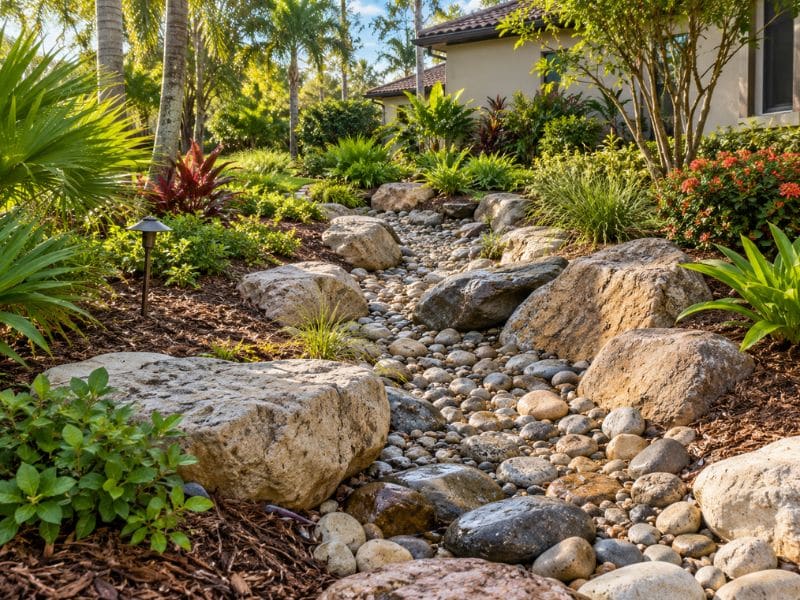
    Dry creek bed made with river rock and larger stones in a landscaped Florida yard.

    Landscaping with rocks in Northeast Florida means planning for heavy summer rain, sandy soil, and strong sun. These rock types hold up well here:

    • River rock: Smooth and durable, and it stays in place where water flows. It's the standard choice for dry creek beds that carry stormwater away from the house.
    • Crushed granite and crushed stone: Packs firmly for paths and drains well after storms.
    • Coquina: A Florida stone made of compressed shell, quarried along the Atlantic coast. It's the same stone used to build the Castillo de San Marcos in St. Augustine, and its light, shell-textured look suits coastal homes.
    • Florida limestone: Light-colored and widely available in the state. Limestone can raise soil pH over time, so keep it away from acid-loving plants like azaleas, camellias, and gardenias.
    • Lava rock: Lightweight and easy to spread, but its dark color absorbs heat, so it's best kept away from tender plants in full sun.

    Common Mistakes To Avoid When Landscaping With Rocks

    Most problems that occur with rock landscaping show up within the first year. The most common ones:

    • Small rock where water flows: Pea gravel under a downspout can end up washed into the lawn after the first storm.
    • No edging: Gravel can spread into the grass, and a mower throws it.
    • No base under the rock, or plastic underneath: Rock sinks into sandy soil without fabric, and plastic traps water on the surface.
    • Too many boulders: A yard with boulders everywhere has no real focal point.
    • Boulders sitting on the surface: Unburied boulders look temporary, rather than embedded and artfully placed.
    • Too many rock types: Mixing several colors and textures makes the yard look unplanned.
    • Rock piled against plant stems: Rock pressed against stems and trunks traps heat and moisture against the plant.

    How Much Does Rock Landscaping Cost In Jacksonville?

    Rock projects vary widely in cost, and the price depends on a few main factors:

    • Rock type: Common gravel and crushed stone usually cost less than specialty stone like flagstone or imported beach pebbles. Rock quarried closer to Florida typically costs less to ship.
    • Size and weight: Small rock is sold by the ton or cubic yard. Boulders and large landscape stones are often priced individually.
    • Coverage and depth: A larger area or deeper layer takes more material.
    • Delivery and access: Tight gates, long carries from the driveway, and backyard-only access add labor time and may require smaller equipment.
    • Site prep: Removing sod, grading, laying fabric, compacting base, and installing edging all add to the cost, and skipping them shortens the life of the project.
    • Equipment and labor: Boulders and heavy stone need machinery and an experienced crew to set them correctly.

    When comparing quotes, ask for material and labor to be listed separately so you can see exactly what you're paying for.

    Let Earth Works Design Your New Backyard

    Earth Works has been designing and building Jacksonville landscapes since 1988. Our design team handles landscaping with rocks at every scale, from a single bed border to dry creek beds, retaining walls, firepits, and pond rockwork.

    Our design process follows four steps: a free consultation at our Garden Center on Beach Blvd, an on-site visit, a design reveal back at the Garden Center where you can see materials in person, and installation. You choose the scope and your level of investment before we start drawing, and if you move forward with the build, 50% of your design fee goes toward it.

    Contact Us Today

    Landscaping With Rocks: FAQs

    How do you move large landscaping boulders into a backyard?

    Large boulders are moved with a skid steer, mini excavator, or similar machine, using lifting straps rated for the weight. Before the boulder is moved, the crew measures gate widths, maps the route around irrigation lines and septic systems, and lays down plywood or ground mats to protect the lawn. In Florida, it may be required to call Sunshine 811 before digging so that buried utility lines are marked first.

    Do I need to place landscaping fabric underneath rocks?

    For garden beds and walkways, yes. Fabric keeps rock from sinking into sandy soil and slows weeds coming up from below. Use a permeable landscape fabric, never plastic, so water can still reach the soil. Boulders don't need fabric underneath, since they're set directly into the ground.

    How do I keep weeds from growing through my rocks in my garden?

    Start with landscape fabric under the rock to block weeds coming up from the soil. Over time, leaves and dirt collect on top of the rock and give weed seeds a place to sprout, so blow or rake debris off the rock regularly. Pull weeds while they're small, before their roots reach the fabric. A rock layer of at least 2 inches also makes it harder for seeds to reach the soil.

    What is the most affordable landscape rock?

    Pea gravel and crushed stone are usually the lowest-cost options, since they're widely available and sold in bulk by the ton or cubic yard. Rock sourced closer to Florida also tends to cost less than imported stone because of shipping. Installation is the other half of the price, so a lower-cost rock on a properly prepared base will outlast a premium rock placed on bare soil.

    Which plants do well with rocks?

    Plants that like good drainage and full sun pair best with rock. In Northeast Florida, good choices include coontie, muhly grass, firebush, blanket flower, and beach sunflower, along with succulents and ornamental grasses. Our Garden Center carries Florida-native plants, succulents, and palms, and our horticulturists can help you choose plants for a rock bed based on its sun exposure and soil.

    Spring Lawn Pests to Look Out For: Chinch Bugs

    Spring Lawn Pests to Look Out For: Chinch Bugs

    Pest Patrol: Chinch Bugs & More – What to Watch for

    Spring is here—and so are the bugs. As temperatures rise, lawn and garden pests become more active and can quickly take a toll on your landscape if left unchecked. That’s why we’re launching a new monthly feature to help you spot and stop common pests before they do serious damage.

    Each month, we’ll highlight a few of the usual suspects, show you what to look for, and share the best ways to manage them—naturally or with targeted treatments.

    This month, we’re kicking things off with a video about chinch bugs—a tiny menace that can cause big problems in your lawn. We’re also spotlighting three more pests you may encounter: mole crickets, grubs, and aphids. Scroll down to learn how to identify each one and what to do if you find them.

    Chinch Bug Video

    Chinch bugs are one of the most destructive lawn pests in Northeast Florida—especially in St. Augustine grass. In this video, Chad from Earth Works in Jacksonville, FL explains how to spot early signs of chinch bug damage, where they typically hide (like along sidewalks and driveways), and how to confirm their presence using a simple float test.

    You’ll also learn:

    ✔️ Why drought-stressed lawns are most vulnerable

    ✔️ The difference between chinch bug and sod webworm damage

    ✔️ How and when to treat using contact insecticides

    ✔️ Why quick action is critical to avoid permanent turf damage

    If you’re seeing browning patches in your lawn and wondering if chinch bugs are to blame.

    This guide will help you take the right steps. 

    Common Lawn & Garden Pests

    Mole cricket Grub aphid

    Mole Crickets

    1. What They Look Like: Light brown, about 2 inches long, with large front legs that look like tiny shovels—perfect for digging.
    2. Where You’ll Find Them: These pests tunnel underground, usually in lawns or vegetable beds, and are active at night. Their presence is often spotted by raised, loose soil and ½-inch wide tunnels.
    3. How to Control Them:
    • Apply beneficial nematodes or insecticides labeled for mole cricket control in early evening.
    • Water the lawn before treatment to draw them closer to the surface.
    • Late spring and early fall are key treatment windows.

    Grubs

    1. What They Look Like: “C”-shaped, dirty white larvae with darkened rear ends and reddish-brown heads, ranging from ¼ to 2½ inches long.
    2. Where You’ll Find Them: In the root zone of your lawn or garden beds, often under the turf. They feed on plant roots and tubers, causing grass to brown or lift easily.
    3. How to Control Them:
    • Apply grub-specific insecticides in late summer or early fall when young grubs are near the surface.
    • Beneficial nematodes are a great organic control option.
    • Keep your lawn healthy and well-aerated to discourage infestation.

    Aphids

    1. What They Look Like: Tiny, pear-shaped insects (1/32 to 1/8 inch) that may be green, yellow, black, pink, or brown.
    2. Where You’ll Find Them: On the undersides of leaves, tender stems, or flower buds—often in clusters.
    3. How to Control Them:
    • Spray plants with a strong stream of water to dislodge them.
    • Use insecticidal soap or neem oil for heavier infestations.
    • Encourage beneficial insects like ladybugs and lacewings to keep aphid populations in check.
    • Watch for curled leaves or stunted growth—aphids also spread plant viruses.

    LAWN CARE PRO TIP

    Don’t Bag Those Clippings!


    Leaving your grass clippings on the lawn isn’t lazy—it’s smart! Clippings break down quickly and return valuable nutrients, especially nitrogen, back into the soil. That means a greener, healthier lawn and less need for fertilizer.

    💡 Bonus: It also helps your lawn retain moisture and reduces landfill waste. Just make sure your mower blade is sharp and you’re not cutting more than 1/3 of the grass height at a time.

    Let your clippings work for you!

    Services

    • Landscape Design & Installation
    • Paver Patios, Paver Walkways, Paver Driveways
    • Firepits, Retaining Walls , Seat Walls,
    • Landscape Lighting, Drainage design & Installation,
    • Lawn Care Services, Lawn Maintenance, Lawn Fertilization
    • Lawn Pest Control, Lawn Weed Control
    • Aeration and Top Dressing
    • Water Features, Koi Ponds,
    • Waterfalls, Bubbling Fountains
    • Garden Center & Pond Supply Store

    General Services Areas

    Jacksonville (Jax), Jacksonville Beach, Neptune Beach, Atlantic Beach, Ponte Vedra Beach, Ponte Vedra, Fernandina Beach, Amelia Island, Orange Park, St. Johns, Nocatee

    Location

    GARDEN CENTER
    12501 Beach Blvd
    Jacksonville, FL 32246

    LANDSCAPE OPERATIONS
    (not open to the public)
    St. Johns Bluff
    1057 St. Johns Bluff Rd. N.
    Jacksonville, FL 32225

    Hours

    Monday-Saturday 9-5
    Sunday 10-5

    HOLIDAY CLOSINGS
    New Year’s Day • Easter • Memorial Day
    July 4th • Labor Day • Thanksgiving Day
    Christmas Eve • Christmas Day

    Florida Palms for Instant Tropical Vibes

    Florida Palms for Instant Tropical Vibes

    Florida Tropicals for Instant Vacation Vibes

    Nothing says “Florida” like palms swaying in the breeze and bright hibiscus blooms bursting with color. June is the perfect time to bring the tropics to your own backyard—whether you’re going for poolside paradise or front yard wow factor.

    We’re starting this summer series with a look at some of our favorite palms for Northeast Florida—from large statement trees to compact options perfect for containers and courtyards.

    Palms in front yard

    Palms We Love (and Why You Will Too)


    These palms offer a variety of forms, textures, and tolerances—many of them well-adapted to Northeast Florida’s climate. From compact varieties to towering canopy trees, each brings a distinct look and practical benefit to the landscape.

    Backyard fence softening Landscape with queen palms

    Sylvester Palm

    (Phoenix sylvestris)

    A majestic showstopper with silver-blue fronds and a robust, textured trunk. Popular for upscale landscapes. Slow-growing and low-maintenance.

    Height: Up to 40 ft

    Zone: 8B–11

    Growth Rate: Slow to Moderate

    Drought Tolerance: High

    Salt Tolerance: Moderate to High

    Queen Palm

    (Syagrus romanzoffiana)

    Graceful and fast-growing with soft, feathery fronds. Perfect for framing entrances or lining a driveway. Sure to provide those relaxing tropical vibes!

    Height: Up to 50 ft

    Zone: 9B–11

    Growth Rate: Fast

    Drought Tolerance: Moderate

    Salt Tolerance: Moderate

    Sylvestris Feature palm copy
    pygmydatepalm 1445x

    Dwarf Sugar Palm

    (Arenga engleri)

    A clumping, shade-tolerant palm with a unique texture and tropical vibe. Fragrant when mature and stays small—perfect for understory or accent planting.

    Height: 6–12 ft

    Zone: 9A–11

    Growth Rate: Moderate

    Drought Tolerance: Moderate

    Salt Tolerance: Low

    Sabalpalmetto 1650x copy

    Pygmy Date Palm

    (Phoenix roebelenii)

    Compact, elegant, and ideal for containers or tight spaces. Often planted in clusters for extra impact. Great near pools or patios.

    Height: 6–12 ft

    Zone: 9–11

    Growth Rate: Slow

    Drought Tolerance: Moderate

    Salt Tolerance: Low

    Dwarf Sugar palm copy

    Sabal Palm

    (Sabal palmetto)

    Florida’s official state tree is a tough, low-maintenance native with large fan-shaped fronds and a rugged trunk. Exceptionally salt- and cold-tolerant, it’s ideal for both coastal and inland landscapes.


    Height: 40–60 ft

    Zone: 8A–11

    Growth Rate: Slow

    Drought Tolerance: High (once established)

    Salt Tolerance: High

    Bismarck Palm

    (Bismarckia nobilis)

    A statement piece, it has massive, icy blue fronds and a thick trunk. It needs space and sunshine. It is drought-tolerant and perfect for dramatic landscape design.

    Height: 30–70 ft

    Zone: 9B–11

    Growth Rate: Slow to Moderate

    Drought Tolerance: High

    Salt Tolerance: Moderate

    Bizmark Palm Tree
    King Alexander 2 copy

    King Alexander Palm

    (Archontophoenix alexandrae)

    Tropical and elegant with a slender trunk and lush crown. Grows best with some protection from cold snaps, but thrives in summer heat and humidity.

    Height: 40–80 ft

    Zone: 10B–11

    Growth Rate: Moderate to Fast

    Drought Tolerance: Moderate

    Salt Tolerance: Low

    European Fan Palm

    (Chamaerops humilis)

    One of the most cold-hardy palms! Slow-growing and tough, with striking fan-shaped leaves.

    Works well in pots or as a dramatic focal point

    Height: 8–15 ft

    Zone: 8–11

    Growth Rate: Slow

    Drought Tolerance: High

    Salt Tolerance: Moderate

    European Fan Palm
    DCIM102MEDIADJI 0224.JPG

    Whether you’re going for a coastal vibe, a courtyard accent, or a full tropical escape, palms are the cornerstone of that classic Florida style. With the right mix of height, texture, and climate tolerance, they can transform any space into a relaxed, resort-like retreat—right at home in Northeast Florida.

    GARDENING PRO TIP

    “Wait till they’re brown to cut them down.”

    Palms grow from the center crown, pushing out new fronds from the top. As new growth emerges, it’s completely normal for the lower fronds to yellow, brown, and die back—this is just part of the palm’s natural cycle. Trim off these older brown fronds as they decline to keep your palm looking neat, healthy, and beautifully shaped. Avoid cutting green fronds, which still help nourish the plant.

    Palm Tree Trimming Thumbnail

    Inside Matt’s Garden Shed

    This month, Matt spotlights two essential fertilizers that help palms stay strong, green, and resilient in Florida’s challenging climate. These go-to products are key for maintaining healthy fronds, preventing deficiencies, and supporting long-term growth in your landscape.

    Espoma Palm tone Video
    Manganese sulfate video of 7. (8.25 x 5 in)

    Services

    • Landscape Design & Installation
    • Paver Patios, Paver Walkways, Paver Driveways
    • Firepits, Retaining Walls , Seat Walls,
    • Landscape Lighting, Drainage design & Installation,
    • Lawn Care Services, Lawn Maintenance, Lawn Fertilization
    • Lawn Pest Control, Lawn Weed Control
    • Aeration and Top Dressing
    • Water Features, Koi Ponds,
    • Waterfalls, Bubbling Fountains
    • Garden Center & Pond Supply Store

    General Services Areas

    Jacksonville (Jax), Jacksonville Beach, Neptune Beach, Atlantic Beach, Ponte Vedra Beach, Ponte Vedra, Fernandina Beach, Amelia Island, Orange Park, St. Johns, Nocatee

    Location

    GARDEN CENTER
    12501 Beach Blvd
    Jacksonville, FL 32246

    LANDSCAPE OPERATIONS
    (not open to the public)
    St. Johns Bluff
    1057 St. Johns Bluff Rd. N.
    Jacksonville, FL 32225

    Hours

    Monday-Saturday 9-5
    Sunday 10-5

    HOLIDAY CLOSINGS
    New Year’s Day • Easter • Memorial Day
    July 4th • Labor Day • Thanksgiving Day
    Christmas Eve • Christmas Day

    July Container Gardening Recipe 2025

    July Container Gardening Recipe 2025


    Sunset Succulent Bowl

    Drought-Defiant Beauty in a Bowl

    This Sunset Succulent Bowl is a heat-loving, low-maintenance container recipe that’s as tough as it is beautiful. Planted in a shallow dish and topped with gravel, this mix of sculptural succulents thrives in summer sun and brings desert-inspired style to your patio or tabletop.

    1. Kalanchoe delagoensis ‘Mother of Millions’

    This unique succulent produces narrow, upright leaves dotted with tiny plantlets along the edges. It multiplies easily and adds vertical interest and texture to the dish. Echeveria

    2. Graptopetalum Pentandrum

    Also known as Ghost Plant, this variety forms pale, plump rosettes with pink and gray tones. It’s incredibly hardy and can easily handle heat and drought.

    3. Graptopetalum Paraguayense

    Features soft, pastel rosettes that shift between shades of silver, pink, and lavender depending on the light. It’s drought-tolerant, easy to propagate, and adds a dreamy, delicate touch to any succulent arrangement.

    4. Aloe

    A classic succulent with spiky green leaves and medicinal uses, Aloe adds structure and resilience to the container. It prefers bright light and dry conditions between waterings. (varieties may vary)

    5. Echeveria ‘McDougallii’

    This smaller, silver-green rosette has a graceful, minimalist look and pairs beautifully with bolder succulent varieties. Its waxy coating helps it tolerate intense summer heat.

    Sunset Succulent Bowl copy

    6. ‘Purple Pearl’

    A stunning rosette with lavender-purple leaves and pink edges, this Echeveria is both drought-tolerant and eye-catching. It loves full sun and adds rich color to any succulent mix.

    7. Sansevieria ‘Tower’

    The upright centerpiece of the arrangement, this 4″ snake plant brings bold architecture and modern style. It’s virtually indestructible, tolerating low water and high heat with ease.

    The Sunset Succulent Bowl is a stylish, sun-loving container that thrives with minimal care—perfect for summer patios, tabletops, or sunny windowsills. With striking textures, sculptural forms, and bold colors, this dish garden proves that low-maintenance can still be high impact.

    Succulent soil

    Pro Tip: Smart Succulent Care


     Succulents need excellent drainage to thrive—always use a cactus or succulent-specific potting mix, never regular garden soil. Water deeply but infrequently, allowing the soil to dry out completely between waterings to prevent root rot.

    Topping your cactus and succulent pots with pebbles or decorative gravel helps keep the soil in place, reduces moisture loss, and prevents rot by keeping leaves off damp soil. It also gives your arrangement a clean, finished look—like a mini desert landscape!

    Soil toppers sqyare

    Succulents 101

    Why They’re Perfect for Summer

    Succulents are the ultimate summer survivors—built to handle heat, sunshine, and dry spells with style. Their thick, water-storing leaves help them thrive in tough conditions, making them an excellent choice for busy gardeners and hot Florida patios alike.

    variety of succulent plants in pots, close up image

    From rosettes to spiky towers, succulents come in endless shapes, colors, and textures that look amazing grouped together in dish gardens or planted solo in decorative pots. Plus, they’re incredibly easy to care for. Just give them well-draining soil, lots of sunlight, and a deep watering only when the soil is completely dry. That’s it!

    If you’re purchasing succulents grown in greenhouses with diffused light, be sure to acclimate them gradually to full sun—a sudden move outdoors can cause leaf scorch or sunburn. Start with a few hours of morning light and increase exposure over several days for happy, sun-hardy plants.

    burnt succulent
    Succulent window box

    Whether you’re looking for a stylish tabletop display, a drought-tolerant porch plant, or a fun gift idea, succulents are your go-to for summer gardening success.

    Services

    • Landscape Design & Installation
    • Paver Patios, Paver Walkways, Paver Driveways
    • Firepits, Retaining Walls , Seat Walls,
    • Landscape Lighting, Drainage design & Installation,
    • Lawn Care Services, Lawn Maintenance, Lawn Fertilization
    • Lawn Pest Control, Lawn Weed Control
    • Aeration and Top Dressing
    • Water Features, Koi Ponds,
    • Waterfalls, Bubbling Fountains
    • Garden Center & Pond Supply Store

    General Services Areas

    Jacksonville (Jax), Jacksonville Beach, Neptune Beach, Atlantic Beach, Ponte Vedra Beach, Ponte Vedra, Fernandina Beach, Amelia Island, Orange Park, St. Johns, Nocatee

    Location

    GARDEN CENTER
    12501 Beach Blvd
    Jacksonville, FL 32246

    LANDSCAPE OPERATIONS
    (not open to the public)
    St. Johns Bluff
    1057 St. Johns Bluff Rd. N.
    Jacksonville, FL 32225

    Hours

    Monday-Saturday 9-5
    Sunday 10-5

    HOLIDAY CLOSINGS
    New Year’s Day • Easter • Memorial Day
    July 4th • Labor Day • Thanksgiving Day
    Christmas Eve • Christmas Day

    Spring Garden Pruning Tips

    Spring Garden Pruning Tips

    Spring Into Pruning: Tips for a Healthier Garden


    Spring is the perfect time to shape up your landscape—and a little thoughtful pruning goes a long way toward keeping your plants healthy, blooming, and looking their best.

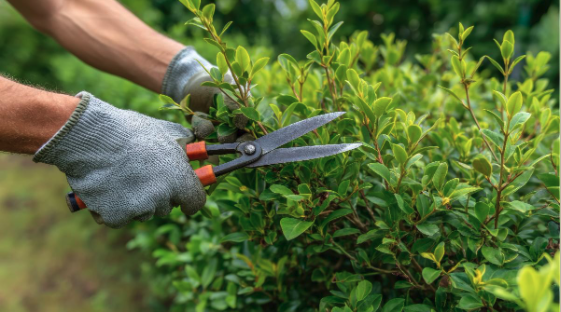
    Pruning Hedges

    Pruning Basics for All Plants

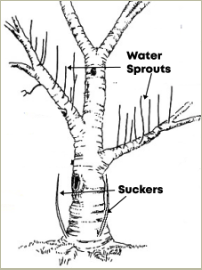
    Pruning Diagram

    Before you get too clip-happy, start with these universal tips:

    • Remove dead, diseased, or damaged wood as soon as you see it—this helps prevent insect damage and disease spread.
    • Cut out crossing branches, water sprouts (vigorous upright shoots on trunks/branches), and suckers (fast-growing shoots from the base or roots).
    • Always use clean, sharp tools and make cuts just above a healthy bud or branch.
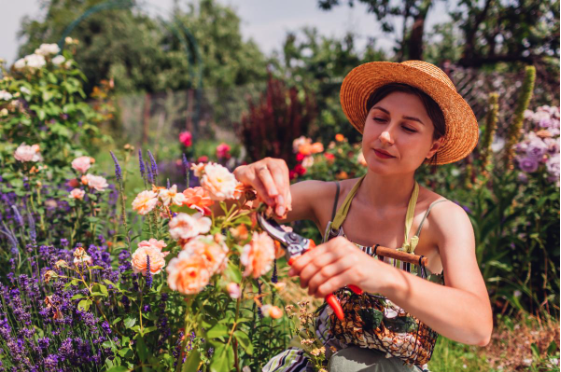
    Pruning Roses

    What to Prune in Florida This Spring

    🌸 Azaleas & Other Spring Bloomers

    Prune right after flowering. These plants bloom on last year’s growth—cutting too late removes next year’s flowers.

    🌼 Crape Myrtle & Summer-Blooming Shrubs

    These bloom on new growth, so prune in late winter or early spring. You can even cut them back hard—they’ll still bloom beautifully!

    💐 Hydrangeas

    Most types bloom on old wood—prune before midsummer to avoid cutting off buds. Newer reblooming varieties are more forgiving.

    🌿 Foliage Shrubs (like Loropetalum & Ligustrum)

    These can be shaped almost anytime—just avoid heavy pruning in late fall when growth won’t harden off before winter.

    🌳 Clipped Hedges (Boxwood, Podocarpus)

    Shear frequently in early spring to maintain a tidy shape. Stop by late fall to prevent frost damage.

    🌹 Roses

    For repeat bloomers like Knock Out and Drift roses, prune in early spring to remove winter damage and shape the plant. For once-a-year bloomers, wait until after flowering.

    🌼 Perennials & Annuals

    Deadhead often to keep the blooms coming. Leggy plants? Cut them back by half to encourage stockier growth and rebloom.

    🍊 Citrus Trees

    Remove suckers from the base of young trees. Mature trees need little canopy pruning—only cut to remove freeze or disease damage, or to prevent crowding.

    GARDENING PRO TIP

    Need Help?

    Bring in photos or ask a team member—we’re happy to show you exactly when and how to prune your favorite plants!

    Customer Care

    A May Welcome from Matt & Rhonda

    croton in the garden

    It’s starting to look and feel like a tropical paradise here at Earth Works! The Garden Center is bursting with vibrant tropical shrubs, lush palm trees, and exotic flowers that bring instant vacation vibes to any landscape.

    Now’s also the perfect time to bring in the pollinators—birds, bees, and butterflies are buzzing, and our wide selection of hardy perennials and dazzling annuals will keep them coming back all season long.

    Tropicals
    Gardenia

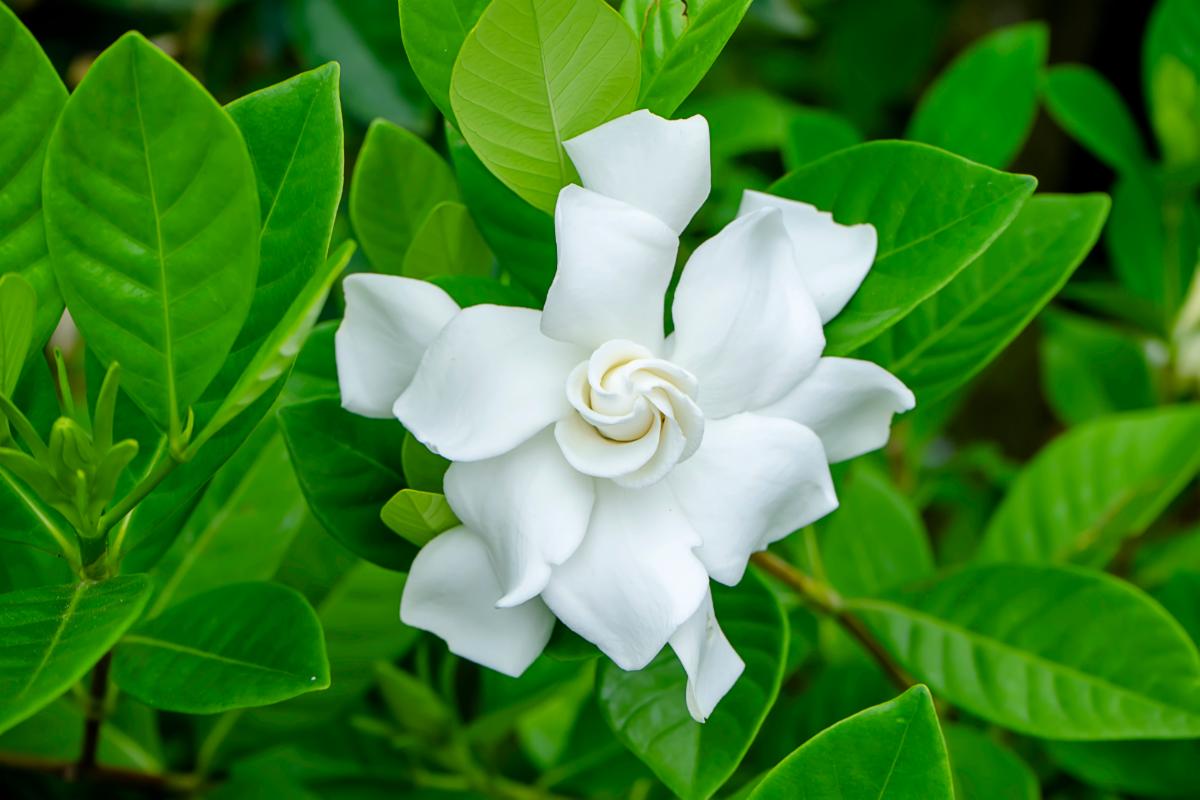
    Don’t miss the gardenias this month—these fragrant beauties are ideal for planting near patios or porches, and a few fresh cuttings indoors will fill your space with their signature scent.

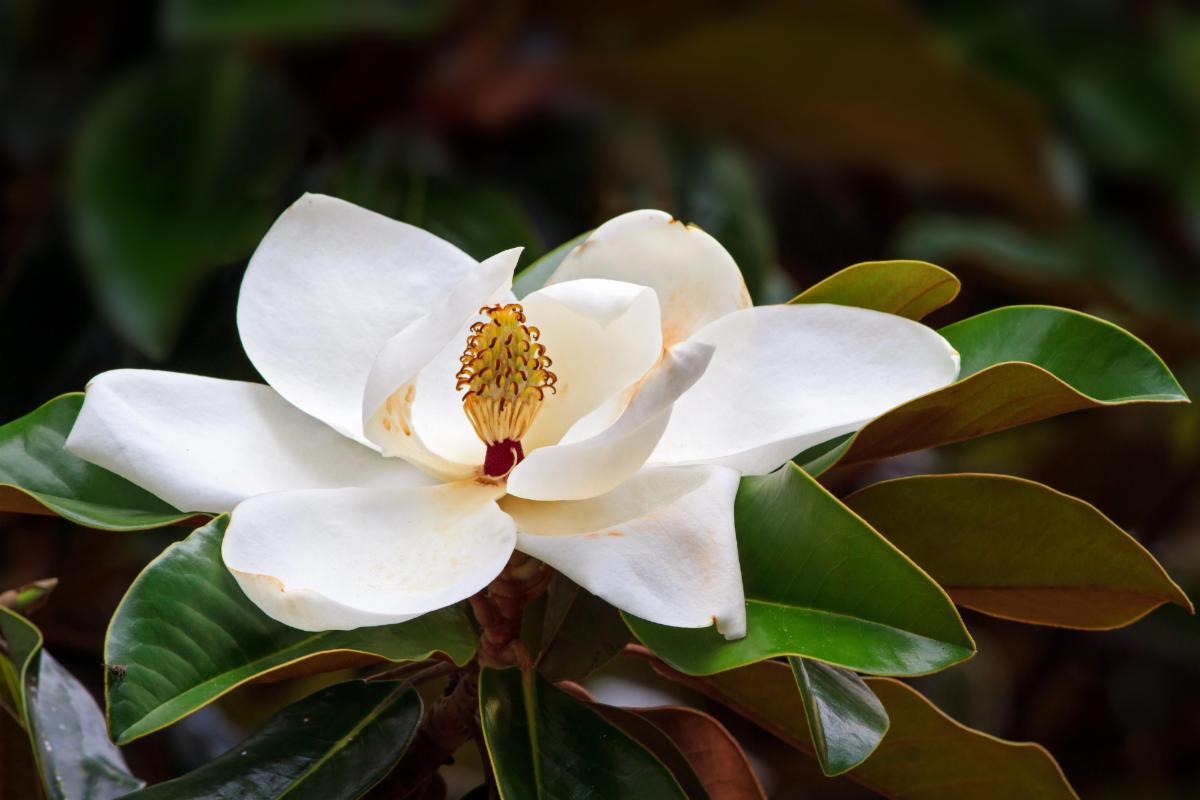
    And finally, our Tree of the Month, the magnolia, is ready to steal the show. If yours isn’t blooming yet, it will be soon—those iconic blossoms are a sure sign that summer’s just around the corner.

    Magnolia

    Hope to see you soon,

    —Matt & Rhonda, Garden Center Managers

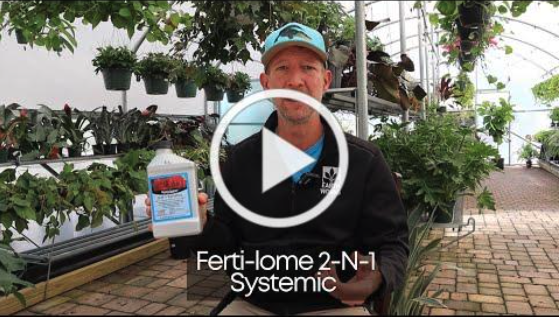
    Inside Matt’s Garden Shed

    Where Matt shares his favorite go-to products every gardener should keep on hand.

    From tried-and-true essentials to clever time-savers, these picks help make lawn and garden care easier and more effective.

    Fertilome 2 1 Systemic

    Services

    • Landscape Design & Installation
    • Paver Patios, Paver Walkways, Paver Driveways
    • Firepits, Retaining Walls , Seat Walls,
    • Landscape Lighting, Drainage design & Installation,
    • Lawn Care Services, Lawn Maintenance, Lawn Fertilization
    • Lawn Pest Control, Lawn Weed Control
    • Aeration and Top Dressing
    • Water Features, Koi Ponds,
    • Waterfalls, Bubbling Fountains
    • Garden Center & Pond Supply Store

    General Services Areas

    Jacksonville (Jax), Jacksonville Beach, Neptune Beach, Atlantic Beach, Ponte Vedra Beach, Ponte Vedra, Fernandina Beach, Amelia Island, Orange Park, St. Johns, Nocatee

    Location

    GARDEN CENTER
    12501 Beach Blvd
    Jacksonville, FL 32246

    LANDSCAPE OPERATIONS
    (not open to the public)
    St. Johns Bluff
    1057 St. Johns Bluff Rd. N.
    Jacksonville, FL 32225

    Hours

    Monday-Saturday 9-5
    Sunday 10-5

    HOLIDAY CLOSINGS
    New Year’s Day • Easter • Memorial Day
    July 4th • Labor Day • Thanksgiving Day
    Christmas Eve • Christmas Day

    Smart Watering Tips for NE Florida

    Smart Watering Tips for NE Florida

    Spring Success Starts with Smart Watering

    Matt Barlow 2

    lA Note from

    Matthew Barlow

    Do April showers bring May flowers? Maybe up North—but here in NE FLorida, we usually face dry conditions during late winter and early spring. Every year is a little different, but as the weather warms up, it’s important to keep a close eye on anything you’ve recently planted. If you haven’t checked your irrigation system yet, now’s the time. A little extra attention now can make all the difference in helping your new landscape take root and thrive.

    Matthew’s Garden Tips

    Essential Watering Tips for Freshly Planted Landscapes


    Spring Plantings Need a Little Extra Love 🌿

    It’s planting season in Northeast Florida! But even the healthiest new trees, shrubs, and flowers need consistent care to thrive—especially when it comes to watering. Nursery plants are used to daily water and need time to adjust to life in your yard.

    Why Watering Matters

    Sprinklers alone often aren’t enough. New plantings need targeted hand watering or a drip system to get their roots established and ensure long-term success

    Watering<br />
plants

    Watering Guidelines

    💧 1-gallon plants & flowers

    Hand-water daily for 2 weeks, then every other day, tapering to 2–3 times a week. These small plants dry out fast and need regular moisture, especially in warmer weather.

    💧 3-gallon shrubs

    Apply at least 1 gallon of water to the root ball every other day for 2 weeks, then twice a week for 2–3 months. These shrubs take up to 7 months to fully establish, so early care is essential.

    💧 Large shrubs & trees (15-gal+)

    Use a slow hose soak at the base for 10–15 minutes daily for 1 month, then every other day for 1 month, and twice a week for the next 3 months. Deep watering encourages strong root systems.

    💧 Extra-large trees (4”+ trunk)

    Drip or hand water daily for 6 weeks, then every other day for 5 months, tapering to weekly. Larger trees take longer to adjust and need ongoing care for up to 15 months.

    When to Water Less

    ✔️ After heavy or frequent rain

    ✔️ In consistently damp soil

    ✔️ In deep shade or with drought-tolerant plants (though they still need help early on)

    GARDENING PRO TIP

    Water in the morning or late evening.

    Never between 1–4 p.m. when most water is lost to evaporation.

    Inside Matt’s Garden Shed

    Where Matt shares his favorite go-to products every gardener should keep on hand.

    From tried-and-true essentials to clever time-savers, these picks help make lawn and garden care easier and more effective.

    Screenshot 2025 07 18 at 11.43.45 AM

    Chad’s Lawn Care Advice

    Lawn Watering Tips

    With the arrival of daylight saving time, Duval County’s watering restrictions have shifted—and with spring heating up, it’s time to make sure your lawn is getting exactly what it needs to stay healthy and green.

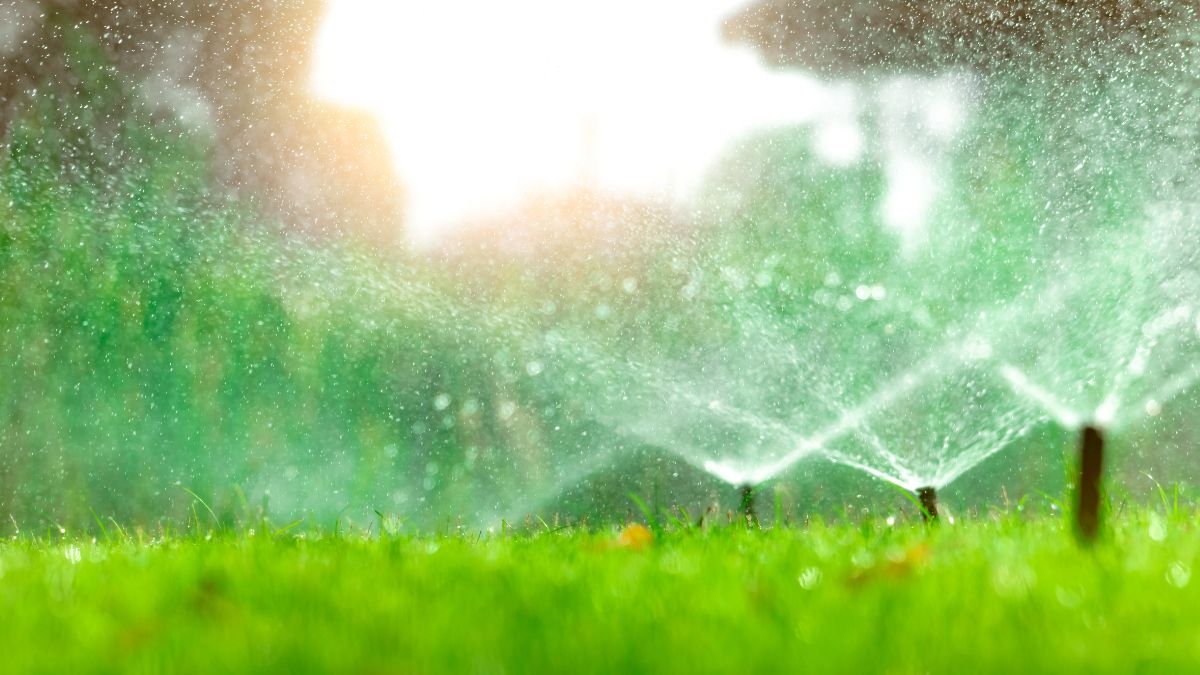
    lawn care jacksonville fl

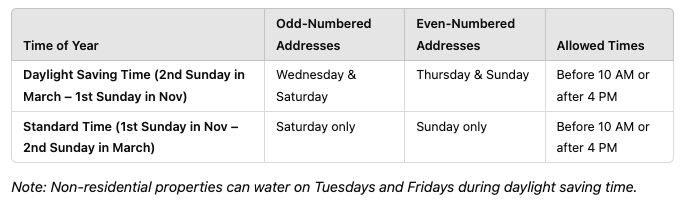
    Know Your Watering Days – Duval County Restrictions

    Here’s a quick guide to the current watering schedule in Duval County, now that we’ve sprung forward:

    Screenshot 2025 03 28 at 3.15.45 PM

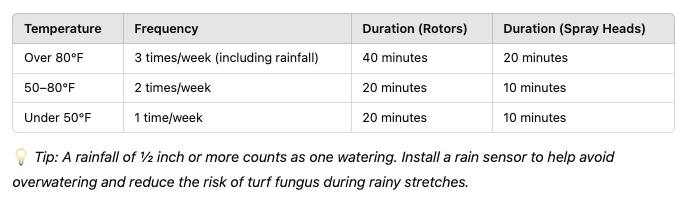
    Watering Guidelines for Established Lawns

    A healthy lawn requires different amounts of water depending on the season and temperature. Here’s a simple breakdown:

    Screenshot 2025 03 28 at 3.15.57 PM
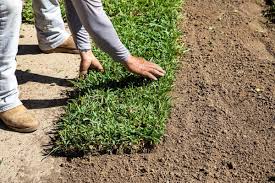
    laying sod

    Newly Installed Sod—Especially St. Augustine

    New sod needs extra attention to take root and thrive, especially in Florida’s fluctuating spring weather. Here’s what to know:

    • Week 1–2: Water daily, ideally in the morning. St. Augustine sod typically needs ¼ to ½ inch of water per day, depending on temperature and wind.
    • Week 3–4: Water every other day.
    • Week 5–6: Transition to your regular watering schedule based on season and temperature.
    • Avoid mowing until roots are established (usually around week 3).
    • Avoid foot traffic (and furry feet!) during this establishment period.

    ☀️ Hot and dry weather? You may need to water twice daily in the first two weeks. Cool and cloudy? Scale back a bit. 

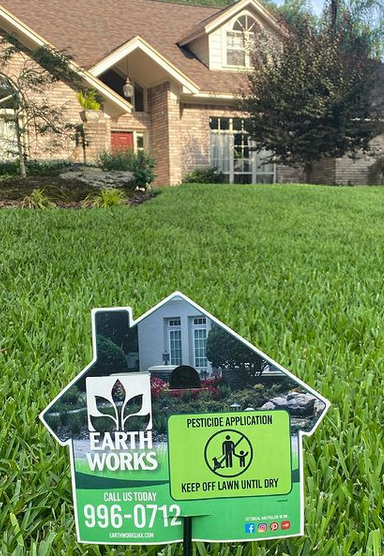
    Lawn Spray sign

    LAWN CARE PRO TIP

    If your lawn has just been sprayed for pests, weeds or fertilization, please keep children and pets off the turf for at least 2 hours, or until the grass is completely dry to the touch. This helps avoid irritation and ensures the product has been absorbed properly.

    Services

    • Landscape Design & Installation
    • Paver Patios, Paver Walkways, Paver Driveways
    • Firepits, Retaining Walls , Seat Walls,
    • Landscape Lighting, Drainage design & Installation,
    • Lawn Care Services, Lawn Maintenance, Lawn Fertilization
    • Lawn Pest Control, Lawn Weed Control
    • Aeration and Top Dressing
    • Water Features, Koi Ponds,
    • Waterfalls, Bubbling Fountains
    • Garden Center & Pond Supply Store

    General Services Areas

    Jacksonville (Jax), Jacksonville Beach, Neptune Beach, Atlantic Beach, Ponte Vedra Beach, Ponte Vedra, Fernandina Beach, Amelia Island, Orange Park, St. Johns, Nocatee

    Location

    GARDEN CENTER
    12501 Beach Blvd
    Jacksonville, FL 32246

    LANDSCAPE OPERATIONS
    (not open to the public)
    St. Johns Bluff
    1057 St. Johns Bluff Rd. N.
    Jacksonville, FL 32225

    Hours

    Monday-Saturday 9-5
    Sunday 10-5

    HOLIDAY CLOSINGS
    New Year’s Day • Easter • Memorial Day
    July 4th • Labor Day • Thanksgiving Day
    Christmas Eve • Christmas Day

    Lawn & Garden Tips March 2025

    Lawn & Garden Tips March 2025

    Introducing the Earth Works Lawn & Garden Monthly!

    We’re excited to bring you a monthly dose of expert advice to help your lawn, landscape, and garden thrive year-round! Each issue will feature timely tips and answers to common questions from our seasoned pros: Matthew Barlow – Earth Works Garden Center Manager. Chad Lakin – Earth Works Lawn Maintenance Operations Manager. Stay tuned for practical, experience-backed guidance to keep your outdoor spaces looking their best!

    Have a question? We’ve got answers! ✅

    Matt Barlow 1

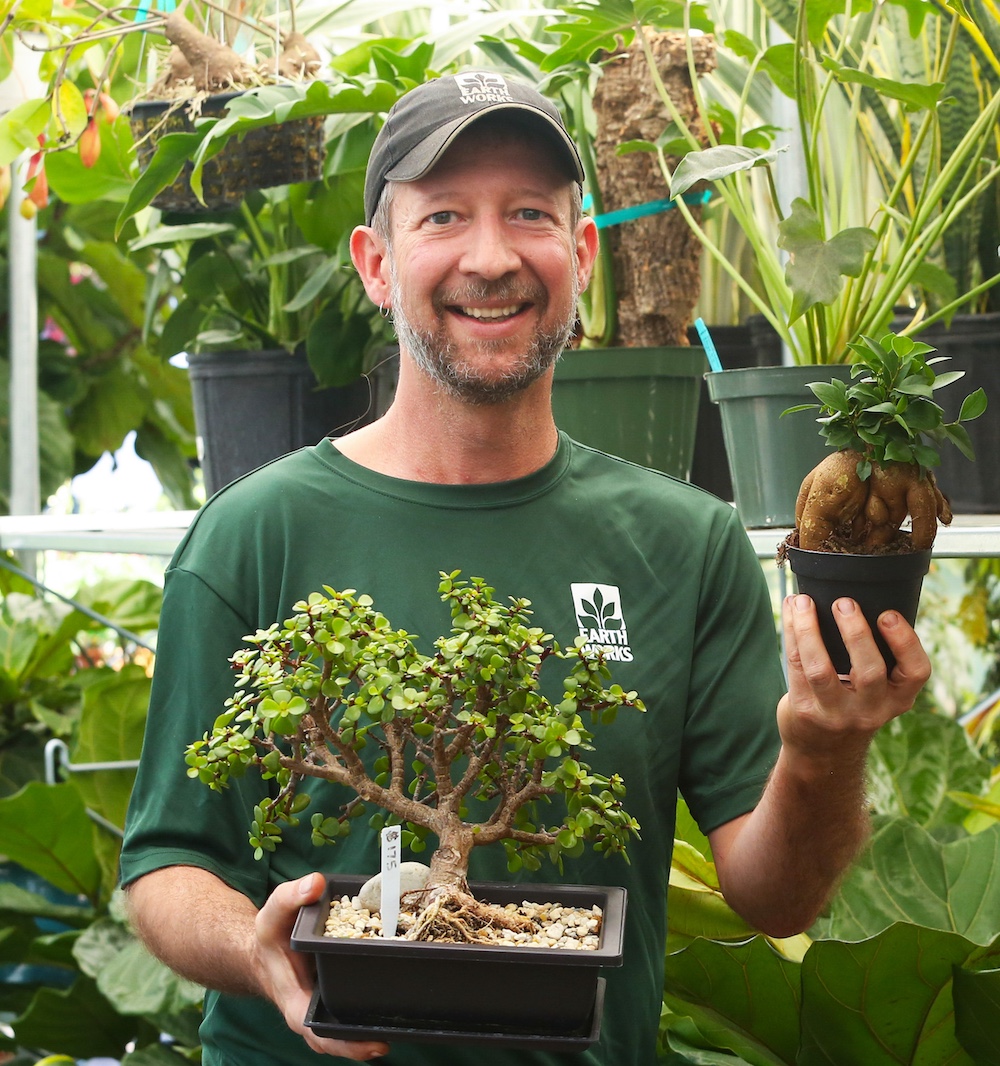
    Matthew Barlow

    Garden Center Manager

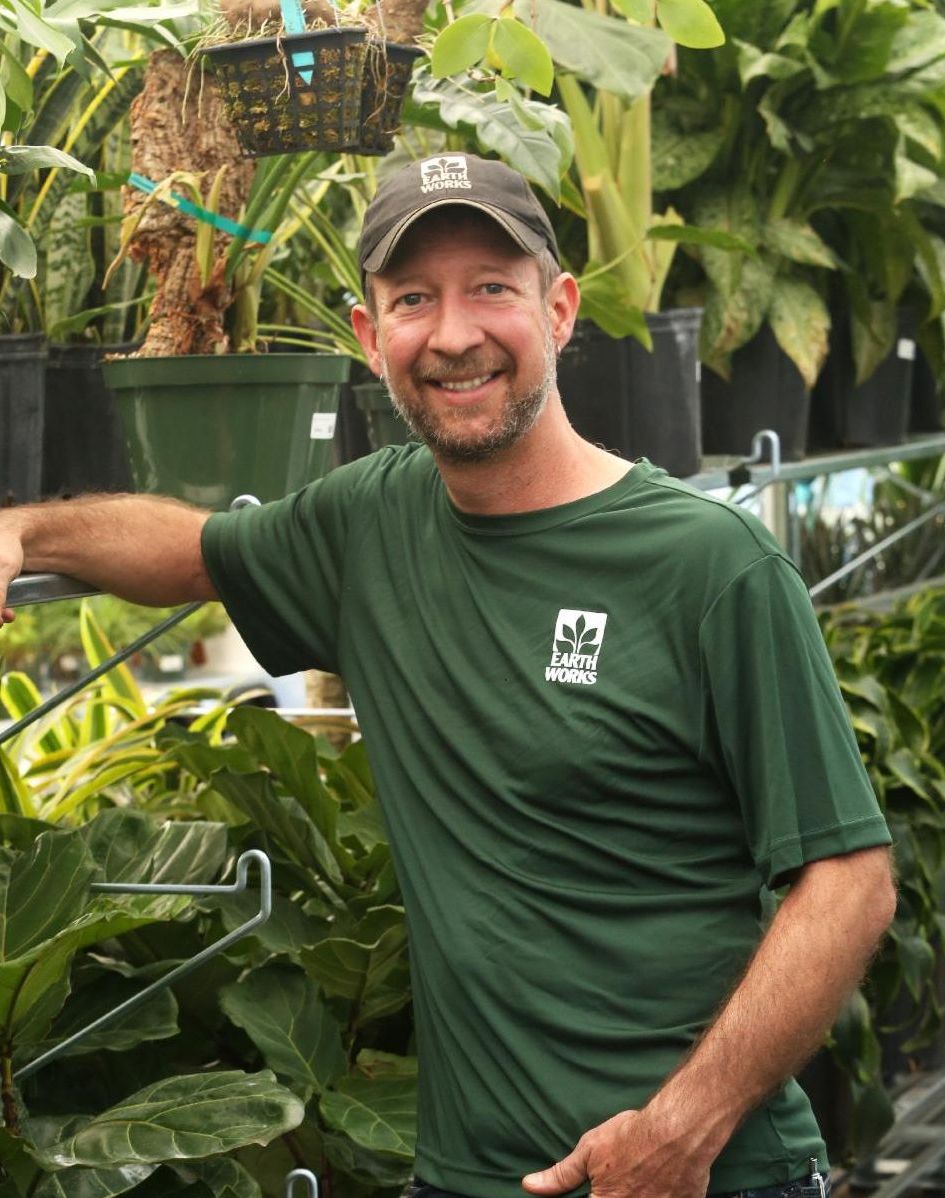
    Matt moved to Northeast Florida over twenty years ago after being bitten by the “plant bug” in a greenhouse in Houston, Texas. Since then he has been passionate about learning as much as he can about every plant he encounters. In his free time he relaxes in his backyard while tending to his vegetable garden and bonsai trees.

    Matthew’s Garden Tips

    Fertilizing Made Simple

    Hey everyone, it’s Matthew from Earth Works! Let’s break down fertilization to help you feed your plants effectively.

    Fertilizers 1

    1. Understanding Fertilizers

    • Synthetic vs. Organic:
    • Synthetic Fertilizers feed the plant directly.
    • Organic Fertilizers feed both the plant and the soil, promoting a thriving ecosystem similar to how nature works.
    • Solid vs. Liquid Fertilizers:
    • Granular (Slow Release): Provides nutrients over time.
    • Liquid (Water-Soluble): Offers immediate absorption for quick results.

    2. The Golden Rules of Fertilizing

    ✅ Follow Instructions – More is NOT better! Overuse can burn plants.

    ✅ Stick to a Schedule – If the label says quarterly, fertilize quarterly. If it’s weekly, stay consistent.

    ✅ Place Granular Fertilizer Correctly – Avoid dumping it at the trunk; instead, apply it around the outer canopy where feeder roots grow.

    3. Creating a Balanced Feeding Plan

    For healthy, thriving plants, use a combination of fertilizers:

    • Planting Time: Mix in Biotone for root stimulation.
    • Slow Release: Apply a granular fertilizer like Dynamite once a year.
    • Weekly Boost: Use a water-soluble fertilizer like fish emulsion (organic) or Jack’s 20-20-20 (synthetic) for rapid absorption.
    • Houseplants & Exotics: Use liquid fertilizers formulated for specific plant types (e.g., citrus, palms, or flowering plants).

    4. Special Tips

    • Sick or stressed plants? Use liquid fertilizers for quick recovery.
    • For maximum growth in veggies & herbs: Weekly feeding helps them reach maturity faster.
    • Foliage Feeding: Plants absorb nutrients through leaves, so spray both the leaves and soil for the best results.

    Find the Right Fertilizer at Earth Works

    We carry a wide range of organic, synthetic, hybrid, solid, and liquid fertilizers. Stop by and chat with me, Matthew—I’d love to help you find the perfect fertilizer for your plants!

    Matthew’s Garden Tips

    A Simple Guide to Spring Vegetable Gardening


    Growing your own vegetables can be an incredibly rewarding experience, but in Florida’s sandy soil, it takes the right approach to be successful. Earth Works Garden Center Manager Matthew Barlow shares his lessons learned from years of trial and error, so you can grow healthy, thriving vegetables with confidence.

    1. Start with the Soil

    The secret to a successful garden? Great soil. Florida’s sandy ground lacks the nutrients and structure vegetables need to thrive. Whether you’re growing in containers, raised beds, or in-ground plots, you need rich, composted soil to support healthy plants.

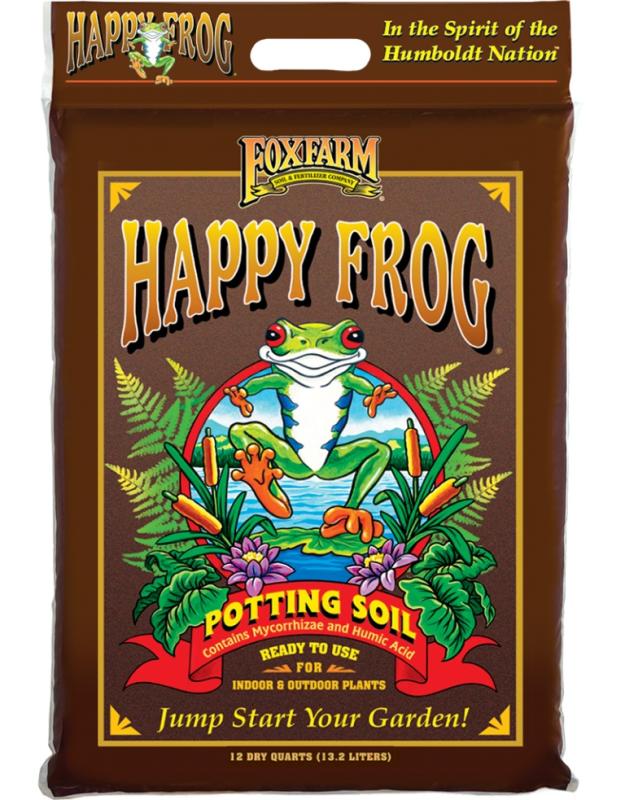
    • Containers: Use high-quality potting soil like FoxFarm Happy Frog for the best results.
    • Raised Beds: A 4×8’ raised bed with 12” of nutrient-rich soil is an ideal starting point. Use a bulk compost/soil mix for affordability.
    • In-Ground Gardens: If planting directly in the ground, amend the soil heavily with compost, organic matter, and slow-release organic fertilizers.

    2. Watering & Feeding

    • Check soil moisture before watering. If the soil is dry, water deeply. If it’s still damp, wait. Overwatering can cause root rot.
    • Use organic fertilizers like Biotone Starter Plus to improve soil health and boost plant growth.
    • Apply liquid fertilizers weekly. Foliar feeding (spraying nutrients directly onto leaves) gives plants an immediate boost, especially in Florida’s extreme heat.

    3. Managing Pests & Disease


    Florida’s heat and humidity create the perfect environment for pests and fungal diseases.

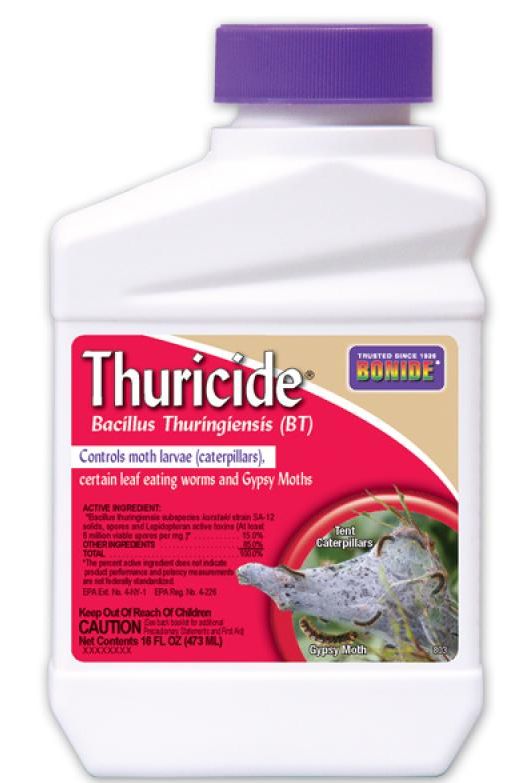
    • Caterpillar Control: Use Bacillus thuringiensis (BT), a natural bacteria that targets leaf-eating caterpillars.
    • Fungal Prevention: Copper fungicide helps prevent mildew and blight. Apply before problems arise.
    • Encourage Pollinators & Beneficial Insects: Companion planting and organic gardening help keep pests in check.

    4. Grow What You Love & Experiment!

    Try heirloom and unique vegetable varieties to keep things interesting. Baker Creek Seeds and Southern Exposure Seed Exchange offer a great selection of rare and Florida-friendly options.

    Best Vegetables & Herbs to Plant This Spring

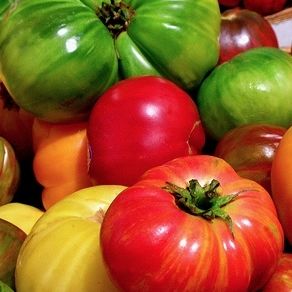
    tomato

    ✅ Tomatoes – Start early for best results

    ✅ Peppers – Bell, jalapeño, banana, and more thrive in warm weather

    ✅ Cucumbers – Perfect for trellises and raised beds

    ✅ Squash & Zucchini – Fast-growing and productive

    ✅ Green Beans – Easy to grow, bush and pole varieties

    ✅ Eggplant – Loves the heat and produces all summer

    ✅ Okra – A summer staple that thrives in Florida’s climate

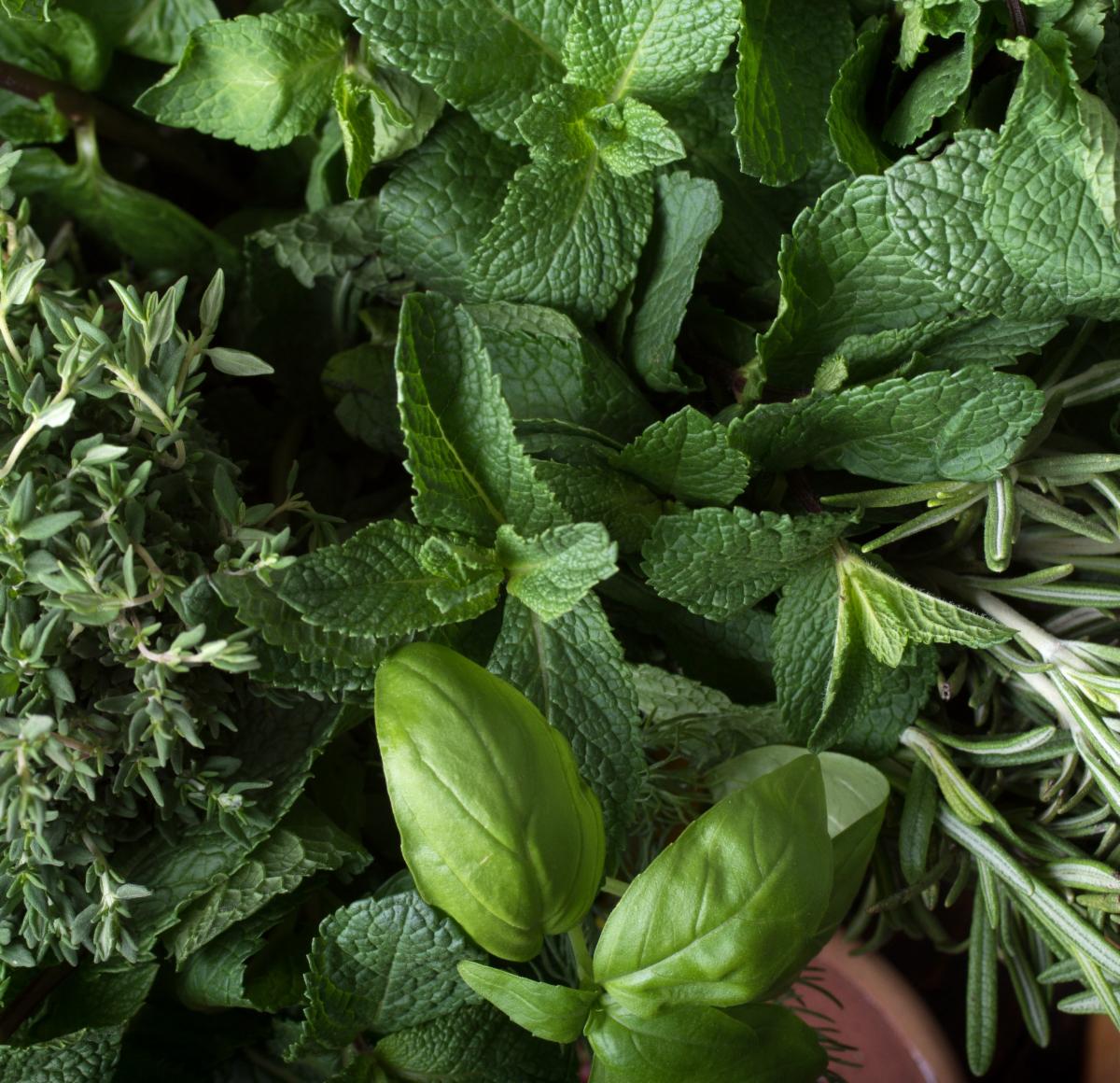
    ✅ Basil – Loves warm weather and pairs perfectly with tomatoes

    ✅ Cilantro – Plant early before the heat sets in

    ✅ Dill – Great for pickling and attracts pollinators

    ✅ Oregano – Thrives in warm, dry conditions

    ✅ Rosemary – Heat-tolerant and a great perennial herb

    ✅ Thyme – Low maintenance and flavorful

    ✅ Mint – Best grown in containers

    Herbs
    Chad L Best IMG 7173

    Chad Lakin

    Lawn Maintenance Operations Manager

    Chad has been a dedicated member of Earth Works for nine years, serving as the Licensed Certified Operator. With over 20 years of experience in the industry, he brings extensive expertise in operations and maintenance. Chad attended the University of North Florida (UNF) and continues to play a vital role in ensuring efficiency and excellence at Earth Works.  

    Screenshot 2025 07 14 at 3.34.20 PM

    Services

    • Landscape Design & Installation
    • Paver Patios, Paver Walkways, Paver Driveways
    • Firepits, Retaining Walls , Seat Walls,
    • Landscape Lighting, Drainage design & Installation,
    • Lawn Care Services, Lawn Maintenance, Lawn Fertilization
    • Lawn Pest Control, Lawn Weed Control
    • Aeration and Top Dressing
    • Water Features, Koi Ponds,
    • Waterfalls, Bubbling Fountains
    • Garden Center & Pond Supply Store

    General Services Areas

    Jacksonville (Jax), Jacksonville Beach, Neptune Beach, Atlantic Beach, Ponte Vedra Beach, Ponte Vedra, Fernandina Beach, Amelia Island, Orange Park, St. Johns, Nocatee

    Location

    GARDEN CENTER
    12501 Beach Blvd
    Jacksonville, FL 32246

    LANDSCAPE OPERATIONS
    (not open to the public)
    St. Johns Bluff
    1057 St. Johns Bluff Rd. N.
    Jacksonville, FL 32225

    Hours

    Monday-Saturday 9-5
    Sunday 10-5

    HOLIDAY CLOSINGS
    New Year’s Day • Easter • Memorial Day
    July 4th • Labor Day • Thanksgiving Day
    Christmas Eve • Christmas Day

    Share Your Story!

    Skip to content