
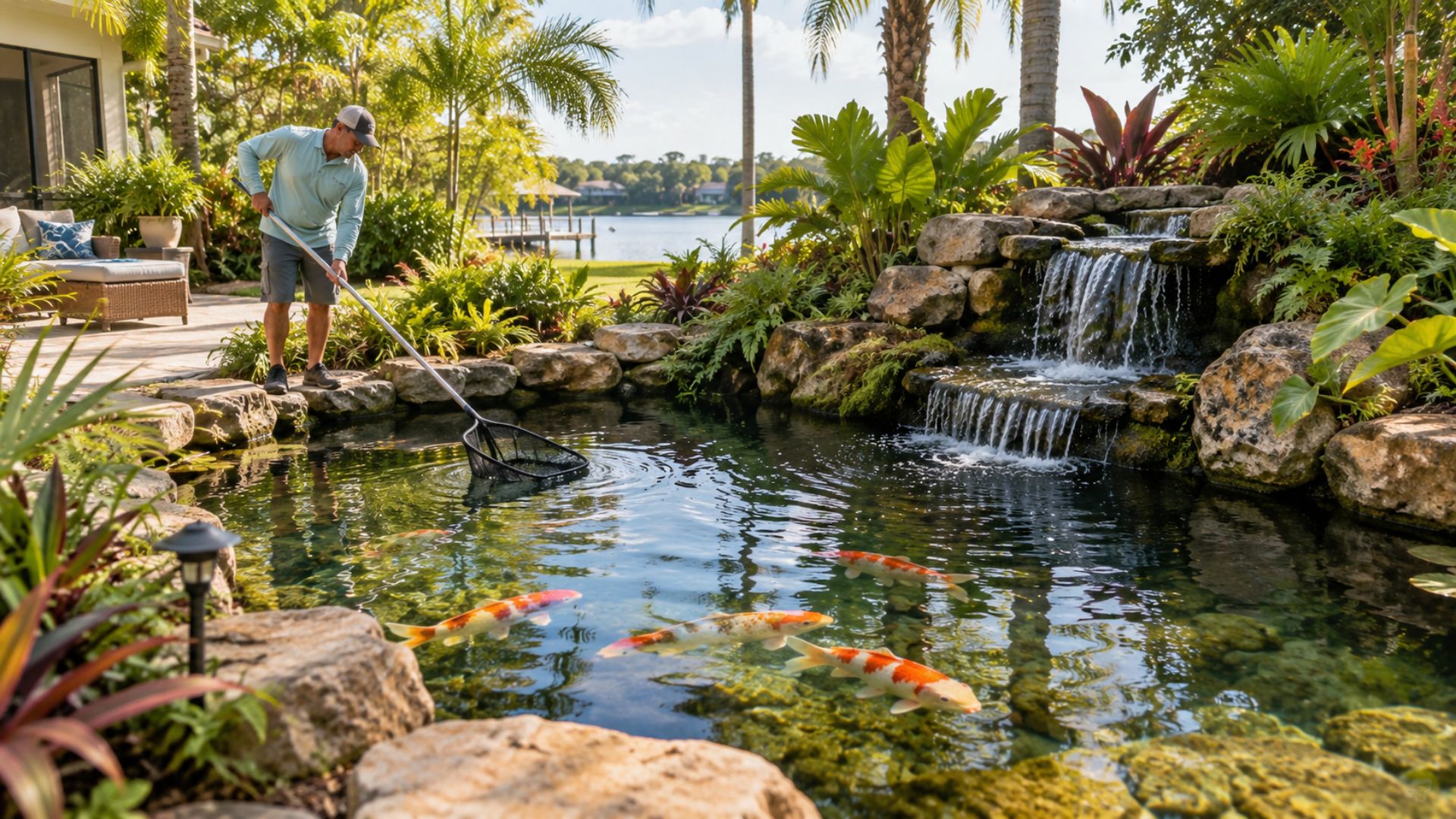
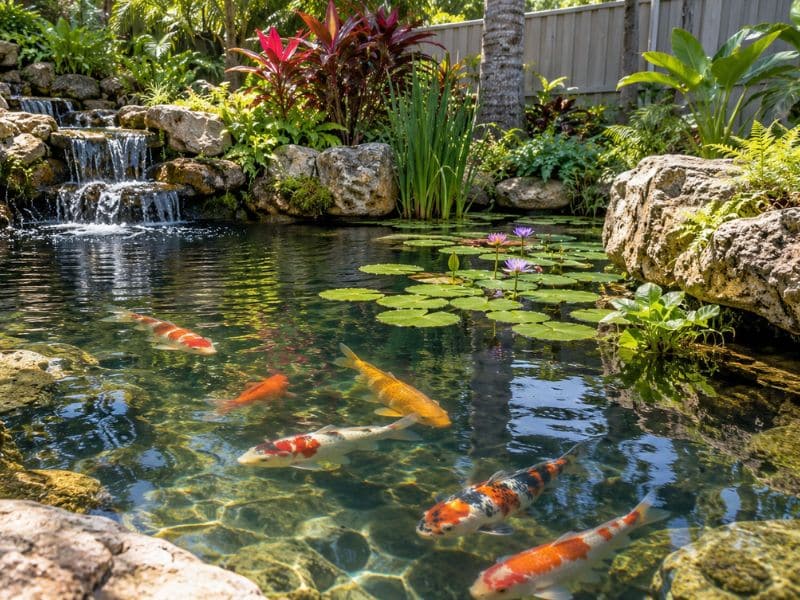
In Florida, pond care runs year-round. Our winters are short and mild, and in Jacksonville, the live oaks drop their old leaves every spring, often right into the water. Pond cleaning here works best as a steady routine rather than one big, annual cleanout. Whether you have a small garden pond off the patio or a koi pond with a waterfall, keeping it clean comes down to three things: recognizing when it needs attention, keeping up with weekly, monthly, and yearly tasks, and protecting your fish when it's time to drain and scrub.
Key Takeaways: Cleaning Your Pond
- Florida's long warm season gives algae more months to grow, so weekly pond care matters more here than in colder climates.
- Skim debris, rinse mechanical filter pads in pond water, and add beneficial bacteria to your pond. Save the full drain and scrub for once a year.
- Rinse the biological filter media sparingly and only with pond water. Chlorinated tap water kills the bacteria that keep your pond water clear.
- Small ponds can usually be cleaned with a net, buckets, and a pond vacuum, often without fully draining them. Large koi ponds call for a solids-handling cleanout pump and a holding tank big enough for your fish.
- Koi and goldfish can only handle temperature changes of 1 to 2 degrees Fahrenheit. Before moving fish from the holding tank back into the refilled pond, make sure the two water temperatures match.
- Use algaecides as a last resort for clearing algae. Reduce sunlight, excess fish, and excess nutrients, and check your filtration first.
Signs Your Pond Needs A Good Cleaning
Most pond problems start small and get worse over weeks of being left untreated. These signs mean debris, waste, algae, or some combination of the three has gotten ahead of your routine:
- Green water or string algae on the rocks. Algae feeds on fish waste and decaying debris, and it grows fastest when a pond gets too much light, holds too many fish for its size, or lacks established bacteria. A sudden bloom often means one of those conditions has changed.
- A swampy or rotten smell. Odors that linger usually come from debris decomposing where water doesn't circulate well: inside filter chambers, under deep gravel, or behind rocks.
- Cloudy water that won't clear. If you're keeping up with filter care and the water stays cloudy, your biological filtration may not be strong enough for the waste load.
- Thick muck on the bottom. Leaves and debris decompose on the pond floor, using up oxygen and raising ammonia levels in the water. If dragging a net along the bottom kicks up a dark cloud, pond sludge removal is overdue.
- Fish gasping at the surface. A fish gasping for air is a warning sign of fish stress. In a dirty pond, gasping is often the first visible sign that oxygen is running low.
- Filters clogging faster than usual. Rapid clogging in your filter means too much debris is getting past your skimmer or entering the pond in the first place. Fixing that source, rather than just cleaning the filter more often, solves the problem.
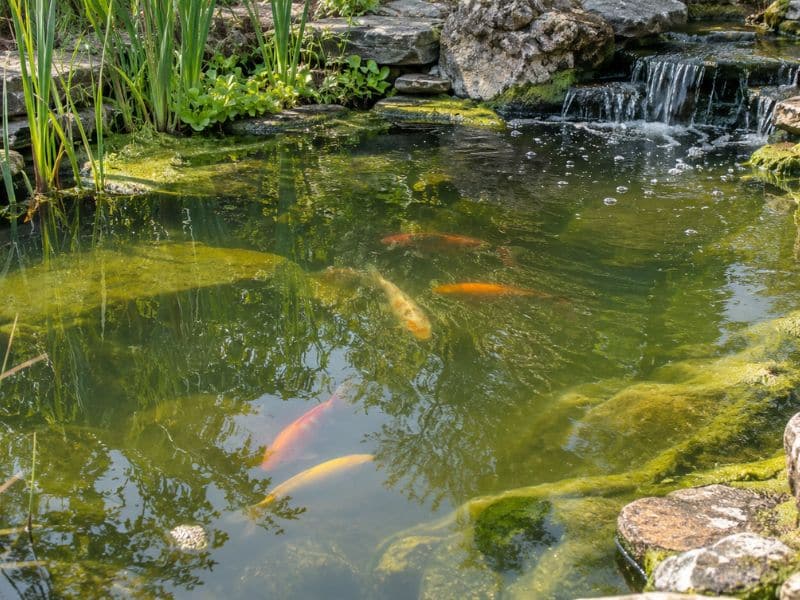
As a note: tea-colored or brown water doesn't necessarily mean your pond needs a cleanout. The color usually comes from tannins released by leaves, bark, and acorns. Tannins are largely harmless to fish, and activated carbon clears them if you don't like the look.
Florida Pond Cleaning Checklist (Weekly, Monthly, Yearly)
Most garden pond cleaning is routine weekly upkeep, not a once-a-year project. Florida's mild winters give algae very little downtime, so skipping weekly tasks shows up in the water quickly.
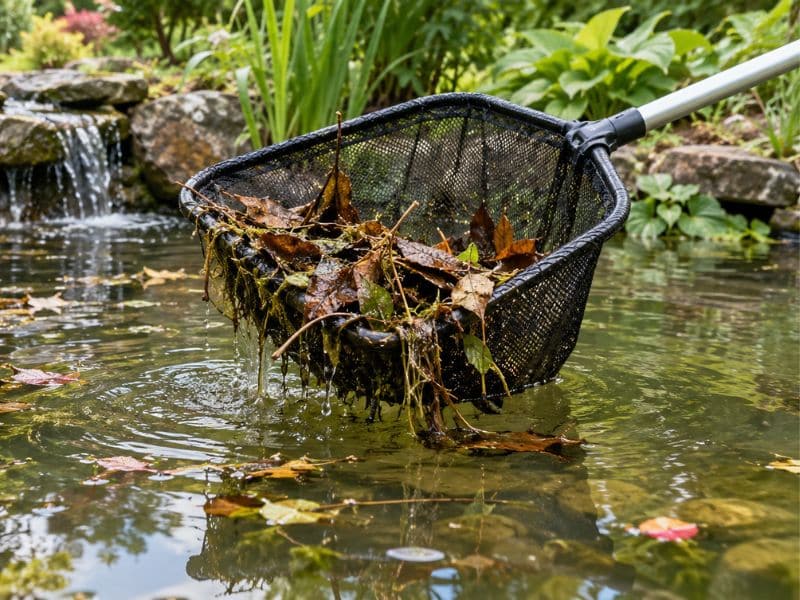
- Skim and empty the skimmer. Regular pond debris removal keeps leaves from sinking and rotting. Some ponds may require daily skimming during heavy leaf drop, which in Jacksonville usually means during the spring.
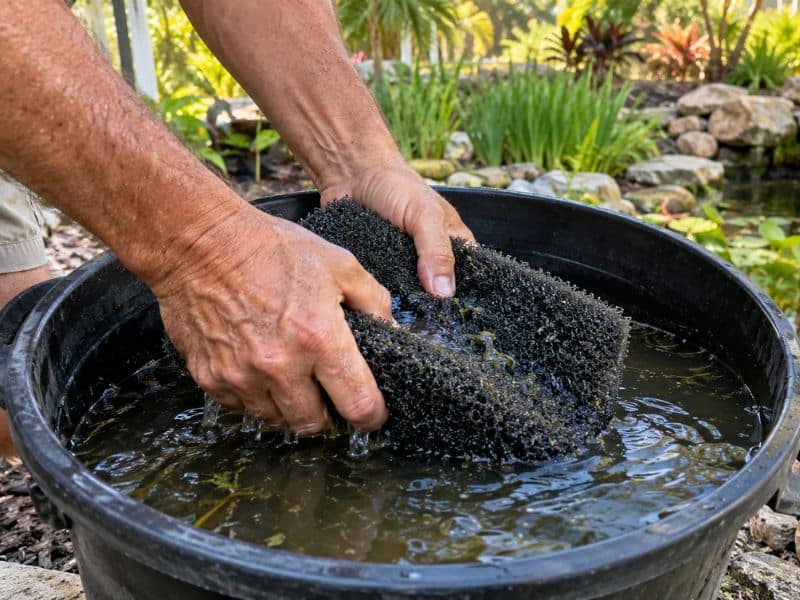
- Rinse mechanical filter pads and intake screens. Rinse foam pads weekly in a bucket of pond water – not tap water – and squeeze them until the water runs clear.
- Add beneficial bacteria and enzymes. Beneficial bacteria compete with algae for the same nutrients, so a weekly dose helps prevent algae from taking over. Because the weather stays warm in Florida, weekly dosing during warm months is ideal.
- Feed less than you think. Feed your fish once a day, and only as much as your fish will finish in two minutes. Leftover food becomes waste, and that waste can fuel algae blooms.
- Test the water. A pond test kit measures ammonia, nitrite, nitrate, and pH in a few minutes. Rising ammonia or nitrite means waste is building up faster than your filter can break it down. Write down your results each week so you can spot changes over time.
- Check the pump and water level. Warm water holds less dissolved oxygen, and fish can suffocate quickly if a pump fails in summer.
- Trim aquatic plants. Remove dead or dying leaves before they decompose and release their stored nutrients back into the water.
- Clean the UV sterilizer sleeve. Do monthly cleaning with white vinegar or a UV cleaner to remove the mineral and algae buildup that blocks UV light.
- Replace activated carbon. If your filter uses activated carbon, swap it every four to six weeks during active seasons. Remove it entirely while treating fish with medication, because carbon absorbs medications before they can work.
- Spot-clean the bottom of your pond. Pond vacuuming pulls up small sludge deposits between full cleanouts without you needing to drain the pond.
- Do a partial water change if tests show waste building up. Drain a portion of the pond and refill it with fresh water. A pond is a closed system, so this is the only way to dilute fish waste and organic debris that builds up over time. Add a dechlorinator when refilling with city water.
- Inspect foam pads. With proper care, most foam pads last four to six months. Check them monthly, and replace them when they start falling apart or won't rinse clean.
- Do a full cleanout. Drain the pond, remove debris, clean the rocks, and flush out the muck once a year. In Northeast Florida, the cooler stretch of late winter is the easiest window to do a cleanout on fish.
- Rinse the biofilter media. Rinse any biological media once a year and reseed it with starter bacteria. We suggest rinsing only half at a time with pond water so the bacteria colony stays strong. Never wash all of it out with tap water.
- Replace the UV bulb. Replace your UV bulb every year even if it still glows, because UV output drops over time.
- Level out the gravel. Keep gravel about 1 to 2 inches deep. Deeper gravel blocks oxygen from reaching the bottom layer, and that layer turns black and mucky.
- Check your stocking levels. A good rule of thumb is 100 to 150 gallons of water for each koi under 8 inches and 30 gallons for each adult goldfish. An overstocked pond will produce more waste than filters can handle.
Cleaning A Small Pond vs. A Large Pond
The basic steps are the same for any pond. Size determines the equipment you need and how long cleaning takes.
Small Pond Cleaning
A small pond is typically defined as a preformed pond, a patio water garden, or a lined pond with a handful of goldfish or no fish at all. Small pond cleaning doesn't take much equipment: a long-handled net, a few buckets, a pond vacuum or small pump, a garden hose, and tall rubber gloves.
Many small ponds never need a full drain. Skimming, vacuuming the bottom, rinsing the filter, and doing a partial water change handle most of the cleaning work. If you drain a small pond with fish in it, use a small pump and watch the water level closely. A small pond drains quickly, and fish need to come out while there's still enough water for them to swim.
Large Pond Cleaning
Large koi ponds and estate-style ponds with rock, gravel, plants, and waterfalls take more planning, more equipment, and usually a second set of hands to clean properly. You will typically need rubber boots, gloves, safety glasses, a solids-handling cleanout pump with a discharge hose, a holding tank with a net cover, an aerator, buckets, beneficial bacteria, and a dechlorinator. The cleanout pump matters more than any other tool for large pond cleaning. A weak pump clogs constantly, and you'll spend the day unclogging it instead of cleaning.
When draining your pond water, it doesn't have to go to waste. Because it is full of nutrients, pumping it onto a lawn or flower bed downhill from the pond can put the pond water to new use. Just be careful to pick a spot for water drainage that people don't walk through.
Pull leaves, branches, and dead plant material by hand before cleaning the rocks. You can then either rinse the rocks gently with a hose, or pressure wash them. Be mindful, though: a pressure washer can strip off the film of beneficial bacteria that keeps the water clear. Leaving a little nature behind can help a freshly cleaned pond get back in balance sooner.
Cleaning Still Ponds vs. Waterfall Ponds
Moving water changes where debris collects and which parts need cleaning.
Still Ponds
A still pond has no waterfall moving water through it, so debris settles straight to the bottom of the pond, instead of getting pulled into a skimmer. Regular surface skimming and pond vacuuming helps keep that buildup under control. Oxygen levels are the bigger concern, since moving water is what adds dissolved oxygen to a pond. In Florida, it's worth running an air stone or small fountain through the warm months to keep oxygen levels up. Floating plants can help keep the pond clean too: they absorb the nutrients algae would otherwise feed on, and their leaves shade the water.
Waterfall Ponds
Waterfall ponds stay better oxygenated, but they have more parts to clean. Most of that cleaning happens in two places: the skimmer, which houses the pump, and the biofalls, the box at the top of the waterfall.
Pull and rinse the filters from both during a cleanout. Before putting everything back, clear any gravel from the bottom of the skimmer so the pump doesn't suck it up, and fit the filter pads snugly so water flows through them instead of around them. Between cleanouts, watch the stream and falls for debris, which can dam the flow and push water over the edge of the liner.
How To Safely Clean A Pond With Fish
Fish pond cleaning adds a few steps to protect your fish from the three biggest risks during a cleanout: rough handling, temperature shock, and chlorinated water. How to clean a pond with fish safely starts with good preparation.
Count your fish first. Have a rough idea of how many fish you have before you begin cleaning, because fish can hide behind rocks and under plants, making them easy to miss.
Prepare a fish holding tank. Place the tank on a level spot in the shade. Fill it with the first water pumped out of the pond, since water from the upper layer is cleaner and saved pond water also carries the beneficial bacteria your fish are used to. Cover the tank with a net so fish can't jump out, and run an aerator in it.
Catch fish gently. Wait until the water is low but still deep enough for fish to swim in, which makes them easier to catch. Use a sock net or something similar that keeps the fish in water and supports its whole body, since uneven support can break a fish's spine. A stress-reducing water treatment in the holding tank can also help.
Keep the oxygen up in the holding tank. Warm water holds less dissolved oxygen, and a holding tank in the Florida sun warms quickly. Work early in the morning or in the evening, use the largest tank you can, and finish as quickly as you can.
Match the water temperature between the holding tank and the pond. Koi and goldfish can only handle rapid temperature changes of 1 or 2 degrees. Before returning fish to the pond, feel the tank water and the pond water. If the tank water is warmer, run a hose into it slowly until the two water temperatures match. Pump the tank water back into the pond along with the fish.
Dechlorinate the refill before fish go back in. City water is usually chlorinated, so add a dechlorinator to the refill water before returning fish to your pond. You can also use a detoxifier that neutralizes ammonia and heavy metals. Finish by adding beneficial bacteria to restart the pond's biological filtration.
When Should Professionals Be Called To Help Clean Your Pond?
Keeping a healthy pond in Northeast Florida requires steady work: weekly skimming and filter rinsing, monthly plant trimming and UV care, and full cleanouts once a year. Most homeowners can handle the weekly and monthly pond maintenance on their own. Annual pond cleaning is often a messier, more involved job, and it's worth bringing in help if you have a large koi pond or algae that keeps coming back despite a consistent routine.
Earth Works has been building and caring for outdoor spaces in Jacksonville since 1988, including koi ponds, pondless waterfalls, and bubbling urns. Our Garden Center on Beach Blvd carries a full pond supply store and aquatic plants, and our horticulturists can walk you through the right filter media, water treatments, and plants for your pond. Whether you want help with a single cleanout or ongoing pond cleaning through the year, we'll look at your pond and tell you exactly what it needs.
Contact Us TodayPond Cleaning: FAQs
Why does my pond turn green so fast here in Florida?
Algae is a plant-like organism that feeds on nutrients from fish waste and decaying debris, and it grows fastest with plenty of light and nutrients. Cold water naturally slows algae growth, but Florida's short, mild winters give algae very little downtime. To keep it in check, reduce what feeds it. Add beneficial bacteria, which compete with algae for the same nutrients. Add plants or shade to cut down on sunlight, avoid overfeeding your fish, and check that your pond isn't overstocked. Pond algae removal works best when you treat the cause, not just the green water.
Can I use chemicals to clean my pond if I have fish and plants?
Yes, with care. Most pond water treatments are made to be safe for fish and plants when used according to the label. Algaecides should be a last resort, because they kill the algae without fixing the filtration problem that let it grow. Before using one, confirm your pond's volume so you dose it correctly, test the water, and add aeration.
Dying algae decomposes and uses up oxygen, and warm weather makes that worse.
After treating, watch your fish closely. If they gasp at the surface or seem sluggish, do a partial water change and add a water conditioner.
What dissolves muck in a pond?
Beneficial bacteria and enzyme products break down fish waste and organic debris over time, and muck remover products speed up that process. These treatments work best on thin layers. Thick muck needs to come out physically, with a pond vacuum or a cleanout pump. The easiest way to deal with muck is to prevent it by netting leaves before they sink.
How long does a full pond cleanout take?
It depends on the size of the pond, the number of fish, and your equipment. A small pond without fish takes far less time than a large koi pond with a waterfall, rock, and gravel. The final rinse alone can take anywhere from minutes to hours, and pump quality makes the biggest difference: a weak pump clogs constantly and slows the whole job down. If you have fish, plan the work so they spend as little time in the holding tank as possible.
