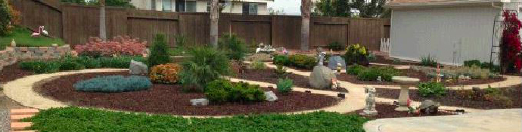
When it comes to our lawns all the rain we’ve been experiencing here in Northeast Florida has its pros and cons. First the good news, the regular rains have provided relief keeping the oppressive heat from drying out our grass and thus keeping the chinch bugs at bay. The bad news, persistent moist lawns have invited in the tropical sod webworms (Herpetogramma phaeopteralis Guenée)! They arrived early and have been wreaking havoc on our lawns for the last four months! There are several other species of webworms that also cause damage, but the tropical varieties have become a prevalent threat to the Northeast Florida lawns this year. The dingy gray triangular-shaped moths fluttering up from our feet while walking through the sod is the most obvious clue you have a problem requiring your immediate attention. While we cannot prevent them from flying in from neighboring lawns we should be looking and listening for their caterpillar larval stage feasting on the sod at night.
Unlike chinch bugs that eat the entire plant the sod webworms feast only on the sod leaf blades, but unchecked can do tremendous damage leaving behind large brown patches during infestations. Furthermore, don’t make the mistake of thinking winter cold will take care of the problem it may not be cold enough and the health of the untreated sod may be worse come Spring.
Treatments include Bacillus thuringiensis, a beneficial bacterium sold under several brands at Earth Works Garden Center. Homeowners may also choose the parathyroid insecticide bifenthrin either as a liquid or in combination with fertilizers such as Scotts Summerguard Lawn Food with Insect Control
For help addressing your specific lawn and lawn pest control needs to contact me Chad Lakin for a FREE Lawn Maintenance & Lawn Pest Control Quote: 996-0712
When it comes to our lawns all the rain we’ve been experiencing here in Northeast Florida has its pros and cons. First the good news, the regular rains have provided relief keeping the oppressive heat from drying out our grass and thus keeping the chinch bugs at bay. The bad news, persistent moist lawns have invited in the tropical sod webworms (Herpetogramma phaeopteralis Guenée)! They arrived early and have been wreaking havoc on our lawns for the last four months! There are several other species of webworms that also cause damage, but the tropical varieties have become a prevalent threat to the Northeast Florida lawns this year. The dingy gray triangular-shaped moths fluttering up from our feet while walking through the sod is the most obvious clue you have a problem requiring your immediate attention. While we cannot prevent them from flying in from neighboring lawns we should be looking and listening for their caterpillar larval stage feasting on the sod at night.
Unlike chinch bugs that eat the entire plant the sod webworms feast only on the sod leaf blades, but unchecked can do tremendous damage leaving behind large brown patches during infestations. Furthermore, don’t make the mistake of thinking winter cold will take care of the problem it may not be cold enough and the health of the untreated sod may be worse come Spring.
Treatments include Bacillus thuringiensis, a beneficial bacterium sold under several brands at Earth Works Garden Center. Homeowners may also choose the parathyroid insecticide bifenthrin either as a liquid or in combination with fertilizers such as Scotts Summerguard Lawn Food with Insect Control
For help addressing your specific lawn and lawn pest control needs to contact me Chad Lakin for a FREE Lawn Maintenance & Lawn Pest Control Quote: 996-0712
Earth Works designs, constructs, and provides support for people wanting water features of all sorts including patio-bowls, pondless waterfalls, water gardens, koi ponds, and recreation ponds. With weather events such as tropical storms and hurricanes, all these water bodies require specific care and attention before, during, and after the storms.
Fishless Water features: The biggest concern besides direct damage to a patio-bowl or pondless waterfall may be the standing water-attracting mosquitos after several days without electricity. • A simple solution is the mosquito dunks and bits available at large retail stores that will prevent mosquito breeding in these systems.
For ponds with fish: Water gardens, koi ponds, and recreation ponds have a more extensive set of concerns to keep those ecosystems and fish healthy in the event of storms and power outages.
• Reduce or stop feeding the fish several days before the storm to reduce their toxic ammonia output into the pond. • Go ahead and do any regularly scheduled water changes along with checking the filtration system, cleaning skimmer baskets, etc. • Assess the threat of pond water overflows and if that were to occur would it result in additional flooding issues or allow fish to escape? Might other hazardous materials enter the pond in flooding conditions? Sandbags could be useful. • Some pond owners will remove the fish and hold in a protected area to weather the storm. • If the threat of flying debris into the pond is significant netting or even sheets of plywood could be used for protection but must be safely secured.
• As filtration and oxygenation are critical for fish health backup generators are literally lifesavers! Battery-powered pond aerators are a quick, easy and inexpensive resource for situations where power may be out for only a few hours. • API 5 in 1 Pond Test Strips are invaluable for monitoring the critical pond water chemical parameters that affect fish health. We regularly stock these at our garden center. SEE OUR YOUTUBE VIDEO DEMONSTRATING USE:
• Be aware that the greater the number of fish and larger they are the greater their oxygen requirements and output of toxic ammonia into the pond. • EarthWorks carries a full-line of Aquascape Inc. products to keep your fish and pond healthy regardless of the critical situation they face.
Silverleaf Whiteflies are not actually flies but distant relatives of aphids and leafhoppers. And like aphids, whiteflies feed on plant sap and produce a sugary waste product called honeydew. Whiteflies cause damage in a variety of ways by eating the plant, as a result of their sugary excretions, and by spreading viruses. The most common genus and species were Bemisia Tabaci believed to have originated in India or the Middle East and identified in the United States dating back to 1896. In the 1980s another biotype, Bemisia Argentifolii began attacking Florida farms, poinsettias, tomatoes, and other fruits and vegetables. Within five years this biotype had spread to Texas and California costing over a billion dollars in agricultural loss.
Scientists have found a variety of effective biological and chemical controls along with cultural practice recommendations for reducing the threat of whiteflies. A couple of options we stock at Earth Works are either a broad spectrum or systemic insecticide from Ferti•lome.
Whiteflies once considered a minor pest have become a major problem for agriculture and may pop up in your garden.
For help addressing your specific lawn and lawn pest control needs contact Chad Lakin, Lawn Maintenance & Lawn Pest Control operations manager for a FREE Lawn Maintenance & Lawn Pest Control Quote: 904-996-0712.
Better Than Your Grandma’s Herb Box – The perfect herb box for any back porch, patio, green house or gift.
Time: 45 minutes
Servings: 1 Serving
Ingredients For the Container:
• 1 – 29 x 14 x 14” Planter Box
For the Planting Media:
• 1 – .5 c.f. Bag of Pea Gravel
• 1 – 2 c.f. Bag of Happy Frog Potting Soil
For the Plants:
• 1 – 10” Lavender
• 1 – 1 gal Pesto Basil
• 1 – 1 gal Creeping Rosemary
• 1 – 1 gal Blue Tuscan Rosemary
• 1 – 4” Blue African Basil
• 1 – 4” Genovese Basil
• 1 – 4” Dill
• 2 – 4” Sage
• 2 – 4” French Cooking Thyme
Instructions
1. Place planter box on flat surface that is easy to access.
2. Open bag of pea gravel and dump into the bottom of your planter box. This should give you about two inches of gravel which helps with the drainage.
3. Next, open your bag of Happy Frog potting soil and pour it into your container until half full.
4.Once your soil is in, take your biggest plant, the lavender, and figure out exactly where you want it. Since this is your biggest plant you might want to put it toward the back so it doesn’t overshadow some of your smaller plants. You might need to move some soil over to make sure the top of your plant’s soil is an inch or two from the top of your container. Remove the lavender from its plastic pot and loosen the roots, then place it in your planter box.
5.Now add in some more soil and build up around your plant till you can add your 1- gal plants without them being too low. Then take you 1 gal plants, place them where you want them and again make sure the top of their soil is an inch or two from the top. I recommend putting your creeping rosemary in the front of your pot or to the side so that it can fall to the side and create a nice cascading effect.
6.Repeat step 5 but this time raise your soil enough to be able to place your 4” plants. Again, I placed my thyme in front so it can grow over the side of the pot.
7.Lastly, you are going to fill in all the crevices in the container that don’t have dirt. Take a small plastic pot or use your hand to put soil in these areas and then pat it down with your hand. You can also water your pot now which will pull your soil down and show you any places you might have missed soil.
8.Your planter is now complete and ready to be enjoyed by you or anyone else who loves fresh herbs.
Water shortages are becoming increasingly common around the world, and the United States is no exception. It’s no wonder that people all around the country are turning to xeriscaping, permaculture, and other approaches to create a garden that requires low water input to thrive. You’ll be pleased to note, however, that you don’t need to sacrifice on aesthetics to put these techniques into practice. Here’s how to create a water-efficient landscape that looks great.
BUILD SWALES
A swale is a trench with a flat bottom, usually dug along the natural contour of sloped land, whose purpose is to catch rainwater and hold it temporarily. From there, the water can seep slowly into the soil, as opposed to running off quickly and dragging the topsoil along with it. Lining swales with trees or plants not only looks great, it helps retain water underground, from where it can spread to the landscape around the swale. Swales are more efficient than traditional rainwater catchment systems (that is, buckets and barrels) because the water is already exactly where it needs to be, and as a natural improvement, they look better too.
CONSTRUCT BERMS
A berm is a manufactured raised area to the landscape. You can use them to add variety and interest to flat yards, using stones and careful plant choices to add aesthetic appeal. On graded land you can construct them at the bottom of the slope to catch rainwater runoff, and you can increase the efficiency of the berm by using it to direct water into a swale. In doing so, plants placed on the berm can then access the water in the swale, so they’ll need less maintenance. When planning out your berm, remember that the south side will receive more sunlight and heat than the north side — keep this in mind when choosing your plants.
XERICAPE
If the dry season is hitting your area hard, xeriscaping is the way to go. Xeriscaping is a landscaping system specifically designed to conserve water in dry climates (the name stems from “xeros,” the Greek word for dry).
Xeriscaping follows seven principles: 1.Include water conservation in every aspect of planning 2.Improve soil quality — unless your chosen plants prefer unimproved soil 3.Limit lawn area, as grass is water-intensive 4.Use drought-tolerant plants native to your region 5.Do not have any areas of bare soil — cover it with mulch to retain moisture 6.Irrigate efficiently — ideally, with a system that irrigates deeper and less often 7.Maintain the garden regularly
Xeriscapes are not only water-conserving, they are low-maintenance, too. Once established, you’ll pretty much only be reaching for your garden gloves to re-mulch and de-weed.
CHOOSE PLANTS CAREFULLY
The main principle for plant choice is to aim for plants with deep roots. Such plants can store relatively large amounts of water underground, helping them last longer during a drought. In dry areas, landscapers often opt to have a shade tree transplanted in — even if not fully mature, a tree can be strategically positioned to protect sensitive plants from the blistering southwest sunshine. You can use drought-tolerant shrubs like bush cinquefoil or Adam’s-needle yucca to provide a transition from the tree to the rest of the landscape. Although many drought-resistant plants have earthy shades, that’s not always the case – creeping phlox, nasturtium (pictured), and sedum are examples of low maintenance plants that can add a splash of color.
PLAN PLAN AND PLAN
When resources like water are limited, planning is key. Spend a lot of time working out which modifications and improvements you’ll make to the land, which plants you’ll choose, and where they’ll go. Do all this in unison — a swale in one area will affect the plants you choose to put around it, a tree in another area means you’ll want plants that enjoy shade nearby. It takes some work, but if you’re mindful of what impacts your choices make on the plants around them, you can create a landscape that’s as efficient as it is beautiful.
Winter is here!! Learn how to protect your plants from the cold snaps.
The task of protecting your plants from “Old Man Winter” can be daunting, but if you adhere to these simple guidelines your landscape will be as beautiful as ever this Spring.
Jacksonville has many different micro-climates. So how much you will need to cover depends on where in town you live. For example, the beaches and along the river tend to be a few degrees warmer than the forecast and escape the worst of the freezes. While North and West of the river tend to be the coldest.
Hard Freeze Precautions! – Delicate plants need protection. Here are some valuable tips on how to care for your garden in freezing weather.
Some common plants found in Northeast Florida which need protection are:
There are too many other sensitive plants to name here. If you are not sure about a certain plant in your yard try www.floridata.com or call us at 996-0712. Plants in containers are especially susceptible. Plant roots have little ability to acclimate or develop cold tolerance. While the ground stays well above freezing on a bitterly cold night, the soil in a container gets almost as cold as the air temperature.
Even though container plants’ above-ground parts may survive a cold snap the roots may suffer injury. Such injury is often not evident until several months later when warmer temperatures begin to place increased demands on the plant. To protect container plants, group them closely together in a protected location up against the home. If very cold temperatures are forecast, cover them with frost cloth for the night.
The best way to protect in-ground plants from the cold is to cover them. At Earth Works, as well as other garden shops, you can find a freeze cloth that is light-weight yet thick enough to provide a few degrees of protection on a cold night. Blankets also work well but are heavier and may require some supports to avoid crushing tender bedding plants, especially when weighted down by rain.
A sheet of plastic placed on top of a blanket can help hold the warm air underneath. However, plastic can burn any leaves it touches on a cold night. This is avoided by placing it over a cloth cover. If more than one night of protection is needed, remove the covers during the day to allow the sun to warm the soil. Then cover them again late in the day.
Blankets keep us warm because they help contain the heat that our bodies produce. Plants do not produce heat for the cover to hold in. The heat we are trying to contain is in the soil. Therefore whenever possible the covers should go over the plants and to the ground. In some cases, this just isn’t practical, like with a tall roebellini palm. In such cases, gathering and wrapping the head of the palm will be necessary. Be careful to include the “heart” from which the new fronds grow.
Two other handy items are a mechanic’s light or a string of outdoor Christmas lights. These can be placed under the covers to give added heat. Just take the obvious precautions to avoid fire hazards and electric shorts. Also, take care not to allow a hot light bulb to contact and damage plant tissues such as the trunk or branches. Use lights beneath a cover to protect valuable but marginally hardy plants like citrus trees. They can also make the difference for an in-ground bougainvillea on a really cold night.
When a freeze is a forecast, give plants a good watering a day or so in advance. Drought-stressed plants are more susceptible to cold injury. The moist soil is also a good “heat sink”, absorbing heat during the day and radiating it out slowly on a cold night. Combined with a cover it can make a small but important difference.
Of course, we must take care not to overwater, creating a water-logged soil condition. Soil dries out much more slowly in winter. Soggy soil excludes oxygen from the roots, often resulting in root loss and attack by root-rotting fungi.
Finally, you can use leaves to mulch perennial plants. A thick blanket of leaves can help protect marginal perennials.
We have rolls of 12′ wide freeze cloth to cut to any length as well as precut packages available at the Garden Center. If you have any questions just give us a call 996-0712.
Winter is here!! Learn how to protect your plants from the cold snaps.
The task of protecting your plants from “Old Man Winter” can be daunting, but if you adhere to these simple guidelines your landscape will be as beautiful as ever this Spring.
Jacksonville has many different micro-climates. So how much you will need to cover depends on where in town you live. For example, the beaches and along the river tend to be a few degrees warmer than the forecast and escape the worst of the freezes. While North and West of the river tend to be the coldest.
Hard Freeze Precautions! – Delicate plants need protection. Here are some valuable tips on how to care for your garden in freezing weather.
Some common plants found in Northeast Florida which need protection are:
There are too many other sensitive plants to name here. If you are not sure about a certain plant in your yard try www.floridata.com or call us at 996-0712. Plants in containers are especially susceptible. Plant roots have little ability to acclimate or develop cold tolerance. While the ground stays well above freezing on a bitterly cold night, the soil in a container gets almost as cold as the air temperature.
Even though container plants’ above-ground parts may survive a cold snap the roots may suffer injury. Such injury is often not evident until several months later when warmer temperatures begin to place increased demands on the plant. To protect container plants, group them closely together in a protected location up against the home. If very cold temperatures are forecast, cover them with frost cloth for the night.
The best way to protect in-ground plants from the cold is to cover them. At Earth Works, as well as other garden shops, you can find a freeze cloth that is light-weight yet thick enough to provide a few degrees of protection on a cold night. Blankets also work well but are heavier and may require some supports to avoid crushing tender bedding plants, especially when weighted down by rain.
A sheet of plastic placed on top of a blanket can help hold the warm air underneath. However, plastic can burn any leaves it touches on a cold night. This is avoided by placing it over a cloth cover. If more than one night of protection is needed, remove the covers during the day to allow the sun to warm the soil. Then cover them again late in the day.
Blankets keep us warm because they help contain the heat that our bodies produce. Plants do not produce heat for the cover to hold in. The heat we are trying to contain is in the soil. Therefore whenever possible the covers should go over the plants and to the ground. In some cases, this just isn’t practical, like with a tall roebellini palm. In such cases, gathering and wrapping the head of the palm will be necessary. Be careful to include the “heart” from which the new fronds grow.
Two other handy items are a mechanic’s light or a string of outdoor Christmas lights. These can be placed under the covers to give added heat. Just take the obvious precautions to avoid fire hazards and electric shorts. Also, take care not to allow a hot light bulb to contact and damage plant tissues such as the trunk or branches. Use lights beneath a cover to protect valuable but marginally hardy plants like citrus trees. They can also make the difference for an in-ground bougainvillea on a really cold night.
When a freeze is a forecast, give plants a good watering a day or so in advance. Drought-stressed plants are more susceptible to cold injury. The moist soil is also a good “heat sink”, absorbing heat during the day and radiating it out slowly on a cold night. Combined with a cover it can make a small but important difference.
Of course, we must take care not to overwater, creating a water-logged soil condition. Soil dries out much more slowly in winter. Soggy soil excludes oxygen from the roots, often resulting in root loss and attack by root-rotting fungi.
Finally, you can use leaves to mulch perennial plants. A thick blanket of leaves can help protect marginal perennials.
We have rolls of 12′ wide freeze cloth to cut to any length as well as precut packages available at the Garden Center. If you have any questions just give us a call 996-0712.
#1- Whatever type of water feature you choose, Earth Works’ pond crew will make it amazing.
From a small fountain on your patio to an in-ground pond with exotic koi fish, colored lights and fountains, experts at Earth Works will find a water feature option that fits your budget and lifestyle while beautifying your surroundings. Our landscape professionals focus on making sure you get what you’re looking for, help you choose a location and with a pond kit, and install your pond from start to finish. Custom options are almost limitless with your choice of stone, lights, fountains, fish, foliage, waterfalls and water plants. You can even add a patio, fire pit, and pergola so you can enjoy your outdoor space and pond year-round.
#2 – Not ready to go the whole hog with an in-ground pond? Start small with a miniature Water Garden or Patio Pond that you can easily set up yourself! We offer a variety of Patio Ponds ready to go home
We offer a variety of Patio Ponds ready to go home with you and immediately brighten up your outdoor living space. Patio Ponds can even sustain small water gardens and certain types of fish for the full “pond experience” on a micro-level. Relaxing on your patio with your Patio Pond adds an artistic centerpiece and the calming sound of moving water.
#3- Contrary to popular belief, having your own pond ADDS to your quality of life and maintenance is a snap!
Often homeowners shy away from adding a water feature to their landscape because there’s a misconception that ponds require a lot of maintenance. Earth Works’ landscaping professionals work with you to pick the right location on your property to install your pond based on your size specifications with a quality pond kit (filtration & pump system, liner, and more depending on what custom features you choose), and your new, beautiful pond is ready to show off to your friends and neighbors! Our Earth Works landscapers will show you how easy it is to maintain your own pond. We’ll always be there for you to answer any questions or help you need after the installation is complete.
#4- In-ground water features like ponds add curb appeal and value to your home.
Besides making your neighbors jealous, your new pond can actually increase curb appeal and add value to your home when it comes time to sell as part of a well-landscaped property. Good, maintained landscaping can add up to 12 to 15 percent to your property’s value!
#5- The relaxing sound of cool running water on a hot summer day.
Free-standing fountain, water garden or in-ground pond, stream or waterfall, there’s nothing like a lounge chair in the shade, enjoying a fresh cold beverage, basking in the ambiance of the cool sounds of running water in your dream backyard during the dog days of summer.
#6 – Water features attract visitors, like birds and butterflies.
Not only can you choose from a huge variety of water plants at Earth Works for your pond, bathing birds and thirsty butterflies come along for free! When you add a new waterscape in your yard, you create a new ecosystem that brings new, lovely visitors to further enrich and beautify your outdoor space.
#7 – Looking for an accent piece for your garden?
A fountain is a great solution that’s much more unique than your average garden gnome. Plus, fountains come in all shapes, colors, and sizes, and even more awesome, you get the relaxing sound of falling water. There’s even a new fountain called a Fire Fountain, and yep, it’s exactly what it sounds like. A fountain with fire in the middle! Whatever your preference, a fountain’s sure to add something special to your outdoor space.
Ready to pull the trigger and get that pond you’ve always wanted? Call 904-996-0712 or stop by our shop located at 12501 Beach Blvd and we’ll help you make your dream backyard happen!
Share Your Story!
Manage Consent
To provide the best experiences, we use technologies like cookies to store and/or access device information. Consenting to these technologies will allow us to process data such as browsing behavior or unique IDs on this site. Not consenting or withdrawing consent, may adversely affect certain features and functions.
Functional
Always active
The technical storage or access is strictly necessary for the legitimate purpose of enabling the use of a specific service explicitly requested by the subscriber or user, or for the sole purpose of carrying out the transmission of a communication over an electronic communications network.
Preferences
The technical storage or access is necessary for the legitimate purpose of storing preferences that are not requested by the subscriber or user.
Statistics
The technical storage or access that is used exclusively for statistical purposes.The technical storage or access that is used exclusively for anonymous statistical purposes. Without a subpoena, voluntary compliance on the part of your Internet Service Provider, or additional records from a third party, information stored or retrieved for this purpose alone cannot usually be used to identify you.
Marketing
The technical storage or access is required to create user profiles to send advertising, or to track the user on a website or across several websites for similar marketing purposes.