Earth Works of Jacksonville as a member of the Interconnecting Concrete Paver Institute (ICPI) provides professional hardscaping services and information on paver care and maintenance. See examples of our completed paver projects in our photo gallery and youtube channel. We answer commonly asked questions below.
What should I expect during my paver project?
–Paver Dust: Make sure all furniture and valuables are covered and protected.
–Loud Noise: This is due to the paver saw.
-If you are doing a paver driveway expect to not be able to park in your driveway for a certain amount of days; determined by the size of the project.
If you have additional questions during your project, please ask the foreman who will be at your job daily.
Why should I use polymeric sand? This product is a fine sane combined with additives, usually silica, that when mixed with water, form a binding agent. These binders lock the sand particles together, which helps lock all the pavers together. A heavy rain will not wash all the sand out like regular sand. It also deters weed growth and ants. Plain sand is a much more inviting home for weeds and ant pests.
Why should my pavers be sealed? Sealing your pavers will slow down fading and provide a measure of protection from some stains. Before sealing, pavers must be clean and dry. It is recommended that you wait at least 45-60 days after installation before sealing. Once sealed, you will need to reseal approximately every three to five years.
How do I clean my pavers? Applying bleach to a paver job is not recommended. Common dish soap can be used in conjunction with a light pressure wash.
Why do my pavers have a chalky, white surface residue? This is called efflorescence which is a natural process occurring with almost all concrete and masonry products. Pavers exhibiting signs of efflorescence are NOT defective and not covered under warranty.
Efflorescence is created when the calcium oxide naturally found in the cement mixes with water to form calcium hydroxide, it leaches to the surface of the paver where it comes in contact with the carbon dioxide in the air and forms calcium carbonate which forms the white, chalky residue referred to as efflorescence. Eventually, efflorescence will disappear on its own. If you wish to fasten the process then use an Efflorescence Cleaner such as Foundation Armor found at Home Depot.
How do I remove oil stains and tire marks?
-Use paint and rubber remover to remove tire marks from pavers.
-Use professional grade oil and grease cleaner to remove oil and grease stains from pavers such as Pull It Out Concrete Stain Remover found at Home Depot.
-Sealing your pavers will help prevent oil stains and tire marks and make them easier to remove in the future.
Can I use Muriatic Acid on my pavers? No, muriatic acid will damage the surface of the pavers and cause pitting to appear.
Will my pavers fade over time? Over time all pavers will begin to fade if left unsealed. Sealing your pavers with a paver sealer after the natural process of efflorescence is complete will provide a barrier of protection against UV rays and harsh climate.
Plus, remember that for comprehensive solutions to your specific lawn, garden and landscaping need contact Earth Works of Jacksonville online and at 904-996-0712. Earth Works operates a retail Garden Center/Plant Nursery in Jacksonville and provides landscaping, hardscaping, water features, lawn care service, lawn spraying, and drainage solutions. Proudly serving clients in Northeast Florida including Jacksonville, Ponte Vedra Beach, Atlantic Beach, Neptune Beach, Jacksonville Beach, Nocatee, St. Johns, Fleming Island, Orange Park, Middleburg, Green Cove Springs, Amelia Island, Fernandina, and St. Augustine.
You may like the sound of running water, but don’t want a pond. Earth Works of Jacksonville, Florida has a variety of pondless water features on display at our garden center that demonstrate a few of your design possibilities. The hardware for these pondless water features is manufactured by Aquascape Inc that Earth Works also sells as kits to clients who wish to do it yourself (DIY). As Certified Aquascape Contractors (CAC) Earth Works landscape department staff work with clients to develop designs and install in landscapes throughout Northeast, Florida.
Pondless Waterfall Garden Center Displays Include:
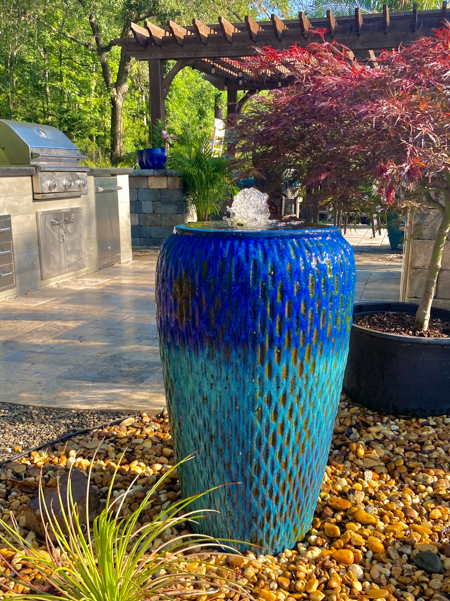
Water Pot Features: Aquabasin 45, 10×10 Pond Liner Pump Size: Ultra Pump 2000 Contact for pricing.
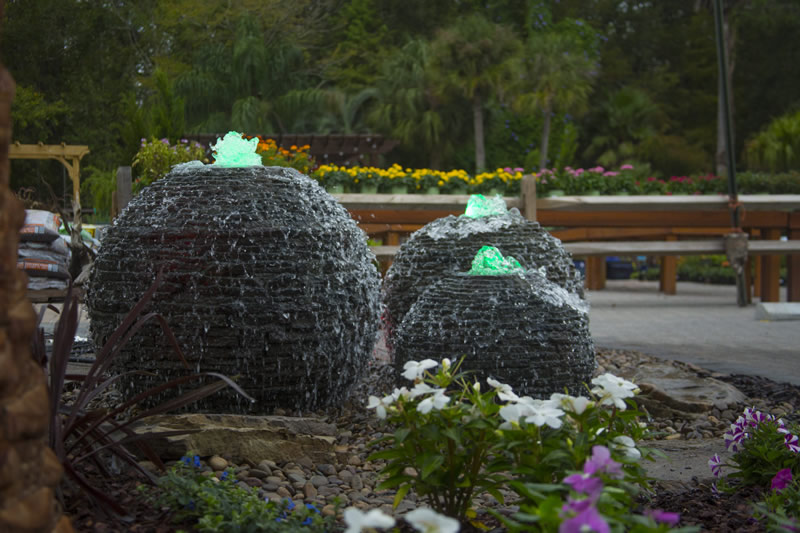
Basalt Columns Size: 1- 24”H, 2-30”H, 3-36”H Features: 2 Night Light, Recirculating system, Large Aquabasin, Built with Mexican Beach Pebble. Pump Size: Ultra 2000 Water Pump. Contact for pricing.
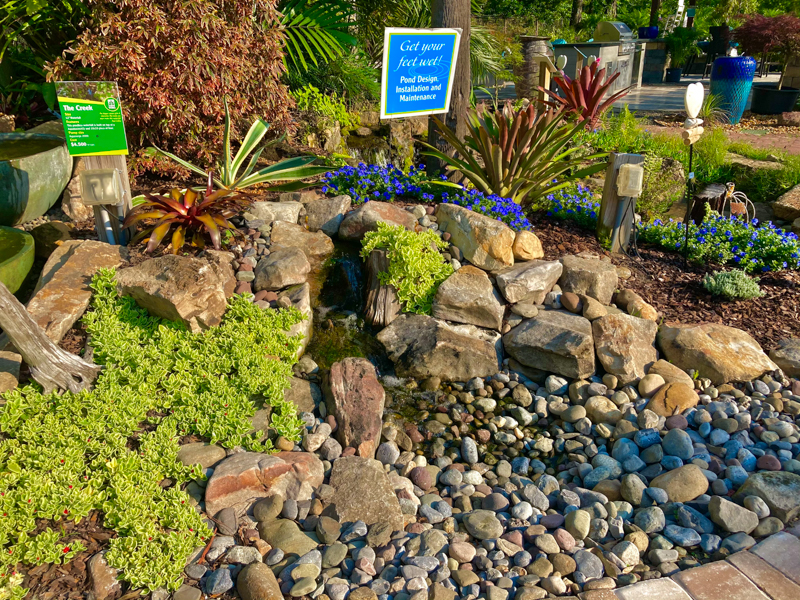
The Creek Size: 12” Waterfall Features: This pondless waterfall is built on top of a Aquabasin (45) and 10×10 piece of liner. Pump Size: Aquasurge 2000 Contact for pricing.
Rocky River Size: 2ft waterfall, 4ft stream. Features: Spillway, Small Aquabloxs, 15×20 Pond Liner, Underlayment, River Jacks and IonGen G2. Pump Size: Aquasurge 5000 Contact for pricing.
Mountain Falls Size: 2.5 ft waterfall x 5ft stream. Features: Low maintenance pondless waterfall, built with Missouri rock. Pump Size: Aquasurge 4000-8000 Adjustable flow pump. With Tennessee Field Stone or Missouri Rock. Contact for pricing.
Stacked Slate Spheres Set of 3 Features: Large Aquablox, Pond Liner, and River Rock. Pump Size: Aquasurge Pro 4000-8000 Contact for pricing.
Entrance Elegance Size 12ft x 8ft Features: Large Aquablox, Pond Linter, Missouri Rock, IonGen G2, Patio Pond 32”, Patio Pond 40”, Curved Stacked Slate Wall 32”. Pump Size: Aquasurge Pro 2000-4000 and Aquasurge Pro 4000-8000. Contact for pricing.
Visit the Earth Works Garden Center to see these water feature options, call 904-996-0714 or request to book a design consultation. Earth Works of Jacksonville is Northeast Florida’s Premier Aquascape Certified Contractor with over 30 years of experience serving clients and delivering available pond options in Northeast Florida.
Plus, remember that for comprehensive solutions to your specific lawn, garden and landscaping need contact Earth Works of Jacksonville online and at 904-996-0712. Earth Works operates a retail Garden Center/Plant Nursery in Jacksonville and provides landscaping, hardscaping, water features, lawn care service, lawn spraying, and drainage solutions. Proudly serving clients in Northeast Florida including Jacksonville, Ponte Vedra Beach, Atlantic Beach, Neptune Beach, Jacksonville Beach, Nocatee, St. Johns, Fleming Island, Orange Park, Middleburg, Green Cove Springs, Amelia Island, Fernandina, and St. Augustine. Happy Gardening!
Brown palm frond tips, called “frizzle top” on new growth, are a cause for concern for newly planted palm species. Palms depending on size, are often pricey and a prized addition to a homeowners landscape plant collection. As popular palm species originate in all sorts of environments, from deserts to river banks and rainforests, keeping a thriving palm collection requires some knowledge of their specific variety requirements. The slow growth rate in palms coincides with an equally slow display of outward signs problems such as brown palm frond tips. For your palm to flourish it needs the right climate, water, and nutrition free of disease otherwise brown palm frond tips and other problems appear.
When planting your palm, make sure the root ball is placed at the surface or slightly above, not completed buried. Burying the rootball too deep can result in water and iron deficiencies in the palm and brown palm frond tips. In addition, the amount of sun they receive and climate is essential to your palm’s long-term health. Some palms prefer direct sun, others indirect sunlight. High humidity is typically preferred but not something you can only control for container palms indoors.
Too much and too little watering will cause brown palm frond tips. Typically palms prefer moist, well-draining soil. Too much water in poorly draining soil can cause root rot, whereas too little water in sandy soil can also harm your palm. Know the specific requirements of your palm as some such as the Everglades palms and mangrove fan palms grow naturally along river banks and water bodies. In contrast, Bismarck’s palms are extremely drought tolerant doing well in dry heat, desert-like conditions.
Sandy Northeast Florida soil is susceptible to mineral deficiencies negatively impacting palms. These minerals include boron, calcium, iron, magnesium, nitrogen, and potassium. “Magnesium deficiency is very common on highly leached soils in Florida, Hawaii, and other tropical areas,” according to the University of Florida. “It can also occur in container-grown palms if dolomitic limestone has not been added to the substrate. Also, since palms may remain in a container for up to a year or longer, any added dolomite is usually exhausted after six months or so with Mg deficiency symptoms becoming visible as a result. Most species of palms are susceptible to Mg deficiency to some degree, but Phoenix canariensis is by far the most susceptible species to this disorder.
Temperature, pH and certain soil amendments in the soil can result in a deficiency of magnesium that also resultw in frizzle top systems in a variety of palms in Northeast Florida. “Manganese deficiency is very common on alkaline soils, but can occur in containers if drainage is poor or soil temperatures are cool,” according to the University of Florida. “Most species of palms can be affected, but Syagrus romanzoffiana (queen palm), Roystonea regia, (royal palm), Acoelorrhaphe wrightii (paurotis palm), Phoenix roebelenii (pygmy date palm), and Elaeis guineensis (African oil palm) are particularly susceptible.”
Pests including weevils & root rot are often associated with increased stress in newly planted palms. However, in most scenarios, the pruning of your palm should remain the same whether it is healthy or not, considering the plant redirects nutrition from diminishing fronds to elsewhere in the plant. Review our palm pruning video for specific directions on proper palm pruning.
Earth Works has a variety of palm nutritional products and fungicides that will benefit their health. To diagnose the specific cause of brown palm frond tips and other palm problems, take pictures and contact your helpful Earth Works garden center staff.
Plus, remember that for comprehensive solutions to your specific lawn, garden and landscaping need contact Earth Works of Jacksonville online and at 904-996-0712. Earth Works operates a retail Garden Center/Plant Nursery in Jacksonville and provides landscaping, hardscaping, water features, lawn care service, lawn spraying, and drainage solutions. Proudly serving clients in Northeast Florida including Jacksonville, Ponte Vedra Beach, Atlantic Beach, Neptune Beach, Jacksonville Beach, Nocatee, St. Johns, Fleming Island, Orange Park, Middleburg, Green Cove Springs, Amelia Island, Fernandina, and St. Augustine. Happy Gardening!
Brown palm frond tips, called “frizzle top” on new growth, are a cause for concern for newly planted palm species. Palms depending on size, are often pricey and a prized addition to a homeowners landscape plant collection. As popular palm species originate in all sorts of environments, from deserts to river banks and rainforests, keeping a thriving palm collection requires some knowledge of their specific variety requirements. The slow growth rate in palms coincides with an equally slow display of outward signs problems such as brown palm frond tips. For your palm to flourish it needs the right climate, water, and nutrition free of disease otherwise brown palm frond tips and other problems appear.
When planting your palm, make sure the root ball is placed at the surface or slightly above, not completed buried. Burying the rootball too deep can result in water and iron deficiencies in the palm and brown palm frond tips. In addition, the amount of sun they receive and climate is essential to your palm’s long-term health. Some palms prefer direct sun, others indirect sunlight. High humidity is typically preferred but not something you can only control for container palms indoors.
Too much and too little watering will cause brown palm frond tips. Typically palms prefer moist, well-draining soil. Too much water in poorly draining soil can cause root rot, whereas too little water in sandy soil can also harm your palm. Know the specific requirements of your palm as some such as the Everglades palms and mangrove fan palms grow naturally along river banks and water bodies. In contrast, Bismarck’s palms are extremely drought tolerant doing well in dry heat, desert-like conditions.
Sandy Northeast Florida soil is susceptible to mineral deficiencies negatively impacting palms. These minerals include boron, calcium, iron, magnesium, nitrogen, and potassium. “Magnesium deficiency is very common on highly leached soils in Florida, Hawaii, and other tropical areas,” according to the University of Florida. “It can also occur in container-grown palms if dolomitic limestone has not been added to the substrate. Also, since palms may remain in a container for up to a year or longer, any added dolomite is usually exhausted after six months or so with Mg deficiency symptoms becoming visible as a result. Most species of palms are susceptible to Mg deficiency to some degree, but Phoenix canariensis is by far the most susceptible species to this disorder.
Temperature, pH and certain soil amendments in the soil can result in a deficiency of magnesium that also resultw in frizzle top systems in a variety of palms in Northeast Florida. “Manganese deficiency is very common on alkaline soils, but can occur in containers if drainage is poor or soil temperatures are cool,” according to the University of Florida. “Most species of palms can be affected, but Syagrus romanzoffiana (queen palm), Roystonea regia, (royal palm), Acoelorrhaphe wrightii (paurotis palm), Phoenix roebelenii (pygmy date palm), and Elaeis guineensis (African oil palm) are particularly susceptible.”
Pests including weevils & root rot are often associated with increased stress in newly planted palms. However, in most scenarios, the pruning of your palm should remain the same whether it is healthy or not, considering the plant redirects nutrition from diminishing fronds to elsewhere in the plant. Review our palm pruning video for specific directions on proper palm pruning.
Earth Works has a variety of palm nutritional products and fungicides that will benefit their health. To diagnose the specific cause of brown palm frond tips and other palm problems, take pictures and contact your helpful Earth Works garden center staff.
Plus, remember that for comprehensive solutions to your specific lawn, garden and landscaping need contact Earth Works of Jacksonville online and at 904-996-0712. Earth Works operates a retail Garden Center/Plant Nursery in Jacksonville and provides landscaping, hardscaping, water features, lawn care service, lawn spraying, and drainage solutions. Proudly serving clients in Northeast Florida including Jacksonville, Ponte Vedra Beach, Atlantic Beach, Neptune Beach, Jacksonville Beach, Nocatee, St. Johns, Fleming Island, Orange Park, Middleburg, Green Cove Springs, Amelia Island, Fernandina, and St. Augustine. Happy Gardening!
The warmest months of the year are times you expect to enjoy your pond and water garden the most, but anxiety arrives if your fish are suffering as a result of a poorly designed & equipped, dirty, overstocked pond that all contribute to low dissolved oxygen. There you are trying to enjoy some time pondside as that Summer warmth cooks the O2 out when the fish need it most. Supplemental aeration helps during these times of Summer by raising the dissolved oxygen levels. “Fish require a certain amount of oxygen in the water – at least 5 parts per million,” according to the University of Florida. “Any lower than that, and they begin to have trouble; when dissolved oxygen levels fall below 2 ppm, an immediate fish kill will occur.”
As Certified Aquascape Contractors, Earth Works of Jacksonville designs and builds healthy, low-maintenance ecosystem ponds and provides annual clean-out services to reduce the potential negative impacts of sludge and debris buildup and their consequential aerobic bacterial breakdown. Ecosystem imbalances can occur along with low DO when pond cleaning is not done as needed, in instances of excessive fish stocking, and where there is excessive algae growth. In addition, sludge and debris buildup is broken down by oxygen-dependent bacteria that further reduces the limited O2 supply available to fish. Small amounts of algae are a normal part of a healthy pond ecosystem. However, excessive nutrient buildup from debris and fish waste can result in algae blooms in your pond, with consequences similar to what’s observed in nature. “Trace minerals or nutrients needed by the algae are occasionally used up, causing some or even all, of the bloom to die back temporarily,” according to Freshwater Aquaculture, at US Department of Agriculture. “The resulting bacterial decomposition and loss of normal oxygen production can lead to oxygen depletions and fish kills.” Fish kills aren’t uncommon with ponders who forget and leave the hose filling the pond and many whose koi outgrew the pond and filtration system without getting it updated in time.
You want the best for your fish and you know when your wet pets are happy or not. “A habitually low oxygen level can be linked to slow fish growth and persistent fish sickness, and it may contribute to repetitive parasite outbreaks,” wrote Ellen Kloubec for Pond Trade magazine. “Continued exposure to low DO is also considered a precursor to bacterial infections in fish. Even short periods of oxygen deprivation can have damaging effects.”
It can seem like a cruel joke that your koi and goldfish are least active in Winter when they have the most available dissolved oxygen and are the most active when there is the least amount of DO available. So what are some of the solutions if you are experiencing problems with your pond system or want to be proactive in addressing potential threats before they arise? “Turning over the water is the best way to increase oxygen in your pond,” according to Practical Fishkeeping. “Waterfalls are another excellent way of bringing needed movement and gas exchange. As the thin film of water runs down the slope, it absorbs oxygen which then transfers to the pond below. An air pump will also aerate a pond, although many people believe that the bubbles themselves provide the oxygen content. This is not the case, as the increased surface area and water movement do the work.”
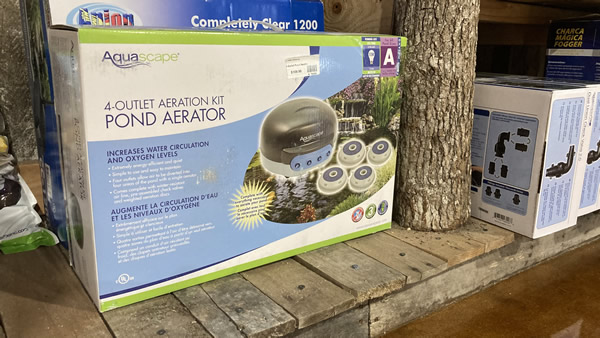
To supplement your pond and water garden dissolved oxygen fish requirements Earth Works Garden Center has available several models of Aquascape Pond Aeration kits that increase water circulation and oxygen levels. Unlike small aquarium-style air stones, these aerators provide greater output with large diffuser discs. “Oxygen is transferred as the bubbles rise through the water column,” according to Craig Tucker, Mississippi State University, published by the Southern Regional Agricultural Center and the Texas Aquaculture Extension Service. “Diffusers for large-scale aeration are usually discs, plates, or tubes constructed of glass-bonded silica, ceramic, porous plastic, or flexible perforated membranes. Diffusers are customarily arranged in a grid pattern over the bottom of the pond, with the number of individual diffusers determined by the oxygen transfer rate of the diffuser and the oxygen consumption rate in the water. Oxygen transfer increases with smaller bubble size, deeper bubble release point, and higher oxygen content in the bubbles.”
Although you cannot count on your fish telling you when they are suffering from low dissolved oxygen signs can include lethargy and them hanging out at the surface doing what’s called “piping” the fish version of gasping for breath. Keep your wet pets properly oxygenated for their health and your sanity when you see them suffering.
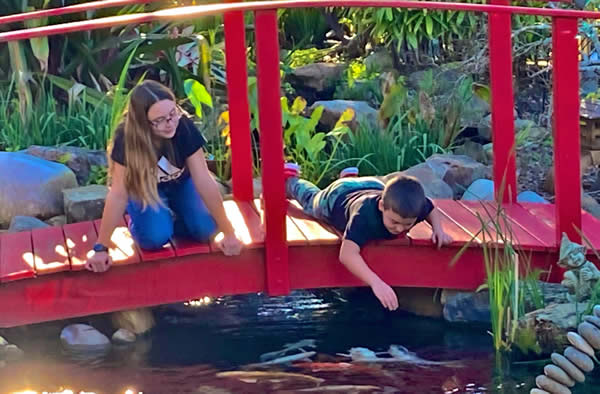
If you want a bigger pond for your growing wet pets or you need to get on our schedule for seasonal pond cleanouts contact the Earth Works Landscape Department at 904-996-0712! Earth Works designers and staff at the garden center are ready to assist you and we encourage strolls of the garden center ponds, water features, and wet pets!
Plus, remember that for comprehensive solutions to your specific lawn, garden and landscaping need contact Earth Works of Jacksonville online and at 904-996-0712. Earth Works operates a retail Garden Center/Plant Nursery in Jacksonville and provides landscaping, hardscaping, water features, lawn care service, lawn spraying, and drainage solutions. Proudly serving clients in Northeast Florida including Jacksonville, Ponte Vedra Beach, Atlantic Beach, Neptune Beach, Jacksonville Beach, Nocatee, St. Johns, Fleming Island, Orange Park, Middleburg, Green Cove Springs, Amelia Island, Fernandina, and St. Augustine. Happy Gardening!
Low dissolved oxygen levels in ponds is most common in Summer and pose a health risk to koi and other aquatic life that Earth Works help clients remedy. There you are trying to enjoy some time pondside as that Summer warmth cooks the O2 out when the koi and goldfish need it most. Supplemental aeration helps during these times of Summer by raising the dissolved oxygen levels. “Fish require a certain amount of oxygen in the water – at least 5 parts per million,” according to the University of Florida. “Any lower than that, and they begin to have trouble; when dissolved oxygen levels fall below 2 ppm, an immediate fish kill will occur.”
As Certified Aquascape Contractors, Earth Works of Jacksonville designs and builds healthy, low-maintenance ecosystem ponds and provides annual clean-out services to reduce the potential negative impacts of sludge and debris buildup and their consequential aerobic bacterial breakdown. Ecosystem imbalances can occur along with low DO when pond cleaning is not done as needed, in instances of excessive fish stocking, and where there is excessive algae growth. In addition, sludge and debris buildup is broken down by oxygen-dependent bacteria that further reduces the limited O2 supply available to fish. Small amounts of algae are a normal part of a healthy pond ecosystem. However, excessive nutrient buildup from debris and fish waste can result in algae blooms in your pond, with consequences similar to what’s observed in nature. “Trace minerals or nutrients needed by the algae are occasionally used up, causing some or even all, of the bloom to die back temporarily,” according to Freshwater Aquaculture, at US Department of Agriculture. “The resulting bacterial decomposition and loss of normal oxygen production can lead to oxygen depletions and fish kills.” Fish kills aren’t uncommon with ponders who forget and leave the hose filling the pond and many whose koi outgrew the pond and filtration system without getting it updated in time.
You want the best for your fish and you know when your wet pets are happy or not. “A habitually low oxygen level can be linked to slow fish growth and persistent fish sickness, and it may contribute to repetitive parasite outbreaks,” wrote Ellen Kloubec for Pond Trade magazine. “Continued exposure to low DO is also considered a precursor to bacterial infections in fish. Even short periods of oxygen deprivation can have damaging effects.”
It can seem like a cruel joke that your koi and goldfish are least active in Winter when they have the most available dissolved oxygen and are the most active when there is the least amount of DO available. So what are some of the solutions if you are experiencing problems with your pond system or want to be proactive in addressing potential threats before they arise? “Turning over the water is the best way to increase oxygen in your pond,” according to Practical Fishkeeping. “Waterfalls are another excellent way of bringing needed movement and gas exchange. As the thin film of water runs down the slope, it absorbs oxygen which then transfers to the pond below. An air pump will also aerate a pond, although many people believe that the bubbles themselves provide the oxygen content. This is not the case, as the increased surface area and water movement do the work.”
To supplement your pond and water garden dissolved oxygen fish requirements Earth Works Garden Center has available several models of Aquascape Pond Aeration kits that increase water circulation and oxygen levels. Unlike small aquarium-style air stones, these aerators provide greater output with large diffuser discs. “Oxygen is transferred as the bubbles rise through the water column,” according to Craig Tucker, Mississippi State University, published by the Southern Regional Agricultural Center and the Texas Aquaculture Extension Service. “Diffusers for large-scale aeration are usually discs, plates, or tubes constructed of glass-bonded silica, ceramic, porous plastic, or flexible perforated membranes. Diffusers are customarily arranged in a grid pattern over the bottom of the pond, with the number of individual diffusers determined by the oxygen transfer rate of the diffuser and the oxygen consumption rate in the water. Oxygen transfer increases with smaller bubble size, deeper bubble release point, and higher oxygen content in the bubbles.”
Although you cannot count on your fish telling you when they are suffering from low dissolved oxygen signs can include lethargy and them hanging out at the surface doing what’s called “piping” the fish version of gasping for breath. Keep your wet pets properly oxygenated for their health and your sanity when you see them suffering.
If you want a bigger pond for your growing wet pets or you need to get on our schedule for seasonal pond cleanouts contact the Earth Works Landscape Department at 904-996-0712! Earth Works designers and staff at the garden center are ready to assist you and we encourage strolls of the garden center ponds, water features, and wet pets!
Plus, remember that for comprehensive solutions to your specific lawn, garden and landscaping need contact Earth Works of Jacksonville online and at 904-996-0712. Earth Works operates a retail Garden Center/Plant Nursery in Jacksonville and provides landscaping, hardscaping, water features, lawn care service, lawn spraying, and drainage solutions. Proudly serving clients in Northeast Florida including Jacksonville, Ponte Vedra Beach, Atlantic Beach, Neptune Beach, Jacksonville Beach, Nocatee, St. Johns, Fleming Island, Orange Park, Middleburg, Green Cove Springs, Amelia Island, Fernandina, and St. Augustine. Happy Gardening!
Having professionals seal your pavers provides peace of mind that your investment is beautiful and adequately protected for years to come.
Benefits of sealing pavers include: BEAUTIFIES paver surface revealing increased color and texture. PROTECTS against stains, weathering, and wear. PREVENTS sand loss and deters plants and insects between joints. ADDS value to your investment.
Sealing your pavers requires additional budgeted expense for labor and materials over and above the paver installation cost and cannot be done immediately after installation. “It is not necessary to seal the pavers,” according to Tremron. “Sealing does however retard fading the color of the pavers and provides a measure of protection from some stains. “Before sealing, pavers must be clean and dry. It is recommended that you wait at least 30-60 days after installation before sealing. Once sealed, you will need to reseal approximately every three to five years.”
Earth Works of Jacksonville is a member of the Interlocking Concrete Pavement Institute (ICPI), a trade association that sets industry standards for design professionals and contractors. “Like any construction project, the quality of the finished product is highly dependent on the quality of the contractor doing the work,” according to ICPI. “You are investing in long-lasting interlocking concrete pavement. ICPI Certified Installers: • Have installed a minimum of 10,000 square feet of pavers • Attended a 2-day intensive training course on industry best practices for installation of interlocking concrete pavers • Passed a written certification exam • Complete continuing education requirements to stay on top of industry best practices.”
“Some of the patios we come across are pretty dirty,” said Tim Gibson, Earth Works foreman. “A lot of them have mildew and mold, which all comes out of course, and after the sealant goes down, it prevents it, but it does not eliminate the possibility of it coming back. The sealant protects the paver and helps stop ants and plants, but it doesn’t prevent them unless polymeric sanded. The reason we seal is to protect the paver from stains such as rust stains and vegetation stains. Plus, it enhances the color of the paver as well.” Steps for sealing your pavers include: -Pressure washing. -Rinse off to remove residue. -Dry and resand between pavers. -Seal and allow to dry before walking on.
Beware of uncredentialed paver installers and sealant applicators. “Some of them, they rove around, and some do excellent jobs, said Coloma Township Highway Commissioner Ruthie Rogers. “And some, they’re here and you never see them again. It’s kind of hit and miss and they move right on.”
Earth Works has been providing professional service in the Northeast Florida area for over thirty years. Related products and services offered by Earth Works of Jacksonville include: -Paver installation, repair, cleaning, sanding, and sealing -Full service design and installation services including landscaping, paver patios, kitchens, pergolas, and ponds. Plus, lawn pest control, fertilization, mowing, and trimming. -Full service garden center and outdoor living design showroom.
Plus, remember that for comprehensive solutions to your specific lawn, garden and landscaping need contact Earth Works of Jacksonville online and at 904-996-0712. Earth Works operates a retail Garden Center/Plant Nursery in Jacksonville and provides landscaping, hardscaping, water features, lawn care service, lawn spraying, and drainage solutions. Proudly serving clients in Northeast Florida including Jacksonville, Ponte Vedra Beach, Atlantic Beach, Neptune Beach, Jacksonville Beach, Nocatee, St. Johns, Fleming Island, Orange Park, Middleburg, Green Cove Springs, Amelia Island, Fernandina, and St. Augustine. Happy Gardening!
Earth Works has four display ponds at our garden center demonstrating the available pond options in Northeast Florida. Each of the ponds have signs posted next to them with the specifications for Do-It-Yourselfers and for clients who prefer that Earth Works design and complete their pond installation. “Hardly anybody ever thinks they go too big,” said Jason Duffney, Earth Works co-owner. “It’s usually on the pond size that they started too small and they are always upgrading. I’ve said it a million times that most of our customers build three ponds in their lifetime.” Many area homeowners build their own first pond and then have Earth Works build a more professional upgraded pond in the future. We are here to help in whatever way we can. There are three standard sizes on display at the garden center along with a customizable size that one of our designers can consult with you on creating in whatever size and shape you want.
Tadpole Springs Size: 4ft x 6ft Features: 400 Skimmer, Signature Series 1000 Biofall Filter, & 15×20 Pond Liner Pump size: Aquasurge 3000 Contact for pricing.
Frog Hollow Size: 8ft x 12ft Features: Pond liner, River Jack, Fish Cave, Auto Dosing System, & Signature Skimmer 1000 Pump size: Aquasurge Pro 2000-4000 Contact for pricing.
Dragonfly Pond Size: 11ft x 16ft. Features: 2ft waterfall, 6000 Biofall Filter Pump size: AquaSurge 4000-8000 gph Contact for pricing.
Turtle Bay Pond Size: 20ft x 20ft. Features: 3ft waterfall, 8ft x 8ft Bog, 15ft meandering stream. Pump size: Bog-AquaSurge 3000 gph Waterfall- Tsurumi 9PL 8500 gph Contact for pricing.
Visit the Earth Works Garden Center to see these water feature options, call 904-996-0714 or request to book a design consultation.
Earth Works is Northeast Florida’s Premier Aquascape Certified Contractor with over 30 years experience serving clients and delivering available pond options in Northeast Florida.
For comprehensive solutions to your specific lawn, garden and landscaping need contact Earth Works of Jacksonville online and at 904-996-0712. Earth Works operates a retail Garden Center/Plant Nursery in Jacksonville and provides landscaping, hardscaping, water features, lawn care service, lawn spraying, and drainage solutions. Proudly serving clients in Northeast Florida including Jacksonville, Ponte Vedra Beach, Atlantic Beach, Neptune Beach, Jacksonville Beach, Nocatee, St. Johns, Fleming Island, Orange Park, Middleburg, Green Cove Springs, Amelia Island, Fernandina, and St. Augustine. Happy Gardening!
Azaleas, Arborvitae, Bamboo, Boxwood, Yews, Ligustrum, Viburnum, and Oleander are readily available for hedges in landscape design. By adding a mix of trees, shrubs, vines, and flowers, the hedge becomes wildlife, attracting hedgerows while providing beauty, obstructing views, enhancing privacy, and a host of area ecological benefits.
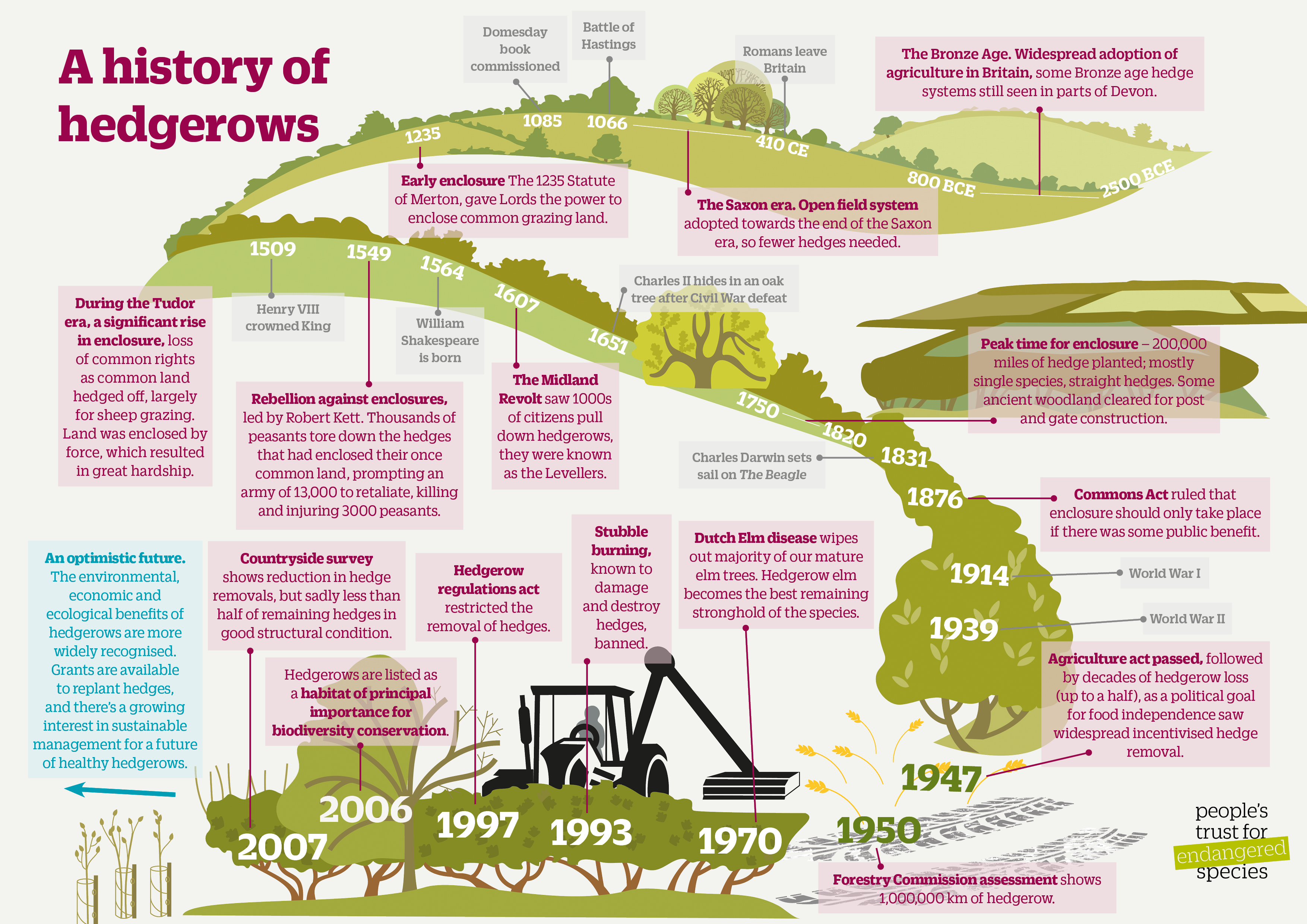
The word hedge, translated from its Old English root word, means enclosure. “Hedges have formed a part of our gardens for at least 2,000 years,” according to the Financial Times. “Among the earliest examples are those used in the landscaping of Roman villas.” Hedgerows consisting of plants anchored together forming living walls were widely used in the United Kingdom for hundreds of years. Still, they waned in popularity after WWII with the rise of industrial farming practices. “Symbolic of the English countryside and teeming with life, there are over 30 different regional styles of hedgerow in the UK,” according to Seedlipdrinks UK. “A border, a boundary, a home, and even a fruit basket, in late Spring, these iconic landmarks come into their own as bright young leaves sprout from bare branches and the first wildflowers appear.”
Americans don’t have this rich history with hedgerows. “Hedgerow plantings were uncommon in the early United States,” according to Oregon State University. “In the 1930s, the U.S. Department of Agriculture’s Shelterbelt Program briefly supported planting trees for windbreaks to prevent soil erosion in the Midwest. Today, as interest surges in sustainable farming methods, more people are turning to this age-old practice.” Government agencies, NGOs, and educational institutions now guide Americans on creating wildlife attracting hedgerows that serve as habitats and corridors while preventing erosion and improving soil conditions.
“Hedgerows certainly will have a natural, informal look, but it’s still important to keep aesthetics in mind,” according to the American Horticultural Society. “Year-round landscape interest can be achieved by selecting plants with attributes that span the seasons. Plants that flower and fruit at different times of the year not only help sustain wildlife, they add pops of seasonal color. Many wildlife-friendly plants contribute textural contrasts to the landscape, while others offer colorful fall foliage or attractive bark for winter interest. Repetition—repeating plants or colors within the hedgerow, or using hedgerow plants in other parts of the landscape—helps create visual flow and harmony within the landscape. Mass plantings or large drifts of color also help unify the space.”
While there are no regional styles of hedgerows that require you to arrange your collection of plants in a particular manner, there are available suggestions. “The most common planting plan is the double line. It is important to offset the 2 rows to give the necessary even distribution of plants along the mature hedge line,” according to Pierce Conservation District. “There are no hard and fast rules for determining the planting space for hedgerows; this depends on the plant selection. For a tight stock-proof hedge, spacing can be as close as 8 -12 inches apart. A good “backbone” plant, which will constitute 60 – 70% of the hedgerow should be among your initial selections. Choose a plant with a good growth rate, resilience to severe pruning, and thorny growth for good stock-proofing capabilities. Once a backbone plant is selected, adding 4-6 additional shrubs or small trees will add value as wildlife habitat as well as reduce any gaps resulting from a particular species dying out.”
Many of the hedgerows around us may have been created by accident within informal gardens as layers of plantings that provide habitat and food for pollinators, birds, amphibians, reptiles and a mammal or two. If interested in creating or adding to your own wildlife attracting hedgerows book a consult with an Earth Works Landscape Designer. Visit our garden center and a garden guide will assist you with a mix of plants for hedgerows in Northeast Florida.
For comprehensive solutions to your specific lawn, garden and landscaping need contact Earth Works of Jacksonville online and at 904-996-0712. Earth Works operates a retail Garden Center/Plant Nursery in Jacksonville and provides landscaping, hardscaping, water features, lawn care service, lawn spraying, and drainage solutions. Proudly serving clients in Northeast Florida including Jacksonville, Ponte Vedra Beach, Atlantic Beach, Neptune Beach, Jacksonville Beach, Nocatee, St. Johns, Fleming Island, Orange Park, Middleburg, Green Cove Springs, Amelia Island, Fernandina, and St. Augustine. Happy Gardening!
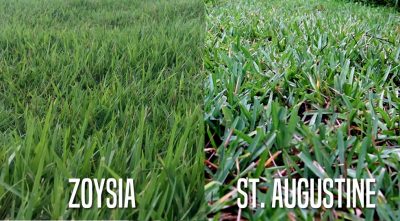
People ask what kind of grass I should have? What is the best type of grass? The truth is there is no best grass. Certain grasses are better for specific situations. We are here today on our Bermuda grass. Bermuda grass is the most wear tolerant grass you are going to find. Bermuda is also, one of the most drought-tolerant grasses you are going to find. That’s why you see it on athletic fields and golf courses. You can put a lot of traffic on it, and it bounces back and doesn’t wear out. St Augustine would be the exact opposite. It’s the least wear tolerant. There are benefits to St Augustine, and it’s probably the most common grass we use. It’s been around for years, and we’ve used it for years. In our view, St. Augustine is easier to take care of than Bermuda grass.
You can look at ours and see there are a few weeds in here. The good news is you can kill the weeds in Bermuda grass. With Bermuda grass, we use multiple herbicides to control the weeds, and with St Augustine, we only use a few. So it’s easier for homeowners to take care of Bermuda and a little easier to keep up.
Two other types of grass we use would include zoysia grass, which is somewhat in between Bermuda and St. Augustine. Bermuda is a very fine leafed grass, and St. Augustine is a very coarse grass. Zoysia grass is in between with a medium coarseness to the leaf blades. Zoysia is a nice grass, very thick, with a better feel if you are standing on it. Some people, especially from the north, say St. Augustine feels and looks like crabgrass because it is very broadleaf.
Sod options in Northeast Florida
So a little about zoysia grass is that its good grass, but it does take a lot longer to establish. So if you don’t water it well if you don’t take care of it for that first year, it doesn’t get established, and it takes much longer to recover if you have problems with it. Once it’s established, it’s great grass. It’s a bit more wear tolerant than St Augustine and probably a little more drought tolerant, but not in the beginning. In the beginning, it has to be babied and taken care of to get it going.
Sod Options for Northeast Florida
So those are the three main types of grass that we use. The fourth one we don’t use as much would be Bahia. Bahiagrass is the most drought tolerant. So Bahia grass is the only one we recommend putting down without irrigation. The other three types of grass you definitely want to put irrigation down with it.
All of the grasses have different varieties. With Bahiagrass, you have two varieties. It’s either Argentine or Pensacola. Argentine Bahia is preferred because it doesn’t get the seed heads. However, the Pensacola Bahia will reseed itself because it does put up a seed head. We used to see the Pensacola Bahia on the roadsides. Then many municipalities switched to Bermuda grass. So it has its uses including overseeding in Winter, and Bahia is a little less expensive as well. As far as the cost of the turf, Bahia is going to be your least expensive, then St. Augustine. Zoysia and Bermuda run about the same price and are going to be your more expensive grasses.
There are mowing differences between the grasses. First, St. Augustine grass is going to be cut the highest. It’s going to be mowed at 3-4″ almost the higher, the better. Next is going to be zoysia grass. It can be maintained at 2-3″. And then your Bermuda grass can be maintained at 1-2″. Bahia should be cut higher up around 3-4″ and closer to the cut length of St. Augustine.
The good news is that Earth Works of Jacksonville can help you out with all these grasses. They are all available. We take care of them. So you don’t have to sweat it. We can come out, mow it. We can treat it, take care of bugs, and take care of weeds. That’s what we are here for. We are here to help you make it easy. And we can keep you having a beautiful lawn.
For comprehensive solutions to your specific lawn, garden and landscaping need contact Earth Works of Jacksonville online and at 904-996-0712. Earth Works operates a retail Garden Center/Plant Nursery in Jacksonville and provides landscaping, hardscaping, water features, lawn care service, lawn spraying, and drainage solutions. Proudly serving clients in Northeast Florida including Jacksonville, Ponte Vedra Beach, Atlantic Beach, Neptune Beach, Jacksonville Beach, Nocatee, St. Johns, Fleming Island, Orange Park, Middleburg, Green Cove Springs, Amelia Island, Fernandina, and St. Augustine. Happy Gardening!
Share Your Story!
Manage Consent
To provide the best experiences, we use technologies like cookies to store and/or access device information. Consenting to these technologies will allow us to process data such as browsing behavior or unique IDs on this site. Not consenting or withdrawing consent, may adversely affect certain features and functions.
Functional
Always active
The technical storage or access is strictly necessary for the legitimate purpose of enabling the use of a specific service explicitly requested by the subscriber or user, or for the sole purpose of carrying out the transmission of a communication over an electronic communications network.
Preferences
The technical storage or access is necessary for the legitimate purpose of storing preferences that are not requested by the subscriber or user.
Statistics
The technical storage or access that is used exclusively for statistical purposes.The technical storage or access that is used exclusively for anonymous statistical purposes. Without a subpoena, voluntary compliance on the part of your Internet Service Provider, or additional records from a third party, information stored or retrieved for this purpose alone cannot usually be used to identify you.
Marketing
The technical storage or access is required to create user profiles to send advertising, or to track the user on a website or across several websites for similar marketing purposes.