In what some consider a Florida real estate post-pandemic gold rush, landscaping for curb appeal in Northeast Florida’s hot real estate market is more critical than ever, benefiting both higher resale value and improved homeowner satisfaction. Earth Works Landscape Designer John Cacchione showcases landscape design elements that improve property value and customer satisfaction at a new estate build.
HOT REAL ESTATE MARKET
Jacksonville home values have increased by 21%, the highest year-over-year increase among the top 40 metro areas in the nation according to Realtor.com’s Market Hotness rankings. This has occurred while Jacksonville remains among the most affordable according to the Boston Real Estate Times.
St John’s County property values and surrounding coastal communities are likewise in high demand as values steadily increase and the average length of homeownership increases post-pandemic.
“Homes on the market are selling quickly in St. Johns County,” reported News4Jax.com. “There is high demand and low inventory. “With resale, those are going under contract often in 24 to 48 hours, multiple offers over list price,” said Karen Zander, 97Park Real Estate owner and broker. “No one knows how much to offer.”
IMPORTANCE OF CURB APPEAL
According to the National Association of Realtors, over 70 percent of prospective homeowners consider curb appeal crucial to their home buying experience according to bankrate.com. “That first impression is important,” says Frank J. Lucco, managing director of IRR-Residential Appraisers & Consultants in Houston. “If they don’t like the looks of the front of the house, which is mostly landscaping, often they won’t even go inside.”
ELEMENTS OF LANDSCAPE DESIGN
Personalizing your landscape design to suit your choice of plants and hardscaping materials if done right creates visual appeal. Whether doing it yourself or hiring a professional, the landscape design elements include considerations of color, form, lines, scale, and texture. Remote consultations do not impair the design process, for although client tastes vary, landscape design principles remain the same. Earth Works landscape designers consult with clients worldwide and often before their home construction is completed in Northeast Florida.
Earth Works of Jacksonville Landscape Design for Curb Appeal
Cacchione’s client for this informal landscape design built a large single-story sprawling home on an expansive lot with a concrete driveway that could accommodate two traffic lanes. The flower bed in the middle of the circular driveway includes green, blue, orange, and red with an outer ring of 50 perennial Blue My Minds followed by a ring of Ixora, and orange birds of paradise, all on an incline leading up to the centerpiece triple trunk Roebelenii palm. All flower beds in the front yard include red mulch that compliments the rich colors of the home. Tan River rock form a border around the house. These rocks protect the black iron fencing around the backyard and line the generator and pool equipment pads and courtyard’s flagstone. Color is a crucial component of landscape design involving the choice of plantings, rocks, and mulch in relation to the house.
The size and growth rates of plant choices are as important as their current appearance. The collective selection of plants involves decisions of proportionality in size and spacing throughout the beds in relation to the home. “That’s something you have to think about while you are planting, doing your design,” said Cacchione. “This plant is small now, but in five years, what’s it going to look like?” On either side of the front door, small plants dominate the flower beds, including foxtail ferns and salvia. Cacchione creates focal points with gradual increases in scale from the flowers to several 10′ Mule palms.
The driveway’s curving lines create an informal design that Cacchione alters with straight lines of hardscaping along the walls of the house that serve a practical purpose and visual appeal. “We did this clean edge around the foundation, then the gravel against the stucco,” said Cacchione. “That’s important, especially with stucco. Stucco is a permeable surface that water will penetrate if it stays wet too long.” Layering with clean lines with a mix of plants, edging, rocks, mulch, and pottery provides lots of visual interest.
The concrete driveway forms a vast flower bed in front of the house leading around the side to a garage and courtyard. “The builder had this pergola existing on the design, and I felt like we needed a way to get from the driveway to the garage door,” said Cacchione. “So this was just a cool addition. And we were able to use some of the flagstones we used in the courtyard.” For color and interest in this area the plan included:
The four walls of the courtyard with doors and window viewing vantages needed a focal point. “We knew this little courtyard needed something special,” said Cacchione. “And just to create the sound of water in here is perfect.” What happens during periods of rain, though, considering the myriad of pitches of the roof? “This water feature collects all the water from the downspouts from the roof in here and are channeled into our reservoir,” said Cacchione. “Another thing in here where we are thinking about permeability. So the gravel and flagstone will allow the water to penetrate, and that also goes into the reservoir.” In the event of an overflow from storms, the water is being funneled out through installed drain pipes.
A portion of the backyard incorporating the swimming pool, patio, and pergola is enclosed by black metal fencing lined with edging and tan river rock. Cacchione centered a triple trunk Roebelenii behind the pool that can be viewed upon entry to the home through the front door. A rectangular flower bed connects the pool pad to the raised pergola sitting area. Texas sage line the bed behind the pool on both sides of the Roebelenii. Pringle’s podocarpus surrounds the pergola and the Bahia sod base will green up nicely as the weather warms up in the Spring and Summer.
As half of our days are shrouded in darkness, the landscaping’s beauty is revealed in new ways with a complete outdoor lighting package including blade lights on steps, path lights, large lights on palms, and wall wash lights. Whether planning to improve your landscaping for curb appeal in a new or existing home in Northeast Florida’s hot real estate market, contact Earth Works for a design consultation.
And remember that for comprehensive solutions to your specific lawn, garden and landscaping need contact Earth Works of Jacksonville online and at 904-996-0712.
Earth Works operates a retail Garden Center/Plant Nursery in Jacksonville and provides landscaping, hardscaping, water features, lawn care service, lawn spraying, and drainage solutions. Earth Works proudly serves clients in Northeast Florida, including Jacksonville, Ponte Vedra Beach, Atlantic Beach, Neptune Beach, Jacksonville Beach, Nocatee, St. Johns, Fleming Island, Orange Park, Middleburg, Green Cove Springs, Amelia Island, Fernandina, and St. Augustine.
APRIL CLIMATE IN NORTHEAST FLORIDA: April Lawn and Garden Tips for Northeast, Florida communities in and around Jacksonville start with a focus on climate as this is the time of year when increasing numbers of gardeners head out to work in the garden and landscape as average high temperatures are 80F and average lows of 62. Jacksonville averages 12 days and 2″ of rainfall in April. And water restrictions loosen during Daylight Savings Time (Second Sunday in March to first Sunday in November) allowing twice per week residential landscape irrigation.
APRIL ANNUAL & PERENNIAL PLANTINGS: April Lawn and Garden tips continue with a reminder that it is time to consider planting new annuals to replace those that died back in Winter and it’s time to plant your new choice of perennials. Carefully consider any changes you want to last years’ landscape design and if those annuals served you well, and if you want more of the same or something different. Are there new varieties of annuals and perennials available that would be better suited for your flower beds? Earth Works Landscape Design staff can assist you developing your landscape design.
APRIL VEGETABLE & HERB GARDENING: In April, when night temperatures stay above 50F is when you want to begin moving vegetables, and herbs seedling started indoors as seeds to your outdoor garden. As with early April 2021, we had some temperatures in the low forty-degree range that could harm those seedlings that so much effort and care were invested in. So be careful and watch the weather trends for your area before and after transplanting your seedlings outdoors.
APRIL PRUNING: Whenever pruning, use clean tools to avoid cross-contamination of pests and pathogens from one plant to another. April is the time to wrap up pruning on shrubs that bloom on new growth such as most roses and prune your old-growth bloomers like azaleas shortly after they bloom. These are generalizations, though, as some plants such as hydrangeas bloom on old or new growth depending on variety. In general, prune both deciduous and evergreen shrubs within the late Winter and early Spring seasons. Become familiar with your plants’ bloom cycle and whether the blooms occur on new or old growth to determine when best to prune for the optimum amount of flowers during their seasonal blooms.
APRIL LAWN CARE: First of all, having a soil sample analysis done provides a baseline of information for what your lawn and garden need for healthy growth and blooms. If, for instance, the analysis shows the yard has adequate amounts of phosphorus, adding more is not only unnecessary but as a constituent of stormwater runoff result in algae blooms and fish kills. The proper fertilization timing is likewise essential as nutrients, including potassium and iron, aren’t bioavailable for grass uptake until the soil is warm. Once the ground warms and turfgrass roots awaken from dormancy various fertilizer formulas allow the uptake of nutrients and benefit a healthy growth cycle.
APRIL LAWN & GARDEN PEST & PATHOGEN CONTROL: Regularly inspect your lawn and garden in April for harmful insects such as aphids, citrus leaf-miner, chinch bugs, mealybugs, and other pests that can quickly devastate an otherwise healthy landscape. April showers bring fungus and mildew. So be on the lookout for powdery mildew, black spot, and sooty mold. Good cultural practices involving clean pruning shears and other lawn care tools and appropriate watering and fertilization contribute to protecting your lawn and garden against pests and pathogens. And remember that not all insects are harmful. Ladybugs, lacewings, praying mantis, and many other insects provide pest control benefits to your lawn and garden, but to nurture them requires care in the types and application of commonly used pesticides. For help with identifying appropriate organic pesticides contact or visit our garden center and for lawn care, fertilization, and lawn pest control contact our lawn care department for a free quote.
And remember that for comprehensive solutions to your specific lawn, garden and landscaping needs contact Earth Works of Jacksonville online and at 904-996-0712. Earth Works operates a retail Garden Center/Plant Nursery in Jacksonville and provides landscaping, hardscaping, water features, lawn care service, lawn spraying, and drainage solutions. Earth Works proudly serves clients in Northeast Florida, including Jacksonville, Ponte Vedra Beach, Atlantic Beach, Neptune Beach, Jacksonville Beach, Nocatee, St. Johns, Fleming Island, Orange Park, Middleburg, Green Cove Springs, Amelia Island, Fernandina, and St. Augustine.
Large-scale landscape projects and complicated hardscaping and water feature installs, benefit from a professionally prepared landscape plan. Have you ever done something and realized later that those actions had unintended consequences? Improving outcomes is a core benefit of planning. Most people don’t have the equipment or horticultural and regulatory knowledge to undertake large-scale landscaping projects successfully. Merely hanging a plant from your favorite nursery or installing a few pavers does not require an extensive landscape plan. Landscape designers have training and experience in multiple disciplines including horticulture, environmental science, engineering, and art. It is less expensive to do it right the first time with a properly prepared and implemented landscape plan.
For the do-it-yourself landscaper, the University of Florida provides helpful design tips to consider when making your landscape plan.
https://youtu.be/n4RELIPsl_w
As landscape plans become larger and more complicated, you may want to hire a professional firm to develop and implement the landscape plan. “Here at Earth Works our landscape plans are all-inclusive”, Jarred Taylor, Lead Landscape Designer said. “So our landscapes will include plants, hardscapes, ponds, water features, irrigation, and drainage. One of the benefits of going with Earth Works is the fact that we have the capability of doing the install ourselves.” Some landscape designers strictly provide the drawing that requires you do-it-yourself or seek another contractor that may or may not acquire the materials and install them as needed per the plan. Headaches and finger-pointing can occur when a third party is involved in implementing the landscape plan.
Earth Works schedules landscape design consultations where your designer meets with you to listen to your ideas and do a site inspection. The designer, with in-depth knowledge of the plants, hardscaping and water feature materials, and engineering and regulator considerations, prepares the landscape plan design drawing. Earth Works also provides a video describing what to expect when you schedule a landscape consultation and how to prepare for it.
Taylor noted that for landscape design drawings he creates, they only include plants and materials available and proper for use in that particular environment that meet code and regulatory requirements. “Here at Earth Works we have a collective understanding of a lot of the different Homeowners Associations (HOA), Architectural Review Boards (ARB), and the different municipalities here in Northeast Florida,” Taylor said. He further emphasized the value a properly prepared landscape plan has that adheres to permeability, setback lines, and a litany of regulatory compliance issues before presenting your proposed design to HOAs and ARBs.
“Here at Earth Works we pride ourselves on being able to provide a beautiful outdoor living space to any homeowner who wants it,” Taylor said. “And just really working with them to give them their dreams as their ideas come to life in a beautiful and cohesive landscape that is going to last for years.” Taylor concluded, “If this is something you are interested in feel free to reach out to Earth Works call in at the garden center or fill out the contact form online.”
Jarred Taylor, Earth Works Lead Landscape Designer
And remember that for comprehensive solutions to your specific lawn, garden and landscaping need contact Earth Works of Jacksonville online and at 904-996-0712. Earth Works operates a retail Garden Center/Plant Nursery in Jacksonville and provides landscaping, hardscaping, water features, lawn care service, lawn spraying, and drainage solutions. Earth Works proudly serves clients in Northeast Florida, including Jacksonville, Ponte Vedra Beach, Atlantic Beach, Neptune Beach, Jacksonville Beach, Nocatee, St. Johns, Fleming Island, Orange Park, Middleburg, Green Cove Springs, Amelia Island, Fernandina, and St. Augustine.
You’ve probably seen waterfalls you liked in nature, neighborhood entrances, or maybe a friend’s pond or water feature. And you’ve wondered about exploring options for having one built in your yard. Luxurious water features add that resort feel to any property. Yet, you wonder what questions you should ask when searching for your pond building contractor?
As with any contracted service, consider specifics about the company background such as: -Is the contractor licensed and insured? -How many years of experience do they have building water features? -Does the contractor provide candid client testimonials? -What are past clients saying in their google and other reviews? -How do they rate with the Better Business Bureau?
Those sorts of questions are an excellent start to narrowing the selection process in identifying a qualified pond building contractor.
Additionally: -Do they have photos and videos demonstrating the types of water features they typically build? -What is their design consultation process? Can they meet with you in-person, via an online app such as zoom if you are traveling or unable to meet in person? -Are they experts in applicable area building regulations? -Do they have expertise in the permitting process? -Do they own the proper construction equipment to complete a project of your complexity? -Do they have reliable relationships for acquiring the necessary building materials and equipment unique to creating a healthy ecosystem pond such as Aquascape Inc? -Have they received approvals from your Home Owners Association (HOA) for other pond building construction projects that they satisfactorily completed? -Can they complete your water feature when you want it for a price you can afford? -Do they provide quality guarantees? -How long before they start the pond building after you sign the contract?
Ponds, waterfalls, and water features of every sort imaginable are an investment that enhances your quality of life when appropriately built by experienced and reputable pond building contractors. We encourage you to shop around and consider contractors’ reputations, knowledge, experience, and generally if you like and trust them in deciding to have them build the pond of your dreams.
And remember that for comprehensive solutions to your specific lawn, garden and landscaping need contact Earth Works of Jacksonville online and at 904-996-0712. Earth Works operates a retail Garden Center/Plant Nursery in Jacksonville and provides landscaping, hardscaping, water features, lawn care service, lawn spraying, and drainage solutions. Earth Works proudly serves clients in Northeast Florida, including Jacksonville, Ponte Vedra Beach, Atlantic Beach, Neptune Beach, Jacksonville Beach, Nocatee, St. Johns, Fleming Island, Orange Park, Middleburg, Green Cove Springs, Amelia Island, Fernandina, and St. Augustine.
So your citrus has started to bloom, and you’ve gone out to visit your orchard only to find leaves covered with a black coating and white fuzz. The black coating is one or more genera of fungi called sooty citrus mold. And in this instance the white spots are from mealybugs laying eggs and freshly produced sugary honeydew secretions as they poke along sap sucking your citrus tree. Although the sooty mold blocks sunlight, it doesn’t feed on the plant tissue and alone won’t destroy your citrus, but ignoring the pests that attracted it just might. Aphids, mealybugs, scale, and whiteflies are the soft-bodied usual insect suspects with their honeydew excretions that must be addressed for your citrus health and to end growth of the sooty mold.
Treat pests, and mold incidentally with a homemade insecticidal soap or a premixed one available at the garden center. Other available treatments include horticultural oil, fungicides, and pesticides. Hanging sticky traps in your citrus trees can attract and capture some of the perpetrating pests such as whiteflies but won’t rid the trees of existing sooty mold. Rinsing the leaves with a strong stream of water can loosen and remove the mold and some pests.
Insecticidal soaps are soap salt from fatty acids in animal fat, coconut, olive, and palm oil. Some online recommendations for making insecticidal soap claim you can use dishwashing soap. Yet, many brands are detergents with none of the necessary salts from fatty acids to be an effective treatment against sooty mold and fruit tree pests. Rely on actual soap such as olive oil-based unscented Castile soap that contains soap salt as the basis of your DIY Insecticidal soap production. Add a tablespoon or two to a gallon of water and apply liberally. You can also purchase the premixed insecticidal soaps in ready-to-use spray bottles.
Applying the Insecticidal soaps will loosen the mold, which will eventually dry and flake off. Soak the leaves to loosen the mold and coat the insects as it only works when wet, and there is no systemic benefit to this treatment.
BE CAREFUL with Insecticidal soap overspray and don’t apply to azaleas, begonias, succulents, and various other plants. Use caution with your citrus understory plantings, as fruit trees have shallow roots that can suffer from too much competition for space and nutrients. Such adverse growing conditions for your citrus trees can result in nutritional deficiencies and stress that attract more pests. Consider practicing companion planting under the citrus with plants such as legumes that return nitrogen to the soil and flowering species like daisies and cosmos that attract beneficial insects. Only use plants underneath your citrus that can withstand your citrus pest control protocols.
Put an added kick in your homemade insecticidal soap with a tablespoon or two of cayenne pepper to further fortify the attack on the soft-shelled honeydew-releasing pests. Dried pepper sprinkled around the base of trees is also an effective pest deterrent without the pepper spray risk of leaf burn on some plants. Cayenne pepper is not only toxic to targeted pests but beneficial insects such as honey bees. Research the interactions of these concoctions with other desirable flora and fauna in your garden or landscape.
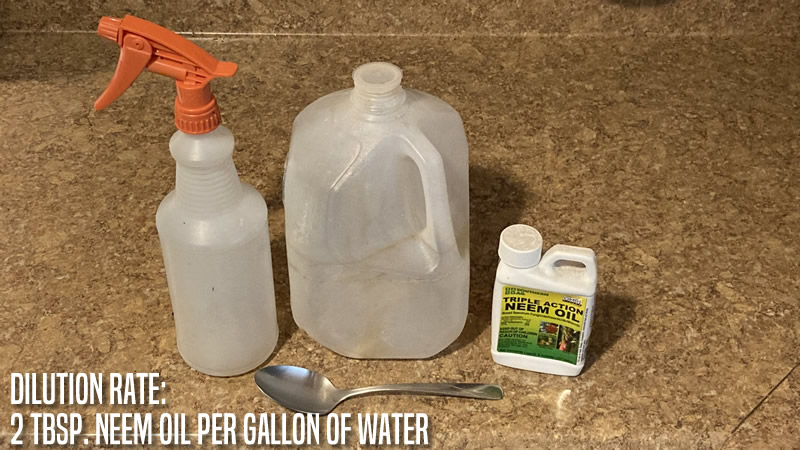
Horticultural oils are petroleum or plant-based oils that include neem oil. These oils make it difficult for the mold to cling to the plant and clog the breathing and other insects’ functions. Precautions are necessary when applying horticultural oils as they can burn non-targeted sensitive plants and your skin. Horticultural oils are non-selective pesticides that kill both pests and beneficial insects. Pond owners beware as horticultural oil is toxic to fish. It is crucial to limit overspray, prevent intrusion of the oil into your pond, and other water bodies via stormwater runoff.
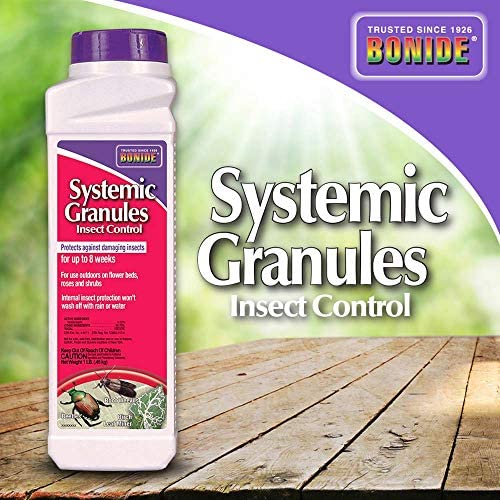
There are also various systemic pesticide treatments available for treating your lawn and garden. Bonide Systemic Granules is what we sell at our garden center and a reliable and effective product when the insecticidal soap and neem oil simply aren’t potent enough to knock down an infestation.
Once the sooty mold is gone, it is essential to maintain a healthy ecosystem for beneficial insects to thrive in and around your citrus trees, including companion planting, limiting the use of harmful chemicals, and proper fertilization of your trees. Some of the predators of these pest species include Ladybugs, Lacewings, and some predator wasps. If you don’t have them in your yard, and are considering trying to establish a population Arbico organics is a reliable source. Earth Works garden center has the organic treatments mentioned in this article available for purchase, and our lawn care department can set you up with fertilization, lawn pest control, and general lawn maintenance programs.
And remember that for comprehensive solutions to your specific lawn, garden and landscaping need contact Earth Works of Jacksonville online and at 904-996-0712. Earth Works operates a retail Garden Center/Plant Nursery in Jacksonville and provides landscaping, hardscaping, water features, lawn care service, lawn spraying, and drainage solutions.
Earth Works proudly serves clients in Northeast Florida, including Jacksonville, Ponte Vedra Beach, Atlantic Beach, Neptune Beach, Jacksonville Beach, Nocatee, St. Johns, Fleming Island, Orange Park, Middleburg, Green Cove Springs, Amelia Island, Fernandina, and St. Augustine.
First of all, it is useful to consider the “Four Ds” of pruning, which are prune when plants are, “dead, diseased, damaged, and dangerous”. Yet, we also prune trees for a variety of other reasons such as general appearance or to deal with their having been planted in a location where they may grow too close to a window or under a power line. So what do we do about crape myrtle pruning?
Specific to crape myrtles know that they are deciduous trees that do well without pruning. Yet, as a popular landscape plant they regularly come under assault from loping shears and pruners. Proper crape myrtle pruning is best done as a consistent cultural practice of modest trimming over the lifetime of these beautiful heavy blooming trees.
Pros include: -Crape Myrtles bloom on new growth stimulated by pruning. -Thinning out crossing limbs in the center of the crape myrtle improves light and airflow within the canopy. -Low lying limbs can be a hazard in the landscape and roadways that warrant pruning. -Pruning crape myrtles can improve their appearance.
Cons include: -When mature thick trunked crape myrtles are topped the thin new growth may not be able to support their sizable blooms. This is called “crape murder.” -Excessive trimming increases the crape myrtles risk from diseases and pests.
Limited pruning over the life of a crape myrtle reduces the possibility of them becoming crisscrossing branched thickets susceptible to disease that pokes out eyes and grows into the path of road traffic.
Take your yard to the next level with Earth Works’ comprehensive lawn care services. Get an instant quote from Earth Works to take care of the crape myrtle pruning and all your lawn care needs!
And remember that for comprehensive solutions to your specific lawn, garden and landscaping needs contact Earth Works of Jacksonville online and at 904-996-0712.
Earth Works operates a retail Garden Center/Plant Nursery in Jacksonville and provides landscaping, hardscaping, water features, lawn care service, lawn spraying, and drainage solutions. Earth Works proudly serves clients in Northeast Florida, including Jacksonville, Ponte Vedra Beach, Atlantic Beach, Neptune Beach, Jacksonville Beach, Nocatee, St. Johns, Fleming Island, Orange Park, Middleburg, Green Cove Springs, Amelia Island, Fernandina, and St. Augustine.
Earth Works provides quotes for annual winter pond clean out service for Aquascape ecosystem ponds we built and any pond system design whether it was a commercial or DIY constructed pond. Earth Works designs and builds low-maintenance ecosystem ponds that collect the majority of debris in the skimmer basket, but some debris settles to the pond bottom that requires periodic clean out. From our experience with unserviced pond debris buildup for water quality concerns, we recommend an annual winter pond clean out service.
“So we recommend once a year,” Jason Duffney, Earth Works owner said at recent Pond Clean Out Seminar. “That’s what we have found is the secret sauce. Don’t wait beyond three years.” Thus, when contacting Earth Works to schedule a pond clean out our standard quotations are based on annual service of your pond considering its size, equipment configuration and design. Pond clean out pricing increases for ponds that have multiple years of built up muck and debris.
Looks can be deceiving when trying to assess if your pond needs the clean out after year one, two or three. “It may not look that bad,” Glenn Stanza, Earth Works pond clean out specialist said. “You just wait and see how much dirt comes out of that pond (during clean out). The dirt settles, there is going to be sediment in the bottom of that thing. It’s bad. And if you let it go and let it go there is so much dirt in there that the pond can’t handle it. It can’t flush it out.”
Winter is the best time to schedule your annual pond clean out for the health of your pond ecosystem. ‘If you do a clean out like we are doing here in June, July, August, September you have to sign a waiver,” Jason Duffney said. “It’s too hot. We actually think it is very bad to do those clean outs that time of year. It’s just not good for the pond. So, once a year and do it ideally December, January and February are the best months.” As an incentive, Earth Works provides discounts on pond clean outs scheduled during the cooler months for the health of your pond ecosystem and to accommodate your year-long enjoyment.
And remember that for comprehensive solutions to your specific lawn, garden and landscaping need contact Earth Works of Jacksonville online and at 904-996-0712. Earth Works operates a retail Garden Center/Plant Nursery in Jacksonville and provides landscaping, hardscaping, water features, lawn care service, lawn spraying, and drainage solutions. Earth Works proudly serves clients in Northeast Florida, including Jacksonville, Ponte Vedra Beach, Atlantic Beach, Neptune Beach, Jacksonville Beach, Nocatee, St. Johns, Fleming Island, Orange Park, Middleburg, Green Cove Springs, Amelia Island, Fernandina, and St. Augustine.
There are many types and varieties of roses available at Earth Works for your North Florida landscape that have unique care requirements. Drift roses, knockouts, hybrid teas, miniatures, bush and climbing roses are among the types of this popular shrub that we encounter. Once your roses are established though as a general rule we follow the University of Florida recommendation that your rose pruning is done for North Florida in the late winter months of January and February as their leaf buds begin to swell and break dormancy.
The key benefits of properly timed rose pruning include encouraging disease-free healthy growth and appearance, new growth, and better blooms. As with other plant varieties, pruning can be done any time of year to address dead, diseased, damaged, or dangerous growth.
Don’t fret or fear pruning incorrectly as it is better to have pruned your roses back than not at all as they are resilient, but unkept potentially dead, diseased, or damaged canes are a detriment to their health and others in the rose bed. Proper rose pruning includes thinning out crisscrossing rose canes that by pruning increases air circulation and sunlight penetration, which encourages photosynthesis, and reduces moisture on leaf surfaces that are an invitation for pests and disease.
As a general rule with plant shape in mind, cut rose canes back 1/3 to 1/2 making clean cuts at a 45-degree angle with sterilized pruning shears directly above the bud eye where new branching occurs. Likewise, cut out suckers that arise from rootstock and remove accumulated debris at the plant base. Then in February resume your monthly fertilization schedule for a bountiful season of beautiful rose blooms. For more specific rose variety information visit and speak with an Earth Works garden guide at our Jacksonville garden center.
And remember that for comprehensive solutions to your specific lawn, garden and landscaping need contact Earth Works of Jacksonville online and at 904-996-0712. Earth Works operates a retail Garden Center/Plant Nursery in Jacksonville and provides landscaping, hardscaping, water features, lawn care service, lawn spraying, and drainage solutions. Earth Works proudly serves clients in Northeast Florida, including Jacksonville, Ponte Vedra Beach, Atlantic Beach, Neptune Beach, Jacksonville Beach, Nocatee, St. Johns, Fleming Island, Orange Park, Middleburg, Green Cove Springs, Amelia Island, Fernandina, and St. Augustine.
The word “xeriscape” is derived from the Greek “xeros,” meaning dry, and “scape,” a kind of view or scene. Together, xeriscaping is landscaping with slow-growing, drought-tolerant plants to conserve water and establish a waste-efficient landscape.
Landscapes can be designed from the start to reduce the amount of resources needed to maintain them. By selecting the appropriate plants and efficient irrigation systems, a balance can be achieved to fit your aesthetic needs as well as reduce resource use. Benefits of xeriscaping include cost savings through lower water bills and a reduction in the labor needed to maintain your landscape.
Elements of Xeriscaping
Designing a resource-efficient landscape requires the incorporation of a few design elements.
• Zoning–grouping plants in the landscape according to their water requirements. For example, water-loving plants should be grouped separately from drought-tolerant plants. This allows for the proper amount of water to be distributed to the plants as they need it.
• Use of drought-tolerant plants–these plants require less water and are adapted to drought conditions and soils with low water-holding capacities.
• Drought-tolerant turf–Ask your local nurseries which grass varieties have excellent drought tolerance and will grow well in your yard’s soil type. Centipede grass is appropriate for most of the Southeast. In Florida, bahiagrass, bermudagrass, and zoysiagrass all have excellent drought tolerance and may be suitable for your area as well. During dry periods, allow the turf to go dormant. When the rain comes, these grasses will turn green again.
• Mulch, mulch, mulch–because mulch reduces evaporation, it is used extensively in xeriscaping to replace areas that require extensive watering. Mulch can also be used to create paths or walkways throughout your landscape.
A few great plants for xeriscaping in NE Florida
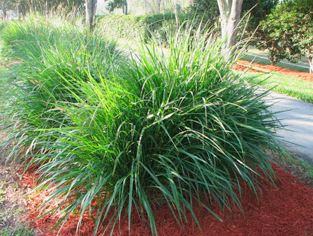
1. Fakahatchee Grass. A Florida native grass that is drought tolerant but able to deal with those rainy summer days here in N.E. FL. It is somewhat salt tolerant as well and likes full sun. Many kinds of grass are considered drought tolerant and are perfect for xeriscaping. Others include Pampas, Fountain, Muhly, and Cord grasses
2. Helianthus. Commonly known as the beach sunflower, this cheerful, low-growing plant has bright, sunflowerlike blooms. A mature plant can cover several feet in diameter, so it makes a great ground cover. It will attract many species of butterflies.
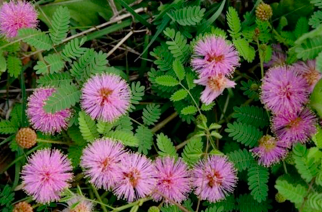
3. Sunshine Mimosa. This is also known as the powderpuff mimosa, because of its distinctive pink flowers that resemble little fiber-optic puffs. It has deep roots, so once you get it established, it requires very little maintenance. A healthy, mature plant can spread as much as 12 inches in a day, providing excellent ground cover. It can even be mixed with grass and mowed without damaging the plant.
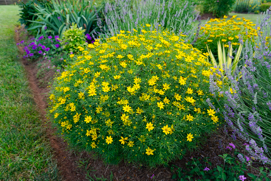
4. Coreopsis. Its sunny, daisylike flowers are beautiful and great for butterflies and pollinators. Once it is established, it’s sun- and drought-tolerant. A mature plant will re-seed itself, which means you don’t just have it once, you have it all the time. Fun fact: The coreopsis is Florida’s state wildflower.
5. Gaillardia. Also known as blanket flower, it has distinctive bright orange and red flowers. It is highly salt-tolerant, prefers sunny locations, and it will seed itself. As an added bonus, the pretty blossoms can last a long time in flower arrangements.
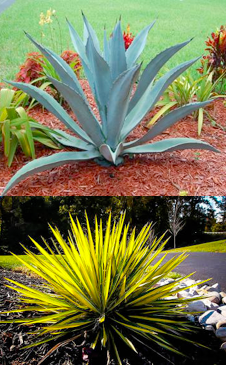
2. Agave and Yucca Plants. Few plants can match the bold and dramatic landscape impact of agave and yucca, both excellent choices for truly low maintenance low water gardening. These amazingly tough plants endure the extremes, hot sun, sandy soil, dry conditions, and salty spots with elegance and style. Combine with landscape boulders for a finishing touch.
Most water gardeners are aware of the importance that good quality water plays in a pond habitat. Not knowing how to get or keep water quality can sometimes prove challenging. Your water may be clear, but your fish might be acting differently, which can signify that something might be a little off in your pond’s water.
With a little education and experience, you’ll become better equipped to solve whatever pond water issues you might have. For starters, follow our 7 tips below to help keep your pond water clean!
1. Maintain a healthy fish population
If you have more than 10” of fish for every 100 gallons of water, your pond is likely over-populated. Excessive fish waste can cause an imbalance in pond water. Consider finding some of them a new home. Many pond retailers and contractors will accept your fish.
2. Don’t over-feed your fish
When you feed fish more than they can eat, the uneaten food is left to decay in the pond. Be careful not to feed your fish more than once per day, and no more than they can eat in 2 to 3 minutes. Choose a quality fish food – preferably one that floats as opposed to sinking to the bottom of the pond if left uneaten.
3. Create a proper balance of plants
At season’s peak, you should have 40% to 60% of the surface area of your pond either covered or shaded by plants. Too many plants can cause oxygen deficiencies at night due to the photosynthetic process, when the plants take in oxygen and give off carbon dioxide. Your fish need the oxygen to survive (see tip #7).
4. Choose the right size pump for your pond
You should be circulating the entire pond’s water volume a minimum of once every hour. Make sure your pump’s flow isn’t restricted by debris in the skimmer or biological filter, and be careful not to pump water higher than it was intended. Every pump has its flow limitations. We’ve made it easy for you to choose the correct size pump for your pond and waterfall with our online pump selection guide.
5. Clean debris from pond before it has a chance to decay
Your pond skimmer will remove most of the debris from the surface of your pond, but you can also use a pond net to skim leaves and small sticks before they have a chance to descend to the pond’s bottom where they’ll decay. Decaying debris, combined with fish waste and leftover fish food, can cause ammonia levels to spike in your pond.
Ammonia can be harmful to your fish and should be addressed right away. If you see your fish jumping out of the water, you likely have an ammonia spike which can happen after adding an algae treatment. You can purchase an ammonia test kit at your local pet and aquarium store and if you find the levels are high, simply treat your pond water with Ammonia Neutralizer. Beneficial microbes such as Aquascape Beneficial Bacteria helps keep your pond water healthy and clean for your finned friends. Better yet, install an Automatic Dosing System to electronically dispense beneficial bacteria and other treatments to your pond to help with breaking down debris and maintaining a proper nitrogen cycle.
6. Choose proper filtration for your pond
Just like your pond pump, your pond’s filter should match the size of your water garden. Most pond filters are based on ideal circumstances, and if you exceed those, your filter becomes less effective. Always up-size your filter so that it can handle more than the capacity of your pond and remember to clean your filter according to instructions.
There are two types of filters in an Aquascape ecosystem pond. A mechanical filter, also known as the skimmer, removes surface debris from your pond water such as leaves and small sticks. The biological filter, or BioFalls filter, is positioned to create the beginning of the waterfall in your pond. This filter uses bacteria to break down pond wastes, converting them into less harmful compounds that can be absorbed as fertilizer by your aquatic plants.
7. Keep your pond cool during the dog days of summer
When pond water exceeds 75º Fahrenheit, it has a difficult time retaining acceptable levels of dissolved oxygen, which is critical for the health of your fish. This is why it’s important to have the surface of your pond shaded by aquatic plants (see tip #3) – to help keep pond water cool. Fish need oxygen to survive. If you see them at the pond’s surface gasping for air, add an aerator to help them during times of extreme heat.
Share Your Story!
Manage Consent
To provide the best experiences, we use technologies like cookies to store and/or access device information. Consenting to these technologies will allow us to process data such as browsing behavior or unique IDs on this site. Not consenting or withdrawing consent, may adversely affect certain features and functions.
Functional
Always active
The technical storage or access is strictly necessary for the legitimate purpose of enabling the use of a specific service explicitly requested by the subscriber or user, or for the sole purpose of carrying out the transmission of a communication over an electronic communications network.
Preferences
The technical storage or access is necessary for the legitimate purpose of storing preferences that are not requested by the subscriber or user.
Statistics
The technical storage or access that is used exclusively for statistical purposes.The technical storage or access that is used exclusively for anonymous statistical purposes. Without a subpoena, voluntary compliance on the part of your Internet Service Provider, or additional records from a third party, information stored or retrieved for this purpose alone cannot usually be used to identify you.
Marketing
The technical storage or access is required to create user profiles to send advertising, or to track the user on a website or across several websites for similar marketing purposes.