Flooding, erosion of topsoil, uprooted trees, and fungal diseases are soggy yard problems Earth Works strives to fix for Northeast Florida residents. Jacksonville’s June rainfall totals are below average, according to the National Weather Service. Still, some Northeast Florida neighborhoods have experienced torrential rain with flash floods complicated by drainage problems. “Several streets in Jacksonville were flooded Sunday as a severe thunderstorm warning was issued for Duval County, followed by a flash flood warning,” according to News4Jax.com. “Just before 6:30 p.m., the Jacksonville Sheriff’s Office reported that Roosevelt Boulevard was closed at Edgewood Avenue due to flooding. Shortly after 5 p.m., there was flooding at Bay and Main streets in downtown Jacksonville. The National Weather Service Jacksonville said it appeared that at least 3-6 inches had collected on the roads at that intersection.”
Drainage Fixes: Jacksonville was experiencing drought conditions in May that, when followed by excessive rain, cause an increased rate of erosion. Addressing flood waters and soil erosion on your property requires properly engineered drainage solutions for your impervious surfaces, including roofs, driveways, decks, patios, and water gardens. Fundamentally, drainage is removing water from an area. However, stormwater regulations developed to protect the environment and prevent flooding restrict the percent of your property that can be built upon with impervious structures and the extent of required onsite stormwater storage. Allowable drainage systems include gutters, French drains, channel drains, swales, permeable paving material, and storm drains. Earth Works landscape designers regularly consult with clients to fix these soggy yard problems that meet stormwater requirements.
Also, while monitoring the amount of rainfall in your lawn and garden, consider cutting back your lawn watering schedule and adjusting your sprinkler timer accordingly.
Tree Staking: Tree damage is one of the principal soggy yard problems. Tree staking protects newly planted tall trees from excessive rain that softens their roots grip while preventing wind from blowing them over, resulting in tree and property damage. Six months to one year is the typical time recommended for staking newly planted trees such as palms and other tall, heavy trees. While most plants don’t require staking, even naysayers must admit that tomato plants can benefit from staking. Earth Works Landscaping division stakes large trees for its clients and the garden center stocks staking kits.
Fungus: Fungal treatments become necessary as the fungus is one of the prime soggy yard problems. We see powdery & downy mildew, black spot, brown patch, leaf spot, and a blight on vegetable plants, fruit trees, shrubs, ornamentals, shade trees, and lawns. Bonide Copper Fungicide and Neem oil are both approved for organic gardening and are available at the garden center. Additionally, the Earth Works Lawn Care division can diagnose and treat fungus in your lawn. Turf fertilization, disease, weed, and pest control INSTANT QUOTES are available.
Plus, remember that for comprehensive solutions to your specific lawn, garden and landscaping need contact Earth Works of Jacksonville online and at 904-996-0712. Earth Works operates a retail Garden Center/Plant Nursery in Jacksonville and provides landscaping, hardscaping, water features, lawn care service, lawn spraying, and drainage solutions. Proudly serving clients in Northeast Florida including Jacksonville, Ponte Vedra Beach, Atlantic Beach, Neptune Beach, Jacksonville Beach, Nocatee, St. Johns, Fleming Island, Orange Park, Middleburg, Green Cove Springs, Amelia Island, Fernandina, and St. Augustine. Happy Gardening!
Between June and September, Jacksonville receives as much precipitation as the other eight months combined, which brings not only lush lawns and gardens, but mosquitos, chinch bugs, and fungus. During extended periods of rainfall, cut back your automatically timed irrigation scheduled watering. Soil aeration, fertilization, and cultural practices, including cutting lawn turf at the proper height and watering at the appropriate time of day, all reduce the threat posed by summer lawn and garden pests and pathogens. While taking measures to remedy these threats to the lawn and garden we discourage overuse and runoff of treatments that can harm beneficial plant and animal species and the environment.
Mosquitos quickly get our attention biting exposed skin after hatching from stagnant water in as little as 24 hours. To minimize the health threat from mosquitos eliminate stagnant water collection receptacles in the landscape. Properly maintained ponds and water gardens are NOT breeding grounds for mosquitos. Still, birdbaths and bogs without filtration or aeration can be a mosquito haven that’s remedied with Mosquito dunks, the solid form of Bacillus Thuringiensis. Low-lying areas of the landscape that hold water also serve as a breeding ground for mosquitos. When mosquitos are present, avoid getting bit with a non-oily application of Natures Way All Natural Repellant, which kills and repels nuisance flying insects and is safe for people, pets, and the environment.
Southern chinch bugs are ever-present in the Northeast Florida environment. Their 3-4 life cycles per year cause damage in full sun and drought conditions, especially to St. Augustine lawn turf. Proper timing and application of pesticides are critical to addressing the threat from chinch bug eggs along with nymphs and adults. Increasing irrigation and dumping high nitrogen fertilizer on chinch bug-infested turf can cause more harm than good to the landscape and environment. Contact the Earth Works lawn care division for professional fertilization, disease, weed, and pest control service. Get Your Free Quote.
Fungal pathogens, including mold and mildew that prey on lawn and garden plants, are of particular concern during the rainy season. However, other fungi species, including mycorrhizae, are beneficial to plants and animals, demonstrating the importance of good cultural practices to only rid your garden of fungal pathogens. Take care of your soil with periodic aeration and soil amendments combined with targeted fungicide treatments available at Earth Works Garden Center to remedy downy and powdery mildews, root rot, and various other fungi in the lawn and garden. Also, ask the Earth Works lawn care division for a quote on such services.
Mosquitos, chinch bugs, and fungus are a threat with lush lawns the same as for rutted-up ones that hold water.
Plus, remember that for comprehensive solutions to your specific lawn, garden and landscaping need contact Earth Works of Jacksonville online and at 904-996-0712. Earth Works operates a retail Garden Center/Plant Nursery in Jacksonville and provides landscaping, hardscaping, water features, lawn care service, lawn spraying, and drainage solutions. Proudly serving clients in Northeast Florida including Jacksonville, Ponte Vedra Beach, Atlantic Beach, Neptune Beach, Jacksonville Beach, Nocatee, St. Johns, Fleming Island, Orange Park, Middleburg, Green Cove Springs, Amelia Island, Fernandina, and St. Augustine. Happy Gardening!
Hurricane season landscape preparation is crucial as it begins on June 1 and lasts until November 30. Each year Floridians face the potential of fall out from tropical storms and full-blown hurricanes. While hurricanes are uncommon in June, there have been tropical storms that were significant rain events, such as Tropical Storm Debby in June 2012, contributing more than half of that months’ 20-inch rainfall totals for Jacksonville. Hurricane seasons such as we are seeing in 2022 have no hurricanes affecting Florida until late September when the season heated up. Please pay attention to the needs of newly planted trees whose root system may not be fully established and do best when staked to prevent them from toppling over during periods of soggy soil and or with high winds.
Older trees may need pruning to reduce the risk to structures and power lines from overhanging limbs. In addition, we benefit from removing dead, diseased, cracked, and broken limbs at risk of falling during high wind events and hurricanes. Depending on the types of trees in the landscape, some are at greater risk of attracting lighting, with those struck most often being oak, pine, and palms. When hit, the tree will attempt to repair itself but should be monitored over some months that ultimately may require that the damaged tree be pruned or removed entirely.
When combined with saturated soil, tree species with shallow roots and large canopies are at higher risk of coming down during high wind and rain events. Younger trees planted that may still be staked or within several years of planting are not without risk during storms as their root systems may still be inadequate to protect against extreme wind and rain and at serious risk of falling. They can likewise be badly damaged in such events where the roots become ajar, exposed, or damaged. If you’ve planted a sizable tree in recent months and not yet protected it from wind damage with a staking kit, it is good to consider purchasing one and installing it.
Though tragic, it is hardly a surprise when we see news coverage of a limb or large tree that fell into a home or crushed a vehicle during high wind and rain. However, regardless of the conditions of our trees, when faced with an impending storm event, it is best to assess the situation, be aware of our surroundings, especially overhead, and take necessary precautions to protect ourselves, friends, and family.
A licensed arborist can provide a professional assessment of what needs to be done to protect the specific trees in the landscape before and after the hurricane season. Earth Works Jax Lawn Care & Pest Control Service offers treatment programs to keep clients’ trees, lawn, and garden healthy throughout the year. The Earth Works Garden Center provides a variety of trees that do well in Northeast Florida weather, including oak, magnolia, crape myrtle, and a wide variety of palms. Our knowledgeable garden center staff and landscape designers are here to help with your hurricane season landscape preparation.
For comprehensive solutions to your specific lawn, garden and landscaping needs contact Earth Works of Jacksonville online and at 904-996-0712. Earth Works operates a retail Garden Center/Plant Nursery in Jacksonville and provides landscaping, hardscaping, water features, lawn care service, lawn spraying, and drainage solutions. Proudly serving clients in Northeast Florida including Jacksonville, Ponte Vedra Beach, Atlantic Beach, Neptune Beach, Jacksonville Beach, Nocatee, St. Johns, Fleming Island, Orange Park, Middleburg, Green Cove Springs, Amelia Island, Fernandina, and St. Augustine. Happy Gardening!
A good starting point for pruning tips with any plant is to remove dead, diseased, or damaged stems as soon as you see them. Dead stems attract insects and invite diseases to develop. Also remove crossing branches, water sprouts (vigorous upright growing shoots that form on trunks or side branches), and suckers (vigorous shoots that develop near or from below ground).
What to Prune When
Spring- Flowering Trees and Shrubs
Early season pruning tips for spring bloomers, such as azalea, bear flowers on wood formed the previous year. The best time to prune them is late spring — immediately after they finish blooming. If you prune them later in the growing season you’ll remove flower buds and decrease the amount of spring bloom.
Hydrangeas
Most hydrangea types bloom on old wood. Prune these types of hydrangeas before midsummer. If you prune them in winter or early spring, you’ll be removing flower buds. With newer reblooming types, such as the Endless Summer Series which bloom on new growth, timing of pruning is less critical. Even if you cut off some of the flower buds by pruning the old stems, the plant will bloom on the new growth.
Shrubs With Showing Blooms
Cut back shrubs grown primarily for their foliage (such as Loropetalum and Ligustrum) almost anytime: except in late autumn. New growth that starts after late season pruning won’t harden off properly before winter. Major pruning is best done when it is dormant.
Clipped Hedges
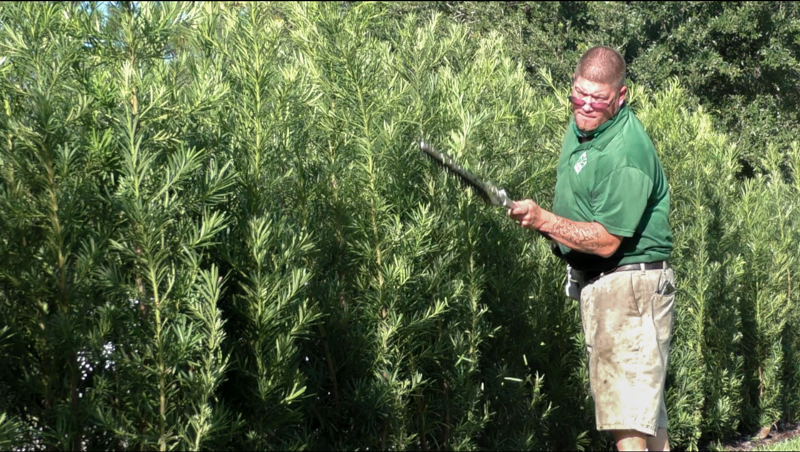
Shrubs such as boxwood and podocarpus are often sheared to form a hedge. To maintain a solid wall of green, shear the new growth frequently during the early part of the growing season. Stop in late autumn.
Roses
Prune climbers and old garden roses that bloom only once per year after they finish blooming. Repeat bloomers, including hybrid teas, floribundas, knockout, and drift shrub roses are pruned mostly to shape the plant or to remove winter-damaged canes. If they become overgrown, cut them back in early spring.
Perennial Flowers
Most perennial flowers look best if you remove faded flowers. This is called deadheading. As a bonus, many perennials will push out another cycle of blooms after deadheading. If your perennial flowers become too tall and leggy, or flop open in the middle, try shearing them back to 6-12 inches above the ground. This type of haircut causes them to become stockier.
Annual Flowers
Deadhead annual flowers regularly to keep them blooming well. Removing the old flowers prevents them from setting seeds and allows plants to put more energy into blooming. Some annuals, such as petunias, sprawl and develop bare stems at their bases. As with perennials, you can shear these rangy plants to force more compact growth and renewed bloom.
Citrus
On young trees, it is important to remove suckers from the base of the tree. Mature citrus trees do not require pruning of the canopy except for substantial injury or after a disease or freeze damage. Unnecessary pruning will reduce fruit production. Pruning of the canopy should be reserved to prevent trees from crowding other plants or buildings. Be sure to remove vertical shoots. Make all pruning cuts flush with the trunk, since stubs may be attacked by rotting organisms that could damage the tree. If you must prune, timing can be tricky and varies by variety. Shoot for after-harvest and before flowering.
Plus, remember that for comprehensive solutions to your specific lawn, garden and landscaping need contact Earth Works of Jacksonville online and at 904-996-0712. Earth Works operates a retail Garden Center/Plant Nursery in Jacksonville and provides landscaping, hardscaping, water features, lawn care service, lawn spraying, and drainage solutions. Proudly serving clients in Northeast Florida including Jacksonville, Ponte Vedra Beach, Atlantic Beach, Neptune Beach, Jacksonville Beach, Nocatee, St. Johns, Fleming Island, Orange Park, Middleburg, Green Cove Springs, Amelia Island, Fernandina, and St. Augustine.
Brown palm frond tips, called “frizzle top” on new growth, are a cause for concern for newly planted palm species. Palms depending on size, are often pricey and a prized addition to a homeowners landscape plant collection. As popular palm species originate in all sorts of environments, from deserts to river banks and rainforests, keeping a thriving palm collection requires some knowledge of their specific variety requirements. The slow growth rate in palms coincides with an equally slow display of outward signs problems such as brown palm frond tips. For your palm to flourish it needs the right climate, water, and nutrition free of disease otherwise brown palm frond tips and other problems appear.
When planting your palm, make sure the root ball is placed at the surface or slightly above, not completed buried. Burying the rootball too deep can result in water and iron deficiencies in the palm and brown palm frond tips. In addition, the amount of sun they receive and climate is essential to your palm’s long-term health. Some palms prefer direct sun, others indirect sunlight. High humidity is typically preferred but not something you can only control for container palms indoors.
Too much and too little watering will cause brown palm frond tips. Typically palms prefer moist, well-draining soil. Too much water in poorly draining soil can cause root rot, whereas too little water in sandy soil can also harm your palm. Know the specific requirements of your palm as some such as the Everglades palms and mangrove fan palms grow naturally along river banks and water bodies. In contrast, Bismarck’s palms are extremely drought tolerant doing well in dry heat, desert-like conditions.
Sandy Northeast Florida soil is susceptible to mineral deficiencies negatively impacting palms. These minerals include boron, calcium, iron, magnesium, nitrogen, and potassium. “Magnesium deficiency is very common on highly leached soils in Florida, Hawaii, and other tropical areas,” according to the University of Florida. “It can also occur in container-grown palms if dolomitic limestone has not been added to the substrate. Also, since palms may remain in a container for up to a year or longer, any added dolomite is usually exhausted after six months or so with Mg deficiency symptoms becoming visible as a result. Most species of palms are susceptible to Mg deficiency to some degree, but Phoenix canariensis is by far the most susceptible species to this disorder.
Temperature, pH and certain soil amendments in the soil can result in a deficiency of magnesium that also resultw in frizzle top systems in a variety of palms in Northeast Florida. “Manganese deficiency is very common on alkaline soils, but can occur in containers if drainage is poor or soil temperatures are cool,” according to the University of Florida. “Most species of palms can be affected, but Syagrus romanzoffiana (queen palm), Roystonea regia, (royal palm), Acoelorrhaphe wrightii (paurotis palm), Phoenix roebelenii (pygmy date palm), and Elaeis guineensis (African oil palm) are particularly susceptible.”
Pests including weevils & root rot are often associated with increased stress in newly planted palms. However, in most scenarios, the pruning of your palm should remain the same whether it is healthy or not, considering the plant redirects nutrition from diminishing fronds to elsewhere in the plant. Review our palm pruning video for specific directions on proper palm pruning.
Earth Works has a variety of palm nutritional products and fungicides that will benefit their health. To diagnose the specific cause of brown palm frond tips and other palm problems, take pictures and contact your helpful Earth Works garden center staff.
Plus, remember that for comprehensive solutions to your specific lawn, garden and landscaping need contact Earth Works of Jacksonville online and at 904-996-0712. Earth Works operates a retail Garden Center/Plant Nursery in Jacksonville and provides landscaping, hardscaping, water features, lawn care service, lawn spraying, and drainage solutions. Proudly serving clients in Northeast Florida including Jacksonville, Ponte Vedra Beach, Atlantic Beach, Neptune Beach, Jacksonville Beach, Nocatee, St. Johns, Fleming Island, Orange Park, Middleburg, Green Cove Springs, Amelia Island, Fernandina, and St. Augustine. Happy Gardening!
People ask what kind of grass I should have? What is the best type of grass? The truth is there is no best grass. Certain grasses are better for specific situations. We are here today on our Bermuda grass. Bermuda grass is the most wear tolerant grass you are going to find. Bermuda is also, one of the most drought-tolerant grasses you are going to find. That’s why you see it on athletic fields and golf courses. You can put a lot of traffic on it, and it bounces back and doesn’t wear out. St Augustine would be the exact opposite. It’s the least wear tolerant. There are benefits to St Augustine, and it’s probably the most common grass we use. It’s been around for years, and we’ve used it for years. In our view, St. Augustine is easier to take care of than Bermuda grass.
You can look at ours and see there are a few weeds in here. The good news is you can kill the weeds in Bermuda grass. With Bermuda grass, we use multiple herbicides to control the weeds, and with St Augustine, we only use a few. So it’s easier for homeowners to take care of Bermuda and a little easier to keep up.
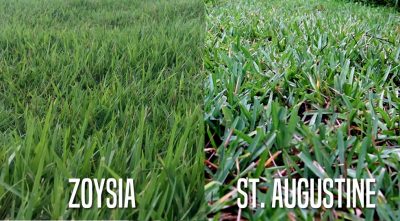
Two other types of grass we use would include zoysia grass, which is somewhat in between Bermuda and St. Augustine. Bermuda is a very fine-leafed grass, and St. Augustine is a very coarse grass. Zoysia grass is in between with a medium coarseness to the leaf blades. Zoysia is a nice grass, very thick, with a better feel if you are standing on it. Some people, especially from the north, say St. Augustine feels and looks like crabgrass because it is very broadleaf.
Sod options in Northeast Florida
So a little about zoysia grass is that it’s good grass, but it does take a lot longer to establish. So if you don’t water it well if you don’t take care of it for that first year, it doesn’t get established, and it takes much longer to recover if you have problems with it. Once it’s established, it’s great grass. It’s a bit more wear tolerant than St Augustine and probably a little more drought tolerant, but not in the beginning. In the beginning, it has to be babied and taken care of to get it going.
Sod Options for Northeast Florida
So those are the three main types of grass that we use. The fourth one we don’t use as much would be Bahia. Bahiagrass is the most drought-tolerant. So Bahia grass is the only one we recommend putting down without irrigation. The other three types of grass you definitely want to put irrigation down with it.
All of the grasses have different varieties. With Bahiagrass, you have two varieties. It’s either Argentine or Pensacola. Argentine Bahia is preferred because it doesn’t get the seed heads. However, the Pensacola Bahia will reseed itself because it does put up a seed head. We used to see the Pensacola Bahia on the roadsides. Then many municipalities switched to Bermuda grass. So it has its uses including overseeding in Winter, and Bahia is a little less expensive as well. As far as the cost of the turf, Bahia is going to be your least expensive, then St. Augustine. Zoysia and Bermuda run about the same price and are going to be your more expensive grasses.
There are mowing differences between the grasses. First, St. Augustine grass is going to be cut the highest. It’s going to be mowed at 3-4″ almost the higher, the better. Next is going to be zoysia grass. It can be maintained at 2-3″. And then your Bermuda grass can be maintained at 1-2″. Bahia should be cut higher up around 3-4″ and closer to the cut length of St. Augustine.
The good news is that Earth Works of Jacksonville can help you out with all these grasses. They are all available. We take care of them. So you don’t have to sweat it. We can come out, mow it. We can treat it, take care of bugs, and take care of weeds. That’s what we are here for. We are here to help you make it easy. And we can keep you having a beautiful lawn.
For comprehensive solutions to your specific lawn, garden and landscaping need contact Earth Works of Jacksonville online and at 904-996-0712. Earth Works operates a retail Garden Center/Plant Nursery in Jacksonville and provides landscaping, hardscaping, water features, lawn care service, lawn spraying, and drainage solutions. Proudly serving clients in Northeast Florida including Jacksonville, Ponte Vedra Beach, Atlantic Beach, Neptune Beach, Jacksonville Beach, Nocatee, St. Johns, Fleming Island, Orange Park, Middleburg, Green Cove Springs, Amelia Island, Fernandina, and St. Augustine. Happy Gardening!
Large masses of colorful bracts surround three petite flowers of Bougainvillea, which grows well in Northeast Florida despite our rainfall. These Brazilian coastal natives do best in direct sunlight with numerous blooming cycles per year in sunny, dry conditions. They are available in bush, tree, and vine form. Growing Bougainvillea in Northeast Florida can be easy if planted in the right spot and protected from frost and freezing temperatures and soggy conditions as they don’t like wet feet.
“Bouganvillea is a fantastic plant if you have the right spot for it,” said Matthew Barlow, Earth Works garden center manager. “ The right spot is that place in the garden that’s hot, that’s sandy, that’s dry, get’s sun all day where nothing else wants to grow. That’s where the bougainvillea wants to be. It is a perfect solution for that place in the garden where it can be very difficult to grow other things especially if it’s getting blasted with the afternoon death rays come June, July, August, September, and sometimes October. Do not put these in a place that’s low-lying, shady, or stays wet for long periods of time. High, dry, hot, sunny, is what the bougainvillea loves.”
Growing Bougainvillea in Northeast Florida with unpredictable low temperatures can be tricky, with some years having few touches of frost and other years having numerous hard freezes. Jacksonville is designated at the lower end of zone 8(8b) and the upper region of 9 (9a). “They (bougainvillea) are a hardy perennial here, although if we have hard frosts, hard freezes they can be knocked back considerably,” said Barlow. “I have seen bougainvilleas come back from some very cold temperatures. After the first Winter or two, the maintenance on them in the Winter is much less. In the first season or two, you might want to cover and protect them, for the first couple of years to make sure their roots become established. Once the roots become established, they will bounce back very quickly in the Spring once the temperatures perk back up.”
“The best time to prune bougainvillea is in late winter or early spring after it flowers, or at the start of the rainy season,” according to the University of Florida. “If you wait until late summer or early fall, your plant may produce fewer flowers during the following winter.” There are numerous varieties of bougainvillea on the market that bloom best at different times of the year. Follow the grower’s recommendation for your specific variety.
“Also feeding is very important with the bougainvilleas,” said Barlow. “You want to keep them on a regular feeding schedule. For those of you who don’t like to use a water-soluble liquid fertilizer, which I recommend even a slow-release quarterly feed will encourage the blooming.” Avoid over-fertilization which can encourage too much foliage at the expense of blooms. And if kept in pots they like to be pot-bound to bloom best.
Bougainvillea is both salt and drought-tolerant, making them a hardy choice for southern coastal landscapes. Visit Earth Works garden center for a wide assortment of bougainvillea, soil amendments, and fertilizers. And talk to Matthew about any concerns you have about growing bougainvillea in your landscape. Plus, consider scheduling a design consultation to include bougainvillea and the many other plant choices we can make available for your landscape.
For comprehensive solutions to your specific lawn, garden and landscaping needs contact Earth Works of Jacksonville online and at 904-996-0712. Earth Works operates a retail Garden Center/Plant Nursery in Jacksonville and provides landscaping, hardscaping, water features, lawn care service, lawn spraying, and drainage solutions. Contact us with your questions and to book design consultations. Earth Works proudly serves clients in Northeast Florida, including Jacksonville, Ponte Vedra Beach, Atlantic Beach, Neptune Beach, Jacksonville Beach, Nocatee, St. Johns, Fleming Island, Orange Park, Middleburg, Green Cove Springs, Amelia Island, Fernandina, and St. Augustine.
We believe Earth Day is the perfect opportunity to share some ways we can all contribute to our remarkable planet’s continued health and beauty. Here is a list of easy things you can do at home and in your garden to celebrate.
1. Plant a tree – Trees remove carbon dioxide from the air, store carbon in the trees and soil, and release oxygen into the atmosphere—all essential factors in the fight to stop climate change.
2. Create a Pollinator Garden – They support and maintain pollinators by supplying food in the form of pollen and nectar to ensure that these crucial animals stay in the area to keep pollinating our crops for continued fruit and vegetable production.
3. Call a Beekeeper vs. an Exterminator – Bees are a critical part of food production worldwide, and their dwindling numbers should concern us all. Help save our struggling bees by allowing a beekeeper to capture the swarm alive.
4. Landscape with Native & Florida Friendly Plants – Plants whose needs meet your local climate will naturally grow better, requiring less additional water, fertilization, and pest control. All positives for the health of our local waterways.
5. Use Organic Fertilizers– Not only are they safe for the environment, your family, and your pets, they can enhance the soil. Plus, synthetic fertilizers require a significant amount of fossil fuels to produce. And their frequent runoff into our river is the cause of those harmful algae blooms.
6. Build a Water Garden –When done correctly, ponds provide shelter and water to native wildlife and support for native plants. Also, by reducing your lawn area, you will conserve water and reduce the use of fertilizers.
7. Consider Solar Panels – Solar power systems derive clean, pure energy from the sun. Installing solar panels on your home helps combat greenhouse gas emissions and reduces our collective dependence on fossil fuels.
8. Shop Local – The planet is perhaps the biggest beneficiary of consumers supporting locally owned small businesses. Shopping local reduces fossil fuel use by the suppliers and the shoppers, ultimately reducing your carbon footprint.
For more Earth Day tips on eco-friendly lawn and gardening practices in Northeast Florida stop into Earth Works garden center, contact us online and at 904-996-0712. Earth Works operates a retail Garden Center/Plant Nursery in Jacksonville and provides landscaping, hardscaping, water features, lawn care service, lawn spraying, and drainage solutions. Earth Works proudly serves clients in Northeast Florida, including Jacksonville, Ponte Vedra Beach, Atlantic Beach, Neptune Beach, Jacksonville Beach, Nocatee, St. Johns, Fleming Island, Orange Park, Middleburg, Green Cove Springs, Amelia Island, Fernandina, and St. Augustine.
Why should I do Soil Testing in Northeast Florida? Soil is a mixture of mostly minerals, organic matter, water, and air. Plants require specific nutrients to thrive. Identifying the soil’s specific composition helps in identifying soil deficiencies and necessary remedies that can aid in avoiding over-fertilization that can result in stormwater run off pollution. Soil testing will also measure pH levels that if too low for instance can cause minerals in the soil not to be available to some plants. Plant varieties prefer varied pH levels and amounts of specific nutrients. Azaleas prefer pH levels below 5.5 whereas pink hydrangeas prefer pH above 6. A soil analysis will provide you with knowledge of your soil composition and help you make decisions that can improve the soil for your lawn and garden.
The golden rule of gardening says, “If you treat your soil well, it will treat your plants well,” according to the United States Department of Agriculture. “Successful gardening depends on good soil. One of the best ways to improve soil fertility is to add organic matter. It helps soil hold important plant nutrients. By adding organic matter to sandy soil, you improve the ability of the soil to retain water. In a clay soil, humus will loosen the soil to make it more crumbly. You can increase the organic matter in your garden by adding compost or applying mulch.”
When should I test my soil? Soil testing in Northeast Florida can be done anytime of year whereas in northern states it should be done in warm months when the soil is not frozen. By having your soil testing done ahead of the growing season you are better prepared to treat with soil amendments if needed. For example, calcitic lime used to increase pH requires 2-3 months to work completely into the soil. Soil sampling can be done anytime and is often done to identify the cause of problems in the landscape such as plants that aren’t growing properly or dying.
Where can I get my soil analyzed? The University of Florida Extension Office in Duval County provides free soil pH analysis that takes typically 7-10 business days to get results. Samples should be dry which is best provided to them in paper bag whereas plastic holds moisture. Samples should be gathered from a few different areas of the landscape and dropped off in person at the extension office. Contact the University of Florida Extension Office in Duval County for more information at (904)255-7450.
Additionally, there are digital and reagent soil test kits available for purchase online from a variety of sources. The Luster Leaf 1880 Rapitest Electronic 4-Way Soil Analyzer is one inexpensive option that’s widely available. More accurate and sophisticated electronic test kits are available for hundreds, even thousands of dollars.
Many of the inexpensive digital and reagent soil test kits although providing a degree of accuracy also provide vague and inaccurate data as a Garden Fundamentals video points out in a comparison of a Rapitest reagent test kit against a laboratory analysis of the same soil sample.
For comprehensive solutions to your specific lawn, garden and landscaping need contact Earth Works of Jacksonville online and at 904-996-0712. Earth Works operates a retail Garden Center/Plant Nursery in Jacksonville and provides landscaping, hardscaping, water features, lawn care service, lawn spraying, and drainage solutions.
Earth Works proudly serves clients in Northeast Florida, including Jacksonville, Ponte Vedra Beach, Atlantic Beach, Neptune Beach, Jacksonville Beach, Nocatee, St. Johns, Fleming Island, Orange Park, Middleburg, Green Cove Springs, Amelia Island, Fernandina, and St. Augustine.
So your citrus has started to bloom, and you’ve gone out to visit your orchard only to find leaves covered with a black coating and white fuzz. The black coating is one or more genera of fungi called sooty citrus mold. And in this instance the white spots are from mealybugs laying eggs and freshly produced sugary honeydew secretions as they poke along sap sucking your citrus tree. Although the sooty mold blocks sunlight, it doesn’t feed on the plant tissue and alone won’t destroy your citrus, but ignoring the pests that attracted it just might. Aphids, mealybugs, scale, and whiteflies are the soft-bodied usual insect suspects with their honeydew excretions that must be addressed for your citrus health and to end growth of the sooty mold.
Treat pests, and mold incidentally with a homemade insecticidal soap or a premixed one available at the garden center. Other available treatments include horticultural oil, fungicides, and pesticides. Hanging sticky traps in your citrus trees can attract and capture some of the perpetrating pests such as whiteflies but won’t rid the trees of existing sooty mold. Rinsing the leaves with a strong stream of water can loosen and remove the mold and some pests.
Insecticidal soaps are soap salt from fatty acids in animal fat, coconut, olive, and palm oil. Some online recommendations for making insecticidal soap claim you can use dishwashing soap. Yet, many brands are detergents with none of the necessary salts from fatty acids to be an effective treatment against sooty mold and fruit tree pests. Rely on actual soap such as olive oil-based unscented Castile soap that contains soap salt as the basis of your DIY Insecticidal soap production. Add a tablespoon or two to a gallon of water and apply liberally. You can also purchase the premixed insecticidal soaps in ready-to-use spray bottles.
Applying the Insecticidal soaps will loosen the mold, which will eventually dry and flake off. Soak the leaves to loosen the mold and coat the insects as it only works when wet, and there is no systemic benefit to this treatment.
BE CAREFUL with Insecticidal soap overspray and don’t apply to azaleas, begonias, succulents, and various other plants. Use caution with your citrus understory plantings, as fruit trees have shallow roots that can suffer from too much competition for space and nutrients. Such adverse growing conditions for your citrus trees can result in nutritional deficiencies and stress that attract more pests. Consider practicing companion planting under the citrus with plants such as legumes that return nitrogen to the soil and flowering species like daisies and cosmos that attract beneficial insects. Only use plants underneath your citrus that can withstand your citrus pest control protocols.
Put an added kick in your homemade insecticidal soap with a tablespoon or two of cayenne pepper to further fortify the attack on the soft-shelled honeydew-releasing pests. Dried pepper sprinkled around the base of trees is also an effective pest deterrent without the pepper spray risk of leaf burn on some plants. Cayenne pepper is not only toxic to targeted pests but beneficial insects such as honey bees. Research the interactions of these concoctions with other desirable flora and fauna in your garden or landscape.
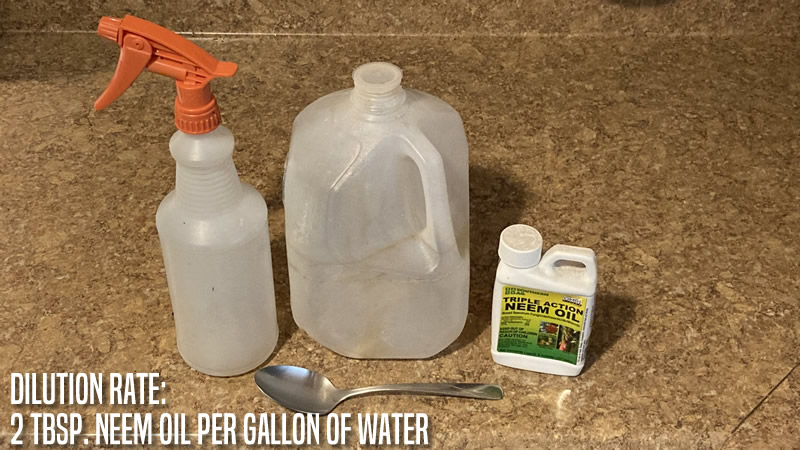
Horticultural oils are petroleum or plant-based oils that include neem oil. These oils make it difficult for the mold to cling to the plant and clog the breathing and other insects’ functions. Precautions are necessary when applying horticultural oils as they can burn non-targeted sensitive plants and your skin. Horticultural oils are non-selective pesticides that kill both pests and beneficial insects. Pond owners beware as horticultural oil is toxic to fish. It is crucial to limit overspray, prevent intrusion of the oil into your pond, and other water bodies via stormwater runoff.
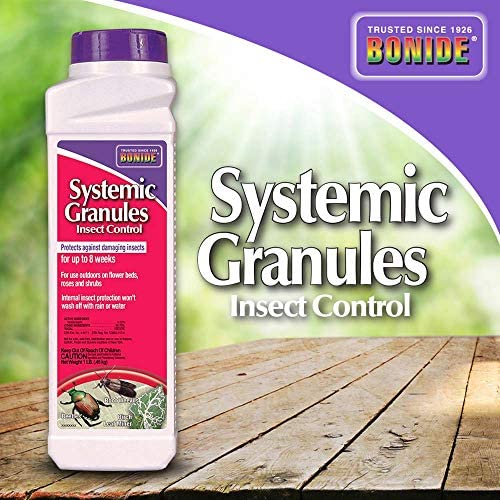
There are also various systemic pesticide treatments available for treating your lawn and garden. Bonide Systemic Granules is what we sell at our garden center and a reliable and effective product when the insecticidal soap and neem oil simply aren’t potent enough to knock down an infestation.
Once the sooty mold is gone, it is essential to maintain a healthy ecosystem for beneficial insects to thrive in and around your citrus trees, including companion planting, limiting the use of harmful chemicals, and proper fertilization of your trees. Some of the predators of these pest species include Ladybugs, Lacewings, and some predator wasps. If you don’t have them in your yard, and are considering trying to establish a population Arbico organics is a reliable source. Earth Works garden center has the organic treatments mentioned in this article available for purchase, and our lawn care department can set you up with fertilization, lawn pest control, and general lawn maintenance programs.
And remember that for comprehensive solutions to your specific lawn, garden and landscaping need contact Earth Works of Jacksonville online and at 904-996-0712. Earth Works operates a retail Garden Center/Plant Nursery in Jacksonville and provides landscaping, hardscaping, water features, lawn care service, lawn spraying, and drainage solutions.
Earth Works proudly serves clients in Northeast Florida, including Jacksonville, Ponte Vedra Beach, Atlantic Beach, Neptune Beach, Jacksonville Beach, Nocatee, St. Johns, Fleming Island, Orange Park, Middleburg, Green Cove Springs, Amelia Island, Fernandina, and St. Augustine.