
When Should I Apply Weed And Feed?
When Should I Apply Weed And Feed?
Knowing when to apply weed and feed in Jacksonville is one of those questions that sounds simple until you’re standing in a lawn care aisle in February trying to figure out if you’re already late. The short answer is: you’re probably not. In North Florida, patience usually beats ambition when it comes to timing your first treatment of the year.
Jacksonville’s warm-season grasses come out of winter on their own schedule, and timing your weed and feed application around that is the difference between a productive treatment and wasted product.
Here’s what you need to know before you put anything down.
Do Not Apply Weed And Feed Before March 1st in North Florida
For North Florida lawns, we recommend waiting until at least March 1 before applying weed and feed, and in cooler years, waiting a few weeks longer is often the smarter call.
The University of Florida puts the window for Central and South Florida on February 15, but moves it to March 1 for our region. Some of their extension agents go further, suggesting you wait until your warm-season grass starts greening up on its own before you fertilize. The reasoning is simple: fertilizer applied to dormant sod feeds the weeds that are already active, not the grass that isn’t yet active.
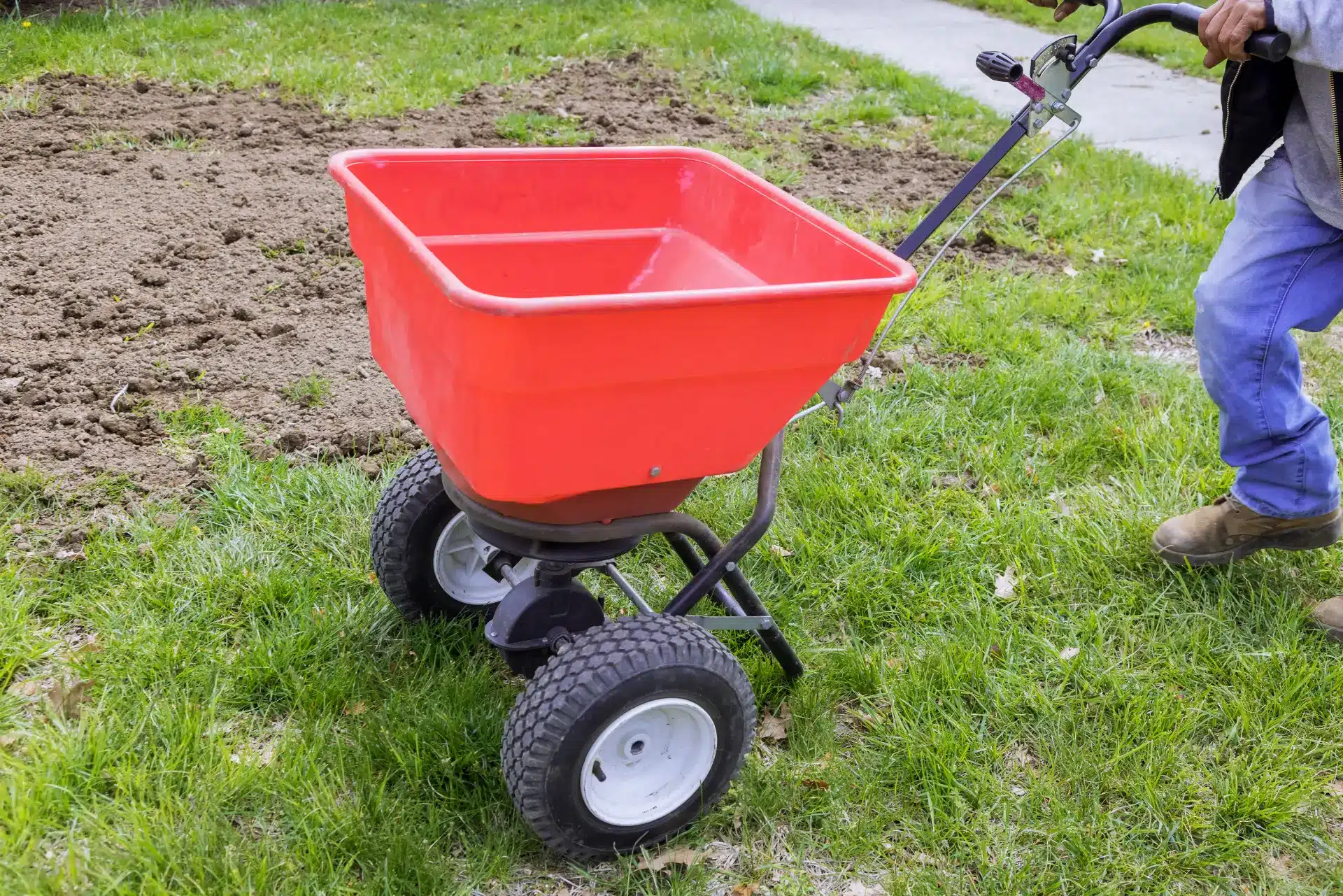

Why Timing Matters: What Weed And Feed Actually Does
Most weed-and-feed products contain two active components: a fertilizer to feed your grass and a herbicide to manage weeds. Many also include a pre-emergent, which works to prevent new weed seeds from germinating before they get a foothold.
The problem with applying too early is that both pieces of the formula work against you:
- The nitrogen in the fertilizer feeds whatever is actively growing, and in February, that’s weeds, not your St. Augustine or Zoysia.
- The herbicide component works best on actively growing weeds. Apply it when temperatures are too low and you lose effectiveness.
- Pre-emergents are time-sensitive. Put them down before the soil is ready and the window closes before it does any good.
Always read the product label before applying. Weed-and-feed formulas are developed for specific grass types, and what works on Bermuda grass can seriously damage St. Augustine grass. It is generally best to follow the timing guidance on the product label.
Jacksonville Weather Complicates the Window
North Florida’s late-winter weather is genuinely unpredictable. We see wide swings in weekly high and low temperatures coming out of January and February, and rainfall patterns have gotten harder to forecast.
Two conditions that will undermine a weed and feed application, regardless of timing:
- Lower-than-average temperatures slow grass activity and reduce herbicide effectiveness. If a cold front is sitting over Jacksonville, wait.
- Heavy rainfall can wash fertilizer and herbicide off your lawn entirely before it has a chance to work, and into nearby waterways. The St. Johns River, its tributaries, and area lakes are the downstream consequence of over-application or poor timing.
City of Jacksonville water restrictions also loosen when Daylight Saving Time begins (the second Sunday in March), allowing twice-weekly residential landscape irrigation. That timing aligns with when your lawn actually needs moisture to respond to treatment.
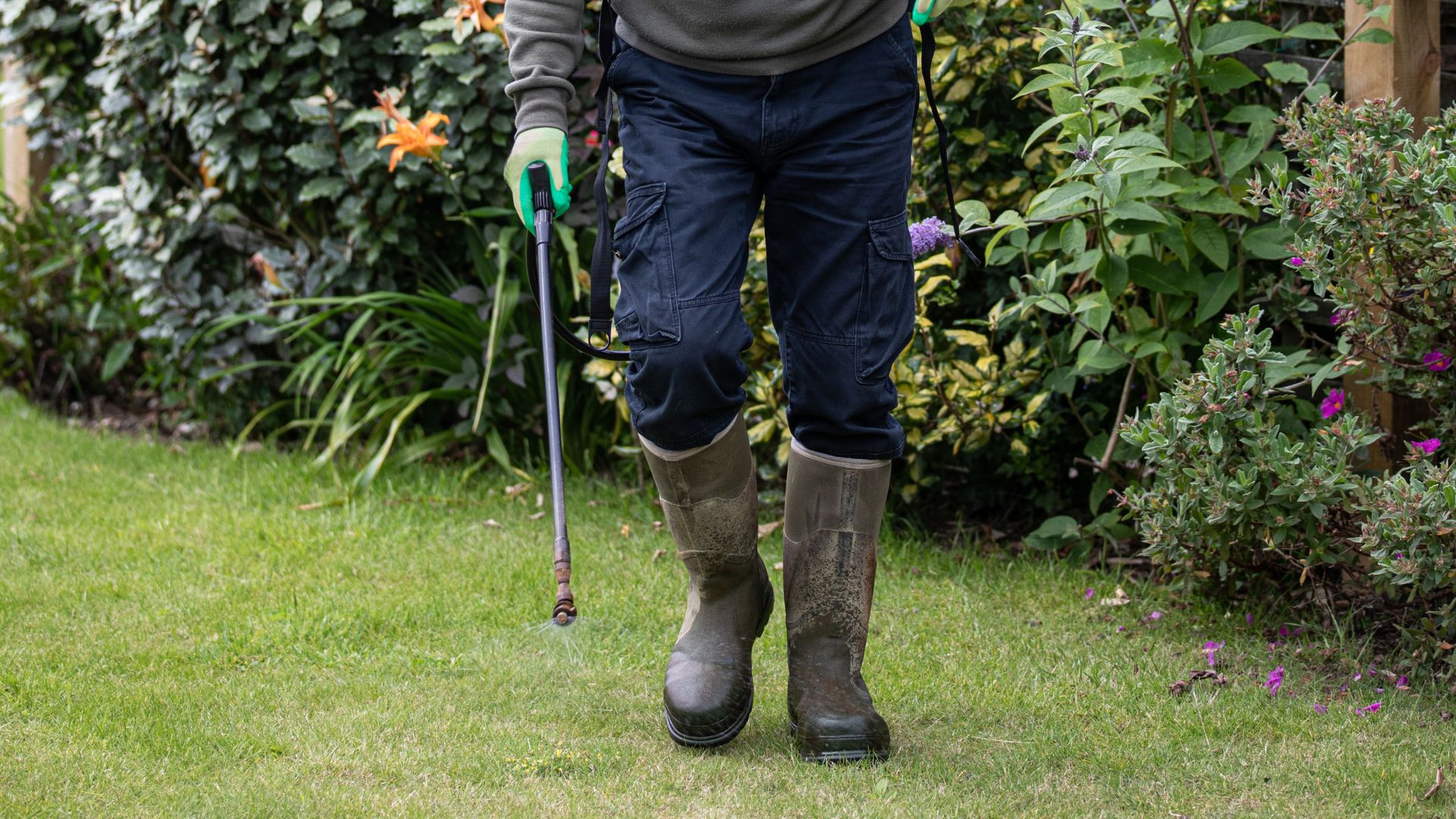
Is Weed And Feed The Right Choice For Your Lawn?
Weed and feed is convenient, but it’s not always the best tool. A few situations where a different approach makes more sense:
- Your weed pressure is concentrated in specific spots, not spread across the lawn. Spot-treating with a targeted herbicide is more precise and less disruptive to your grass.
- Your soil hasn’t been tested recently. Fertilizing without knowing your soil pH can lock up nutrients before your grass ever uses them.
- Your lawn hasn’t been dethatched or aerated. Heavy thatch acts as a barrier that prevents the product from reaching the soil and root zone where it does its work.
The University of Florida Gardening Solutions site has an extensive list of common weeds for identification. Knowing what you’re dealing with before you treat them is the first step to managing it effectively.
If you’re unsure about your lawn’s soil health, UF/IFAS offers free soil testing through their Northeast Florida extension offices.
Questions About Your Lawn This Spring?
If you’re not sure whether your lawn is ready or which products make sense for your grass type, we’d be happy to help. Earth Works has been maintaining Jacksonville-area lawns since 1988, and our crews know this soil the way you’d expect after almost 40 years of working in it.
Learn more about our lawn care and turf fertilization programs, or give us a call. We’ll tell you honestly what your lawn needs, and what it doesn’t.
Weed And Feed: Frequently Asked Questions
What month should I apply Weed And Feed in Jacksonville?
March is the safe starting point for most North Florida lawns. March 1 is the general recommendation from UF/IFAS, though in cooler years, or if your lawn hasn’t started greening up yet, waiting until late March or early April is the better call. Applying too early wastes product and feeds the weeds you’re trying to eliminate.
How do I know if my lawn is ready for fertilizer?
Look at your lawn. When your warm-season grass, whether St. Augustine, Zoysia, Bermuda, or Bahia, starts actively greening up without any help, that’s the signal the soil is warm enough for fertilizer to do something useful. If the grass still looks dormant, you’re too early.
What happens if I apply weed and feed too early?
Two problems can occur. First, the nitrogen in the fertilizer feeds whatever is actively growing, which in February is usually weeds, not your grass. Second, the herbicide works less effectively in cold temperatures. You end up spending money on a treatment that either does nothing or actively works against you.
Should I water after applying Weed And Feed?
Check the product label, as it varies by formula. Most granular weed-and-feed products need water to activate, but some require you to wait. Applying right before rain is often ideal. Just be careful not to overwater immediately after application, as it can wash the product off your lawn before it’s absorbed.
Is Weed And Feed safe for St. Augustine Grass?
Not all formulas are safe for St. Augustine Grass. St. Augustine is sensitive to certain herbicides, particularly Atrazine in high doses and some broadleaf herbicides. Always check that the product you’re using is labeled safe for your specific grass type before applying. When in doubt, read the label or ask someone who knows. Not all lawn products are interchangeable.
What's the difference between Weed And Feed and a professional turf fertilization program?
A retail weed-and-feed product is a one-size-fits-most solution. A professional turf fertilization program accounts for your specific grass type, your soil, the current season, and what pest or disease pressure your lawn is dealing with right now. Earth Works’ turf fertilization program runs 8 treatments per year and covers fertilization, weed control, pest management, and disease control, calibrated to what North Florida lawns actually need, not what a general formula assumes.
Services
- Landscape Design & Installation
- Paver Patios, Paver Walkways, Paver Driveways
- Firepits, Retaining Walls, Seat Walls
- Landscape Lighting, Drainage design & Installation,
- Lawn Care Services, Lawn Maintenance, Lawn Fertilization
- Lawn Pest Control, Lawn Weed Control
- Aeration and Top Dressing
- Water Features, Koi Ponds,
- Waterfalls, Bubbling Fountains
- Garden Center & Pond Supply Store
General Services Areas
Jacksonville (Jax), Jacksonville Beach, Neptune Beach, Atlantic Beach, Ponte Vedra Beach, Ponte Vedra, Fernandina Beach, Amelia Island, Orange Park, St. Johns, Nocatee

Location
GARDEN CENTER
12501 Beach Blvd
Jacksonville, FL 32246
LANDSCAPE OPERATIONS
(not open to the public)
St. Johns Bluff
1119 St. Johns Bluff Rd. N.
Jacksonville, FL 32225
Hours
Monday-Saturday 9-5
Sunday 10-5
HOLIDAY CLOSINGS
New Year’s Day • Easter • Memorial Day
July 4th • Labor Day • Thanksgiving Day
Christmas Eve • Christmas Day
Seasonal Lawn Fungus Threats
Seasonal Lawn Fungus Threats
The seasonal lawn fungus threats are at their peak in Spring and Fall when nights are cool and humidity is high here in Northeast Florida. A good lawn fungus application is recommended. There are natural solutions such as baking soda and neem oil but rarely do lawn care pest control companies go that route for commercial applications.
A well-maintained lawn is the best defense against most lawn issues. A healthy lawn is less susceptible to long-term fungal disease outbreaks. Plus, minor outbreaks may go away on their own as some die with seasonal temperature variations and increases or decreases in rain and watering. Those same variations in temperature, water supply, and nutrition put the poorly maintained lawn at greater risk of damage from disease when an outbreak occurs. To understand this better consider that a healthy body heals quicker than a sick one.
Dethatching and aerating the turf along with the proper type of fertilizer at the proper timing for fertilization improves turf disease resistance. Mowing the grass at the proper height with a sharp blade likewise reduces turf disease susceptibility. And no good deed goes unpunished as putting out that same high nitrogen fertilizer you were using earlier in the year will mostly grow weeds and forms of fungus in the Fall. Reduce the days and duration of watering in the fall and increase again in spring.
Lawn fungus appears in many forms including white, yellow and brown patches, multiple colored spots on the grass blades, a powdery or stringy coating on the grass and slick, slimy darkened colored grass. Whatever type of fungus you may have, know that it spreads by spores. So walking on it increases the risk of spreading the spores to other parts of your lawn.
There are two types of lawn fungicides, foliar liquids and granular systemic. The liquid is fast-acting with less residual benefit whereas the granular works its way up through the root system over time. For long-term treatment, alternate both modes of application foliar and granular since different fungicides absorb differently and build resistance to treatments.
For seasonal lawn fungus here at Earth Works we use and recommend a broad-spectrum fungicide that is available in both foliar and granular form by the brand name HeadwayG with azoxystrobin & propiconazole. This treats various brown patches, rust, ring spots, powdery mildew, blight, red thread, and root rot. Typically treat twice and fourteen days apart. The untreated fungus can spread and be very damaging to the lawn over time. So don’t mow when the fungus is present which would encourage its spread.

Earth Works operates a retail Garden Center/Plant Nursery in Jacksonville and provides landscaping, hardscaping, water features, lawn care service, lawn spraying, and drainage solutions. Stop by our retail center or contact us online or by phone at 904-996-0712.
Earth Works proudly serves clients in Northeast Florida, including Jacksonville, Ponte Vedra Beach, Atlantic Beach, Neptune Beach, Jacksonville Beach, Nocatee, St. Johns, Fleming Island, Orange Park, Middleburg, Green Cove Springs, Amelia Island, Fernandina, and St. Augustine.
Services
- Landscape Design & Installation
- Paver Patios, Paver Walkways, Paver Driveways
- Firepits, Retaining Walls, Seat Walls
- Landscape Lighting, Drainage design & Installation,
- Lawn Care Services, Lawn Maintenance, Lawn Fertilization
- Lawn Pest Control, Lawn Weed Control
- Aeration and Top Dressing
- Water Features, Koi Ponds,
- Waterfalls, Bubbling Fountains
- Garden Center & Pond Supply Store
General Services Areas
Jacksonville (Jax), Jacksonville Beach, Neptune Beach, Atlantic Beach, Ponte Vedra Beach, Ponte Vedra, Fernandina Beach, Amelia Island, Orange Park, St. Johns, Nocatee
Location
GARDEN CENTER
12501 Beach Blvd
Jacksonville, FL 32246
LANDSCAPE OPERATIONS
(not open to the public)
St. Johns Bluff
1119 St. Johns Bluff Rd. N.
Jacksonville, FL 32225
Hours
Monday-Saturday 9-5
Sunday 10-5
HOLIDAY CLOSINGS
New Year’s Day • Easter • Memorial Day
July 4th • Labor Day • Thanksgiving Day
Christmas Eve • Christmas Day