
The Benefits of Core Aeration and Top Dressing for Northeast Florida Lawns.
The Benefits of Core Aeration and Top Dressing for Northeast Florida Lawns.
In the quest for a verdant and thriving lawn, especially in the distinctive sandy soils of Northeast Florida, understanding the benefits of core aeration and top dressing is paramount. These lawn care practices are not just beneficial; they are necessary for the long-term health and vitality of your turf. Let’s explore why these techniques are so effective and how they contribute to a healthy lawn.

Understanding Core Aeration
Core aeration is a process that combats the common issues of soil compaction and thatch build-up, which are prevalent in our sandy Northeast Florida soils. By removing small “cores” of soil, we create a pathway for air, water, and nutrients to reach the root zone of your grass. Here are the benefits you can expect:
-
Air Exchange Improvement:
Aeration facilitates better exchange of air between the soil and atmosphere, which is essential for root respiration and growth.
-
Water Uptake Enhancement:
The process allows for better water absorption, helping to reduce runoff and increase moisture retention in the root zone.
-
Fertilizer Efficiency:
Aerated soils enable better fertilizer uptake, ensuring that essential nutrients are more readily available to the grass roots.
-
Root System Development:
Loosening the soil helps to foster a stronger and deeper root system, key to a resilient and lush lawn.
-
Soil Decompaction:
By breaking up compacted soil, aeration encourages a healthier soil environment for turfgrass to grow.
The Role of Organic Matter
The addition of organic matter to the soil is another crucial step in nurturing a healthy lawn. Organic matter has a multitude of benefits, including:

-
Moisture Retention:
It acts much like a sponge, absorbing and holding moisture for extended periods, which is particularly useful during dry spells.
-
Soil Aeration and Structure:
The introduction of organic material creates air pockets and loosens soil structure, leading to improved root growth and enhanced water absorption and drainage.
-
Nutrient Provision:
As it decomposes, organic matter slowly releases nutrients that are vital for plant growth, such as nitrogen, phosphorus, and sulfur.
-
Soil Biology Enhancement:
The incorporation of organic matter supports a diverse ecosystem of soil organisms that contribute to the overall health of the lawn by breaking down organic material and fighting off pests and diseases.
Top Dressing: A Nutrient Booster
Top dressing, when applied after core aeration, can significantly amplify the benefits of the aeration process. By filling the aeration holes with nutrient-rich organic compost or a similar medium, the soil is directly amended where it matters most. This can enhance the soil’s water retention capabilities, provide a direct nutrient boost, and introduce beneficial microorganisms that help create a robust and balanced soil ecosystem.

Practical Lawn Care Strategies
Incorporating these practices into regular lawn care routines can have a profound effect on the health of your lawn. Here are some strategies for homeowners:
-
Regular Aeration:
Aerate your lawn annually or biannually to maintain soil health and ensure nutrient availability.
-
Organic Top Dressing:
Following aeration, apply a layer of organic compost to enrich the soil and provide a healthy growing environment for your grass.
-
Appropriate Grass Selection:
Choose turfgrasses that are well-suited to the climate and soil conditions of Northeast Florida to ensure the best growth and resilience.
-
Soil Testing:
Conduct periodic soil tests to identify nutrient deficiencies and pH imbalances, adjusting your lawn care practices accordingly.
By understanding and implementing core aeration and top dressing, homeowners in Northeast Florida can significantly improve the health and appearance of their lawns. These practices promote deeper root growth, enhance soil quality, and help establish a lush, green turf that is both beautiful and sustainable.
Earth Works Lawn Care: Your Partner in Lawn Excellence
At Earth Works, we’ve seen phenomenal results from these services. Your turf and plants won’t just survive; they’ll thrive. If you’re ready to improve your lawn’s health and enhance its beauty, reach out to us at 904.996.0712. Let’s work together to create the lush, green oasis you’ve always wanted in Northeast Florida.
Services
- Landscape Design & Installation
- Paver Patios, Paver Walkways, Paver Driveways
- Firepits, Retaining Walls, Seat Walls
- Landscape Lighting, Drainage design & Installation,
- Lawn Care Services, Lawn Maintenance, Lawn Fertilization
- Lawn Pest Control, Lawn Weed Control
- Aeration and Top Dressing
- Water Features, Koi Ponds,
- Waterfalls, Bubbling Fountains
- Garden Center & Pond Supply Store
General Services Areas
Jacksonville (Jax), Jacksonville Beach, Neptune Beach, Atlantic Beach, Ponte Vedra Beach, Ponte Vedra, Fernandina Beach, Amelia Island, Orange Park, St. Johns, Nocatee

Location
GARDEN CENTER
12501 Beach Blvd
Jacksonville, FL 32246
LANDSCAPE OPERATIONS
(not open to the public)
St. Johns Bluff
1119 St. Johns Bluff Rd. N.
Jacksonville, FL 32225
Hours
Monday-Saturday 9-5
Sunday 10-5
HOLIDAY CLOSINGS
New Year’s Day • Easter • Memorial Day
July 4th • Labor Day • Thanksgiving Day
Christmas Eve • Christmas Day
Why Did My Leaves Turn Black?
Why Did My Leaves Turn Black?
Insect secretions of honeydew and the resulting sooty mold biofilm buildup are why your plant’s leaves turn black. The sooty mold has a mutualist relationship with sap-sucking insect pests that create favorable growth conditions for the fungus. Blocking photosynthesis is the only harm to the plant caused beside the unsightly appearance of this fungus. “On pecan (Carva illinoensis) these molds can reduce light penetration and photosynthesis by factors of from 25% to 98%,” according to Science Direct. “In addition, the darkening of the leaf surface can result in an increase in leaf temperature of 4°C.”
Plants whose leaves turn black include azaleas, camellias, citrus trees, crepe myrtles, gardenias, elms, hollies, maples, podocarpus, and mostly evergreen plants. Susceptible plants tend to have rigid leaves that hold up well to prolong infestations.
Aphids, scale, mealybugs, mites, scale, and whiteflies pierce and suck out nutrients from the host plant. They then secrete the sticky honeydew waste product that fungal spores attach to as the leaves turn black. While other plants, such as herbaceous perennials, can be affected by the same insects, they are more likely to die before the buildup of secondary black sooty mold.
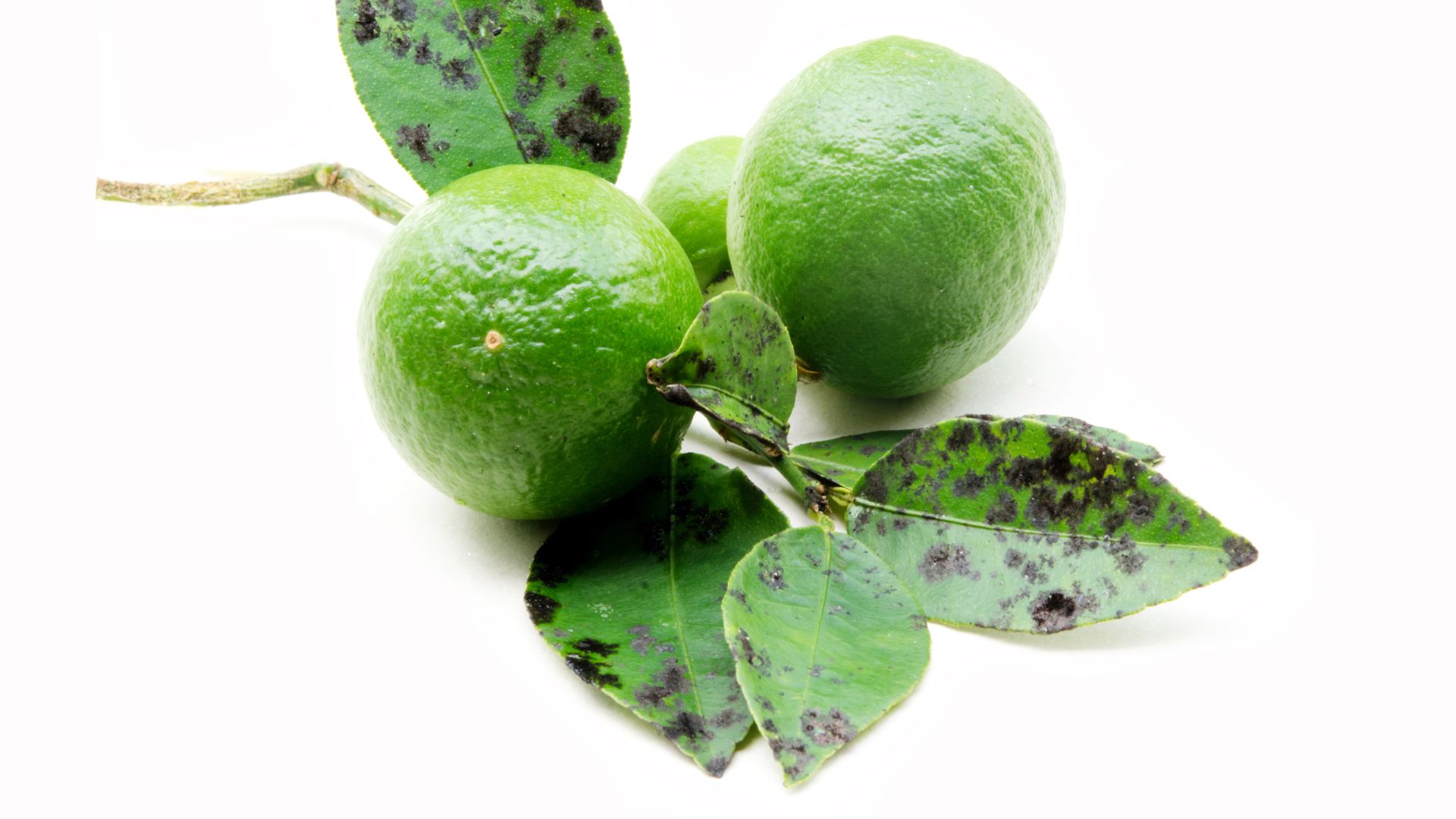
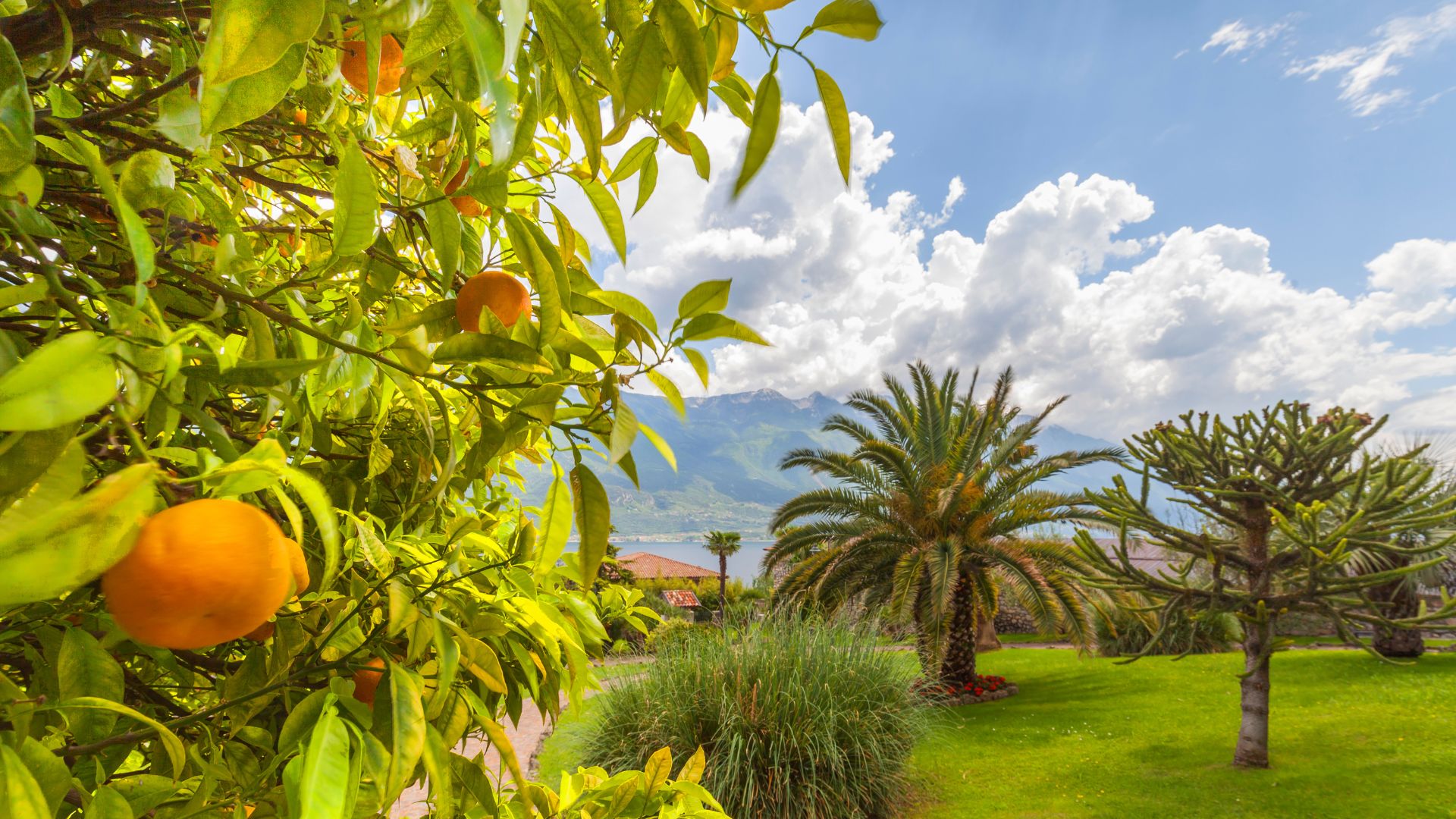
There are two identified forms of sooty mold categorized as deciduous and permanent. “The deciduous growth form is characterized by a thin hyphal layer that peels away from its substratum in drier, cooler months,” according to Science Direct. “It is found predominantly in lowland tropical regions but is absent from rainforests. The deciduous form also occurs along the coast of the southeastern United States and commonly is found on citrus trees.”
While the type of sooty mold commonly encountered can dry up and flake off during cool and dry seasons, it’s most effectively removed by washing with soap and water. Soaking the leaves and hand washing will loosen the mold away. This can be also be done with insecticidal soap or horticultural oil that also treats the primary pests. However, horticultural oils should not be used during freezing or over 90F temperatures or drought-stressed plants. You might see mention of ‘dormant oils’, which are horticultural oils used to treat overwintering aphids, mites, scale, and other sap suckers’ eggs. Always read label directions making sure that the treatment suits your specific plant. And don’t use horticultural oil on azaleas, begonias, or succulents.
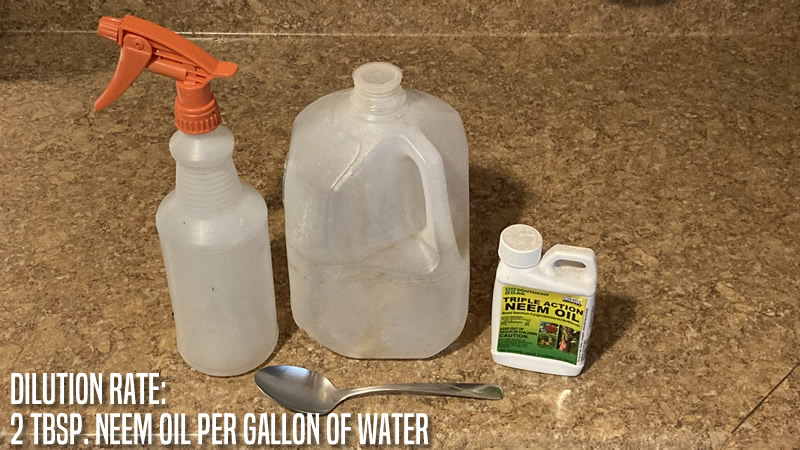
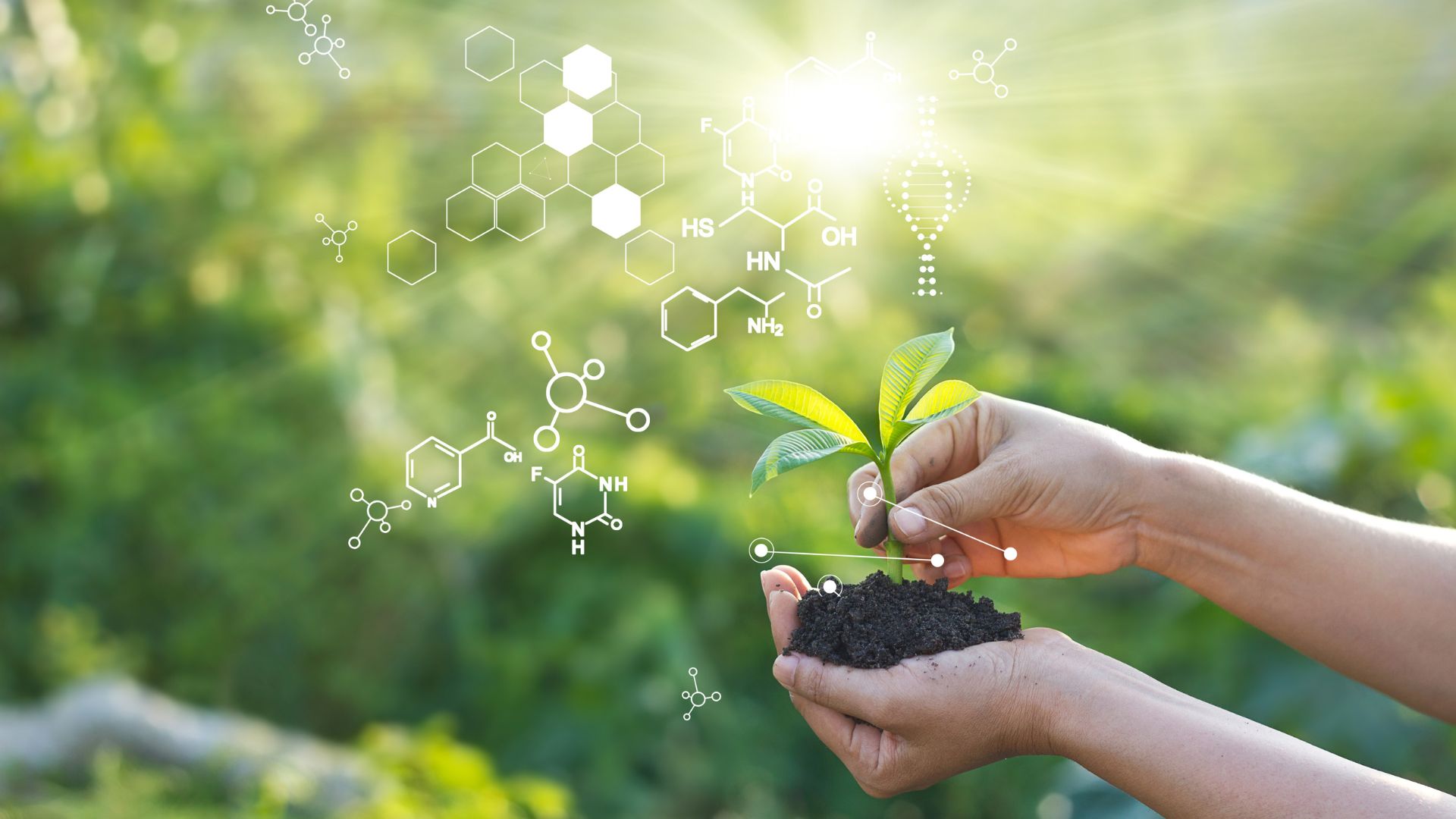
There is ongoing research into biocontrols of sooty citrus mold and the associated insects. Bacillus velezensis MT9 and Pseudomonas chlororaphis MT5. “These bacteria were shown to produce antibacterial and antifungal activities in the form of water-soluble molecules and were effective in vitro in inhibiting the growth of two fungal strains, Penicillium sp. YM1 and YM2, isolated from citrus soot,” according to researchers at the University of Salento, Via Monteroni in Italy. “Altogether these in vitro findings and pilot experiments with a limited set of plants indicate that Bacillus velezensis MT9 and Pseudomonas chlororaphis MT5 can effectively combat sooty mold possibly by acting on both the insects and the fungi that inhabit the black biofilm, paving the way for an innovative and sustainable tool to fight this disease.”
Beneficial insects such as Ladybugs, Lacewings, and some predator wasps are a long-term natural remedy for sap-sucking insects. However, maintaining a sufficient population can take time and effort. If you want to introduce them in your yard, consider available species from Arbico organics. Earth Works garden center has the organic treatments mentioned in this article available for purchase.
Earth Works Lawn Care provides Integrated Pest Management treatment programs based on what we see with pest populations throughout the community and your specific landscape.

Services
- Landscape Design & Installation
- Paver Patios, Paver Walkways, Paver Driveways
- Firepits, Retaining Walls, Seat Walls
- Landscape Lighting, Drainage design & Installation,
- Lawn Care Services, Lawn Maintenance, Lawn Fertilization
- Lawn Pest Control, Lawn Weed Control
- Aeration and Top Dressing
- Water Features, Koi Ponds,
- Waterfalls, Bubbling Fountains
- Garden Center & Pond Supply Store
General Services Areas
Jacksonville (Jax), Jacksonville Beach, Neptune Beach, Atlantic Beach, Ponte Vedra Beach, Ponte Vedra, Fernandina Beach, Amelia Island, Orange Park, St. Johns, Nocatee
Location
GARDEN CENTER
12501 Beach Blvd
Jacksonville, FL 32246
LANDSCAPE OPERATIONS
(not open to the public)
St. Johns Bluff
1119 St. Johns Bluff Rd. N.
Jacksonville, FL 32225
Hours
Monday-Saturday 9-5
Sunday 10-5
HOLIDAY CLOSINGS
New Year’s Day • Easter • Memorial Day
July 4th • Labor Day • Thanksgiving Day
Christmas Eve • Christmas Day
When Should I Apply Weed And Feed?
When Should I Apply Weed And Feed?
Knowing when to apply weed and feed in Jacksonville is one of those questions that sounds simple until you’re standing in a lawn care aisle in February trying to figure out if you’re already late. The short answer is: you’re probably not. In North Florida, patience usually beats ambition when it comes to timing your first treatment of the year.
Jacksonville’s warm-season grasses come out of winter on their own schedule, and timing your weed and feed application around that is the difference between a productive treatment and wasted product.
Here’s what you need to know before you put anything down.
Do Not Apply Weed And Feed Before March 1st in North Florida
For North Florida lawns, we recommend waiting until at least March 1 before applying weed and feed, and in cooler years, waiting a few weeks longer is often the smarter call.
The University of Florida puts the window for Central and South Florida on February 15, but moves it to March 1 for our region. Some of their extension agents go further, suggesting you wait until your warm-season grass starts greening up on its own before you fertilize. The reasoning is simple: fertilizer applied to dormant sod feeds the weeds that are already active, not the grass that isn’t yet active.

Why Timing Matters: What Weed And Feed Actually Does
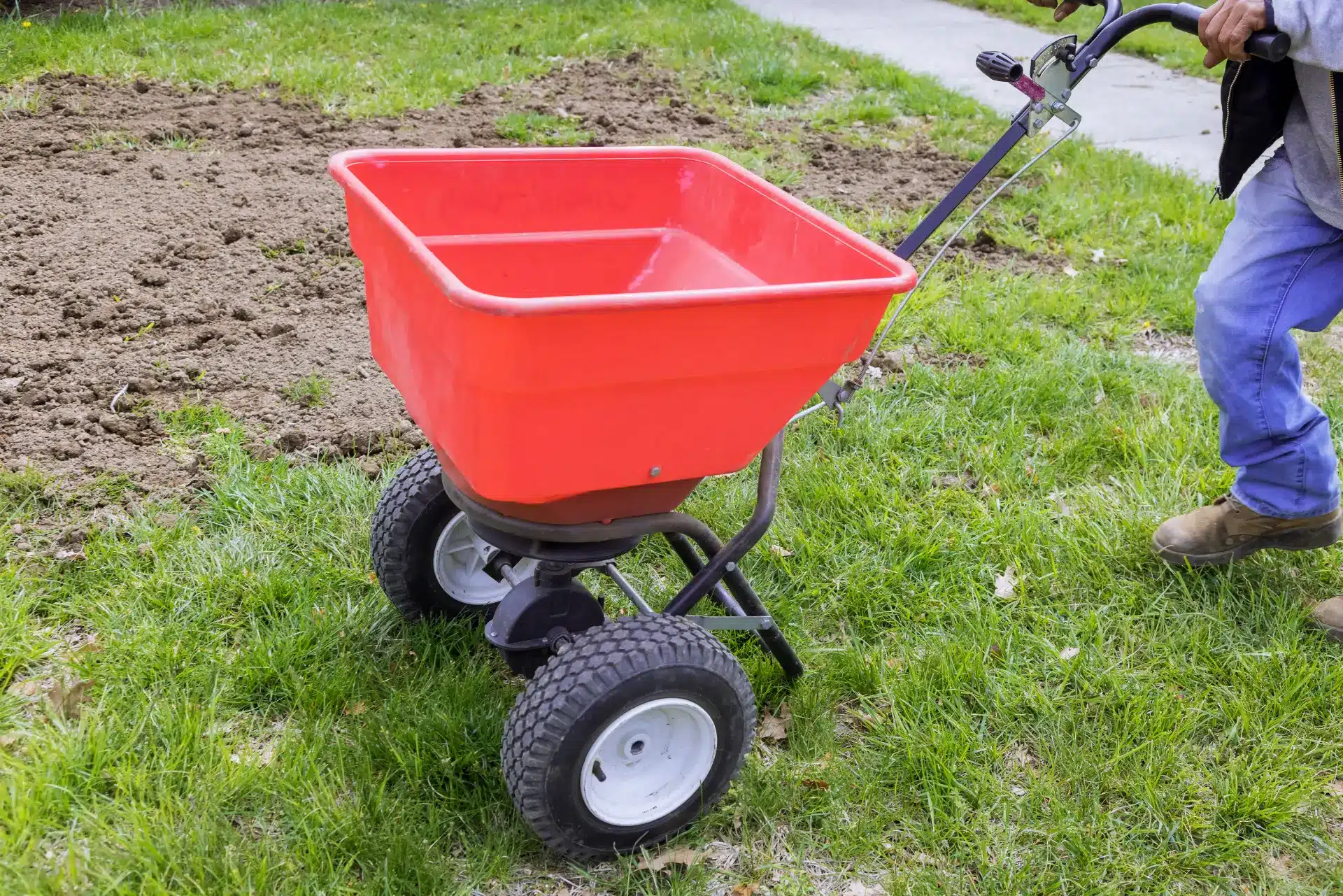
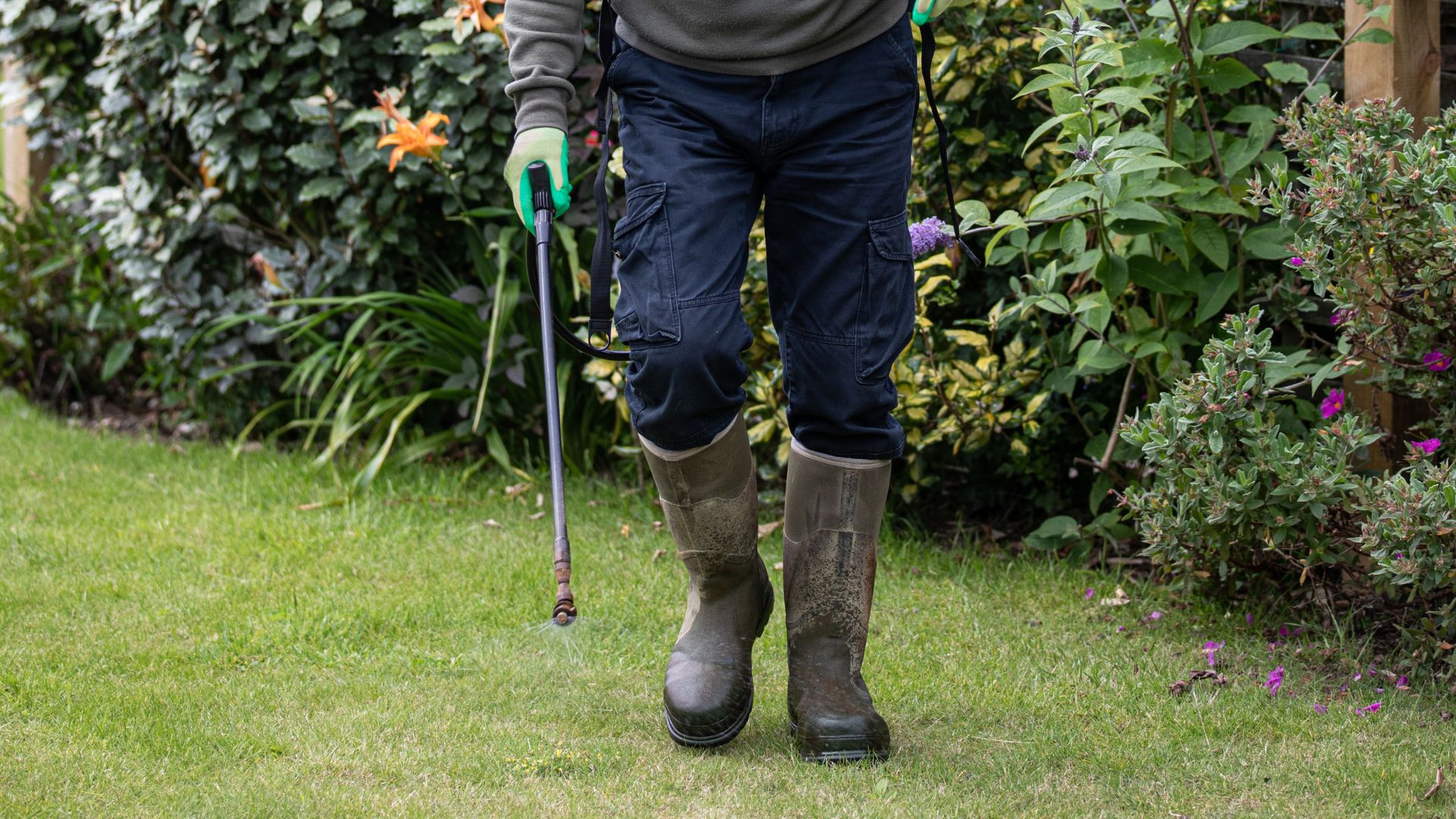
Most weed-and-feed products contain two active components: a fertilizer to feed your grass and a herbicide to manage weeds. Many also include a pre-emergent, which works to prevent new weed seeds from germinating before they get a foothold.
The problem with applying too early is that both pieces of the formula work against you:
- The nitrogen in the fertilizer feeds whatever is actively growing, and in February, that’s weeds, not your St. Augustine or Zoysia.
- The herbicide component works best on actively growing weeds. Apply it when temperatures are too low and you lose effectiveness.
- Pre-emergents are time-sensitive. Put them down before the soil is ready and the window closes before it does any good.
Always read the product label before applying. Weed-and-feed formulas are developed for specific grass types, and what works on Bermuda grass can seriously damage St. Augustine grass. It is generally best to follow the timing guidance on the product label.
Jacksonville Weather Complicates the Window
North Florida’s late-winter weather is genuinely unpredictable. We see wide swings in weekly high and low temperatures coming out of January and February, and rainfall patterns have gotten harder to forecast.
Two conditions that will undermine a weed and feed application, regardless of timing:
- Lower-than-average temperatures slow grass activity and reduce herbicide effectiveness. If a cold front is sitting over Jacksonville, wait.
- Heavy rainfall can wash fertilizer and herbicide off your lawn entirely before it has a chance to work, and into nearby waterways. The St. Johns River, its tributaries, and area lakes are the downstream consequence of over-application or poor timing.
City of Jacksonville water restrictions also loosen when Daylight Saving Time begins (the second Sunday in March), allowing twice-weekly residential landscape irrigation. That timing aligns with when your lawn actually needs moisture to respond to treatment.
Is Weed And Feed The Right Choice For Your Lawn?
Weed and feed is convenient, but it’s not always the best tool. A few situations where a different approach makes more sense:
- Your weed pressure is concentrated in specific spots, not spread across the lawn. Spot-treating with a targeted herbicide is more precise and less disruptive to your grass.
- Your soil hasn’t been tested recently. Fertilizing without knowing your soil pH can lock up nutrients before your grass ever uses them.
- Your lawn hasn’t been dethatched or aerated. Heavy thatch acts as a barrier that prevents the product from reaching the soil and root zone where it does its work.
The University of Florida Gardening Solutions site has an extensive list of common weeds for identification. Knowing what you’re dealing with before you treat them is the first step to managing it effectively.
If you’re unsure about your lawn’s soil health, UF/IFAS offers free soil testing through their Northeast Florida extension offices.
Questions About Your Lawn This Spring?
If you’re not sure whether your lawn is ready or which products make sense for your grass type, we’d be happy to help. Earth Works has been maintaining Jacksonville-area lawns since 1988, and our crews know this soil the way you’d expect after almost 40 years of working in it.
Learn more about our lawn care and turf fertilization programs, or give us a call. We’ll tell you honestly what your lawn needs, and what it doesn’t.
Weed And Feed: Frequently Asked Questions
What month should I apply Weed And Feed in Jacksonville?
March is the safe starting point for most North Florida lawns. March 1 is the general recommendation from UF/IFAS, though in cooler years, or if your lawn hasn’t started greening up yet, waiting until late March or early April is the better call. Applying too early wastes product and feeds the weeds you’re trying to eliminate.
How do I know if my lawn is ready for fertilizer?
Look at your lawn. When your warm-season grass, whether St. Augustine, Zoysia, Bermuda, or Bahia, starts actively greening up without any help, that’s the signal the soil is warm enough for fertilizer to do something useful. If the grass still looks dormant, you’re too early.
What happens if I apply weed and feed too early?
Two problems can occur. First, the nitrogen in the fertilizer feeds whatever is actively growing, which in February is usually weeds, not your grass. Second, the herbicide works less effectively in cold temperatures. You end up spending money on a treatment that either does nothing or actively works against you.
Should I water after applying Weed And Feed?
Check the product label, as it varies by formula. Most granular weed-and-feed products need water to activate, but some require you to wait. Applying right before rain is often ideal. Just be careful not to overwater immediately after application, as it can wash the product off your lawn before it’s absorbed.
Is Weed And Feed safe for St. Augustine Grass?
Not all formulas are safe for St. Augustine Grass. St. Augustine is sensitive to certain herbicides, particularly Atrazine in high doses and some broadleaf herbicides. Always check that the product you’re using is labeled safe for your specific grass type before applying. When in doubt, read the label or ask someone who knows. Not all lawn products are interchangeable.
What's the difference between Weed And Feed and a professional turf fertilization program?
A retail weed-and-feed product is a one-size-fits-most solution. A professional turf fertilization program accounts for your specific grass type, your soil, the current season, and what pest or disease pressure your lawn is dealing with right now. Earth Works’ turf fertilization program runs 8 treatments per year and covers fertilization, weed control, pest management, and disease control, calibrated to what North Florida lawns actually need, not what a general formula assumes.
Services
- Landscape Design & Installation
- Paver Patios, Paver Walkways, Paver Driveways
- Firepits, Retaining Walls, Seat Walls
- Landscape Lighting, Drainage design & Installation,
- Lawn Care Services, Lawn Maintenance, Lawn Fertilization
- Lawn Pest Control, Lawn Weed Control
- Aeration and Top Dressing
- Water Features, Koi Ponds,
- Waterfalls, Bubbling Fountains
- Garden Center & Pond Supply Store
General Services Areas
Jacksonville (Jax), Jacksonville Beach, Neptune Beach, Atlantic Beach, Ponte Vedra Beach, Ponte Vedra, Fernandina Beach, Amelia Island, Orange Park, St. Johns, Nocatee
Location
GARDEN CENTER
12501 Beach Blvd
Jacksonville, FL 32246
LANDSCAPE OPERATIONS
(not open to the public)
St. Johns Bluff
1119 St. Johns Bluff Rd. N.
Jacksonville, FL 32225
Hours
Monday-Saturday 9-5
Sunday 10-5
HOLIDAY CLOSINGS
New Year’s Day • Easter • Memorial Day
July 4th • Labor Day • Thanksgiving Day
Christmas Eve • Christmas Day
Seasonal Lawn Fungus Threats
Seasonal Lawn Fungus Threats
The seasonal lawn fungus threats are at their peak in Spring and Fall when nights are cool and humidity is high here in Northeast Florida. A good lawn fungus application is recommended. There are natural solutions such as baking soda and neem oil but rarely do lawn care pest control companies go that route for commercial applications.
A well-maintained lawn is the best defense against most lawn issues. A healthy lawn is less susceptible to long-term fungal disease outbreaks. Plus, minor outbreaks may go away on their own as some die with seasonal temperature variations and increases or decreases in rain and watering. Those same variations in temperature, water supply, and nutrition put the poorly maintained lawn at greater risk of damage from disease when an outbreak occurs. To understand this better consider that a healthy body heals quicker than a sick one.
Dethatching and aerating the turf along with the proper type of fertilizer at the proper timing for fertilization improves turf disease resistance. Mowing the grass at the proper height with a sharp blade likewise reduces turf disease susceptibility. And no good deed goes unpunished as putting out that same high nitrogen fertilizer you were using earlier in the year will mostly grow weeds and forms of fungus in the Fall. Reduce the days and duration of watering in the fall and increase again in spring.
Lawn fungus appears in many forms including white, yellow and brown patches, multiple colored spots on the grass blades, a powdery or stringy coating on the grass and slick, slimy darkened colored grass. Whatever type of fungus you may have, know that it spreads by spores. So walking on it increases the risk of spreading the spores to other parts of your lawn.
There are two types of lawn fungicides, foliar liquids and granular systemic. The liquid is fast-acting with less residual benefit whereas the granular works its way up through the root system over time. For long-term treatment, alternate both modes of application foliar and granular since different fungicides absorb differently and build resistance to treatments.
For seasonal lawn fungus here at Earth Works we use and recommend a broad-spectrum fungicide that is available in both foliar and granular form by the brand name HeadwayG with azoxystrobin & propiconazole. This treats various brown patches, rust, ring spots, powdery mildew, blight, red thread, and root rot. Typically treat twice and fourteen days apart. The untreated fungus can spread and be very damaging to the lawn over time. So don’t mow when the fungus is present which would encourage its spread.

Earth Works operates a retail Garden Center/Plant Nursery in Jacksonville and provides landscaping, hardscaping, water features, lawn care service, lawn spraying, and drainage solutions. Stop by our retail center or contact us online or by phone at 904-996-0712.
Earth Works proudly serves clients in Northeast Florida, including Jacksonville, Ponte Vedra Beach, Atlantic Beach, Neptune Beach, Jacksonville Beach, Nocatee, St. Johns, Fleming Island, Orange Park, Middleburg, Green Cove Springs, Amelia Island, Fernandina, and St. Augustine.
Services
- Landscape Design & Installation
- Paver Patios, Paver Walkways, Paver Driveways
- Firepits, Retaining Walls, Seat Walls
- Landscape Lighting, Drainage design & Installation,
- Lawn Care Services, Lawn Maintenance, Lawn Fertilization
- Lawn Pest Control, Lawn Weed Control
- Aeration and Top Dressing
- Water Features, Koi Ponds,
- Waterfalls, Bubbling Fountains
- Garden Center & Pond Supply Store
General Services Areas
Jacksonville (Jax), Jacksonville Beach, Neptune Beach, Atlantic Beach, Ponte Vedra Beach, Ponte Vedra, Fernandina Beach, Amelia Island, Orange Park, St. Johns, Nocatee
Location
GARDEN CENTER
12501 Beach Blvd
Jacksonville, FL 32246
LANDSCAPE OPERATIONS
(not open to the public)
St. Johns Bluff
1119 St. Johns Bluff Rd. N.
Jacksonville, FL 32225
Hours
Monday-Saturday 9-5
Sunday 10-5
HOLIDAY CLOSINGS
New Year’s Day • Easter • Memorial Day
July 4th • Labor Day • Thanksgiving Day
Christmas Eve • Christmas Day
Florida Winterizer Fertilization
Florida Winterizer Fertilization
Florida Winterizer Fertilization of warm-season grasses if done should be done with a nitrogen-free product and applied prior to dormancy. Although many brands promote the sale of Winterizing fertilizers that include nitrogen, these are not appropriate for warm-season grasses. They encourage new grass blade development that alters the dormancy cycle that, by design, is nature’s way of protecting the plant from cold damage—waking the plant before a freeze puts it at risk of increased stress and death. “Many of the so-called winterizer fertilizers available in our area can cause more damage than good,” according to UF/IFAS. “The time to fertilize our warm-season grasses in Florida is during the growing season, not when the grasses are going to “sleep” for the winter.”
The three macro-nutrients listed on the label of all fertilizers are nitrogen, phosphorus, and potassium, abbreviated as NPK. If choosing a Wintering lawn fertilizer, we only recommend an NPK with phosphorus and potassium. “Adding phosphorus to soil low in available phosphorus promotes root growth and winter hardiness, stimulates tillering, and often hastens maturity,” according to University of Nebraska Plant & Soil elibrary. “Potassium is a vital component of numerous plant functions, including nutrient absorption, respiration, transpiration, and enzyme activity.” Both phosphurus and potassium are essential for plant maintenance and support, according to the Noble Research Institute.
Our Florida Winterizer Fertilization recommendation is for an NPK of only phosphorus and potassium. This nitrogen-free formulation is most readily available for retail sale with a 0-10-10 NPK.
It’s also essential to know your soil pH when supplementing with fertilizers. These macro-nutrients are only fully bioavailable at a pH of 6.5 or above and decreasingly available below. “In a very acid soil of pH 5.0 only 40% of the nitrogen is available, 35% of the phosphorus and 50% of the potassium,” according to Allotment Garden.org. “Increasing to an average plot’s pH 5.5 takes the nitrogen and potassium up to 70% availability but the phosphorus is still only at 45% availability. It’s not until the pH hits 6.5 that all the big 3 nutrients are fully available to fuel the plants.”
Where can I get my soil analyzed?
The University of Florida Extension Office in Duval County provides free soil pH analysis that takes typically 7-10 business days to get results. Samples should be dry which is best provided to them in paper bag whereas plastic holds moisture. Samples should be gathered from a few different areas of the landscape and dropped off in person at the extension office.
Contact the University of Florida Extension Office in Duval County for more information at (904)255-7450. Find out more about soil and soil testing in our article Soil Testing In Northeast Florida.

For comprehensive solutions to your specific lawn, garden and landscaping need contact Earth Works of Jacksonville online and at 904-996-0712. Earth Works operates a retail Garden Center/Plant Nursery in Jacksonville and provides landscaping, hardscaping, water features, lawn care service, lawn spraying, and drainage solutions.

Earth Works operates a retail Garden Center/Plant Nursery in Jacksonville and provides landscaping, hardscaping, water features, lawn care service, lawn spraying, and drainage solutions. Stop by our retail center or contact us online or by phone at 904-996-0712.
Earth Works proudly serves clients in Northeast Florida, including Jacksonville, Ponte Vedra Beach, Atlantic Beach, Neptune Beach, Jacksonville Beach, Nocatee, St. Johns, Fleming Island, Orange Park, Middleburg, Green Cove Springs, Amelia Island, Fernandina, and St. Augustine.
Services
- Landscape Design & Installation
- Paver Patios, Paver Walkways, Paver Driveways
- Firepits, Retaining Walls, Seat Walls
- Landscape Lighting, Drainage design & Installation,
- Lawn Care Services, Lawn Maintenance, Lawn Fertilization
- Lawn Pest Control, Lawn Weed Control
- Aeration and Top Dressing
- Water Features, Koi Ponds,
- Waterfalls, Bubbling Fountains
- Garden Center & Pond Supply Store
General Services Areas
Jacksonville (Jax), Jacksonville Beach, Neptune Beach, Atlantic Beach, Ponte Vedra Beach, Ponte Vedra, Fernandina Beach, Amelia Island, Orange Park, St. Johns, Nocatee
Location
GARDEN CENTER
12501 Beach Blvd
Jacksonville, FL 32246
LANDSCAPE OPERATIONS
(not open to the public)
St. Johns Bluff
1119 St. Johns Bluff Rd. N.
Jacksonville, FL 32225
Hours
Monday-Saturday 9-5
Sunday 10-5
HOLIDAY CLOSINGS
New Year’s Day • Easter • Memorial Day
July 4th • Labor Day • Thanksgiving Day
Christmas Eve • Christmas Day
Lawn Cleanup Tips For Storms
Lawn Cleanup Tips For Storms
In the aftermath of Hurricane Ian or any storm, we’d recommend following these lawn cleanup tips for storms.
-Inspect trees and roofs for broken or fallen limbs. Remove them before doing other yard debris removal to avoid any double working. If significant damage is identified that you cannot safely deal with, consider contacting a professional tree surgeon.
-Cut up larger pieces of tree limbs with a chain saw and lopping shears.
-Rake up sticks, twigs, and leaf debris. Don’t use lawn mowers for this as it can damage mower and mower blades, resulting in flying debris that causes personal injury and property damage.

-Mow the lawn after all debris is removed. Chopping up storm debris with a lawn mower can also leave large chunks of debris in your yard that can kill the turf as it can take months to deteriorate.

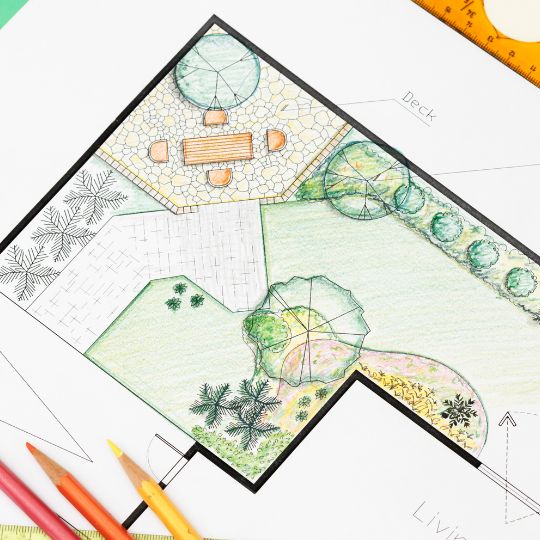
-After evaluating your trees, shrubs, and garden beds for potential plant damage trim or remove damaged growth. Make lemonade from lemons and consider replacing trees and/or refreshing landscape beds and shrubs with new varieties. Visit your favorite garden center for new and replacement plants. This could be a great time to schedule a design consultation and have Earth Works complete a landscape makeover.
-Separate yard debris from other household trash and containerize it if required by your municipal trash service. Some services allow large piles of rubble, whereas others need it all to be containerized to a specific size and weight. Refer to your local regulations and potential new pickup times after a storm.
-Avoid piling yard trash up for trash pickup in an area that will smother your good turf, as in bad storms and hurricanes. Realize that it can take longer than usual for removal by your municipal trash service.

-Assess any drainage issues that occurred during the storm and consider drainage solutions appropriate for your circumstances.
-Resume your regular irrigation schedule after giving the landscape time to dry out.
We hope these lawn cleanup tips for storms help you after any of these unwanted naturally occurring weather events.
Earth Works operates a retail Garden Center/Plant Nursery in Jacksonville and provides landscaping, hardscaping, water features, lawn care service, lawn spraying, and drainage solutions. Contact us at 904-996-0712.
Earth Works proudly serves clients in Northeast Florida, including Jacksonville, Ponte Vedra Beach, Atlantic Beach, Neptune Beach, Jacksonville Beach, Nocatee, St. Johns, Fleming Island, Orange Park, Middleburg, Green Cove Springs, Amelia Island, Fernandina, and St. Augustine.

Earth Works operates a retail Garden Center/Plant Nursery in Jacksonville and provides landscaping, hardscaping, water features, lawn care service, lawn spraying, and drainage solutions. Stop by our retail center or contact us online or by phone at 904-996-0712.
Earth Works proudly serves clients in Northeast Florida, including Jacksonville, Ponte Vedra Beach, Atlantic Beach, Neptune Beach, Jacksonville Beach, Nocatee, St. Johns, Fleming Island, Orange Park, Middleburg, Green Cove Springs, Amelia Island, Fernandina, and St. Augustine.
Services
- Landscape Design & Installation
- Paver Patios, Paver Walkways, Paver Driveways
- Firepits, Retaining Walls, Seat Walls
- Landscape Lighting, Drainage design & Installation,
- Lawn Care Services, Lawn Maintenance, Lawn Fertilization
- Lawn Pest Control, Lawn Weed Control
- Aeration and Top Dressing
- Water Features, Koi Ponds,
- Waterfalls, Bubbling Fountains
- Garden Center & Pond Supply Store
General Services Areas
Jacksonville (Jax), Jacksonville Beach, Neptune Beach, Atlantic Beach, Ponte Vedra Beach, Ponte Vedra, Fernandina Beach, Amelia Island, Orange Park, St. Johns, Nocatee
Location
GARDEN CENTER
12501 Beach Blvd
Jacksonville, FL 32246
LANDSCAPE OPERATIONS
(not open to the public)
St. Johns Bluff
1119 St. Johns Bluff Rd. N.
Jacksonville, FL 32225
Hours
Monday-Saturday 9-5
Sunday 10-5
HOLIDAY CLOSINGS
New Year’s Day • Easter • Memorial Day
July 4th • Labor Day • Thanksgiving Day
Christmas Eve • Christmas Day
Fall Lawn and Garden Checklist
Fall Lawn and Garden Checklist
Autumn arrives on September 22, ushering in our Fall lawn and garden checklist of steps to get the most out of your lawn and garden. Here in Northeast Florida we experience cooler temperatures and sooner than Florida communities further south, but this checklist is generally applicable for lawns and gardens throughout the state.
–Plant trees and shrubs as soil temperatures remain warm as air temperatures decline, putting less stress on new plantings and transplants.
–Address any drainage and percolation problems that will damage or destroy turf. When the water table or zone of saturation is such that the soil is soggy the available oxygen supply to your turf is diminished that kills turf the same as if it was underwater in a flood. Soggy soil encourages fungus growth such as Take-All Root Rot below ground and a cornucopia of fungus species above grown that kill turf and other plants in the landscape.
–Aerate and provide top dressing soil to your lawn in the Fall or Winter to improve percolation and replenish macro and micronutrients used and leached from your soil. Percolation reduces soggy soil conditions and improves plants’ ability to absorb nutrients. Top dressing with nutrient-enriched soil increases microbial activity such as that of Mycorrhiza fungi that convert nutrients to bioavailable forms for turf and other plants in the landscape.
–Prepare the ground for Fall herbs and vegetable garden beds, perennials, and Spring bulbs, adding compost and soil amendments specifically formulated for the growing requirements of your plantings. For the veggie beds consider planting Beans, broccoli, cabbage, carrots cauliflower, collards, cucumbers, endive, kale, kohlrabi, lettuce, mustard, onions, radishes, summer squash, and turnips.

–Refresh container gardening arrangements with Fall season color. Refer to our monthly Container Gardening Recipes for tips on what will do well each season.

–Rooting hardwood cuttings is best done in Fall.
–Raise mower blades as less frequent mowing is required as warm season grasses prepare to go into dormancy.
–Spread grass seed and lay sod as temperatures have moderated. Many will overseed with ryegrass to green and thicken up the lawn in Fall and Winter.
–Keep your lawn turf thick, which can crowd out weeds and prevent weed seeds from getting sunlight that aids in their germination. Continue pulling weeds, and observing good cultural practices and only then if necessary consider treating with herbicide. Always follow the herbicide manufacturer’s directions. Learn which weeds you are dealing with and their stage of development, which is critical to their treatment. Warm-season weeds will be dying back and replaced with cool-season weeds, which requires the right choice between preemergent and postemergent herbicide application.
–Apply Weed and Feed, commonly called Winterizer this time of year prior to turf dormancy. Remember that any preemergent herbicide component will prevent any new grass seeds from germinating. The appropriate NPK formulation for Fall Winterizers is high in potassium and low in nitrogen. Unlike, Spring when nitrogen benefits new growth that same growth in Fall would be threatened by Winter cold and stress the plant. Adequate potassium provided the grass while its still actively taking in nutrients provides warm season grasses greater protection from stress heading into dormancy. However, weigh the fact that herbicides in general stress St. Augustine grass when applying them as a component of your Winterizer.
–Rake, mulch, or bag falling leaves to avoid leaf litter blocking landscape plants’ available sunlight.

Stop by the Earth Works garden center for more information and assistance implementing our Florida Fall Lawn and Garden checklist. Get a free quote for aeration and top dressing and book a landscape design consultation today!
For newcomers to Florida be sure to attend our Welcome to Florida seminar on Oct. 21, 2022, from 5-8 pm. Matthew Barlow, Earth Works Garden Center Manager will introduce Florida newcomers to need-to-know gardening and landscape information. Enjoy appetizers and drinks while you mingle with other Jacksonville transplants and get all your gardening questions answered.
$25 Cover Charge. Tickets can be purchased at Eventbrite or in-store.

For comprehensive solutions to your specific lawn, garden, and landscaping needs, contact us at 904-996-0712. Earth Works operates a retail Garden Center/Plant Nursery in Jacksonville and provides landscaping, hardscaping, water features, lawn care service, lawn spraying, and drainage solutions.

Earth Works operates a retail Garden Center/Plant Nursery in Jacksonville and provides landscaping, hardscaping, water features, lawn care service, lawn spraying, and drainage solutions. Stop by our retail center or contact us online or by phone at 904-996-0712.
Earth Works proudly serves clients in Northeast Florida, including Jacksonville, Ponte Vedra Beach, Atlantic Beach, Neptune Beach, Jacksonville Beach, Nocatee, St. Johns, Fleming Island, Orange Park, Middleburg, Green Cove Springs, Amelia Island, Fernandina, and St. Augustine.
Services
- Landscape Design & Installation
- Paver Patios, Paver Walkways, Paver Driveways
- Firepits, Retaining Walls, Seat Walls
- Landscape Lighting, Drainage design & Installation,
- Lawn Care Services, Lawn Maintenance, Lawn Fertilization
- Lawn Pest Control, Lawn Weed Control
- Aeration and Top Dressing
- Water Features, Koi Ponds,
- Waterfalls, Bubbling Fountains
- Garden Center & Pond Supply Store
General Services Areas
Jacksonville (Jax), Jacksonville Beach, Neptune Beach, Atlantic Beach, Ponte Vedra Beach, Ponte Vedra, Fernandina Beach, Amelia Island, Orange Park, St. Johns, Nocatee
Location
GARDEN CENTER
12501 Beach Blvd
Jacksonville, FL 32246
LANDSCAPE OPERATIONS
(not open to the public)
St. Johns Bluff
1119 St. Johns Bluff Rd. N.
Jacksonville, FL 32225
Hours
Monday-Saturday 9-5
Sunday 10-5
HOLIDAY CLOSINGS
New Year’s Day • Easter • Memorial Day
July 4th • Labor Day • Thanksgiving Day
Christmas Eve • Christmas Day
Organic Fertilizers Benefits Over Synthetics
Organic fertilization supports healthy soil ecology that benefits home gardening and landscaping more than reliance on synthetic fertilizers. By definition, with fertilization, we want to enrich the nutrients in the soil. Organic fertilization increases the microbial activity of beneficial bacteria, fungi, protozoa, and nematodes, all components of healthy soil ecology that don’t require synthetic inputs. Synthetic fertilization feeds the plant, not the soil.
Organic fertilizers are more forgiving and less likely to burn plants than synthetics used by non-professionals. Many likewise believe organically grown foods taste better. “Several studies have reported that organic produce stores better and has longer shelf life than conventional produce due to the lower nitrate levels in organic produce,” according to Iowa State University’s Leopold Center for Sustainable Agriculture. “Organic apples are generally firmer and have superior storage properties. Organic potatoes contain more vitamin C. Many studies have found that lower yields, better taste, more vitamin C and higher antioxidant levels in organic fruits and vegetables are correlated with lower levels of readily available nitrogen.”
Although synthetic fertilizers are potent and a quick fix for a slow-growing garden, the widespread use of synthetics is consequential. “The effects of chemical fertilizers on soil include; acidification, which limits the nutrient bioavailability, accumulation of toxic elements like, cadmium, fluoride, radioactive elements, lead, arsenic, chromium, and nickel, and finally disruption of the biology of the soil,” according to Bashar Khiatah, MD. “In regards to human health, the effects of chemical fertilizers are serious, both with their direct toxic effect, or in the indirect effects that are related to decreasing the nutrient density in the consumed plants. This exposure comes from a chemical reaction between nitrites and secondary amines or proteins and causes DNA damage, oxidative stress, lipid peroxidation, and pro-inflammatory cytokine activation, which together leads to increased cellular degeneration and death.”

The frustration for many residential homeowners having difficulty with their gardening and landscape began with poor soil. “Most of the time consumers are growing in backfill from the foundation of their home,” said Sid Raisch, CEO of Horticultural Advantage. “It is not soil, it is sub(beneath)soil. It has value to hold up soil above it, if any was added, but nothing else. It is usually high in clay particles and low in loam (organic matter) and what is there is often anaerobic with little living organisms and void of many minerals. It is very difficult and expensive to change this.”
While many experts in agriculture view plant nutritional needs as elements of the periodic table, others view those exact needs through a prism of interconnected ecology and outcomes. Permaculture and Soil Regenerative agriculture advocates challenge us to live sustainably and leave our ecosystem better than we found it. The critical components of this journey are the reduced reliance on synthetic fertilizers while improving soil microbial health with organic fertilization that helps plants grow strong and healthy.
“Our yard is a thin crust of junk over coral rock,” said Erik Dietl-Friedli, manager at Flamingo Road Nursery in Davie, Florida. “I have literally planted with a pry bar and can dig a well with a stick, since our water table is so high. Over the years, I allowed our garden to become a jungle and left the leaf litter to decompose into the “soil”. This past year I had the jungle removed and have been replacing with Florida native and butterfly plants. Years of leaf litter have transformed our soil into actual soil. Digging has been much easier than in the past and the quality of the soil is much improved. Earthworms and other “Life” are present where there was nothing in the beginning. I will not disrupt this with synthetics. After my garden settles, I will fertilize only with Espoma products. I like that they contain beneficial bacteria in addition to other healthy, organic ingredients.”
Earth Works recommends Espoma Bio-Tone Starter Plus Plant Food organic fertilizer enriched with beneficial microbes and both endo & ectomycorrhizal fungi to support healthy soil ecology for beautiful plants year after year.
“You can solve all the world’s problems in a garden.”
― Geoff Lawton

For comprehensive solutions to your specific lawn, garden, and landscaping needs, contact us at 904-996-0712. Earth Works operates a retail Garden Center/Plant Nursery in Jacksonville and provides landscaping, hardscaping, water features, lawn care service, lawn spraying, and drainage solutions.
Earth Works proudly serves clients in Northeast Florida, including Jacksonville, Ponte Vedra Beach, Atlantic Beach, Neptune Beach, Jacksonville Beach, Nocatee, St. Johns, Fleming Island, Orange Park, Middleburg, Green Cove Springs, Amelia Island, Fernandina, and St. Augustine.
Why Freeze After Warm Days Are Bad For Landscape
Northeast Florida gardeners are rightfully concerned for their lawns and gardens over a freeze after warm days close to Spring. For days the Earth Works Garden Center staff has been busy implementing steps to protect new blooming Spring plant deliveries from cold temperatures. “Plants need to leaf out as early as they can in spring to take full advantage of the growing season,” according to The Conversation. “But this involves pumping water into their developing leaves, which reduces the concentration of sugars, salts and organic compounds in their tissues and removes their winter protection from cold.” Conditions can be worse when a freeze arrives after an unseasonably warm late winter morning versus during mid-Winter. Ignoring the threat of plant damage comes at a high cost so Learn how to protect your plants from the cold snaps and consider this additional information.
What is Plant Hardiness?
The United States Department of Agriculture (USDA) plant hardiness zones are largely based on the minimum temperature a plant can survive. “Where the USDA zones fall short; however, is that they don’t account for other factors,” according to Gardening Know How. “These include freeze dates, freeze-thaw cycles, the effects of snow cover, precipitation, and elevation.”
2022 Late Winter- Early Spring Weather Snapshot
After above-average temperatures in the 70s and 80s the first week of March 2022, an inland freeze is forecast on the morning of Sunday, March 13, one week out from Spring. Besides the higher-than-average temperatures, the morning temperatures had been low. Forecasters attributed the above-average afternoon highs and chilly mornings to a La Nina induced high-pressure bubble in the atmosphere. “This bubble of high pressure is what we experienced in December,” according to News4Jax. “We experienced the fourth warmest December in Jacksonville’s history.” Weeks of above-average temperature were followed by several days of steady rain ahead of this brief late winter freeze.
Effects of Dramatic Temperature Change on Plants
“Plants develop their cold hardiness in stages,” according to McDonald Garden Center in Virginia. “Each new temperature low increases the plant’s ability to survive even colder temps. Maximum hardiness is usually reached in late January and early February and is best achieved by a gradual chilling. The late warmth allowed the plant cell tissue to retain more moisture thus reducing the concentration of salts and chemicals in the cell that act as antifreeze in high concentrations. As a result, the cells freeze and burst and plant death occurs.” That interpretation of a gradual increase in seasonal plant cold hardiness is substantiated by the University of Florida. “When temperatures gradually decrease over time, the plants ability to acclimate to colder temperatures is increased,” according to the University of Florida. “The opposite is true when temperatures suddenly take a dip during the fall, which can cause more damage than the same low temp would in mid to late winter.”

Whether going into or coming out of winter, dramatic temperature changes adversely impact plants. Have you seen and felt the signs of an early Spring in Northeast Florida, including the high pollen levels and a wide variety of early blooming trees and shrubs? “These ‘spring-like’ temperatures often result in many plants and trees breaking dormancy prematurely,” according to Growing A Greener World. “This sudden drop to below freezing can wreak havoc on tender new growth.”

Protective Measures
While the new foliage of shrubs and trees could burn and drop flowers, with a freeze after warm days more severe harm is likely for unprotected warm-season annuals, vegetables, and tropicals. Perennials stand a better chance of recovery.
-Avoid fertilizing lawn turf until after the last freeze. Lawn turf coming out of dormancy could fall back into a slumber, unable to absorb the benefits of fertilization. “If you fertilize your lawn and another frost hits, your grass will go right back into dormancy, and you’ll have a harder time getting it to green up again,” according to Sod Solutions. “This does more harm than good.” Application of slow-release fertilizer in early Spring reduces the risks of damage associated with an unexpectedly late frost.
-If you’ve moved tender plants back outside consider moving them back into protected areas ahead of a freeze after warm days. Cover plants and provide wind protection for those that can’t be brought indoors. The Earth Works Garden Center has freeze cloth available while supplies last.
-Consider Landscaping with Florida Natives that are better acclimated to the climate and require less care and protection.
-Be mindful that low-lying areas tend to be colder and plantings there will have shallower root development and increased risk of freeze damage. Consider booking a landscape design consultation with one of our Earth Works designers.

For comprehensive solutions to your specific lawn, garden, and landscaping need, contact Earth Works of Jacksonville online or at 904-996-0712. Earth Works operates a retail Garden Center/Plant Nursery in Jacksonville and provides landscaping, hardscaping, water features, lawn care service, lawn spraying, and drainage solutions.
Earth Works proudly serves clients in Northeast Florida, including Jacksonville, Ponte Vedra Beach, Atlantic Beach, Neptune Beach, Jacksonville Beach, Nocatee, St. Johns, Fleming Island, Orange Park, Middleburg, Green Cove Springs, Amelia Island, Fernandina, and St. Augustine.
Good Gardening Soil for Northeast Florida
Good gardening soil is a loose mix of air, water, minerals, and organic matter including humus, roots, and organisms. Of the 18 essential elements for plant growth and development nine are called macronutrients with the most common being carbon (C), hydrogen (H), and oxygen (O), which are key for the production of carbohydrates, proteins, and nucleic acids. Carbon makes up about 50% of soil by weight. All the organic matter in your garden, including compost, animal manure, and leaf litter, are mostly carbon. Additional macronutrients are nitrogen (N), phosphorus (P), potassium (K), calcium (Ca), magnesium (Mg), and sulphur (S). The nitrogen (N), phosphorus (P), and potassium (K) constitute the NPK formula associated with fertilizers as they are key to plant growth and development. Lack of macronutrients in soil inhibits proper plant growth and development.
Micronutrients include iron (Fe), manganese (Mn), boron (B), molybdenum (Mo), copper (Cu), zinc (Zn), chlorine (Cl), nickel (Ni), cobalt (Co), sodium (S), and silicon (Si). “Deficiencies in any of these nutrients—particularly the macronutrients—can adversely affect plant growth,” according to UC Davis University of California. “Depending on the specific nutrient, a lack can cause stunted growth, slow growth, or chlorosis (yellowing of the leaves). Extreme deficiencies may result in leaves showing signs of cell death.”

Essential factors for good gardening soil include the physical properties, mineral composition, pH, water holding capacity, and the absence of toxins. Healthy soil is filled with nutrients, microbes, and minerals that provide food for plants, help them grow strong roots, and help prevent diseases. Earth Works provides a variety of specially formulated good gardening soil to enhance Northeast Florida gardeners success in containers, raised beds, and directly in the ground.
Good Gardening Soil Available at Earth Works include:
Black Gold Natural & Organic Succulent & Cactus Potting Mix Soil is a Sungro Horticulture product recommended in indoor and outdoor containers and with houseplants. Ingredients include Canadian Sphagnum Peat Moss, Bark, Earthworm Castings, Horticultural Grade Perlite, Pumice, or Cinders.

Black Gold Natural & Organic Potting Mix Soil is recommended in raised beds, indoor and outdoor containers, houseplants, hanging baskets, and window boxes. It’s appropriate for growing bedding plants, vegetables, herbs, annuals, and perennials. Ingredients include Canadian Sphagnum Peat Moss, Composted or Aged Bark, Compost, Earthworm Castings, Horticultural Grade Perlite, Pumice, or Cinders, and Organic Grade Fertilizer. Also included is RESiLIENCE, a silicon-enriched additive that may enhance plant growth, flowering and improve resistance to wilting.

Fafard Pro Potting Mix Soil is recommended for indoor and outdoor all-purpose container plantings. Ingredients include Vermiculite, Perlite, Compost, Pine Bark, Canadian Sphagnum Peat Moss, Dolomite Lime, a Wetting Agent, and RESiLIENCE.

Fafard Ultra Container Mix with Extended Feed Soil is recommended in hanging baskets, window boxes, indoor and outdoor containers. It’s appropriate for growing bedding plants, annuals, perennials, houseplants, seeds, cuttings, vegetables and herbs. Ingredients include Canadian Sphagnum Peat Moss, Pine Bark, Compost, RESiLIENCE®, Perlite, Dolomite Lime, Wetting Agent, and Water-Holding Crystals.

FoxFarm Planting Mix Soil is a blend of soil amendments, including aged forest products, sphagnum peat moss, and earthworm castings. This is an all-purpose soil. The aged forest products and peat moss in FoxFarm Original Planting Mix may make it more effective at holding moisture around the roots of plants.

Happy Frog Original Potting Soil is a FoxFarm product designed for container plantings. It includes earthworm castings, bat guano, and aged forest products amended with soil microbes.

Lucky Dog K-9 Kube Growers Blend Soil is a FoxFarm product for rooted cuttings, and young plant starts for use in both indoor and outdoor cultivation and contains earthworm castings, perlite, peat moss, and mycorrhizal fungi.

Ocean Forest Potting Soil is a FoxFarm product designed for container gardeners. Ingredients include a blend of aged forest products, sphagnum peat moss, earthworm castings, bat guano, fish emulsion, and crab meal. The Aged forest products, sandy loam, and sphagnum peat moss give Ocean Forest a light, aerated texture.

ProMix Organic Premium Organic Vegetable and Herb Mix Soil is for us directly in the ground or containers and is great for fruits, herbs, and vegetables. Ingredients include Canadian sphagnum peat moss, Peat humus, Compost, Perlite, Gypsum, Limestone (for pH adjustment), Organic fertilizer, and Mycorrhizae.

Wild Earth Mix Soil bags and bulk are all-purpose soil for container gardens, raised beds, and use directly in the ground. Ingredients include organic compost, aged forest products, kelp, and peat humus.

For comprehensive solutions to your specific lawn, garden, and landscaping need, contact us at 904-996-0712. Earth Works operates a retail Garden Center/Plant Nursery in Jacksonville and provides landscaping, hardscaping, water features, lawn care service, lawn spraying, and drainage solutions.
Earth Works proudly serves clients in Northeast Florida, including Jacksonville, Ponte Vedra Beach, Atlantic Beach, Neptune Beach, Jacksonville Beach, Nocatee, St. Johns, Fleming Island, Orange Park, Middleburg, Green Cove Springs, Amelia Island, Fernandina, and St. Augustine.