Aquascape Pond Detoxifier makes pond water safe for fish and plants, allowing you to spend more time enjoying your fish and less time worrying about them. Source water, including tap and well water, often contains chlorine, chloramines, and heavy metals. It is essential to eliminate any toxins in your pond water to ensure the health of your ecosystem. Pond Detoxifier removes and detoxifies chlorine, neutralizes ammonia, and detoxifies and chelates copper and heavy metals that can harm pond fish and aquatic plants. Pond Detoxifier also allows some metals, like iron, to be used as a fertilizer, helping your plants to thrive.
Staple Fish Food
If you want happy and healthy pond fish, you need to feed them high-quality fish food. Aquascape Premium Staple Fish Food Pellets are formulated for everyday use and provide your pond fish with the nutrition they need to thrive at an affordable price. The mixed pellet sizes include small, medium, and large pellets, ideal for ponds containing a variety of fish sizes. All Aquascape fish foods contain probiotics that aid in digestion and reduce fish waste, while the included high-quality protein helps optimize growth rates. The floating pellets contain stabilized vitamin C and other quality ingredients and are scientifically formulated for all pond fish, including koi and goldfish. Aquascape fish food will not break apart during feeding, helping to maintain clear Premium water conditions.
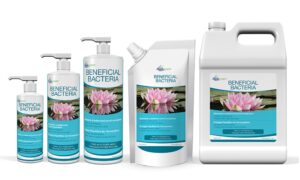
Beneficial Bacteria
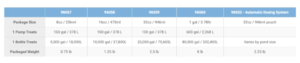
Aquascape Beneficial Bacteria in concentrated power formula or liquid water treatment helps to provide clean, clear, and healthy water conditions, significantly reducing pond maintenance. Each bottle of Beneficial Bacteria is packed full of eight pure strains of concentrated beneficial bacteria and is completely safe for fish, plants, pets, and wildlife. Our Beneficial Bacteria effectively reduce fish waste, organic plant material, sludge, and excess nutrients in your pond, allowing you to spend more time enjoying your water feature and less time maintaining it. Our bacteria contains a 1.5 billion CFU per ounce potency, ensuring consistently effective treatment. The included marigold and vitamin B help bring out your fish’s natural colors while maintaining proper fish health.
Adding marginal pond plants helps to reduce algae growth by competing with the algae for nutrients. Popular choices include bloody dock, pennywort, aquatic mint, corkscrew rush, pickerel, water iris, canna lily, and more. Providing shade on the pond’s surface by adding water lilies will help diminish the possibility of green water.
Canna Lily
Pennywort
Water Iris
Maintain
Aquascape Maintain for Ponds combines our most effective pond water treatments into one powerful formulation to successfully keep ponds clean, clear, healthy, and maintenance-free. This easy-to-use water treatment contains a powerful blend of beneficial bacteria, phosphate binder, flocculant, and pond detoxifier. The bacteria blend includes lithotrophic, heterotrophic, and photosynthetic bacteria strains, keeping pond water healthy, beautiful, and safe for pond fish. The included phosphate binder locks up excess nutrients that could otherwise cause issues with water quality, and the flocculant quickly clears cloudy water by clumping suspended debris. A pond water detoxifier is added to the formulation to remove and detoxify chlorine, chloramine, heavy metals, and other toxins, making your pond water safe for fish and plants. The easy-to-use pump top accurately measures 100 gallons of treatment per pump. Maintain for Ponds is safe for fish, plants, pets, and wildlife.
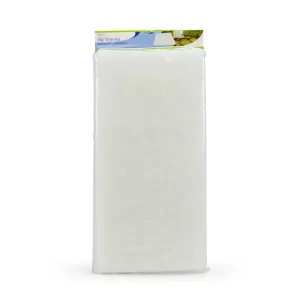
The Aquascape Rapid Clear Fine Filter Pad helps speed up flocculated particles’ filtering. Smaller debris is often tricky to catch and remove from the pond. Therefore, using a finer disposable filter mat will allow you to capture particulate that is too fine for your mechanical filter mats. Place the mat inside the skimmer box and watch the impressive results. The Aquascape Rapid Clear Fine Filter Pad is best used in combination with Rapid Clear Flocculant water treatment to quickly enhance water clarity and quality.
When a pollen grain moves from the anther (male part) of a flower to the stigma (female part), pollination happens. This is the first step in a process that produces seeds, fruits, and the next generation of plants. This can happen through self-pollination, wind and water pollination, or through the work of vectors that move pollen within the flower and from bloom to bloom.
Why do we need pollinators?
Birds, bats, bees, butterflies, beetles, and other small mammals that pollinate plants are responsible for bringing us one out of every three bites of food. They also sustain our ecosystems and produce our natural resources by helping plants reproduce.
Pollinating animals travel from plant to plant carrying pollen on their bodies in a vital interaction that allows the transfer of genetic material critical to the reproductive system of most flowering plants – the very plants that
bring us countless fruits, vegetables, and nuts,
½ of the world’s oils, fibers, and raw materials;
prevent soil erosion,
and increase carbon sequestration
This nearly invisible ecosystem service is a precious resource that requires attention and support – – and in disturbing evidence found around the globe, is increasingly in jeopardy. Pollinator Partnership, 2021. “Pollinators need you. You need Pollinators.”
Published by Pollinator Partnership, San Francisco, USA. pollinators.org
Pollinator facts:
Our pollinators are in trouble with declining numbers worldwide. There are multiple causes including, habitat loss, pesticide use, invasive plants, climate change, and diseases.
In Florida, we have 300 native bees, 160 butterfly species that breed here and about 200 species that migrate through the state, and 3 commonly seen hummingbird species.
Bees are our most efficient pollinators. Practicing “flower Constancy,” searching for certain plants on their foraging trips. They go to and from the same species of flower. Pollinating a third of the world’s food supply.
Searching for nectar, butterflies pick up pollen and accidentally pollinate, not quite as efficient as the honeybee. Yet, several plant species, like milkweed and other wildflowers, depend on butterflies to transfer their pollen.
Hummingbirds are hungry creatures feeding most of the day. This makes them perfect pollinators for many flowers. Certain flower varieties have evolved to become even more appealing to these tiny birds.
Gardening for Pollinators in your own yard can help! As natural habitats are being destroyed to accommodate new development, the importance of gardening to assist bee and butterfly populations is growing. Planting a pollinator garden in your yard helps combat this loss of natural habitats.
Selecting the right plants for your Pollinator Garden
BEES: Honeybees prefer white, yellow, purple, and blue flowers — they can’t even see the color red! Bees also need a nice-sized landing pad, so broad petal, daisy-like flowers are best. Finally, they need both pollen and nectar to feed the hive. So fruit-producing trees and shrubs, as well as native plants, fill the bill.
BUTTERFLIES: If you want a well-attended butterfly party in your yard, invite your local butterfly species by planting their favorite host plants! Butterflies require specific host plant species to lay their eggs on, along with food and shelter. Then add some nectar plants, preferably with red, orange, yellow, and pink trumpet-shaped flowers, to feed your guest.
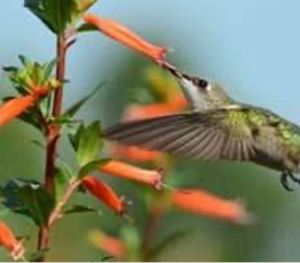
HUMMINGBIRDS: Brightly colored, preferably red, tubular flowers that hold the most nectar are particularly attractive to hummingbirds. Plant these sugar-rich plants near and around your home and patio areas for the best opportunity to view these elusive and amazing birds.
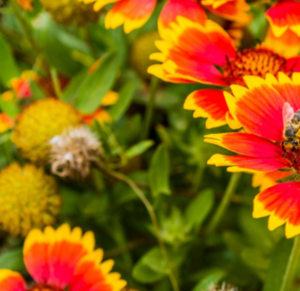
Bees on gaillardia
Black-Eyed Susan
Coral Honeysuckle
Marigolds
Lavender
Purple Coneflower
Milkweed
Coreopsis
Gaillardia
Dune Sunflower
Blue-Eyed Grass
Liatris
Alyssum
Agastache Bee Balm
Monarch Butterfly on flowers 1
Lantana
Penta
Buddleia
Firebush
Salvia
Porterweed
Sweet Almond Bush
Firespike
Black-Eyed Susan
Purple Coneflower
Milkweed
Coreopsis
Gaillardia Dune Sunflower
Hummingbird drinking from cigar plant
Firebush
Coral honeysuckle
Coralbean
Tropical Sage
Crossvine
Cardinal flower
Necklace Pod
Cigar Plant
Bat face Cuphea
Salvia
Jatropha
Bottlebrush
Shrimp plant Soap Aloe
Important Tips:
Avoid using insecticides and other harmful chemicals in your garden.
Shop the garden centers at different times to select plants that bloom in different seasons.
Fertilize with organic plant foods, like compost and fish fertilizer.
Choose plants for butterflies that will provide food for caterpillars.
Butterfly adults need more than nectar from flowers. Try setting out a dish full of fruit scraps. Fill the bottom with a very shallow layer of water mixed with sea salt and watch which butterflies hang around for a snack.
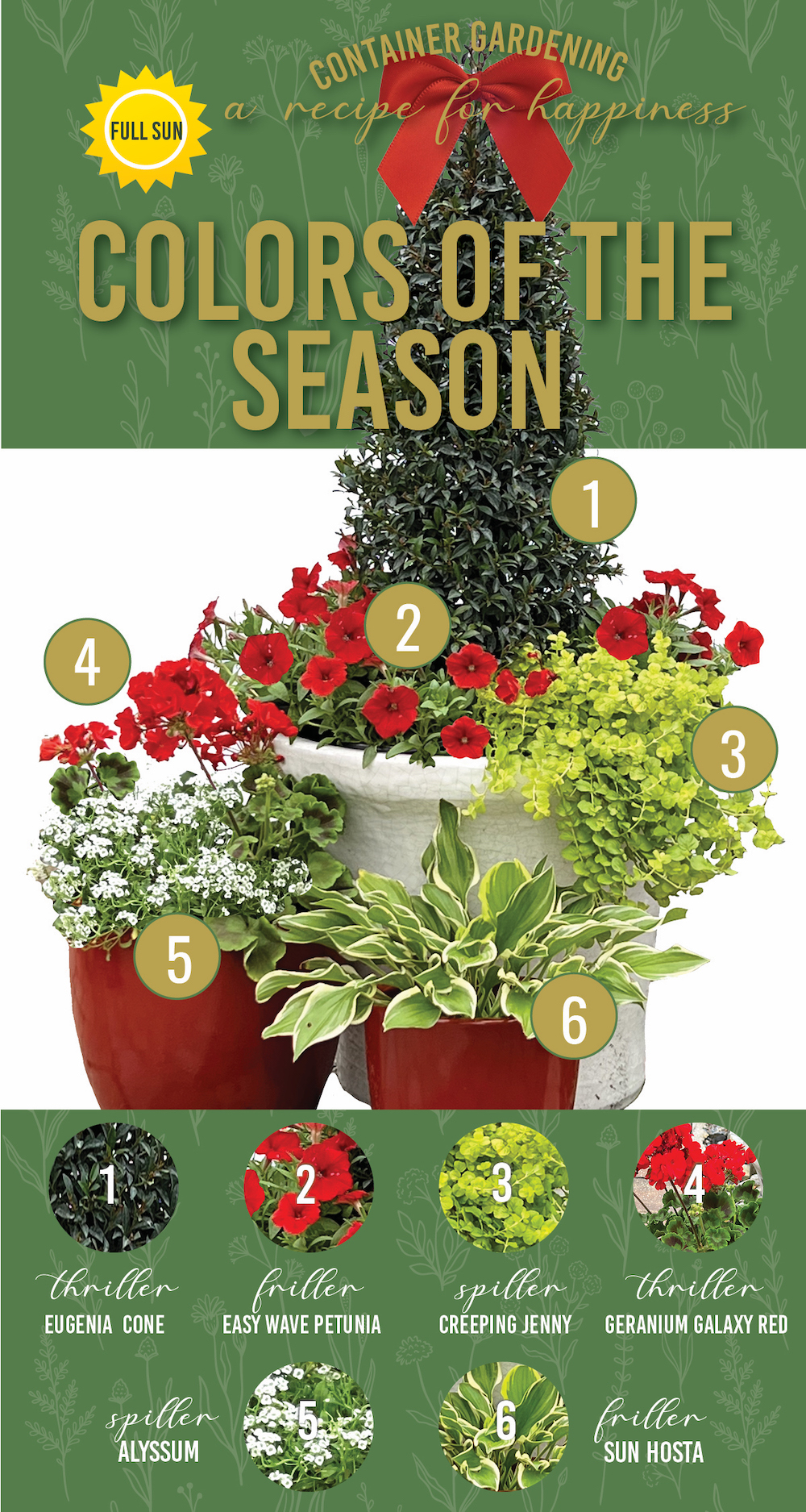
A classic recipe for creating a beautiful arrangement uses this theory of combining plants with different heights, textures, and growth patterns.
Thriller: Anything you choose that will act as a focal point. Choose something dramatic and flashy. It could be anything that draws the eye. This is also usually the tallest plant in the mix.
Filler: Choose plants that won’t get as tall as the Thriller but will either contrast or complement it and fill in the middle space
Spiller: Pick one or several plants that will drape and spill over the container.
Design Possibilities:
Monochromatic design–Pick plants that flower in similar colors.
A centered layout – If your planter is seen from all sides, you should center your tallest plant and fill in around it so it looks beautiful from every angle.
Butterfly attractor pot – Combine several nectar plants
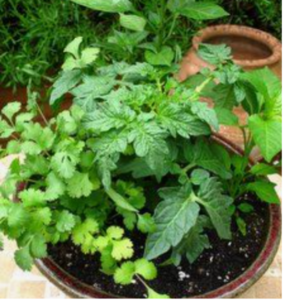
Salsa Pot – Pick a favorite tomato variety, a jalapeno, or even a hotter variety of pepper with a cilantro herb to have all your ingredients for delicious fresh
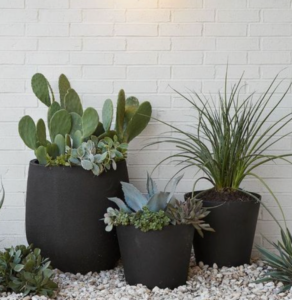
Evergreen collection – Try combining three different size planters in a unifying color or texture, each with just one beautiful evergreen shrub plant.
Be sure to choose plants with similar water and light needs when combining them. Also, please take into consideration the amount of space each plant will need when they a full-grown
Proper container planting steps:
Pots over 18” deep should have a minimum of 3” of gravel placed in the bottom. (Add 3” of additional stone for every 18” of pot height.)
Fill pots with premium Fox Farm potting soil up to the point of the depth of the plants that are going to be installed. Image of fox farm
A few easy steps will ensure your plants have an advantage. Add rich Compost and Bio-charged organic soil amendments.
After selecting the placement of your plants, follow these easy steps:
1–7 gallon plants: Water the plant(s) gently.
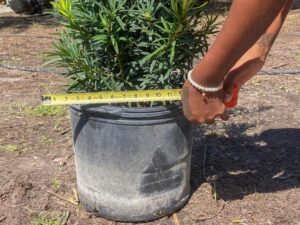
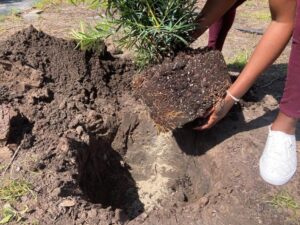
1. Dig a hole several inches wider and deeper than the size of the pot holding the plant.
Measuring the size of your pot for hole size
2. Remove the plastic pot from the root ball.
3. Inspect to make sure there are no large roots circling around the edges. If so, gently pull roots away.
placing plant in the hole
4. Add Wild Earth Mix and Bio-Tone to the hole. Enough so that when the plant is sitting in the hole the top surface of the plant’s soil is a quarter of an inch above ground level.
Adding in Biotone to hole
Back filling the hole with soil
15-gallon plants and larger
Follow the steps above. (1-4)
5. Then, after back-filling with Wild Earth Mix, use the native soil that was removed to make the hole to create a ring around the tree or shrub. The ring should be on the surface of the soil at the edges of the circumference of the plant’s roots. Pack the soil with the backside of the shovel on the interior and exterior sides of the ring. Adjust hose flow to run at a gentle trickle and fill the ring with water for several minutes. Keep the flow rate slow enough to keep the ring filled with water but not overflowing.
Protect your investment by giving your plants a huge advantage.
Harness the power of nature and Bio-Boost your soil.
Earth Works proven success kit will reduce heat stress, water needs, and transplant shock.
Organic ingredients guaranteed not to burn the plant’s root system
Beneficial bacteria and Fungi come to life in the soil and work to energize root systems
Slow-release natural fertilizer feeds for months
3 Easy Steps!
1.
Just dig your hole
2.
Coat the inside with Bio-Tone
3.
Backfill with Wild Earth Mix #3
Don’t forget that freshly installed plants may need water once a day when temperatures are in the mid-’70s and above. Check Daily if the soil below the surface is dry; hand water as needed. Never water plants if the soil is wet or moist.
Bio-Tone
For everything you plant. Use when planting all flowers, vegetables, trees, and shrubs.
Use at the planting time to help produce large root systems very quickly. This will help ensure that new plantings get maximum water and nutrients from the soil to minimize transplant loss.
Planting Beds: Mix into the top 4-6″ of the soil before planting.
Trees & Shrubs: Mix into the soil used to backfill the planting hole.
Potting Mixes: Mix thoroughly into the soil mix before planting.
Wild Earth Mix #3
A highly organic growing medium for vegetables, flowers, trees, shrubs. Wild Earth Mix #3 is a blend of wheat straw, chicken litter, cottonseed hulls, gypsum, organic compost, kelp, humates, and pine products. It was amended with an organic nutrition package with macro and minor elements that enrich the soil for a full 26 weeks and more prolonged. Wild Earth Mix #3 has been trusted by competitive Rosarians and commercial and home gardeners for over 20 years.
• Great for gardens, raised beds, containers, new landscape installations, or refreshing older plantings.
• The USDA has approved all the components in Wild Earth Mix #3 for organic crop production.
Jack’s Classic Bloom Booster
Blossom Booster 10-30-20 is a Professional formula designed to produce more flowers and brighter colors on all indoor and outdoor plants. Feeds through both the roots and the leaves. This is the Original Blossom Booster with the proven 1:3:2 nutrient ratio– the quality is unmatched in the home gardener market. Trusted by many professional growers as a tool to fill out a blooming container. This formula will produce the same GREAT results for you at home.
Start with an evergreen cone, spiral, or ball-shaped topiary. In this recipe, we have used a Eugenia cone. Other options include bluepoint juniper, boxwood, or even rosemary. Then pick some annuals that do well in the cooler temps of December, like the Easy Wave Petunia® and Alyssum. A green, red and white pallet will give you many flower options and leaf textures to choose from. Add some ribbon and lights to take let your Christmas spirit shine!
Eugenia Cone – Adds a formal touch with rich glossy leaves. If we get unusually cold, topiary eugenia can be overwintered indoors as an elegant houseplant. Just be sure to put in a sunny window.
Easy Wave Petunia – As the name tells us, these are easy to grow and will trail beautifully as well. Full sun to partial shade. They do well in our mild Florida winters.
Creeping Jenny – A must-have trailer also enjoys our mild temperatures and will come back from a frost.
Galaxy Red Geraniums– This scented geranium attracts bees and hummingbirds and is deer resistant and drought-tolerant.
Alyssum – This filler/spiller has a wonderful scent and is a perfect choice for adding white to your combinations.
Sun Hosta – This is a medium-sized hosta that does well in Florida. It is a perennial and can take the sun. In the spring and summer, give it some afternoon shade.
Sign up for updates!
Sign up to receive exclusive offers, event notifications and announcements.
Lawn Care Services, Lawn Maintenance, Lawn Fertilization
Lawn Pest Control, Lawn Weed Control
Aeration and Top Dressing
Water Features, Koi Ponds,
Waterfalls, Bubbling Fountains
Garden Center & Pond Supply Store
General Services Areas
Jacksonville (Jax), Jacksonville Beach, Neptune Beach, Atlantic Beach, Ponte Vedra Beach, Ponte Vedra, Fernandina Beach, Amelia Island, Orange Park, St. Johns, Nocatee
The Queen palm is a fast-growing palm and an elegant choice for landscapes in Jacksonville and throughout Northeast Florida. The long feathery pinnate leaves are not only beautiful but can create shade if placed in the right spot. Queen palms can be used to line the property or planted as single specimens to create focal points in your landscape design. This palm tree grows fast approximately two feet per year up to typically forty feet in height. Earth Works sells 15-gallon, 30-gallon, and field-grown Queen Palms year-round. We offer delivery and planting services year-round. Our knowledgeable and friendly staff can help you find the right palm tree design for your landscape.
If you are looking for a cold hardy palm tree that looks like a tropical palm, the Queen palm is a good choice. As they mature, Queen Palms shed their outer layers and reveal an attractive silver color on their trunk. The contrast of the light-colored trunk with the dark green palm fronds is a spectacular look that creates a tropical vibe when paired with a good landscape design in Jacksonville.
Queen Palm genus and species Syagrus romanzoffiana Common names: Queen Palm & Cocos Palm
Drought Tolerance: Moderate
Origin: Argentina, Brazil, Uruguay
Zone: 9-11
Typical Height: 40ft
Salt Tolerance: Moderate
Growth Rate: Moderate to Fast
Earth Works operates a retail Garden Center/Plant Nursery in Jacksonville and provides landscaping, hardscaping, water features, lawn care service, lawn spraying, and drainage solutions. Stop by our retail center or contact us online or by phone at 904-996-0712.
Earth Works proudly serves clients in Northeast Florida, including Jacksonville, Ponte Vedra Beach, Atlantic Beach, Neptune Beach, Jacksonville Beach, Nocatee, St. Johns, Fleming Island, Orange Park, Middleburg, Green Cove Springs, Amelia Island, Fernandina, and St. Augustine.
Living in Jacksonville at the time, McGregor and Fechtel and their wives met by chance during a wedding in St. Petersburg. “Our good friends said we had to meet Doug and Terri because they are a fun couple,” said Fechtel. “Little did we know that eight months later, we were going to start our own business.”
After graduating from college with finance degrees, McGregor worked as a banker and Fechtel as a financial planner when they decided to make the change. “We loved our jobs until the market crashed in 1987, threatening our positions,” McGregor recalled. “We decided to walk away from our coat-and-tie jobs. We neither had kids nor big mortgages, so we planned our exit strategy and started the company.
“I had worked in a garden center growing up, and Mark mowed grass as the “boy next door.” We knew landscaping was the kind of work we liked,”
After growing their Lawn Care Business, the pair soon expanded their services to irrigation and landscaping. In 1999, they bought a swath of heavily wooded land bordering Beach Boulevard which became Earth Works Garden Center.
Jason Duffney, who joined McGregor and Fechtel as a junior business partner in ?, was hired in 2003 as a part-time employee while a freshman at the University of North Florida. “Jason started with us when he was 19 years old. By the time he was 33, he had grown with the company and became one of our business partners,” said Fechtel.
A native of Lecanto, Florida, Duffney had previous experience working in a nursery as a teenager before he moved to Jacksonville to earn a finance degree from UNF. “I came in as a nursery kid pulling weeds and making deliveries,” he said. Jason learned quickly and became well-versed in pond building. He contemplated starting a pond business of his own at one point when McGregor and Fechtel approached him with a proposition.
“They wrangled me in and said, ‘don’t be stupid. Let’s talk about how all of us can grow,” Duffney recalled. In charge of Earth Works’ pond operations, he has built it into the award-winning Water Garden division it is today.
As Earth Works’ third business partner, Duffney’s mission is to update and streamline the company so it can serve customers better.
Working together, we balance each other out, said McGregor. “Mark and I have different personalities” “I’m more Type A, and he’s a laid-back guy. I don’t think we’ve had ten disagreements in over 30 years. We like each other. We’re really good friends, and our families are close.”
In the business, Duffney heads operations, McGregor oversees finances, and Fechtel manages sales. “Mark and Doug are opposites, and I fall somewhere in the middle, which makes for a nice blend,” Duffney said. “If we are dealing with clients or employees, everyone brings a different skill to the table.”
Maintaining a lush tropical landscape requires learning about your plant’s cold tolerance and the threat of chilling temperatures above freezing. When purchasing plants for your landscape, it is essential to know which USDA hardiness zone they’re growing in and each variety’s cold hardiness rating. For instance, the large geographic area of Jacksonville, Florida, is USDA Hardiness Zone 9a (20F- 25F) and borders 8a (15-20F) to the West. If the plants in your landscape and collection cannot tolerate temperatures as low as the minimum temperatures then they aren’t considered hardy for Jacksonville’s zone. View USDA Hardiness zones from around the country and find yours by zip code at USDA Agricultural Research Service.
Avoid planting your most cold-sensitive plants with northern exposure and consider other more hardy plantings around them as wind blocks if you must. It’s common knowledge that houseplants and tropicals won’t survive freezing temperatures. However, there is less appreciation for the fact that chilling temperatures within specific ranges above freezing can also result in plant stress, damage, and death.
“A chilling temperature is any temperature that is cold enough to cause plant injury but not cold enough to freeze the plant,” according to the University of Florida/IFAS. “These temperatures usually range from just above 32°F to about 59°F. Chilling injury to tropical foliage plants is also dependent on the duration of exposure to a chilling temperature.”
Plants are triggered to begin acclimation or hardening in Autumn as daylight hours, and temperatures decline. Non-native plants in Jacksonville’s humid subtropical gardens face more significant fluctuations of temperature in the chilling temperature range than our neighbors in Central and South Florida’s tropical hardiness zones. While Jacksonville has an average October temperature between 81F- 66F, forecasts call for a low of 46F with 10-15mph wind on October 18, 2022. Chilling temperature plant damage can appear as wilting, yellowing, reddish-brown spots, and even mushiness.
“Tropical and subtropical crops such as ageratum, alternanthera, angelonia, basil, celosia, cleome, coleus, cosmos, lantana, pentas, poinsettia, portulaca, sweet potato vine, vinca and zinnia are classified as cold-sensitive because their development stops at a base temperature of 46 F or higher,” according to Michigan State University. “Another group of greenhouse crops is classified as cold-intermediate (or cold-temperate) crops as their development stops at moderately low temperatures of 40 to 45 F. These crops include calendula, dahlia, geranium, impatiens, lobelia, some petunia cultivars, verbena and wax begonia.” Many of our local gardens contain a mix of these plants and others with varied cold sensitivity.
Consider our Overwintering and Indoor Propagation article if you are preparing to protect your houseplants and tropicals during a cold spell and before freezing temperatures are forecast for your area. If chilling temperature damage occurs, ensure the affected plants are watered and avoid the temptation of fertilization, which can stimulate new growth and further stress the plant.
For more information on your plant’s cold tolerance how to protect your plants every season and for comprehensive solutions to your specific lawn, garden and landscaping needs contact Earth Works of Jacksonville at 904-996-0712. Earth Works operates a retail Garden Center/Plant Nursery in Jacksonville and provides landscaping, hardscaping, water features, lawn care service, lawn spraying, and drainage solutions.
Earth Works proudly serves clients in Northeast Florida, including Jacksonville, Ponte Vedra Beach, Atlantic Beach, Neptune Beach, Jacksonville Beach, Nocatee, St. Johns, Fleming Island, Orange Park, Middleburg, Green Cove Springs, Amelia Island, Fernandina, and St. Augustine.