The warm weather has arrived. Here is the perfect planter to soak up the heat! The mixture of warm tones and hot colors creates that tropical feel, and the copper-toned pot adds a touch of glamour. Of course, this combo would look fabulous in just about any container. Although this recipe uses full-sun plants, a little afternoon shade will help keep it blooming until the next frost.
1. Canna Lily’slarge tropical leaves and tall, striking blooms thrill.
2. Bronze Coleus fills in with nice contrasting color and texture from the canna leaves.
3. Sunpatiens will fill and spill with bright blooms covering the plant.
4. Gold Lantanais a hardy heat-loving bloomer that will bring in the butterflies.
Design tip:If your planter is against a wall, place the canna lilies in the back. For a pot seen from all sides, plant in a centered format.
For comprehensive solutions to your specific lawn, garden, and landscaping needs, contact Earth Works of Jacksonville online or at 904-996-0712. Earth Works operates a retail Garden Center/Plant Nursery in Jacksonville and provides landscaping, hardscaping, water features, lawn care service, lawn spraying, and drainage solutions.
Earth Works proudly serves clients in Northeast Florida, including Jacksonville, Ponte Vedra Beach, Atlantic Beach, Neptune Beach, Jacksonville Beach, Nocatee, St. Johns, Fleming Island, Orange Park, Middleburg, Green Cove Springs, Amelia Island, Fernandina, and St. Augustine.
Spring has sprung as we are into April, our first month of Spring, as gardeners rush to tend to all our lawn and garden care needs here in Jacksonville and surrounding areas. Lawn and garden tips would not be complete if we didn’t start by encouraging you to make a plan for all you want to accomplish in the lawn and garden, pay attention to local weather, start planting and tending to fertilization, pruning, and pest control needs.
Making A Plan: Failure to Plan is Planning to Fail
While people acknowledge the need for an architectural design plan before building a house, the benefits of landscape design plans aren’t as readily appreciated. A home can collapse if not adequately planned. A tree planted in the wrong location can crush home and tear up driveways and water and sewer lines. Landscape planning should be as simple or complex as needed to accomplish your goals. Typically the more time spent thoughtfully considering the details of your landscape and creating a plan to implement means more enjoyment in your outdoor living space with fewer headaches and costly unwanted surprises.
Weather:Prepare for the worst and hope for the best Spring ever!
Jacksonville’s rainfall totals for March 2022 were something for the record books with 9.95 inches of precipitation, three times the average rainfall for the month. That was the 6th highest amount of rainfall for March in 150 years. March rains made up for the precipitation shortfall from the driest Winter (Dec.-Feb.) in a decade that temporarily at least dampened concerns over drought conditions and wildfires. However, the threat of drought is never far off in Northeast Florida, considering our well-draining sandy soils dry out fast.
In March, the cool nights prevented the fungus damage that would have followed from warmer nighttime temperatures later in the Spring and Summer. However, roses and many other plants in the area are exhibiting the black spot symptoms of fungus. Organic home remedies for Rose Black Spot fungus, Diplocarpon rosae include a combination of a tablespoon of baking soda, white vinegar, and horticultural oil in a gallon of water to use as a foliar spray. Diluted Hydrogen Peroxide solution such as one tablespoon (for 3%) or 1/4 teaspoon (for 35%) in a cup of water can treat Diplocarpon, and other fungi such as that found on milkweed weed leaves. Commercially available ready mix fungal treatments worth considering include Fertilome Liquid Systemic Fungicide.
Water As Needed
April’s average rainfall total is 2.93 inches. Abide by your municipal water restrictions, which in Duval County allows for twice-per-week irrigation during Spring and Summer with additional watering for new landscapes, and unlimited hand watering. Xeriscaping with native plants and those with low watering requirements conserves water, saves you time and money, and reduces concerns associated with high-maintenance plants requiring frequent watering.
Tend To Your Soil
Periodically have soil samples tested to know the pH and other factors that impact your plant’s ability to grow and flourish. Periodic soil aeration and nutrient enrichment with a top dressing reduces compaction and stormwater runoff, and increases plants’ nutrient uptake. Poor drainage conditions threaten the structural integrity of structures and increase the risk of fungus, root rot, and choking off the oxygen supply to beneficial microbes in the soil. Earth Works provides aeration and top dressing services, products, and a wide range of drainage solutions.
What Can I Plant in April?Essentially Everything!
Unlike other seasons which don’t provide optimum conditions for planting, the Spring season is Go Time for almost everything you’d want to plant or transplant. Plant your favorite perennials and include Spring annuals for an extra dose of seasonal color. The moderate morning low temperatures and afternoon highs provide the ideal conditions to safely plant palms, trees, shrubs, vines, and flowering plants, fruits, herbs, and vegetables.
Lawn and Garden Fertilization
Fertilize only when your lawn turf is actively growing. Our warmer temperatures of April are perfect for doing so. Consider our blog on the use of Weed and Feed products.
Fertilize ahead of June through Sept nitrogen fertilization blackout periods that are in place for many Florida counties. Duval County does not prohibit nitrogen fertilization during the rainy season. Still, it is less effective due to runoff resulting in water pollution, algae blooms, and fish kills.
Lawn Weed & Pest Control
Pre and Post emergent lawn pest and weed control products are part of our lawn care maintenance programs that do-it-yourself property owners and gardeners likewise do. There are separate categories of weeds, including cold and warm-season varieties and those that thrive in wet and-or dry environments that may be present at any given time on a property. The treatment protocols to deal with all these factors are complex. Likewise, the prevalence of lawn pests such as chinch bugs and sod webworms is weather and soil-condition-dependent. We strongly recommend homeowners consider professional lawn maintenance such as ours for your ongoing weed and lawn pest control needs.
Visit the Earth Works Garden Center for Saturday Sip & Shop from 10AM-3PM for more lawn and garden tips and speak with one of our designers over a complimentary beverage. And for comprehensive solutions to your specific lawn, garden, and landscaping needs, contact Earth Works of Jacksonville online or at 904-996-0712.
Earth Works operates a retail Garden Center/Plant Nursery in Jacksonville and provides landscaping, hardscaping, water features, lawn care service, lawn spraying, and drainage solutions. Earth Works proudly serves clients in Northeast Florida, including Jacksonville, Ponte Vedra Beach, Atlantic Beach, Neptune Beach, Jacksonville Beach, Nocatee, St. Johns, Fleming Island, Orange Park, Middleburg, Green Cove Springs, Amelia Island, Fernandina, and St. Augustine.
Earth Works Gardens hosts Jacksonville’s Saturday Sip & Shop gardening events each week during Spring 2022. Are you looking for a place to take your mind off of all the stress of the week? Relax with a drink while you shop and find your Happy Place at the corner of Beach and Kernan. Don’t miss out on this beautiful outdoor shopping experience at Earth Works Gardens. Grab a drink and do some shopping at Jacksonville’s Saturday Sip & Shop Gardening Event!
Find your happy place at Jacksonville’s Saturday Sip & Shop Gardening Event at Earth Works Gardens from 10AM-3PM.
For comprehensive solutions to your specific lawn, garden, and landscaping needs, contact Earth Works of Jacksonville online or at 904-996-0712. Earth Works operates a retail Garden Center/Plant Nursery in Jacksonville and provides landscaping, hardscaping, water features, lawn care service, lawn spraying, and drainage solutions. Earth Works proudly serves clients in Northeast Florida, including Jacksonville, Ponte Vedra Beach, Atlantic Beach, Neptune Beach, Jacksonville Beach, Nocatee, St. Johns, Fleming Island, Orange Park, Middleburg, Green Cove Springs, Amelia Island, Fernandina, and St. Augustine.
Earth Works invited all plant-loving gardeners in Northeast Florida to our Jacksonville House Plant Social held on Friday April 22, 2022. The event was billed as your opportunity to learn tips and tricks to green up your thumb and get exclusive event savings while mixing and mingling with fellow plant geeks.
Matthew Barlow gave a Houseplant Talk that is available in video below. We served appetizers, and drinks, and provided a 20% discount on all house plants for ticket holders. Tickets for the Jacksonville House Plant Social were $20 and available online and at Earth Works Gardens.
For comprehensive solutions to your specific lawn, garden, and landscaping needs, contact Earth Works of Jacksonville online or at 904-996-0712. Earth Works operates a retail Garden Center/Plant Nursery in Jacksonville and provides landscaping, hardscaping, water features, lawn care service, lawn spraying, and drainage solutions. Earth Works proudly serves clients in Northeast Florida, including Jacksonville, Ponte Vedra Beach, Atlantic Beach, Neptune Beach, Jacksonville Beach, Nocatee, St. Johns, Fleming Island, Orange Park, Middleburg, Green Cove Springs, Amelia Island, Fernandina, and St. Augustine.
Water lilies add beauty and ecological benefits to ponds and have been of cultural and religious significance for thousands of years. Water lilies were depicted in the art of the tombs of Egyptian pharaohs and among the images of gods worshiped by the Mayans of Central America. Water lilies have symbolic meaning in Christianity, Hinduism, and Buddhism. Considered treasures of Western art French Artist Claude Monet featured water lilies in hundreds of his impressionist paintings.
Due to water lily popularity groups exist such as the International Water Lily & Water Garden Society, which has been holding water lily competitions for decades. The next IWGS water lily competition is scheduled at their annual symposium this year at Naples Botanical Gardens with over 40 hybridizers from nearly a dozen countries expected to show hundreds of varieties. An award at the IWGS competition suggests great value for the new water lily cultivar.
Although water lilies contain a toxic alkaloid, as do elephant ears, it is neutralized when boiled. Known as Shapla in Bangladesh, where water lilies are the national plant, they are enjoyed in curry recipes. Water lilies believed medicinal benefits including regulating insulin levels and promoting liver health are the subject of ongoing investigation.
Water lilies are a food source for wildlife and provide protective cover, help cool water temperatures, and absorb water-polluting nutrients. Organic debris, including fish food, animal, and plant waste, accumulate in ponds and are broken down by nitrifying bacteria making nitrogen available to plants in a process called nitrogen fixation as part of the nitrogen cycle. “Excessive inputs of phosphorus (P) and nitrogen (N) trigger eutrophication of the water bodies, which promotes the undesirable growth of algal bloom and deterioration of the water quality, and aquatic biodiversity,” according to the Plant Physiology and Biochemistry Journal. “Water lily (Nymphaea) is largely used as an ornamental plant for landscaping, and it has been documented that water lily possesses the potentiality in mitigating polluted aquatic environments.” These same scientists documented an increase in dissolved oxygen concentration in the aquatic environment attributable to water lilies. Dissolved oxygen is critical to animal life in ponds and in short supply as pond water temperature increases during the warm months making water lilies a beneficial addition.
Considering lawn and garden fertilization is a source of waterway pollution and fish kills how does one fertilize their precious marginals and water lilies without harming wet pets such as koi and goldfish? Slow-release tablets containing the necessary nutrition for plant growth and increasing bloom potential have been developed. We recommend slow-release PondMax – AquaBloom Aquatic Plant Food for water lily fertilization, which provides nutrients for plant health and flower formation. Simply press the Aquabloom Aquatic Plant Food tablets into the aquatic plant media or soil.
Although there are three genera in the water lily family Nymphaeaceae varieties typically marketed as Hardy & Tropical are of the genus Nymphaea and their hybrids. They reproduce via seeds, tubers, and viviparously. For starting your seeds, tubers, or transplants you’ll want and appropriate aquatic plant media or soil. Potting soil would be inappropriate. We recommend and stock Aquascapes Pond Plant Potting Media. It’s free of peat, compost, fertilizers, and pesticides that could cloud the water and harm animals in your pond. We additionally stock floating planters, which is a popular technique to stabilize the lily tuber and roots within the basking allowing the pad and flower portions of the plant to move about the pond.
We provide a stock of fully developed already blooming hardy and tropical water lilies sourced from Holt Nurseries for your viewing pleasure and purchase at Earth Works Gardens nursery in Jacksonville. Stop in and see them for yourself and take your favorites home.
For all your water gardening needs and comprehensive solutions to your specific lawn, garden, and landscaping needs, contact us at 904-996-0712 or visit us at the Earth Works Garden Center/Plant Nursery in Jacksonville. We also build water gardens, and provide hardscaping, lawn care service, lawn spraying, and drainage solutions.
Earth Works proudly serves clients in Northeast Florida, including Jacksonville, Ponte Vedra Beach, Atlantic Beach, Neptune Beach, Jacksonville Beach, Nocatee, St. Johns, Fleming Island, Orange Park, Middleburg, Green Cove Springs, Amelia Island, Fernandina, and St. Augustine.
Our March Container Gardening Recipe is Colors For Peace and you don’t have to wait for your sunflowers to bloom to show your colors of support! Try this sunny yellow and blue container garden recipe. These springtime favorites are in bloom at the garden center right now. And for your landscape, Blue Plumbago and Lantana New Gold or Sunshine Ligustrum with Blue My Mind down in front make great combinations.
1. Gazania’s large bright blooms look like miniature sunflowers.
2. African Iris will thrill with its tall grass and springtime blue, yellow, and white blooms.
3.Merconia Gold Dust is a nice texture change with their dainty flowers.
4. Kalancho is so beautiful and bright, filling in perfectly.
5. Blue my Mind is a perennial favorite that will perform well in pots!
This sunny annual garden favorite has meant many things to many cultures throughout the centuries and worldwide. Today it is gaining deeper meaning from our solidarity with the Ukrainian people and a global symbol of resistance, unity, and hope.Learn more!
For comprehensive solutions to your specific lawn, garden, and landscaping needs, contact Earth Works of Jacksonville online or at 904-996-0712. Earth Works operates a retail Garden Center/Plant Nursery in Jacksonville and provides landscaping, hardscaping, water features, lawn care service, lawn spraying, and drainage solutions.
Earth Works proudly serves clients in Northeast Florida, including Jacksonville, Ponte Vedra Beach, Atlantic Beach, Neptune Beach, Jacksonville Beach, Nocatee, St. Johns, Fleming Island, Orange Park, Middleburg, Green Cove Springs, Amelia Island, Fernandina, and St. Augustine.
In the news today is the sunflower story as a symbol of hope, unity, and resistance although the sunflower has a long history of cultural meaning.
This sunny annual garden favorite has meant many things to many cultures throughout the centuries and worldwide. Today it is gaining deeper meaning from our solidarity with the Ukrainian people and a global symbol of resistance, unity, and hope. Here are some of the many diverse meanings attributed to this spectacular flowering specimen throughout history. The scientific name for the sunflower is Helianthus. It comes from the Greek words “helios,” meaning sun, and “Anthus,” meaning flower.
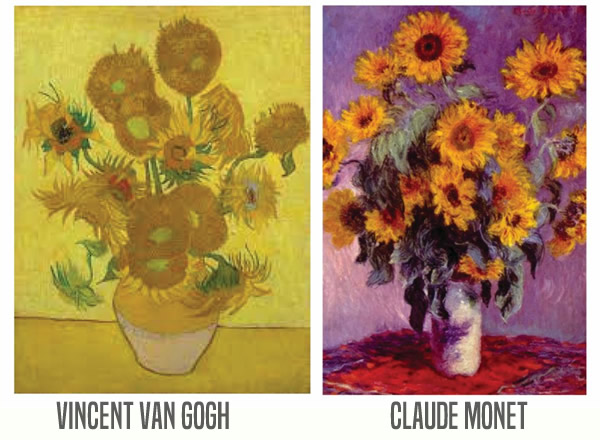
According to some, the ancient Greeks believed that sunflowers turned towards the sun because the nymph Clytie adored Apollo, the God of the Sun. At first, he loved her too, but then he turned his affections towards another nymph. Clytie told the other nymph’s father in a jealous rage, and he buried her alive as punishment. Outraged, Apollo turned Clytie into a sunflower, but her love for him was so strong she watched him move across the sky each day – just as sunflowers follow the sun. This story adds adoration and loyalty to the list. The sunflower story origins were here in the Americas between 1000-5000 years ago; the Native Americans cultivated this crop and viewed sunflowers as symbols of harvest and abundance with their bounty to hunters and gatherers centuries ago. With the discovery of the new world, the sunflower’s popularity spread throughout Europe. And it soon became a favorite subject, even the obsession of many impressionist painters.
The flower symbolizes good fortune, longevity, and everlasting joy in China. When wishing someone good luck or to express happiness for an accomplishment, the Chinese often give sunflowers. One of the sunflower’s recent and most significant and critical symbolic meanings is having a nuclear-free world. On June 1, 1996, Ukraine gave up its nuclear weapons. Celebrating the occasion, the defense ministers from the U.S., Russia, and Ukraine planted Sunflowers. They scattered Sunflowers seeds to represent a world of peace, hope, and freedom from any dangerous nuclear weapons. U.S. Secretary of Defense William Perry said, “Sunflowers instead of missiles in the soil would ensure peace for future generations.”
More than just a symbol against nuclear, the flowers absorb harmful toxic elements and radiation from the soil and clean up the environment. They were planted on an old Ukrainian missile base and grew across nuclear disaster sites like Fukushima, Chernobyl, and Hiroshima.
DID YOU KNOW
Sunflowers are heliotropic. Heliotropism refers to species that follow the sun’s movement as it travels across the sky. In its early stages, the buds and leaves of the sunflower display this behavior. Once the head of the plant has come into full bloom, it remains fixed facing towards the east where the sun rises. Each sunflower is actually thousands of teeny flowers. The iconic yellow petals and fuzzy brown centers are actually individual flowers themselves. As many as 2,000 can make up the classic sunflower bloom.
A dried sunflower makes a unique, natural bird feeder. Feathered friends love to snack on sunflower seeds just like you do. Each sunflower can contain as many as 1,000 to 2,000 seeds. So there are tons for birdies to munch on! But you can harvest and roast them for yourself, too. The tallest sunflower on record was over 30 feet tall. Coming in at 30-feet, 1-inch, the bloom was grown in Germany by Hans-Peter Schiffer, who has held the record twice before. You should harvest sunflowers in the morning, not the afternoon. Planning to clip a few to display in a vase? If you wait until the afternoon, they may wilt. To learn more about the sunflower story and how to grow them check out this great video by Epic Gardening.
For comprehensive solutions to your specific lawn, garden, and landscaping needs, contact Earth Works of Jacksonville online or at 904-996-0712. Earth Works operates a retail Garden Center/Plant Nursery in Jacksonville and provides landscaping, hardscaping, water features, lawn care service, lawn spraying, and drainage solutions. Earth Works proudly serves clients in Northeast Florida, including Jacksonville, Ponte Vedra Beach, Atlantic Beach, Neptune Beach, Jacksonville Beach, Nocatee, St. Johns, Fleming Island, Orange Park, Middleburg, Green Cove Springs, Amelia Island, Fernandina, and St. Augustine.
Northeast Florida gardeners are rightfully concerned for their lawns and gardens over a freeze after warm days close to Spring. For days the Earth Works Garden Center staff has been busy implementing steps to protect new blooming Spring plant deliveries from cold temperatures. “Plants need to leaf out as early as they can in spring to take full advantage of the growing season,” according to The Conversation. “But this involves pumping water into their developing leaves, which reduces the concentration of sugars, salts and organic compounds in their tissues and removes their winter protection from cold.” Conditions can be worse when a freeze arrives after an unseasonably warm late winter morning versus during mid-Winter. Ignoring the threat of plant damage comes at a high cost so Learn how to protect your plants from the cold snaps and consider this additional information.
What is Plant Hardiness? The United States Department of Agriculture (USDA) plant hardiness zones are largely based on the minimum temperature a plant can survive. “Where the USDA zones fall short; however, is that they don’t account for other factors,” according to Gardening Know How. “These include freeze dates, freeze-thaw cycles, the effects of snow cover, precipitation, and elevation.”
2022 Late Winter- Early Spring Weather Snapshot After above-average temperatures in the 70s and 80s the first week of March 2022, an inland freeze is forecast on the morning of Sunday, March 13, one week out from Spring. Besides the higher-than-average temperatures, the morning temperatures had been low. Forecasters attributed the above-average afternoon highs and chilly mornings to a La Nina induced high-pressure bubble in the atmosphere. “This bubble of high pressure is what we experienced in December,” according to News4Jax. “We experienced the fourth warmest December in Jacksonville’s history.” Weeks of above-average temperature were followed by several days of steady rain ahead of this brief late winter freeze.
Effects of Dramatic Temperature Change on Plants “Plants develop their cold hardiness in stages,” according to McDonald Garden Center in Virginia. “Each new temperature low increases the plant’s ability to survive even colder temps. Maximum hardiness is usually reached in late January and early February and is best achieved by a gradual chilling. The late warmth allowed the plant cell tissue to retain more moisture thus reducing the concentration of salts and chemicals in the cell that act as antifreeze in high concentrations. As a result, the cells freeze and burst and plant death occurs.” That interpretation of a gradual increase in seasonal plant cold hardiness is substantiated by the University of Florida. “When temperatures gradually decrease over time, the plants ability to acclimate to colder temperatures is increased,” according to the University of Florida. “The opposite is true when temperatures suddenly take a dip during the fall, which can cause more damage than the same low temp would in mid to late winter.”
Whether going into or coming out of winter, dramatic temperature changes adversely impact plants. Have you seen and felt the signs of an early Spring in Northeast Florida, including the high pollen levels and a wide variety of early blooming trees and shrubs? “These ‘spring-like’ temperatures often result in many plants and trees breaking dormancy prematurely,” according to Growing A Greener World. “This sudden drop to below freezing can wreak havoc on tender new growth.”
Protective Measures While the new foliage of shrubs and trees could burn and drop flowers, with a freeze after warm days more severe harm is likely for unprotected warm-season annuals, vegetables, and tropicals. Perennials stand a better chance of recovery.
-Avoid fertilizing lawn turf until after the last freeze. Lawn turf coming out of dormancy could fall back into a slumber, unable to absorb the benefits of fertilization. “If you fertilize your lawn and another frost hits, your grass will go right back into dormancy, and you’ll have a harder time getting it to green up again,” according to Sod Solutions. “This does more harm than good.” Application of slow-release fertilizer in early Spring reduces the risks of damage associated with an unexpectedly late frost.
-If you’ve moved tender plants back outside consider moving them back into protected areas ahead of a freeze after warm days. Cover plants and provide wind protection for those that can’t be brought indoors. The Earth Works Garden Center has freeze cloth available while supplies last.
-Be mindful that low-lying areas tend to be colder and plantings there will have shallower root development and increased risk of freeze damage. Consider booking a landscape design consultation with one of our Earth Works designers.
For comprehensive solutions to your specific lawn, garden, and landscaping need, contact Earth Works of Jacksonville online or at 904-996-0712. Earth Works operates a retail Garden Center/Plant Nursery in Jacksonville and provides landscaping, hardscaping, water features, lawn care service, lawn spraying, and drainage solutions. Earth Works proudly serves clients in Northeast Florida, including Jacksonville, Ponte Vedra Beach, Atlantic Beach, Neptune Beach, Jacksonville Beach, Nocatee, St. Johns, Fleming Island, Orange Park, Middleburg, Green Cove Springs, Amelia Island, Fernandina, and St. Augustine.
March brings Spring, warming soil, longer days, and a return to Daylight Savings Time on Sunday, March 13, a week before the first day of Spring on Sunday, March 20. Our last frost and freeze days are likely behind us. Gardeners in Northeast Florida must stay prepared for late-season cold fronts while going ahead with planting, fertilizing, and watering their palms, fruit trees, shrubbery, warm-season annuals, perennials, herbs, and vegetables.
Earth Works Garden Center is fully stocked with herbs & vegetable plants.
New shipments arrive weekly stocked with a wide assortment of palms, fruit, bamboo, and hardwood trees.
Our Peach trees are currently blooming and setting fruit.
Get prepared for a successful season ahead using our Northeast Florida Spring Lawn and Garden Checklist.
MARCH USHERS IN LONGER DAYS March brings Spring and an increase in seed germination rates, while seedlings flourish as solar radiation increases soil temperatures. The sun moves north and crosses the equator on the first day of Spring and reaches its peak in the Northern Hemisphere on the first day of Summer. As the sun moves closer overhead and shines longer each day our plants draw vital life energy. March has the distinction of adding more minutes of daylight of all the months on the calendar. The shortest day was 10:11:21 back on the first day of Winter, December 21. January reversed that cycle of declining minutes per day and added 31 minutes of day length for a total of 10:44:34. February accelerates the pickup of daylight hours, adding 47 minutes for a total of 11:31:02 by month’s end. March adds 56 minutes, followed by April adding 52 minutes, May adding 38 minutes, and June an additional 8 minutes in the lead up to the longest day of 14:06:19 on the June 21, Summer Solstice. Long days with the sun shining brightly means plants have the maximum amount of light energy possible and we have more daylight hours for gardening. Yay!
Give us a wave when you spot us in Northeast, Florida!
SEASONAL PRECIPITATION AND WATER RESTRICTIONS IN NORTHEAST FLORIDA During the winter months, plants need less water due to lower growth rates, dormancy, and less evaporation in the lawn and garden. With higher temperatures and longer days, our lawn and garden plants begin their intensive vegetative growth stage that to thrive requires adequate rain or irrigation. In Duval County, water restrictions loosen during Daylight Savings Time, allowing twice per week residential landscape irrigation with no limits for a new landscape or hand watering. “Residential properties with even numbered addresses or those ending with A-M** may water on Thursday and Sunday; properties with odd numbered addresses, those ending with N-Z*, or properties with no street address may water on Wednesday and Saturday, according to the City of Jacksonville. “Non-residential irrigation is only permitted Tuesday and Friday. Irrigation is not permitted between 10 a.m. and 4 p.m.” Be vigilant in making sure your lawn and garden are sufficiently watered. Earth Works lawn care division recommends two rain or watering events per week for a healthy lawn.
While Northeast Florida’s sub-tropical climate usually receives an abundance of rain in Spring, it can come all at once or not at all. For instance, Jacksonville had nearly twice the normal rain totals by this time last year compared to half the normal rate thus far this year. January and February normally receive 5.4 inches of rainfall in Jacksonville (Craig Field weather station), but for 2022 it was half that at 2.73 inches. Compare that to 9.64 inches of rain over the same period last year. Less rain was predicted by NOAA due to La Nina. “The Southwest will certainly remain a region of concern as we anticipate below-normal precipitation where drought conditions continue in most areas,” said Jon Gottschalck, chief, Operational Prediction Branch, NOAA’s Climate Prediction Center.
BEWARE: CHINCH BUGS LIKE DROUGHT CONDITIONS
Drought conditions can increase the chance of chinch bugs infestation in your St. Augustine turf. Chinch bug season in North Florida is typically March through November. “Chinch bug damage can be confused with certain lawn diseases or other physiological disorders,” according to Texas A&M. “For example, brown patch is a common disease affecting the leaf blades of St. Augustinegrass. Brown patch symptoms, however, usually occur in a circular or semi-circular pattern, as opposed to the irregular-shaped areas of dead and dying grass that result from chinch bug feeding. Chinch bug damage also can be difficult to distinguish from that caused by drought.”
Droughts threaten the health of the lawn, garden, and homes due to the increased threat of wildfires. Florida’s wildfire season begins in March and typically ends in May or June as the rainy season ‘hopefully’ arrives. “Florida’s population has nearly tripled in the last century, and much of the growth has occurred in undeveloped areas,” according to the Florida Department of Agriculture and Consumer Services. “The trend has created a complex landscape known as the Wildland/Urban Interface, a set of conditions under which wild land fires move beyond trees and undergrowth to threaten neighborhoods. Ensuring a home is compatible with nature can help save it and the entire community when wildfire strikes.” Fire breaks with lawns forming a buffer of 30’ between wooded areas and homes are recommended.
An additional resource provided by the Florida Department of Agriculture and Consumer Services is the Keetch-Byram Drought Index (KBDI). “The Keetch-Byram drought index (KBDI) is a continuous reference scale for estimating the dryness of the soil and duff layers, according to FDACS. “The range of the index is determined by assuming that there is 8 inches of moisture in a saturated soil that is readily available to the vegetation.”
A great way to enjoy a Spring Day! Stop by each Saturday in Spring for Sip & Shop. Enjoy a beautiful Spring Day while you sip on a cool beverage and browse among our beautiful plants, ponds, and pottery. Find your happy place this Saturday at Earth Works garden center!
For comprehensive solutions to your specific lawn, garden, and landscping need, contact Earth Works of Jacksonville online or at 904-996-0712. Earth Works operates a retail Garden Center/Plant Nursery in Jacksonville and provides landscaping, hardscaping, water features, lawn care service, lawn spraying, and drainage solutions.
Earth Works proudly serves clients in Northeast Florida, including Jacksonville, Ponte Vedra Beach, Atlantic Beach, Neptune Beach, Jacksonville Beach, Nocatee, St. Johns, Fleming Island, Orange Park, Middleburg, Green Cove Springs, Amelia Island, Fernandina, and St. Augustine.
Follow these steps for Do It Yourself pond filter clean out for better start-up success regardless of your equipment configuration. Do It Yourselfers often build and clean out their water gardens constructed with professional-grade equipment such as Aquascape Biofall filters installed by pond building contractors. The time a filter can go before needing a cleanout varies depending on various factors related to the pond size, type of equipment installed, fish and plant load. Although Earth Works builds pond systems with skimmers, including submersible pumps and biofall filters we understand that your DIY pond might be put together differently, you can still benefit from knowing how best to complete your pond filter clean out ahead of Spring. -When designing a pond, you should consider: -A pond layout that prevents debris buildup. -Use a pump with a proper flow and turnover rate for the size and fish load. -Piping from the pump to biofall should be adequate diameter, length, and height considering effects of friction loss and head pressure.
Do It Yourself pond builders can have all sorts of pond configurations along with mix and match pond equipment. So let’s set aside the platitudes of the ‘perfect pond design and configuration’ and consider getting the best performance out of the system you’ve got. Cleaning the debris from your filter heading into Spring is an essential general rule. As water temperatures increase, so do the bacteria and algae populations. Built-up debris serves as a petri dish to grow harmful strains of bacteria that cause bacterial infections and algae blooms that can result in fish kills.
DIY pond with Aquascape Biofall 6000 installed
Using the example of a DIY pond build that includes an Aquascape Biofall 6000 follow these steps to clean out yours. The Aquascape Biofall 2500 & 1000 could be cleaned following the same procedures. This pond example is a koi pond that consists of an external pump that draws from the pond bottom drain and pumps water through a 2″ line to one of the bulkhead connections on the bottom of the biofall. -If you do regular water changes, make this part of one of those regularly scheduled events. -Turn off your pump and draw down the water level in the pond to the bottom of the biofall. Likewise, empty the biofall reservoir.
Biofall reservoir being drained by using a sump pump.
-There are a variety of sump pumps available for quickly drawing down pond water levels. These same pumps can be used for removing the water and sludge buildup from the bottom of the biofall reservoir. While the filter sludge can be scooped out with a bucket or shop vacuum, there are specialty pumps like the Oase Pondovac that contractors use for their clean-out services. “I can’t imagine doing this work without one,” says Josiah Crousore Specialty Water Gardens & Landscapes, Columbia, MO. “It comes in especially handy for just your situation, cleaning out pump vaults, skimmers, biofall boxes, etc. No more hand scooping muck and dead frogs for me. We use it throughout the year for all kinds of tasks related to maintenance or transferring water. It’s not 100% perfect at everything but nothing is. They ain’t cheap but I promise you wouldn’t regret getting one. The Oase vacuums are built pretty tough, especially the pump and vacuum motors.” -When draining water from your pond, utilize this nutrient-rich water within your landscape to fertilize the plants. -Remove the rock tray, fine and coarse filter material, and bioballs. It’s good to have a dedicated area to clean pond material that is out of the way, and that doesn’t flood your yard or your neighbors.
DIYer’s dedicated area for cleaning equipment that won’t flood neighbors.
-Spray off all the sludge and debris from the filter material. Thoroughly clean both sides of filter mats and bagged bioballs until the cleaning water clears. Cleaning the filter media removes all the good bacteria that you can replenish with Beneficial Bacteria by Aquascape, and Maintain that includes beneficial bacteria, along with a flocculant, and phosphate binder. There are time-release formulas that can be used with our Aquascape Automatic Dosing Systems as well.
Proper cleaning of filter media requires water pressure and patience.
-Return your filter media to the biofall filter. Although simply designed the Aquascape biofall components must be installed properly with the large coarse filter material placed at the bottom and bags of bioballs placed on top. For extra filtering of suspended fine particles include fine filter material in the path of the flowing water over the filter spillway.
-Refill pond water (treated with detox or Maintain), and restart your filter. The biofilm and beneficial bacteria colonization will begin thereafter, but depending on temperature and pond configuration there can be water clouding and increased algae growth prior to optimum filter performance.
Supercharge your water changes with MAINTAIN
-After successfully completing your pond filter clean out bathe and sanitize yourself as the bacteria splattered on your skin can cause a variety of health problems that we don’t want to discuss.
Earth Works is a Certified Aquascape Contractor designing ponds and serving as a retail supplier of the full line of high-quality Aquascape pond equipment and supplies in Northeast Florida. If your pond performance is inadequate for your needs contact Earth Works or another Certified Aquascape Contractor for a design consultation.
For comprehensive solutions to your specific lawn, garden, and landscaping need, contact us at 904-996-0712. Earth Works operates a retail Garden Center/Plant Nursery in Jacksonville and provides landscaping, hardscaping, water features, lawn care service, lawn spraying, and drainage solutions.
Earth Works proudly serves clients in Northeast Florida, including Jacksonville, Ponte Vedra Beach, Atlantic Beach, Neptune Beach, Jacksonville Beach, Nocatee, St. Johns, Fleming Island, Orange Park, Middleburg, Green Cove Springs, Amelia Island, Fernandina, and St. Augustine.
Share Your Story!
Manage Consent
To provide the best experiences, we use technologies like cookies to store and/or access device information. Consenting to these technologies will allow us to process data such as browsing behavior or unique IDs on this site. Not consenting or withdrawing consent, may adversely affect certain features and functions.
Functional
Always active
The technical storage or access is strictly necessary for the legitimate purpose of enabling the use of a specific service explicitly requested by the subscriber or user, or for the sole purpose of carrying out the transmission of a communication over an electronic communications network.
Preferences
The technical storage or access is necessary for the legitimate purpose of storing preferences that are not requested by the subscriber or user.
Statistics
The technical storage or access that is used exclusively for statistical purposes.The technical storage or access that is used exclusively for anonymous statistical purposes. Without a subpoena, voluntary compliance on the part of your Internet Service Provider, or additional records from a third party, information stored or retrieved for this purpose alone cannot usually be used to identify you.
Marketing
The technical storage or access is required to create user profiles to send advertising, or to track the user on a website or across several websites for similar marketing purposes.