June lawn and garden tips for Northeast Florida start with the recognition that Summer begins on June 20. This is also the Summer Solstice, the longest day of the year as the Sun is at its highest point in the sky. June 1 is the first day of hurricane season. Rainfall totals for Jacksonville between January and June 2021 were 17”, which is one inch above average. However, May was a dry month with less than a half-inch of rainfall, with most of the monthly totals coming in February and April. As a result, the soil is dry and irrigation and hand watering crucial. Fortunately, the chance of rain increases each day of June historically to the greatest daily likelihood coming at the end of July. June is typically a wet month averaging nearly six inches of rainfall, with last year’s total being 8.9 inches. In June 2012, Jacksonville received over 21 inches of rain, with 12 inches of it associated with Tropical Storm Debby. Rain is good, but not too much.
June’s climate in Northeast Florida is typically prime time for planting a wide assortment of warmth and full sun-loving flowering plants and shrubs. Rising soil and air temperatures of spring and early summer make for good conditions for planting palms and drought-tolerant choices, including African Iris, bromeliads, bulbine, crotons, figs, fountain grass, lantana, agaves, birds of paradise, junipers, and fruit trees. Vegetables for planting directly in the ground in June include okra, peas, squash, spinach, and sweet potatoes as the heat becomes too much for most cooler season vegetables. Remember to water new landscape plants daily for the first month, which is an allowable exception to the twice per week watering restrictions for the region.
JUNE PRUNING IN NORTHEAST FLORIDA
Remember the five D’s of pruning, pruning a plant anytime it is dead, dying, damaged, disfigured, or showing signs of diseased wood. Shrubs that bloom in spring typically set their blooms on old wood from the prior season, whereas summer-blooming shrubs typically set blooms in spring on new growth from the same year. Thus, trim your spring bloomers immediately after their flowers bloom to allow for the preservation of buds for next year. Prune your summer bloomers in late winter or early spring to encourage new growth before bud setting. Ask Earth Works garden center staff for help with your specific plant pruning requirements.
JUNE FERTILIZATION & SOIL AMENDMENTS IN NORTHEAST FLORIDA
It is essential to match the nutrient needs of your landscape and house plants with the appropriate NPK (Nitrogen, phosphorus & potassium) provided by various fertilizers. For example, balanced fertilizer such as 10-10-10 has an equal percentage of nitrogen for green leaf development, phosphorus and potassium for root growth, and setting blooms and fruit. Soil testing provides a baseline of information for knowing your plant’s nutrient needs, and testing is free in Northeast Florida at the University of Florida IFAS Extension Office. Learn more about their services in our blog “Soil Testing in Northeast Florida.”
Long-standing recommendations were to fertilize your lawn in spring, followed by an additional application in summer and then a winterizing fertilizer application which prepares the sod heading into winter dormancy. However, in 2007 the Florida Department of Agriculture and Consumer Services (FDACS) passed the Urban Turf Fertilizer Rule that reduces the amount of phosphorus and potassium allowed for release during lawn fertilization to negligible percentages, basically defined as low or no phosphorus and nitrogen. Dozens of counties have rules more strict than the state rule prohibiting nitrogen and phosphorus entirely between June 1 and Sept 30 due to the increasing frequency of devastating algae blooms. Duval County does not.
Most of your houseplants do well with monthly liquid fertilization during their growing season. However, because of the wide assortment of plants in the typical landscape, please research their nutritional needs and consider using slow-release fertilizers. In addition, create setbacks around water bodies and pathways to storm drains to avoid fertilizer pollution. Earth Works lawn care division provides aeration and top dressing services to replenish lawn nutrients that reduce your fertilization and watering needs.
JUNE POND CARE IN NORTHEAST FLORIDA
The warmest months of the year are times you expect to enjoy your pond and water garden the most, but anxiety arrives if your fish are suffering as a result of a poorly designed & equipped, dirty, overstocked pond that all contribute to low dissolved oxygen. There you are trying to enjoy some time pondside as that Summer warmth cooks the O2 out when the fish need it most. Supplemental aeration helps during these times of Summer by raising the dissolved oxygen levels. Learn more in our blog “Low Dissolved Oxygen: Koi Summer.”
JUNE PEST CONTROL IN NORTHEAST FLORIDA
June’s heat and moisture make for good conditions for and an explosion of lawn and garden pest species. Chinch bugs, sod webworms, grubs, mole crickets, and fungus are a few of the species attacking the lawn while aphids, thrips, whitefly, leafhoppers, leaf miners, and leafrollers go after the flower beds, trees, and shrubs. The Earth Works lawn care department has a seasonal pre and post-emergent pesticide treatment program and provides instant quotes for all available services. In addition, the garden center has a wide assortment of organic pest control solutions, including Horticultural oil, bacillus thuringiensis, and copper fungicide, along with broad-spectrum bifenthrin, systemic insect spray, and granules.
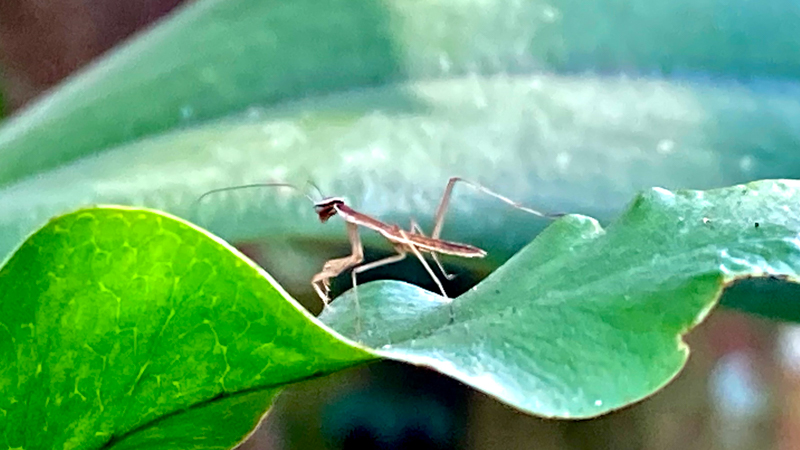
Nurturing predatory species of beneficial insects in the garden, such as ladybugs, green lacewings, and praying mantis, will reduce dependence on chemical treatments for these pests and support a sustainable ecosystem. Wrapping up June lawn and garden tips on the topic of pollinators, Join the Buzz by Entering our Social Media Contest. Share your love of pollinators on our Facebook page and spread the word! Share the favorite POLLINATOR PHOTO you have taken in the comment section—post by June 20, 2021, for a chance to win our fun friends of pollinator kit.
Plus, remember that for comprehensive solutions to your specific lawn, garden and landscaping need contact Earth Works of Jacksonville online and at 904-996-0712. Earth Works operates a retail Garden Center/Plant Nursery in Jacksonville and provides landscaping, hardscaping, water features, lawn care service, lawn spraying, and drainage solutions. Proudly serving clients in Northeast Florida including Jacksonville, Ponte Vedra Beach, Atlantic Beach, Neptune Beach, Jacksonville Beach, Nocatee, St. Johns, Fleming Island, Orange Park, Middleburg, Green Cove Springs, Amelia Island, Fernandina, and St. Augustine. Happy Gardening!
A good starting point for pruning tips with any plant is to remove dead, diseased, or damaged stems as soon as you see them. Dead stems attract insects and invite diseases to develop. Also remove crossing branches, water sprouts (vigorous upright growing shoots that form on trunks or side branches), and suckers (vigorous shoots that develop near or from below ground).
What to Prune When
Spring- Flowering Trees and Shrubs
Early season pruning tips for spring bloomers, such as azalea, bear flowers on wood formed the previous year. The best time to prune them is late spring — immediately after they finish blooming. If you prune them later in the growing season you’ll remove flower buds and decrease the amount of spring bloom.
Hydrangeas
Most hydrangea types bloom on old wood. Prune these types of hydrangeas before midsummer. If you prune them in winter or early spring, you’ll be removing flower buds. With newer reblooming types, such as the Endless Summer Series which bloom on new growth, timing of pruning is less critical. Even if you cut off some of the flower buds by pruning the old stems, the plant will bloom on the new growth.
Shrubs With Showing Blooms
Cut back shrubs grown primarily for their foliage (such as Loropetalum and Ligustrum) almost anytime: except in late autumn. New growth that starts after late season pruning won’t harden off properly before winter. Major pruning is best done when it is dormant.
Clipped Hedges
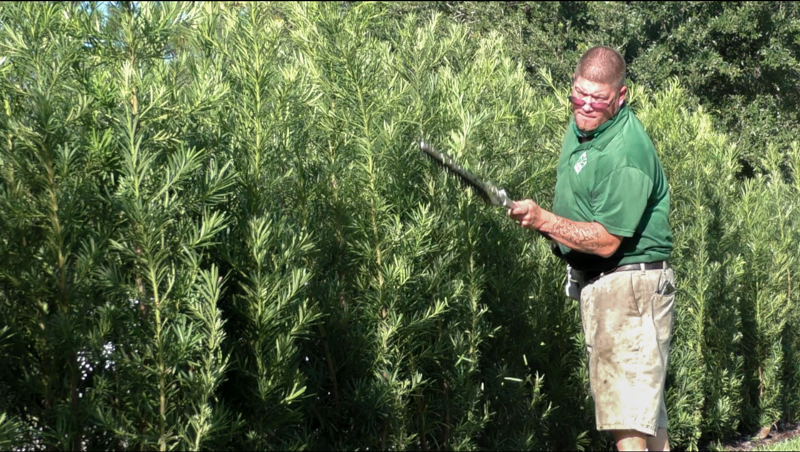
Shrubs such as boxwood and podocarpus are often sheared to form a hedge. To maintain a solid wall of green, shear the new growth frequently during the early part of the growing season. Stop in late autumn.
Roses
Prune climbers and old garden roses that bloom only once per year after they finish blooming. Repeat bloomers, including hybrid teas, floribundas, knockout, and drift shrub roses are pruned mostly to shape the plant or to remove winter-damaged canes. If they become overgrown, cut them back in early spring.
Perennial Flowers
Most perennial flowers look best if you remove faded flowers. This is called deadheading. As a bonus, many perennials will push out another cycle of blooms after deadheading. If your perennial flowers become too tall and leggy, or flop open in the middle, try shearing them back to 6-12 inches above the ground. This type of haircut causes them to become stockier.
Annual Flowers
Deadhead annual flowers regularly to keep them blooming well. Removing the old flowers prevents them from setting seeds and allows plants to put more energy into blooming. Some annuals, such as petunias, sprawl and develop bare stems at their bases. As with perennials, you can shear these rangy plants to force more compact growth and renewed bloom.
Citrus
On young trees, it is important to remove suckers from the base of the tree. Mature citrus trees do not require pruning of the canopy except for substantial injury or after a disease or freeze damage. Unnecessary pruning will reduce fruit production. Pruning of the canopy should be reserved to prevent trees from crowding other plants or buildings. Be sure to remove vertical shoots. Make all pruning cuts flush with the trunk, since stubs may be attacked by rotting organisms that could damage the tree. If you must prune, timing can be tricky and varies by variety. Shoot for after-harvest and before flowering.
Plus, remember that for comprehensive solutions to your specific lawn, garden and landscaping need contact Earth Works of Jacksonville online and at 904-996-0712. Earth Works operates a retail Garden Center/Plant Nursery in Jacksonville and provides landscaping, hardscaping, water features, lawn care service, lawn spraying, and drainage solutions. Proudly serving clients in Northeast Florida including Jacksonville, Ponte Vedra Beach, Atlantic Beach, Neptune Beach, Jacksonville Beach, Nocatee, St. Johns, Fleming Island, Orange Park, Middleburg, Green Cove Springs, Amelia Island, Fernandina, and St. Augustine.
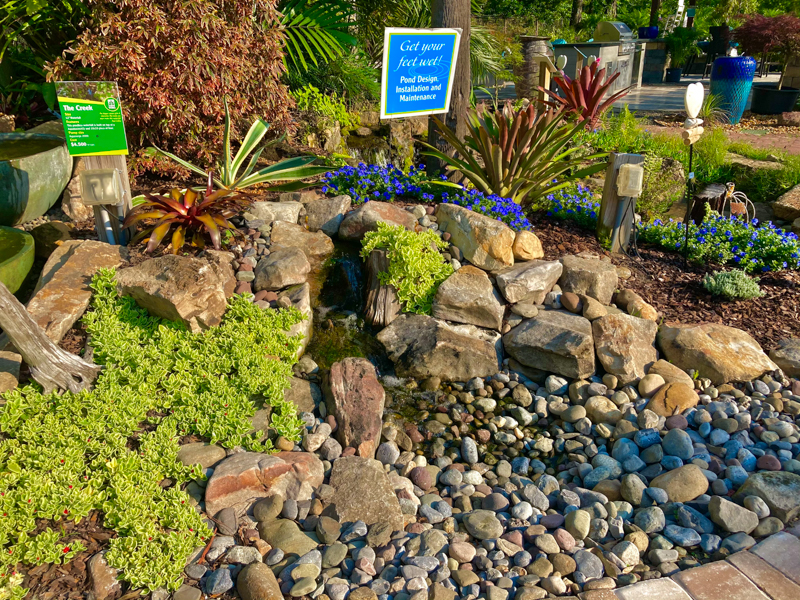
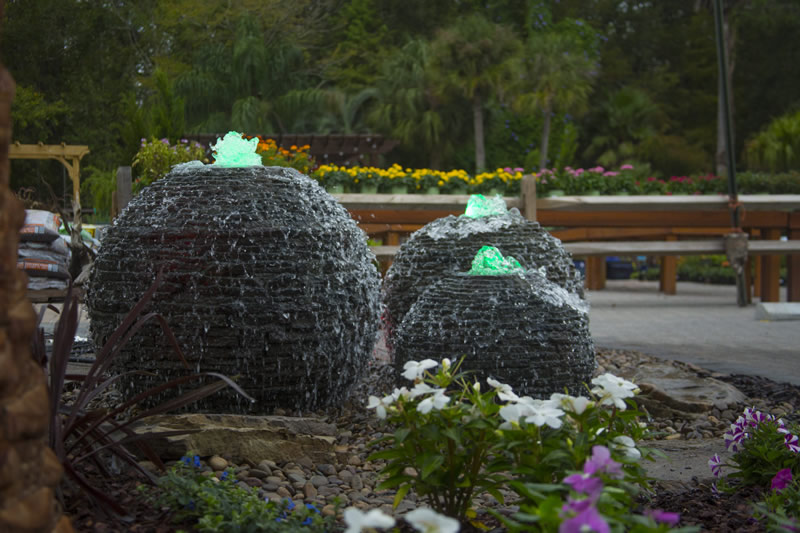
You may like the sound of running water, but don’t want a pond. Earth Works of Jacksonville, Florida has a variety of pondless water features on display at our garden center that demonstrate a few of your design possibilities. The hardware for these pondless water features is manufactured by Aquascape Inc that Earth Works also sells as kits to clients who wish to do it yourself (DIY). As Certified Aquascape Contractors (CAC) Earth Works landscape department staff work with clients to develop designs and install in landscapes throughout Northeast, Florida.
Pondless Waterfall Garden Center Displays Include:
Water Pot Features: Aquabasin 45, 10×10 Pond Liner Pump Size: Ultra Pump 2000 Contact for pricing.
Basalt Columns Size: 1- 24”H, 2-30”H, 3-36”H Features: 2 Night Light, Recirculating system, Large Aquabasin, Built with Mexican Beach Pebble. Pump Size: Ultra 2000 Water Pump. Contact for pricing.
The Creek Size: 12” Waterfall Features: This pondless waterfall is built on top of a Aquabasin (45) and 10×10 piece of liner. Pump Size: Aquasurge 2000 Contact for pricing.
Rocky River Size: 2ft waterfall, 4ft stream. Features: Spillway, Small Aquabloxs, 15×20 Pond Liner, Underlayment, River Jacks and IonGen G2. Pump Size: Aquasurge 5000 Contact for pricing.
Mountain Falls Size: 2.5 ft waterfall x 5ft stream. Features: Low maintenance pondless waterfall, built with Missouri rock. Pump Size: Aquasurge 4000-8000 Adjustable flow pump. With Tennessee Field Stone or Missouri Rock. Contact for pricing.
Stacked Slate Spheres Set of 3 Features: Large Aquablox, Pond Liner, and River Rock. Pump Size: Aquasurge Pro 4000-8000 Contact for pricing.
Entrance Elegance Size 12ft x 8ft Features: Large Aquablox, Pond Linter, Missouri Rock, IonGen G2, Patio Pond 32”, Patio Pond 40”, Curved Stacked Slate Wall 32”. Pump Size: Aquasurge Pro 2000-4000 and Aquasurge Pro 4000-8000. Contact for pricing.
Visit the Earth Works Garden Center to see these water feature options, call 904-996-0714 or request to book a design consultation. Earth Works of Jacksonville is Northeast Florida’s Premier Aquascape Certified Contractor with over 30 years of experience serving clients and delivering available pond options in Northeast Florida.
Plus, remember that for comprehensive solutions to your specific lawn, garden and landscaping need contact Earth Works of Jacksonville online and at 904-996-0712. Earth Works operates a retail Garden Center/Plant Nursery in Jacksonville and provides landscaping, hardscaping, water features, lawn care service, lawn spraying, and drainage solutions. Proudly serving clients in Northeast Florida including Jacksonville, Ponte Vedra Beach, Atlantic Beach, Neptune Beach, Jacksonville Beach, Nocatee, St. Johns, Fleming Island, Orange Park, Middleburg, Green Cove Springs, Amelia Island, Fernandina, and St. Augustine. Happy Gardening!
Brown palm frond tips, called “frizzle top” on new growth, are a cause for concern for newly planted palm species. Palms depending on size, are often pricey and a prized addition to a homeowners landscape plant collection. As popular palm species originate in all sorts of environments, from deserts to river banks and rainforests, keeping a thriving palm collection requires some knowledge of their specific variety requirements. The slow growth rate in palms coincides with an equally slow display of outward signs problems such as brown palm frond tips. For your palm to flourish it needs the right climate, water, and nutrition free of disease otherwise brown palm frond tips and other problems appear.
When planting your palm, make sure the root ball is placed at the surface or slightly above, not completed buried. Burying the rootball too deep can result in water and iron deficiencies in the palm and brown palm frond tips. In addition, the amount of sun they receive and climate is essential to your palm’s long-term health. Some palms prefer direct sun, others indirect sunlight. High humidity is typically preferred but not something you can only control for container palms indoors.
Too much and too little watering will cause brown palm frond tips. Typically palms prefer moist, well-draining soil. Too much water in poorly draining soil can cause root rot, whereas too little water in sandy soil can also harm your palm. Know the specific requirements of your palm as some such as the Everglades palms and mangrove fan palms grow naturally along river banks and water bodies. In contrast, Bismarck’s palms are extremely drought tolerant doing well in dry heat, desert-like conditions.
Sandy Northeast Florida soil is susceptible to mineral deficiencies negatively impacting palms. These minerals include boron, calcium, iron, magnesium, nitrogen, and potassium. “Magnesium deficiency is very common on highly leached soils in Florida, Hawaii, and other tropical areas,” according to the University of Florida. “It can also occur in container-grown palms if dolomitic limestone has not been added to the substrate. Also, since palms may remain in a container for up to a year or longer, any added dolomite is usually exhausted after six months or so with Mg deficiency symptoms becoming visible as a result. Most species of palms are susceptible to Mg deficiency to some degree, but Phoenix canariensis is by far the most susceptible species to this disorder.
Temperature, pH and certain soil amendments in the soil can result in a deficiency of magnesium that also resultw in frizzle top systems in a variety of palms in Northeast Florida. “Manganese deficiency is very common on alkaline soils, but can occur in containers if drainage is poor or soil temperatures are cool,” according to the University of Florida. “Most species of palms can be affected, but Syagrus romanzoffiana (queen palm), Roystonea regia, (royal palm), Acoelorrhaphe wrightii (paurotis palm), Phoenix roebelenii (pygmy date palm), and Elaeis guineensis (African oil palm) are particularly susceptible.”
Pests including weevils & root rot are often associated with increased stress in newly planted palms. However, in most scenarios, the pruning of your palm should remain the same whether it is healthy or not, considering the plant redirects nutrition from diminishing fronds to elsewhere in the plant. Review our palm pruning video for specific directions on proper palm pruning.
Earth Works has a variety of palm nutritional products and fungicides that will benefit their health. To diagnose the specific cause of brown palm frond tips and other palm problems, take pictures and contact your helpful Earth Works garden center staff.
Plus, remember that for comprehensive solutions to your specific lawn, garden and landscaping need contact Earth Works of Jacksonville online and at 904-996-0712. Earth Works operates a retail Garden Center/Plant Nursery in Jacksonville and provides landscaping, hardscaping, water features, lawn care service, lawn spraying, and drainage solutions. Proudly serving clients in Northeast Florida including Jacksonville, Ponte Vedra Beach, Atlantic Beach, Neptune Beach, Jacksonville Beach, Nocatee, St. Johns, Fleming Island, Orange Park, Middleburg, Green Cove Springs, Amelia Island, Fernandina, and St. Augustine. Happy Gardening!
Azaleas, Arborvitae, Bamboo, Boxwood, Yews, Ligustrum, Viburnum, and Oleander are readily available for hedges in landscape design. By adding a mix of trees, shrubs, vines, and flowers, the hedge becomes wildlife, attracting hedgerows while providing beauty, obstructing views, enhancing privacy, and a host of area ecological benefits.
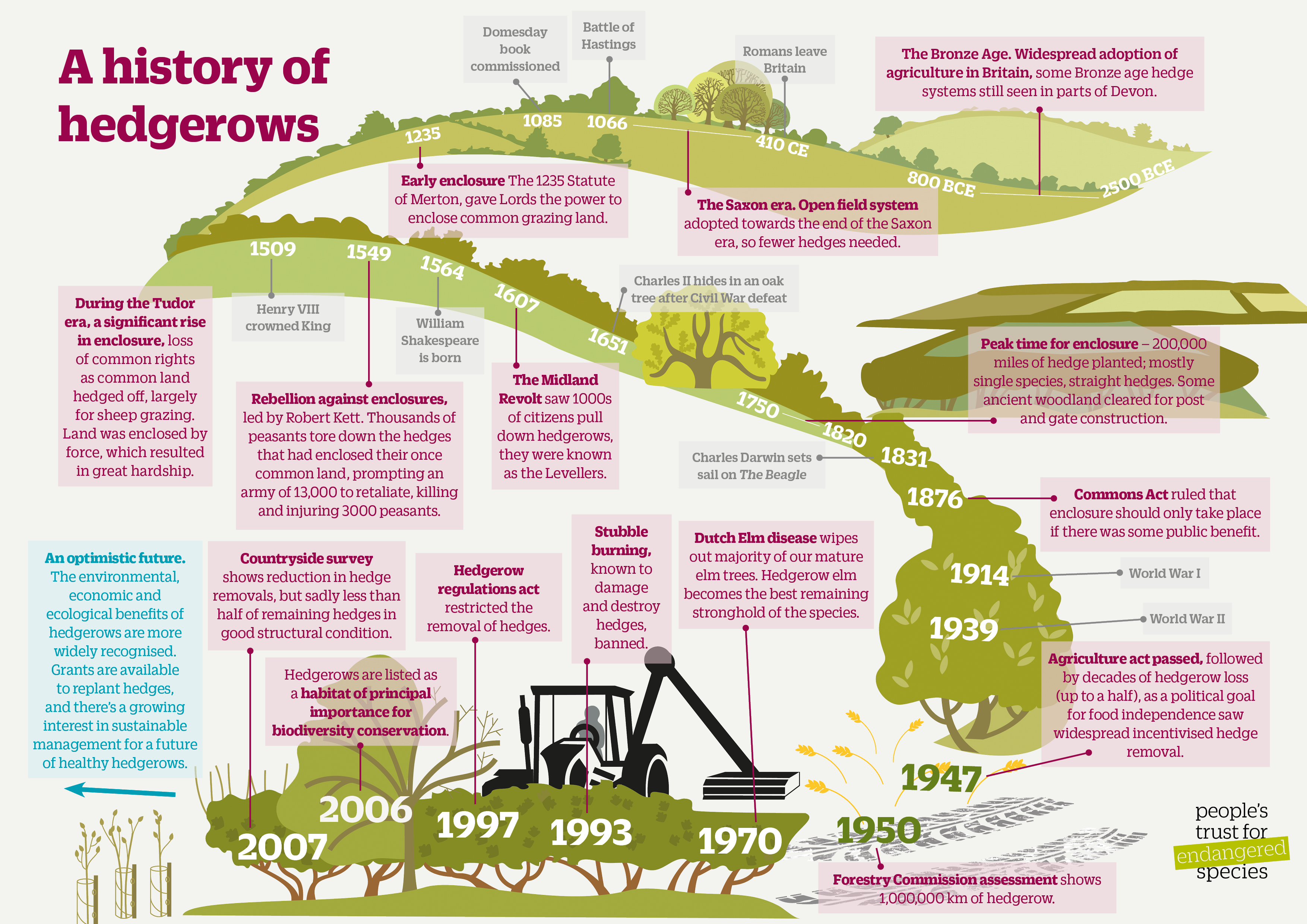
The word hedge, translated from its Old English root word, means enclosure. “Hedges have formed a part of our gardens for at least 2,000 years,” according to the Financial Times. “Among the earliest examples are those used in the landscaping of Roman villas.” Hedgerows consisting of plants anchored together forming living walls were widely used in the United Kingdom for hundreds of years. Still, they waned in popularity after WWII with the rise of industrial farming practices. “Symbolic of the English countryside and teeming with life, there are over 30 different regional styles of hedgerow in the UK,” according to Seedlipdrinks UK. “A border, a boundary, a home, and even a fruit basket, in late Spring, these iconic landmarks come into their own as bright young leaves sprout from bare branches and the first wildflowers appear.”
Americans don’t have this rich history with hedgerows. “Hedgerow plantings were uncommon in the early United States,” according to Oregon State University. “In the 1930s, the U.S. Department of Agriculture’s Shelterbelt Program briefly supported planting trees for windbreaks to prevent soil erosion in the Midwest. Today, as interest surges in sustainable farming methods, more people are turning to this age-old practice.” Government agencies, NGOs, and educational institutions now guide Americans on creating wildlife attracting hedgerows that serve as habitats and corridors while preventing erosion and improving soil conditions.
“Hedgerows certainly will have a natural, informal look, but it’s still important to keep aesthetics in mind,” according to the American Horticultural Society. “Year-round landscape interest can be achieved by selecting plants with attributes that span the seasons. Plants that flower and fruit at different times of the year not only help sustain wildlife, they add pops of seasonal color. Many wildlife-friendly plants contribute textural contrasts to the landscape, while others offer colorful fall foliage or attractive bark for winter interest. Repetition—repeating plants or colors within the hedgerow, or using hedgerow plants in other parts of the landscape—helps create visual flow and harmony within the landscape. Mass plantings or large drifts of color also help unify the space.”
While there are no regional styles of hedgerows that require you to arrange your collection of plants in a particular manner, there are available suggestions. “The most common planting plan is the double line. It is important to offset the 2 rows to give the necessary even distribution of plants along the mature hedge line,” according to Pierce Conservation District. “There are no hard and fast rules for determining the planting space for hedgerows; this depends on the plant selection. For a tight stock-proof hedge, spacing can be as close as 8 -12 inches apart. A good “backbone” plant, which will constitute 60 – 70% of the hedgerow should be among your initial selections. Choose a plant with a good growth rate, resilience to severe pruning, and thorny growth for good stock-proofing capabilities. Once a backbone plant is selected, adding 4-6 additional shrubs or small trees will add value as wildlife habitat as well as reduce any gaps resulting from a particular species dying out.”
Many of the hedgerows around us may have been created by accident within informal gardens as layers of plantings that provide habitat and food for pollinators, birds, amphibians, reptiles and a mammal or two. If interested in creating or adding to your own wildlife attracting hedgerows book a consult with an Earth Works Landscape Designer. Visit our garden center and a garden guide will assist you with a mix of plants for hedgerows in Northeast Florida.
For comprehensive solutions to your specific lawn, garden and landscaping need contact Earth Works of Jacksonville online and at 904-996-0712. Earth Works operates a retail Garden Center/Plant Nursery in Jacksonville and provides landscaping, hardscaping, water features, lawn care service, lawn spraying, and drainage solutions. Proudly serving clients in Northeast Florida including Jacksonville, Ponte Vedra Beach, Atlantic Beach, Neptune Beach, Jacksonville Beach, Nocatee, St. Johns, Fleming Island, Orange Park, Middleburg, Green Cove Springs, Amelia Island, Fernandina, and St. Augustine. Happy Gardening!
MAY WEATHER IN NORTHEAST FLORIDA May lawn and garden tips starts with recognition that this is the second and final full month of Spring as temperature increases heading to Summer. “Daily high temperatures increase by 5°F, from 82°F to 87°F, rarely falling below 74°F or exceeding 93°F,” according to weatherspark.com. “Daily low temperatures increase by 7°F, from 62°F to 70°F, rarely falling below 53°F or exceeding 74°F.” This is the peak plant production period for many plants before some stifling in the coming Summer months. Average Jacksonville rainfall for May is 2.5 inches, which is slightly lower than April but much less than the approximate 6.5 inches June and July averages.
MAY PLANTINGS IN NORTHEAST FLORIDA
May is prime time for planting pollinator-friendly flowering plants in Northeast Florida. Lantana, milkweed, salvia, begonia, coleus, cuphea, and passion vines are but a few of the long lists that bloom and are ready to plant from your neighborhood garden center. In addition, consider warm-season herbs and vegetables, including basil, okra, peas, rosemary, and sweet potatoes for growing in May. It is wide open season on getting started with container gardening, potted plants, and houseplants. Earth Works garden center, landscape designers, and lawn care are available to assist you in developing a beautiful, healthy, and manageable lawn and garden.
MAY PRUNING IN NORTHEAST FLORIDA Our May pruning tips for Northeast, Florida start with the recognition that April and May are times when most of your trees and shrubs are putting out new growth. Consider replacing the deciduous trees and shrubs that don’t appear to be coming back from the Winter cold, disease, or parasites. If plants including crape myrtles, hibiscus, and roses aren’t showing signs of budding with new growth on bare branches, prune back judiciously, looking for live wood before removal and replacement. Prune your Spring flowering plants and hedge plants such as azaleas and oleander back shortly after blooms subside to allow maximum growth ahead of their next bloom cycle on new growth. Plants with dead growth that are damaged, diseased can cut out at any time.
MAY FERTILIZATION & SOIL AMENDMENTS IN NORTHEAST FLORIDA May lawn and garden tips emphasizes fertilization schedules that vary greatly among ornamental plants, fruits, and vegetables. Fertilization needs depend on the soil fertility for starters and the nutrient requirements of the specific plants. Native plants are adapted to local soil conditions and need less fertilization than plants categorized as moderate to heavy feeders. A benefit to consults with a landscape designer is their horticultural knowledge in assisting you to devise a plan that takes plant care and fertilization into consideration. Heavy feeders such as Bird of Paradise can benefit from biweekly fertilization during their growing season. In contrast, Florida native plants require very little fertilization, although mulch and composted soil amendments will more closely mimic their native soil constituents than not. “Of the 17 elements essential for plant growth, eight are micronutrients: boron (B), chlorine (CI), copper (Cu), iron (Fe), manganese (Mn), molybdenum (Mo), zinc (Zn) and nickel (Ni),” according to Ohio State University. “Micronutrients are essential plant nutrients that are found in trace amounts in tissue, but play an imperative role in plant growth and development. Without these nutrients, plant nutrition would be compromised leading to potential declines in plant productivity.” In addition, foliar fertilization helps deliver micronutrients otherwise unavailable by broadcast methods of slow-release fertilizers in high pH soils. Thus, it’s also important to know your soil pH, a free test with recommendations for amendments where necessary by the University of Florida is encouraged. For more information, read “Soil Testing in Northeast Florida.”
MAY LAWN CARE IN NORTHEAST FLORIDA If suffering from soil compaction, consider doing core aeration and top dressing with soil amendments that will facilitate the bio availability of micro-nutrients and provide better water retention ahead of extreme Summer conditions. “Keep your St. Augustine between two to four inches in height,” according to Sod Solutions. “These heights slightly vary for different brand names of St. Augustine. For example, Palmetto should be maintained at a height of 1.5–2.5 inches whereas CitraBlue should be kept at a height of 2.5–3.5 inches during the spring.” Although St. Augustine grass is the most common turf in Florida there are numerous other varieties that do best if not scalped too short. Keep your mower blades sharp and water adequately.
MAY LAWN & GARDEN PEST CONTROL IN NORTHEAST FLORIDA
As part of May lawn and garden tips be on the lookout for any signs of weeds, insects, mold, and fungus in the lawn and garden. Good weather for the lawn and garden is likewise suitable for insects and other pests. Chinch bugs, sod webworms, grubs, and mole crickets are a few that begin successive life cycles in untreated lawn turf in Spring ahead of Summer rains. Meanwhile, many other pests will feast on the roots, stems, leaves, and fruit of ornamental plants, citrus, and vegetables in the garden. Aphids, lace bugs, mealybugs, nematodes, scale, and whiteflies are a few of the common pests that can devastate the garden. Know that the insects, both beneficial and otherwise, outnumber us. “In the world, some 900 thousand different kinds of living insects are known,” according to the Smithsonian. “Most authorities agree that there are more insect species that have not been described (named by science) than there are insect species that have been previously named. Conservative estimates suggest that this figure is 2 million, but estimates extend to 30 million. “ A healthy lawn and garden are best not left to chance but better managed with a proactive insect management plan. Address the potential threats in advance of infestations and be vigilant in inspecting the landscape for signs of new arrivals. May is too late for best results with pre-emergent herbicides as soil temperatures are above 55F, at which point seeds began bursting onto the scene. However, pre-emergents can continue to be a useful though less practical part of your insect management plan. May is prime time for post-emergent herbicide applications on the weed seedlings, vegetative & flower stages when average temperatures are between 65F and 85F. Biologic controls such as the bacteria bacillus thuringiensis are an organic resource for pest control. In addition, good cultural practices are a good starting point for nurturing healthy populations of beneficial insects that lower pest levels in an ecologically friendly manner. The healthier the plant with proper nutrition and planted in the proper location for its needs, the less susceptible the plant will be to pests and subsequent decline. A few examples include June-drop in Florida citrus beginning in May. Don’t worry so much about the flower drop that won’t hold fruit as the more significant the flowering, the lower the percentage of flowers producing fruit to harvest. Stress from insufficient water and nutrients and other environmental conditions, including pests, can increase the adverse impact of June-drop. There is a myriad of interactions between plants and insects in the landscape, with most being benign while others can cause great harm. For example, the bronzing of leaves on recently bloomed-out azaleas results from lace bugs that can cause tremendous damage if not controlled with biological controls such as green lacewings, lady beetles, or insecticides.
For comprehensive solutions to your specific lawn, garden and landscaping need contact Earth Works of Jacksonville online and at 904-996-0712. Earth Works operates a retail Garden Center/Plant Nursery in Jacksonville and provides landscaping, hardscaping, water features, lawn care service, lawn spraying, and drainage solutions. Proudly serving clients in Northeast Florida including Jacksonville, Ponte Vedra Beach, Atlantic Beach, Neptune Beach, Jacksonville Beach, Nocatee, St. Johns, Fleming Island, Orange Park, Middleburg, Green Cove Springs, Amelia Island, Fernandina, and St. Augustine. Happy Gardening!
Large masses of colorful bracts surround three petite flowers of Bougainvillea, which grows well in Northeast Florida despite our rainfall. These Brazilian coastal natives do best in direct sunlight with numerous blooming cycles per year in sunny, dry conditions. They are available in bush, tree, and vine form. Growing Bougainvillea in Northeast Florida can be easy if planted in the right spot and protected from frost and freezing temperatures and soggy conditions as they don’t like wet feet.
“Bouganvillea is a fantastic plant if you have the right spot for it,” said Matthew Barlow, Earth Works garden center manager. “ The right spot is that place in the garden that’s hot, that’s sandy, that’s dry, get’s sun all day where nothing else wants to grow. That’s where the bougainvillea wants to be. It is a perfect solution for that place in the garden where it can be very difficult to grow other things especially if it’s getting blasted with the afternoon death rays come June, July, August, September, and sometimes October. Do not put these in a place that’s low-lying, shady, or stays wet for long periods of time. High, dry, hot, sunny, is what the bougainvillea loves.”
Growing Bougainvillea in Northeast Florida with unpredictable low temperatures can be tricky, with some years having few touches of frost and other years having numerous hard freezes. Jacksonville is designated at the lower end of zone 8(8b) and the upper region of 9 (9a). “They (bougainvillea) are a hardy perennial here, although if we have hard frosts, hard freezes they can be knocked back considerably,” said Barlow. “I have seen bougainvilleas come back from some very cold temperatures. After the first Winter or two, the maintenance on them in the Winter is much less. In the first season or two, you might want to cover and protect them, for the first couple of years to make sure their roots become established. Once the roots become established, they will bounce back very quickly in the Spring once the temperatures perk back up.”
“The best time to prune bougainvillea is in late winter or early spring after it flowers, or at the start of the rainy season,” according to the University of Florida. “If you wait until late summer or early fall, your plant may produce fewer flowers during the following winter.” There are numerous varieties of bougainvillea on the market that bloom best at different times of the year. Follow the grower’s recommendation for your specific variety.
“Also feeding is very important with the bougainvilleas,” said Barlow. “You want to keep them on a regular feeding schedule. For those of you who don’t like to use a water-soluble liquid fertilizer, which I recommend even a slow-release quarterly feed will encourage the blooming.” Avoid over-fertilization which can encourage too much foliage at the expense of blooms. And if kept in pots they like to be pot-bound to bloom best.
Bougainvillea is both salt and drought-tolerant, making them a hardy choice for southern coastal landscapes. Visit Earth Works garden center for a wide assortment of bougainvillea, soil amendments, and fertilizers. And talk to Matthew about any concerns you have about growing bougainvillea in your landscape. Plus, consider scheduling a design consultation to include bougainvillea and the many other plant choices we can make available for your landscape.
For comprehensive solutions to your specific lawn, garden and landscaping needs contact Earth Works of Jacksonville online and at 904-996-0712. Earth Works operates a retail Garden Center/Plant Nursery in Jacksonville and provides landscaping, hardscaping, water features, lawn care service, lawn spraying, and drainage solutions. Contact us with your questions and to book design consultations. Earth Works proudly serves clients in Northeast Florida, including Jacksonville, Ponte Vedra Beach, Atlantic Beach, Neptune Beach, Jacksonville Beach, Nocatee, St. Johns, Fleming Island, Orange Park, Middleburg, Green Cove Springs, Amelia Island, Fernandina, and St. Augustine.
We believe Earth Day is the perfect opportunity to share some ways we can all contribute to our remarkable planet’s continued health and beauty. Here is a list of easy things you can do at home and in your garden to celebrate.
1. Plant a tree – Trees remove carbon dioxide from the air, store carbon in the trees and soil, and release oxygen into the atmosphere—all essential factors in the fight to stop climate change.
2. Create a Pollinator Garden – They support and maintain pollinators by supplying food in the form of pollen and nectar to ensure that these crucial animals stay in the area to keep pollinating our crops for continued fruit and vegetable production.
3. Call a Beekeeper vs. an Exterminator – Bees are a critical part of food production worldwide, and their dwindling numbers should concern us all. Help save our struggling bees by allowing a beekeeper to capture the swarm alive.
4. Landscape with Native & Florida Friendly Plants – Plants whose needs meet your local climate will naturally grow better, requiring less additional water, fertilization, and pest control. All positives for the health of our local waterways.
5. Use Organic Fertilizers– Not only are they safe for the environment, your family, and your pets, they can enhance the soil. Plus, synthetic fertilizers require a significant amount of fossil fuels to produce. And their frequent runoff into our river is the cause of those harmful algae blooms.
6. Build a Water Garden –When done correctly, ponds provide shelter and water to native wildlife and support for native plants. Also, by reducing your lawn area, you will conserve water and reduce the use of fertilizers.
7. Consider Solar Panels – Solar power systems derive clean, pure energy from the sun. Installing solar panels on your home helps combat greenhouse gas emissions and reduces our collective dependence on fossil fuels.
8. Shop Local – The planet is perhaps the biggest beneficiary of consumers supporting locally owned small businesses. Shopping local reduces fossil fuel use by the suppliers and the shoppers, ultimately reducing your carbon footprint.
For more Earth Day tips on eco-friendly lawn and gardening practices in Northeast Florida stop into Earth Works garden center, contact us online and at 904-996-0712. Earth Works operates a retail Garden Center/Plant Nursery in Jacksonville and provides landscaping, hardscaping, water features, lawn care service, lawn spraying, and drainage solutions. Earth Works proudly serves clients in Northeast Florida, including Jacksonville, Ponte Vedra Beach, Atlantic Beach, Neptune Beach, Jacksonville Beach, Nocatee, St. Johns, Fleming Island, Orange Park, Middleburg, Green Cove Springs, Amelia Island, Fernandina, and St. Augustine.
Landscaping with Florida native plants is economical and benefits our Northeast, Florida ecosystems requiring less water, fertilizers, and pesticides to sustain than non-native plants. “They are acclimated to everything that Northeast Florida can hand them the cold, the heat, the extreme drought that we can have from time to time, but also the deluge of rain we get a couple of months of thunderstorms back to back to back,” said Matt Barlow, Earth Works garden center manager. “And they are also pest and disease resistant because they evolved right here.” Native plants are also important to the ecosystem as a source of food, shelter, and habitat for native wildlife including amphibians, birds, insects, mammals, reptiles and non-native migratory species.
Native plants host beneficial insects, pollinators, and decomposers that form a healthy natural ecosystem. For example, there are 24 oak tree varieties native to Florida, which support over 500 species of moths and butterflies. According to the National Wildlife Federation nearly 100% of songbirds depend on these insects as a key food source. Remove the native plants and the insect and dependent animal species populations crash. “More than 100 species of vertebrate animals are known to consume acorns in the US, including mammals such as white-tailed deer, gray squirrels, fox squirrels, flying squirrels, mice, voles, rabbits, raccoons, opossums, gray foxes, red foxes, and wild hogs,” according to the University of Florida. “Birds that feed on acorns include wild turkey, bobwhite quail, wood ducks, mallards, woodpeckers, crows, and jays.”
Outside of their natural environment non-native species have fewer natural predators resulting in invasiveness crowding out native species without providing a similar degree of benefits to the ecosystem. A few non-native invasive plants you may be familiar with include camphor trees, Japanese honeysuckle, kudzu, melaleuca, mimosa, sword fern, torpedo grass, and water hyacinth.
Earth Works carries a variety of Florida native plants including Walters Viburnum. “It’s a great slow-growing shrub that you can use as individual plants, as focal points, but also as a hedge row,” said Barlow. “They do grow thick and dense and are evergreen. They bloom white in the Spring. Once we come out of Winter and the temperature starts to warm up the flowers pop. They do hold their buds sometimes for a very long period of time. Their buds when they are closed are kind of a rosy color, which gives the shrub in Wintertime going into Spring this really nice look and then they pop open and their covered with tiny white flowers. These are a very easy addition to your garden.”
Walters Viburnum “These are a very easy addition to your garden.”
The Florida Native Plant Society lists 663 native plants in its database. However, most Florida native plants are not commercially available for purchase. Where native plants are grown commercially it is typically by small independent growers who cannot keep up with the commercial demand for the natives they grow. Propagating native plants to nurture commercially favorable ornamental characteristics results in what is called cultivars. “Many native plant experts and enthusiasts do not consider man-made cultivars as being native, although it might be argued that selections or hybrids could have occurred under natural conditions,” according to the University of Florida. “When purchasing native plants, ask for a plant by its scientific name. Also ask about the origin of the plant. Plants that were derived from seed or plants of natural populations in other parts of the country might not perform well in Florida.”
Zamia integrifolia the Coontie palm is another popular commercially available Florida native plant. “It’s called the Coontie palm, but it’s not an actual palm,” said Barlow. “It’s actually a cycad. It gives you a palm or tropical look without actually being a palm. They’re more of a small loose, but densely compacted shrub. Loose in the fact that they are not branched like other types of shrubs. There is a lot more separation and distance where all the stems come from the base rather than a branching type plant like a traditional shrub. They don’t require any pruning. So those of you who are looking for a low maintenance plant the coontie is a great addition. Also, the coontie is versatile. It can grow in the sun, part sun, and into almost some completely shaded conditions. It’s very versatile and easy to grow.”
Coontie palm. “They don’t require any pruning. So those of you who are looking for a low maintenance plant the coontie is a great addition.”
Florida native plants occur in diverse biomes including marshes and swamps, prairies, hammocks, sandhills, scrub forests, upland forests, and more resulting in the need to match your choice of natives to your conditions. It’s also important to understand the significance of your area’s plant communities. For Duval County alone the plant communities include; Beach Dunes, Hydric Hammocks, Mangrove Swamps, Maritime Forests, Pine Flatwoods, Saltwater Marshes, Sandhills, and Wetland Swamp Forests. Native plants adapt in these areas in relation to one another in ways that we continue striving to understand.
Salt tolerant native seagrapes are better suited for the coastal landscape than Florida’s state wildflower the Coreopsis found in fields and along roadsides across North Florida. Landscaping for Florida native plants requires considering the various categories of natives available including flowers, grasses, ground covers, palms, shrubs, trees, and vines. Search these categories at www.floridayards.org. Likewise, a variety of Florida native palms including the Florida State Tree, the Sabal Palm, and palmettos are available at Earth Works and seasonal varieties of other natives like anise.
There are small local companies that afford us the opportunity to buy Florida Native plant seeds and advocates of planting natives share them through local and national seed exchange programs and on social media. Visit our Seed Saving & Exchange blog that contains extensive information about these activities and information about groups like the 13,000 member Seed Savers Exchange.
For more information on landscaping with Florida native plants in Northeast Florida stop into Earth Works garden center and speak with Barlow, another garden guide, or schedule a consultation with one of our landscape designers to help you with your Florida-friendly landscape.
For comprehensive solutions to your specific lawn, garden and landscaping need contact Earth Works of Jacksonville online and at 904-996-0712. Earth Works operates a retail Garden Center/Plant Nursery in Jacksonville and provides landscaping, hardscaping, water features, lawn care service, lawn spraying, and drainage solutions.
Earth Works proudly serves clients in Northeast Florida, including Jacksonville, Ponte Vedra Beach, Atlantic Beach, Neptune Beach, Jacksonville Beach, Nocatee, St. Johns, Fleming Island, Orange Park, Middleburg, Green Cove Springs, Amelia Island, Fernandina, and St. Augustine.
Why should I do Soil Testing in Northeast Florida? Soil is a mixture of mostly minerals, organic matter, water, and air. Plants require specific nutrients to thrive. Identifying the soil’s specific composition helps in identifying soil deficiencies and necessary remedies that can aid in avoiding over-fertilization that can result in stormwater run off pollution. Soil testing will also measure pH levels that if too low for instance can cause minerals in the soil not to be available to some plants. Plant varieties prefer varied pH levels and amounts of specific nutrients. Azaleas prefer pH levels below 5.5 whereas pink hydrangeas prefer pH above 6. A soil analysis will provide you with knowledge of your soil composition and help you make decisions that can improve the soil for your lawn and garden.
The golden rule of gardening says, “If you treat your soil well, it will treat your plants well,” according to the United States Department of Agriculture. “Successful gardening depends on good soil. One of the best ways to improve soil fertility is to add organic matter. It helps soil hold important plant nutrients. By adding organic matter to sandy soil, you improve the ability of the soil to retain water. In a clay soil, humus will loosen the soil to make it more crumbly. You can increase the organic matter in your garden by adding compost or applying mulch.”
When should I test my soil? Soil testing in Northeast Florida can be done anytime of year whereas in northern states it should be done in warm months when the soil is not frozen. By having your soil testing done ahead of the growing season you are better prepared to treat with soil amendments if needed. For example, calcitic lime used to increase pH requires 2-3 months to work completely into the soil. Soil sampling can be done anytime and is often done to identify the cause of problems in the landscape such as plants that aren’t growing properly or dying.
Where can I get my soil analyzed? The University of Florida Extension Office in Duval County provides free soil pH analysis that takes typically 7-10 business days to get results. Samples should be dry which is best provided to them in paper bag whereas plastic holds moisture. Samples should be gathered from a few different areas of the landscape and dropped off in person at the extension office. Contact the University of Florida Extension Office in Duval County for more information at (904)255-7450.
Additionally, there are digital and reagent soil test kits available for purchase online from a variety of sources. The Luster Leaf 1880 Rapitest Electronic 4-Way Soil Analyzer is one inexpensive option that’s widely available. More accurate and sophisticated electronic test kits are available for hundreds, even thousands of dollars.
Many of the inexpensive digital and reagent soil test kits although providing a degree of accuracy also provide vague and inaccurate data as a Garden Fundamentals video points out in a comparison of a Rapitest reagent test kit against a laboratory analysis of the same soil sample.
For comprehensive solutions to your specific lawn, garden and landscaping need contact Earth Works of Jacksonville online and at 904-996-0712. Earth Works operates a retail Garden Center/Plant Nursery in Jacksonville and provides landscaping, hardscaping, water features, lawn care service, lawn spraying, and drainage solutions.
Earth Works proudly serves clients in Northeast Florida, including Jacksonville, Ponte Vedra Beach, Atlantic Beach, Neptune Beach, Jacksonville Beach, Nocatee, St. Johns, Fleming Island, Orange Park, Middleburg, Green Cove Springs, Amelia Island, Fernandina, and St. Augustine.
Share Your Story!
Manage Consent
To provide the best experiences, we use technologies like cookies to store and/or access device information. Consenting to these technologies will allow us to process data such as browsing behavior or unique IDs on this site. Not consenting or withdrawing consent, may adversely affect certain features and functions.
Functional
Always active
The technical storage or access is strictly necessary for the legitimate purpose of enabling the use of a specific service explicitly requested by the subscriber or user, or for the sole purpose of carrying out the transmission of a communication over an electronic communications network.
Preferences
The technical storage or access is necessary for the legitimate purpose of storing preferences that are not requested by the subscriber or user.
Statistics
The technical storage or access that is used exclusively for statistical purposes.The technical storage or access that is used exclusively for anonymous statistical purposes. Without a subpoena, voluntary compliance on the part of your Internet Service Provider, or additional records from a third party, information stored or retrieved for this purpose alone cannot usually be used to identify you.
Marketing
The technical storage or access is required to create user profiles to send advertising, or to track the user on a website or across several websites for similar marketing purposes.