
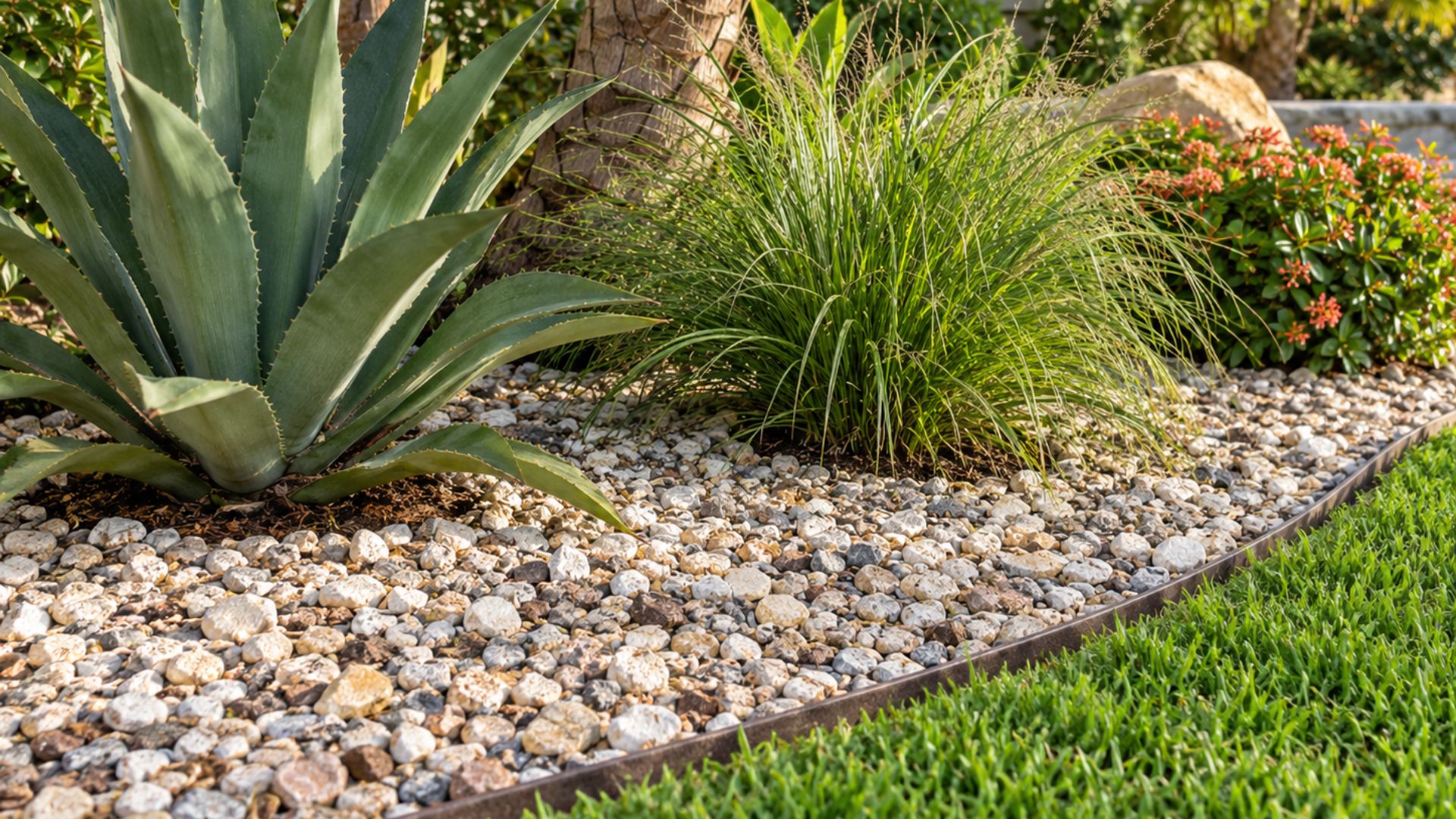
Rock can give a landscape structure and texture that plants and mulch can't. It doesn't break down or need replacing every year, and when it's installed on the right base, it holds up to heavy Florida rain. Landscaping with rocks works best when each size of rock goes where it performs best: gravel in beds and paths, river rock along borders, flat stones for stepping, and boulders as the one or two pieces that catch the eye first. Whether you're refreshing a single bed, adding a walkway, or planning a full backyard project in Jacksonville, it helps to know what each size of rock does well, what should go underneath it, and which landscaping mistakes to avoid.
Key Takeaways: Landscaping With Rocks
- Match the rock to the job: small rock for beds and paths, mid-sized rock for borders and stepping stones, and boulders for focal points.
- Every rock project needs a base. Landscape fabric goes under rock beds, and compacted crushed stone goes under walkways.
- Small rocks wash out wherever water runs, so use larger rocks under downspouts, roof edges, and slopes.
- Bury boulders a third to half of their height so they look like part of the landscape instead of something dropped on the lawn.
- Moving and setting boulders takes heavy equipment, and a boulder placed in the wrong spot can be very difficult to move later.
Why Rock Size Is Important For Your Landscaping Project
When rock in a landscape looks off, the problem is usually size, not color or type. Rock that's too small for the space gets lost, and rock that's too large takes over. Pea gravel spread across a long, wide bed looks like just a flat beige surface. Softball-sized river rock lining a narrow path makes the path feel cramped. A single small boulder in the middle of an open lawn looks like it fell off a truck.
The Four Sizes Of Rock
- Gravel and pebbles (under 1 inch): This includes pea gravel, crushed granite, and small decorative pebbles. This rock is best for garden beds, walking paths, and filling the gaps between stepping stones.
- River rock and cobble (about 1 to 6 inches): These are smooth, rounded stones. They are best for bed borders, dry creek beds, and areas under downspouts where water needs somewhere to go.
- Landscape stone (6 inches to 2 feet): Including flagstones, stepping stones, wall stone, and fieldstone. Best for stepping stone walkways, low bed walls, and edging.
- Boulders (2 feet and larger): Single stones that can weigh several hundred pounds to several tons. Best for focal points in the landscape, slopes, and pond edges.
Suppliers size and name rock a little differently, so use these ranges only as a guide and check the actual dimensions before you buy.
Small Rocks For Garden Beds And Walkways
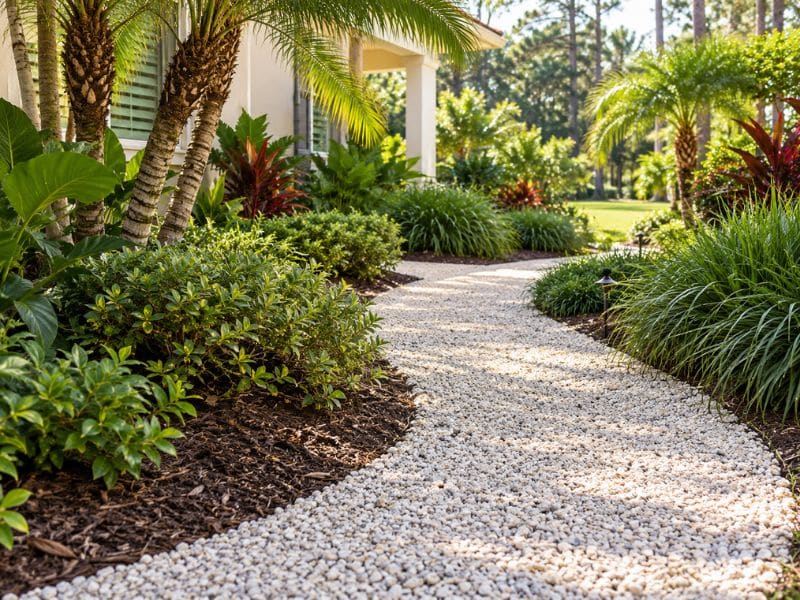
Small rock settles into an even layer, fills in around plant stems, and lets rainwater pass through to the soil underneath. It's also easy to rake level and comfortable to walk on, which makes it the most practical choice for garden beds and paths.
Using Small Rocks In Garden Beds
Spread small rocks about 2 to 3 inches deep in a garden bed. That's enough to cover the soil without burying the crowns of your plants. Keep the rock material pulled back a few inches from stems and trunks so heat and moisture don't build up against the plant. Small rock pairs best with plants that like good drainage, such as succulents, ornamental grasses, and many Florida native plants.
Placement matters in Florida. Summer storms dump a lot of water in a short time, and small rock under a roof edge or on a slope will wash into the lawn after the first heavy rain. Use river rock or cobble instead in those spots and keep small rock on flat, protected ground.
Using Small Rocks For Walkways And Paths
Small rocks can make a good walking surface, but not all small rock works equally well underfoot. Crushed stone and crushed granite make a firmer path than pea gravel. The angular edges of crushed stone lock together when compacted, while the round shape of pea gravel lets it shift and roll underfoot. Pea gravel works for paths that get light use, but crushed stone holds up better to daily foot traffic and wheelbarrows.
Every gravel path needs edging. Steel, aluminum, or stone edging along both sides of the path keeps gravel from spreading into the lawn, where a mower can pick it up and throw it.
What To Put Under Landscape Rocks
Under garden beds, use landscape fabric, a woven or non-woven material that lets water through while keeping rock separated from the soil. In Jacksonville's sandy soil, fabric keeps rock from slowly sinking out of sight, and it slows weeds coming up through the rocks from below.
Under walkways, start with a few inches of compacted crushed stone base, then add fabric and the surface gravel. The compacted base keeps the path firm and level after years of use.
Do not use plastic sheeting with small landscape rocks. Plastic blocks water from reaching the soil, so rain pools on top of the rock or runs off, and the plants in the bed lose their water supply.
Mid Sized Rocks For Garden Beds And Borders
Mid-sized rock is heavy enough to stay in place, but small enough to set by hand, which makes it the right size for edging. River rock, cobble, and smaller landscape stones define a bed without the cost or engineering of a retaining wall. A row of border stones separates the bed from the lawn, holds mulch or gravel in place, and gives a curved bed a clean, visible edge.
Building A Garden Bed
Lay out the shape of the bed with a garden hose, then cut a clean edge in the turf along that line. Set each border stone so its bottom third sits in the soil. Stones set on top of the grass will shift when they're bumped by a mower or a foot, while partly buried stones stay put.
For a slightly raised bed, stack low stones two layers – or courses – high. Taller garden beds that are expected to hold back more soil need a retaining wall built with a proper footing and drainage, rather loosely stacked stone.
Use Rock That Matches Your Home
Use rock colors that match your house: the brick, the stucco, the roof, or the trim. Lighter stones brighten shady beds, and darker stones stand out against green foliage. A beach home in Ponte Vedra might call for light, shell-toned stone, while a brick home inland pairs well with warmer browns and tans.
Stick to one or two rock types across the property. Five different colors and textures in one yard look unplanned, even when each choice looks good on its own.
Mid Sized Rocks For Stepping Stone Walkways
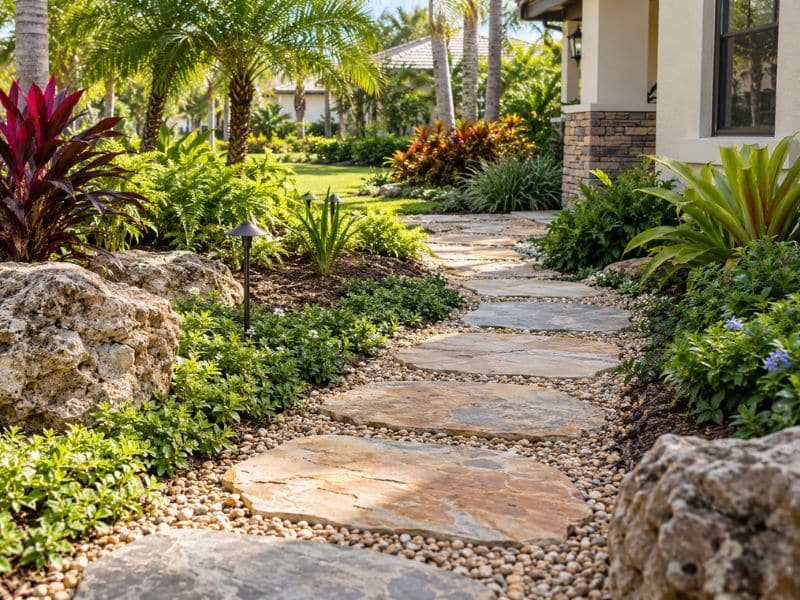
A stepping stone walkway looks intentional when the spacing matches a natural walking stride. For most adults, that means setting stones about 24 inches apart, measured from the center of one stone to the center of the next. Walk the route a few times before finalizing the rock setting, and adjust the spacing to where your feet actually land.
Set each stone flush with the ground or slightly above it so a mower can pass over and no one catches a toe. It is best to put a bed of sand or fine crushed stone under each stone to keep it from rocking when stepped on. The gaps can be filled with gravel, left as lawn, or planted with a low groundcover such as dwarf mondo grass in shady spots.
Stepping Stones vs. Gravel Pathways
Stepping stones work best for casual routes through a lawn or garden bed, like a path from the patio to a side gate. They use less material and let grass or groundcover grow between the stones.
Gravel pathways create a continuous surface, which makes them better for routes that get daily use, wider paths, or anywhere you'll push a wheelbarrow or mower. They need edging and an occasional top-off of gravel. Many yards combine the two by setting stepping stones into a gravel path, which gives a firm footing with a finished look.
Landscaping With Large Rocks And Boulders
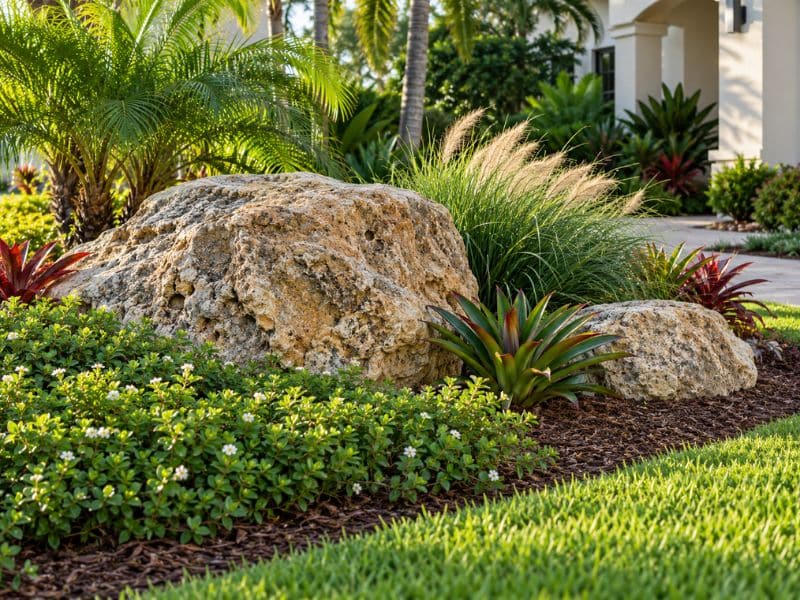
Boulders often become the focal points of a yard, so use them sparingly. Use one boulder or a small group of three where you want to draw the eye, such as the corner of a garden bed or the start of a path. In a mostly flat Jacksonville yard, a well-placed boulder adds height, marks the corner of a bed or the start of a path, or helps hold soil on a slope.
How To Place Boulders So They Look Natural
A boulder sitting on top of the grass looks like it was dropped off and left there. Boulders in nature are partly buried, so bury yours a third to half of their height. Set the widest side down, and turn the most weathered face up and toward the main viewing angle.
To add to the natural look, group boulders in odd numbers with varied sizes, and avoid lining them up or spacing them evenly. Plant groundcover or low perennials around the base of each one so the stone looks like part of the bed.
Why Boulder Placement Is A Job For Professionals
A boulder large enough to serve as a focal point can weigh as much as a car. Moving a boulder safely usually takes equipment like a skid steer or mini excavator, lifting straps, and a crew that knows how to rig and set heavy stone. Getting the boulder into the backyard takes planning too. Gate widths, irrigation lines, septic systems, and soft ground all affect how a boulder gets from the driveway to the backyard.
Setting a boulder can include digging, and digging can come with legal requirements. Professionals know what Florida law calls for, like having buried utility lines marked, and take care of it before the work starts.
A boulder set in the wrong spot is very difficult to move without bringing landscaping equipment back. Earth Works' landscape crews handle boulder placement and heavy rock work from delivery through planting.
Using Rocks Around Your Backyard Pond
Without rock, a pond looks like a hole that was dug and filled with water. You can see the liner edge, and the transition from lawn to water is abrupt. Rock is what makes a pond look like it belongs in the landscape.
Cover the liner edge with a mix of boulders and cobble rather than a single ring of same-sized stones, which looks like a necklace laid around the water. Vary the heights, let a few stones step down into the shallow shelves, and keep gravel on the shelves thin. Earth Works' landscape team builds koi ponds and pondless waterfalls with this kind of layered rockwork. If you already have a pond, our pond cleaning guide covers how to keep the rock and gravel clean once it's in place.
What Are The Best Types Of Rocks For Florida Landscapes
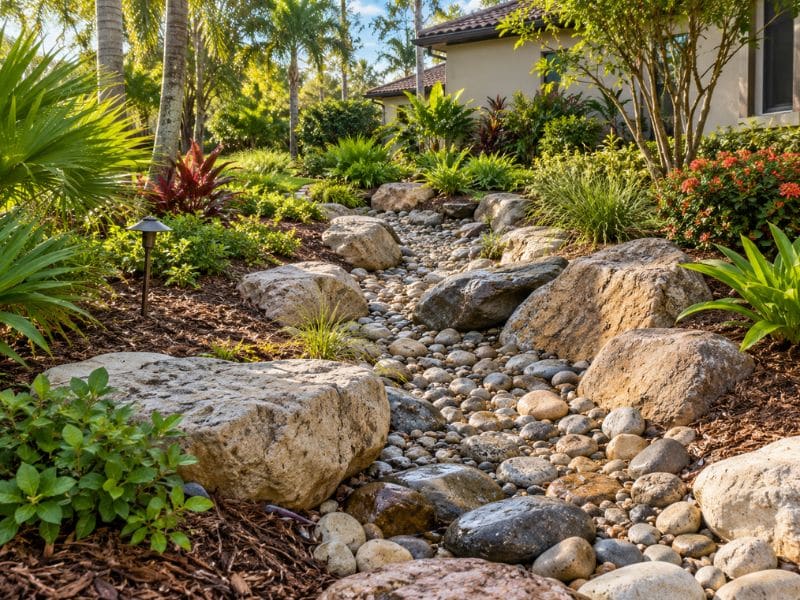
Landscaping with rocks in Northeast Florida means planning for heavy summer rain, sandy soil, and strong sun. These rock types hold up well here:
- River rock: Smooth and durable, and it stays in place where water flows. It's the standard choice for dry creek beds that carry stormwater away from the house.
- Crushed granite and crushed stone: Packs firmly for paths and drains well after storms.
- Coquina: A Florida stone made of compressed shell, quarried along the Atlantic coast. It's the same stone used to build the Castillo de San Marcos in St. Augustine, and its light, shell-textured look suits coastal homes.
- Florida limestone: Light-colored and widely available in the state. Limestone can raise soil pH over time, so keep it away from acid-loving plants like azaleas, camellias, and gardenias.
- Lava rock: Lightweight and easy to spread, but its dark color absorbs heat, so it's best kept away from tender plants in full sun.
Common Mistakes To Avoid When Landscaping With Rocks
Most problems that occur with rock landscaping show up within the first year. The most common ones:
- Small rock where water flows: Pea gravel under a downspout can end up washed into the lawn after the first storm.
- No edging: Gravel can spread into the grass, and a mower throws it.
- No base under the rock, or plastic underneath: Rock sinks into sandy soil without fabric, and plastic traps water on the surface.
- Too many boulders: A yard with boulders everywhere has no real focal point.
- Boulders sitting on the surface: Unburied boulders look temporary, rather than embedded and artfully placed.
- Too many rock types: Mixing several colors and textures makes the yard look unplanned.
- Rock piled against plant stems: Rock pressed against stems and trunks traps heat and moisture against the plant.
How Much Does Rock Landscaping Cost In Jacksonville?
Rock projects vary widely in cost, and the price depends on a few main factors:
- Rock type: Common gravel and crushed stone usually cost less than specialty stone like flagstone or imported beach pebbles. Rock quarried closer to Florida typically costs less to ship.
- Size and weight: Small rock is sold by the ton or cubic yard. Boulders and large landscape stones are often priced individually.
- Coverage and depth: A larger area or deeper layer takes more material.
- Delivery and access: Tight gates, long carries from the driveway, and backyard-only access add labor time and may require smaller equipment.
- Site prep: Removing sod, grading, laying fabric, compacting base, and installing edging all add to the cost, and skipping them shortens the life of the project.
- Equipment and labor: Boulders and heavy stone need machinery and an experienced crew to set them correctly.
When comparing quotes, ask for material and labor to be listed separately so you can see exactly what you're paying for.
Let Earth Works Design Your New Backyard
Earth Works has been designing and building Jacksonville landscapes since 1988. Our design team handles landscaping with rocks at every scale, from a single bed border to dry creek beds, retaining walls, firepits, and pond rockwork.
Our design process follows four steps: a free consultation at our Garden Center on Beach Blvd, an on-site visit, a design reveal back at the Garden Center where you can see materials in person, and installation. You choose the scope and your level of investment before we start drawing, and if you move forward with the build, 50% of your design fee goes toward it.
Contact Us TodayLandscaping With Rocks: FAQs
How do you move large landscaping boulders into a backyard?
Large boulders are moved with a skid steer, mini excavator, or similar machine, using lifting straps rated for the weight. Before the boulder is moved, the crew measures gate widths, maps the route around irrigation lines and septic systems, and lays down plywood or ground mats to protect the lawn. In Florida, it may be required to call Sunshine 811 before digging so that buried utility lines are marked first.
Do I need to place landscaping fabric underneath rocks?
For garden beds and walkways, yes. Fabric keeps rock from sinking into sandy soil and slows weeds coming up from below. Use a permeable landscape fabric, never plastic, so water can still reach the soil. Boulders don't need fabric underneath, since they're set directly into the ground.
How do I keep weeds from growing through my rocks in my garden?
Start with landscape fabric under the rock to block weeds coming up from the soil. Over time, leaves and dirt collect on top of the rock and give weed seeds a place to sprout, so blow or rake debris off the rock regularly. Pull weeds while they're small, before their roots reach the fabric. A rock layer of at least 2 inches also makes it harder for seeds to reach the soil.
What is the most affordable landscape rock?
Pea gravel and crushed stone are usually the lowest-cost options, since they're widely available and sold in bulk by the ton or cubic yard. Rock sourced closer to Florida also tends to cost less than imported stone because of shipping. Installation is the other half of the price, so a lower-cost rock on a properly prepared base will outlast a premium rock placed on bare soil.
Which plants do well with rocks?
Plants that like good drainage and full sun pair best with rock. In Northeast Florida, good choices include coontie, muhly grass, firebush, blanket flower, and beach sunflower, along with succulents and ornamental grasses. Our Garden Center carries Florida-native plants, succulents, and palms, and our horticulturists can help you choose plants for a rock bed based on its sun exposure and soil.
